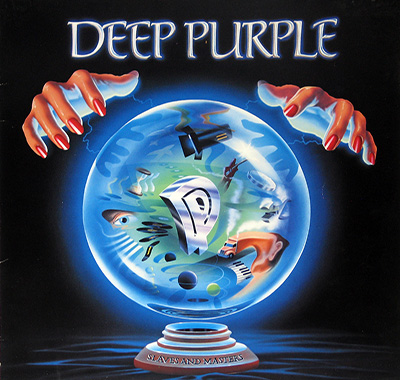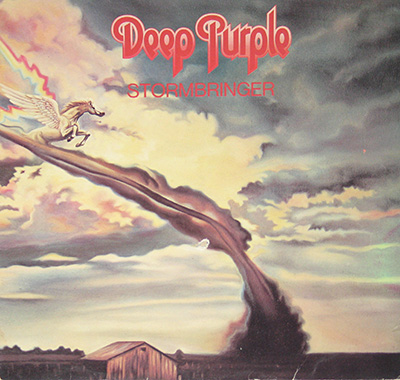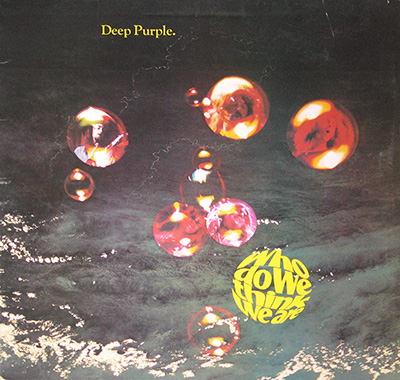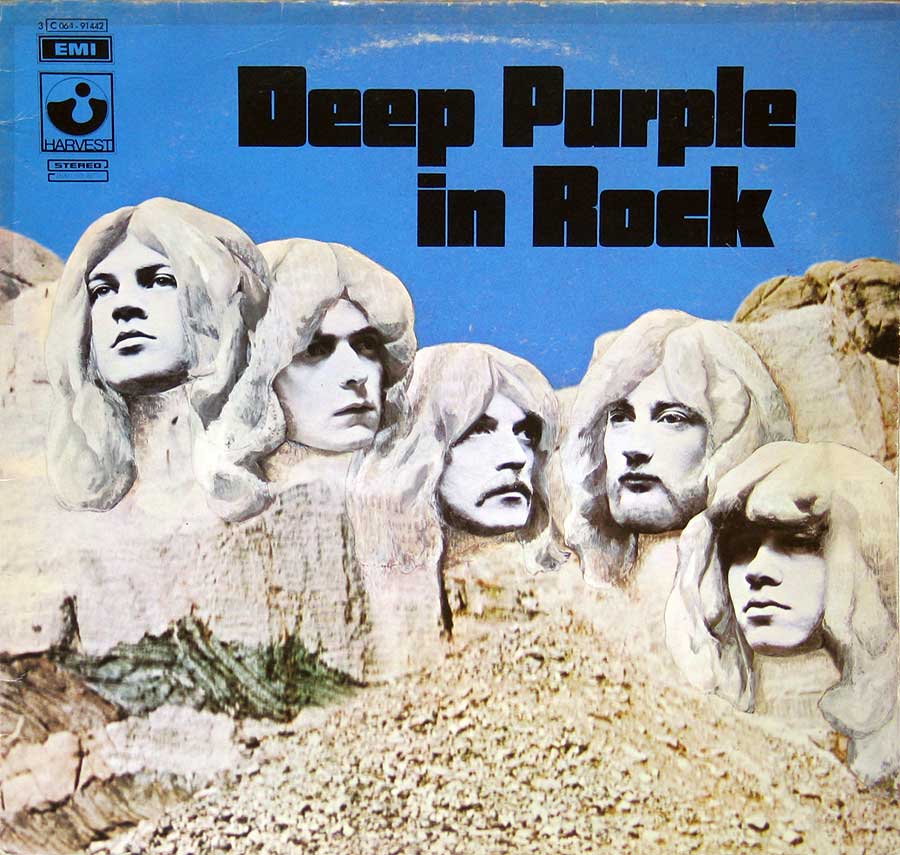
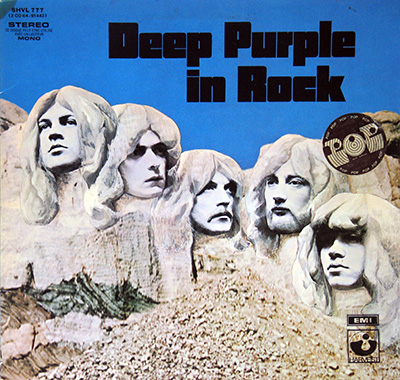
"In Rock" (1970) Album Description:
Deep Purple didn't make "In Rock" to decorate the room. They made it to shove the room sideways. You can hear it in the first hard breath of "Speed King"—that feeling of a band leaning forward, not back, like they're about to knock the pint off the table and not apologize.
The funny part is how quickly it turns from loud to dangerous. Somewhere between the rehearsal-hall muscle and the studio tape, they find a groove that feels like it could slip the leash at any second—especially when the organ and guitar start circling each other like they're deciding who gets to speak first. Stick around past this paragraph and you'll hear where the leash snaps.
England, 1970: less incense, more voltage
Britain in 1970 wasn't floating on flower-power fumes anymore; it was tightening its jaw. The country had just flipped governments in June, and the air was full of money talk, union muscle, and that familiar grey pressure that makes people either go quiet or get loud on purpose. Rock bands noticed. They stopped pretending the blues was polite dinner music and started treating it like machinery.
Purple were also coming off the orchestra experiment, and you can feel them swatting away any lingering tuxedo vibes. "In Rock" is basically them saying: we're a rock band, don't hand us sheet music, hand us power. And then they test the fuse.
Mk II: the polite guys left the room
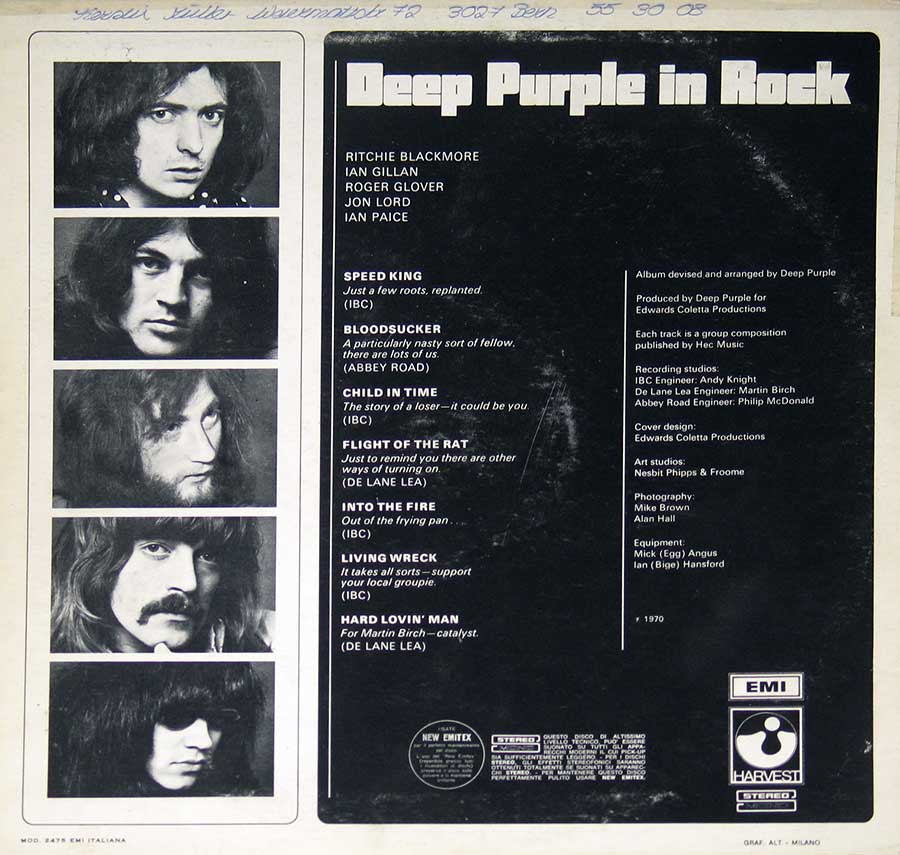
This is the first studio album with the Mark II line-up, and the change isn't cosmetic—it's cause-and-effect. Blackmore wanted heavier after hearing what the new hard bands were doing, and the old singer couldn't sell that punch without sounding like he was acting. So they went hunting for a voice with teeth, and Gillan walked in with a throat built for sirens.
Gillan didn't come alone for long. Roger Glover followed, and suddenly the band had a bassist who could lock the bottom end down and also help write, not just survive the song. The whole thing starts in rehearsal rooms where the point was making a lot of noise, then gets sharpened onstage night after night until the arrangements stop being ideas and become reflexes.
Peer pressure: who else was swinging in 1970
The scene that year wasn't one lane; it was a bunch of lanes all trying to run you off the road. Put "In Rock" in the middle of these neighbors and you'll feel what Purple were reacting to:
- Black Sabbath: riffs like wet concrete, slow and mean.
- Led Zeppelin: the blues stretched, then snapped back with swagger they could actually earn.
- Free: lean, unflashy, built on space and feel instead of fireworks.
- The Who: volume as a civic event, not a studio decision.
- Uriah Heep: big harmonies and fantasy smoke starting to drift in.
Purple don't pick one lane. They steal from all of them, then glue it together with brute confidence and a very specific obsession: the sound of a band playing like it's live, even when it isn't.
What it sounds like when volume is the point
The album's attack is immediate—sharp edges, very little softness, and a sense that the instruments are competing for the same air. Jon Lord's organ isn't background color; it's a steel beam shoved through the middle of the song, and it forces Blackmore to answer with riffs that bite instead of sparkle. When they run fast, it feels like controlled panic; when they slow down, it feels like the floorboards are complaining.
"Child in Time" is the big tense room in the house. Lord lays down that cycling figure and the band keeps widening the space around it until Gillan starts climbing the walls. The tempo doesn't feel like a metronome so much as a pulse—surge, hold, surge—like they're daring the tape to keep up.
Then there's the mid-album grit: "Bloodsucker" grinding forward, "Into the Fire" throwing heat without getting cute, "Flight of the Rat" sprinting like the band is late for a fight. "Living Wreck" and "Hard Lovin' Man" close the door with a thick, sweaty shove.
One quiet anchor: late-night radio, the kind that fades in and out like a guilty secret, and suddenly that organ line shows up through the static. You sit closer without realizing it.
Hands on the controls
The band produced it themselves, which explains the attitude: no adult in the room telling them to smooth the corners. But there was a practical adult behind the glass—engineer Martin Birch—who worked to get the sound of the room onto tape instead of turning it into something polite. The sessions jump between London studios (IBC, De Lane Lea, Abbey Road) in the cracks between touring, so the record keeps a road-tough stiffness even when it's recorded under proper lights.
Paice is the secret weapon here: not flashy for the sake of it, just relentlessly physical. Glover and Paice together make the songs feel like they're moving even when the chords sit still, which lets Lord and Blackmore fight on top without the whole thing collapsing into noise soup.
Success, and the kind of crowds it attracts
When "In Rock" hit in June 1970, it didn't sneak onto the charts—it barged in and stayed, peaking at No. 4 in the UK and hanging around for over a year. Then "Black Night" arrives and goes even higher as a single, the sort of hook that makes people who don't even like hard rock start humming it in spite of themselves. Suddenly the gigs get louder, the rooms get rowdier, and the band stops being a rumor and starts being a problem.
You can hear that live-wire mood in the stories that follow: the festival stages, the gear getting abused, the idea that the show is part music and part public incident. There's a reason you picture this line-up under hot lights, not sitting down.
Controversy, and the stuff people get wrong
There wasn't a big moral panic headline attached to this release—no courtroom spectacle, no official ban—just the usual hand-wringing about volume and aggression from people who think a guitar amp should behave. The messier argument lives inside the music: that central theme in "Child in Time" traces back to "Bombay Calling" by It's a Beautiful Day. Some folks treat it like a crime scene.
The more accurate version is less dramatic and more honest: bands borrow, trade, and mutate ideas, especially when they're touring the same circuits and listening hard. Purple turned the borrowed shape into something colder and bigger, then Gillan aimed the lyric mood at the nuclear-era anxiety everybody pretended not to feel. Another misconception: because Abbey Road is in the credits, people assume polish. This record is not polished. It's weaponized.
Quick listening map
- "Speed King" — kicks the door in and dares you to complain.
- "Child in Time" — slow tension, then a long climb into the red.
- "Flight of the Rat" — sprinting hard rock with elbows out.
- "Hard Lovin' Man" — the closer that leaves the room smelling like hot transformers.
"In Rock" doesn't ask you to admire it. It asks what you're made of when the band turns up and refuses to blink.
References (for the facts, not the fun)
- Wikipedia: Deep Purple in Rock (release info, studios, personnel, singles)
- Wikipedia: "Child in Time" (origin notes and context)
- Official Charts: UK Albums Chart snapshot (Sep 1970, shows peak and weeks listed)
- Britannica: Britain since 1945 (June 18, 1970 election context)
- LouderSound: Background on "Child in Time" and the Mk II writing burst

.jpg)