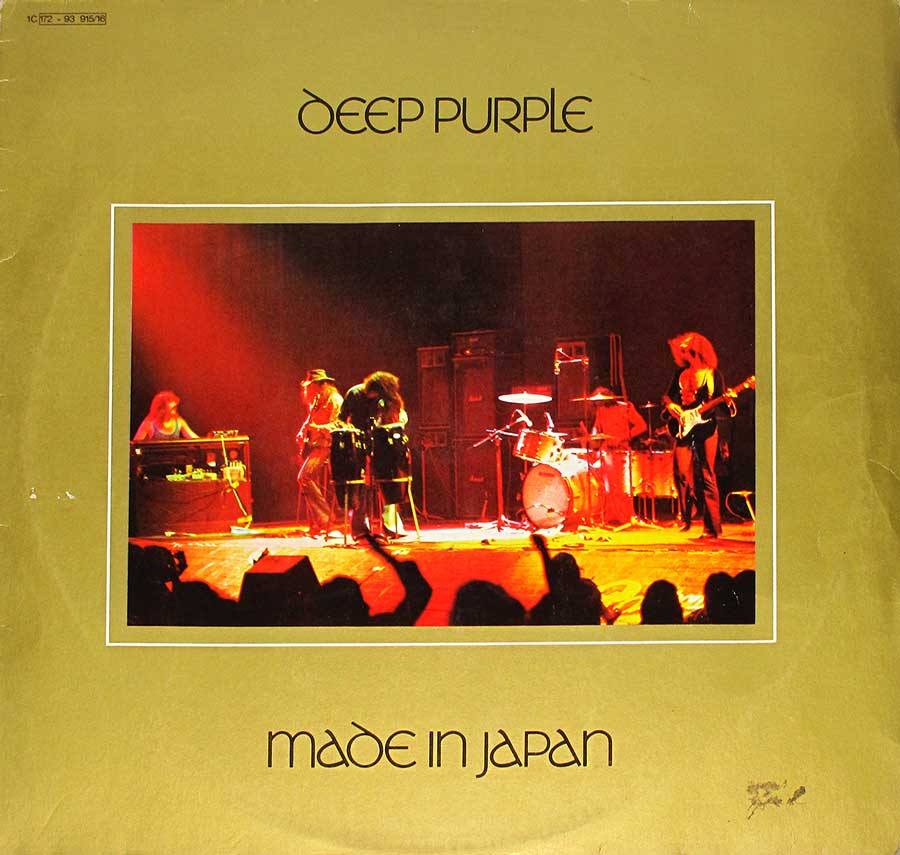
"Made in Japan" (1972) Album Description:
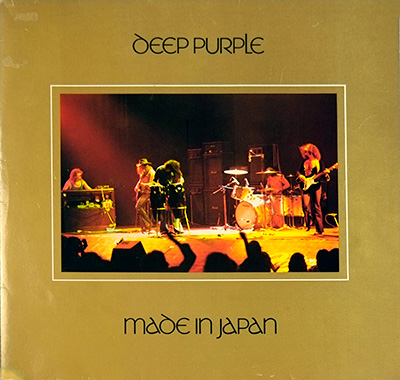
Some live albums document a tour. "Made in Japan" sounds like the tour manager forgot to close the cage. In this German gatefold edition, spread across two LPs on Purple Records, Deep Purple do not behave like a band politely preserving a successful year; they hit the tape like men who know these songs too well to play them safely. You can hear the 1972 machinery running at full temperature: Blackmore slicing through the mix, Jon Lord's Hammond roaring like a church organ dragged into a knife fight, Ian Gillan pulling the melodies until they nearly tear, and Roger Glover with Ian Paice keeping the whole contraption from flying into the lighting rig.
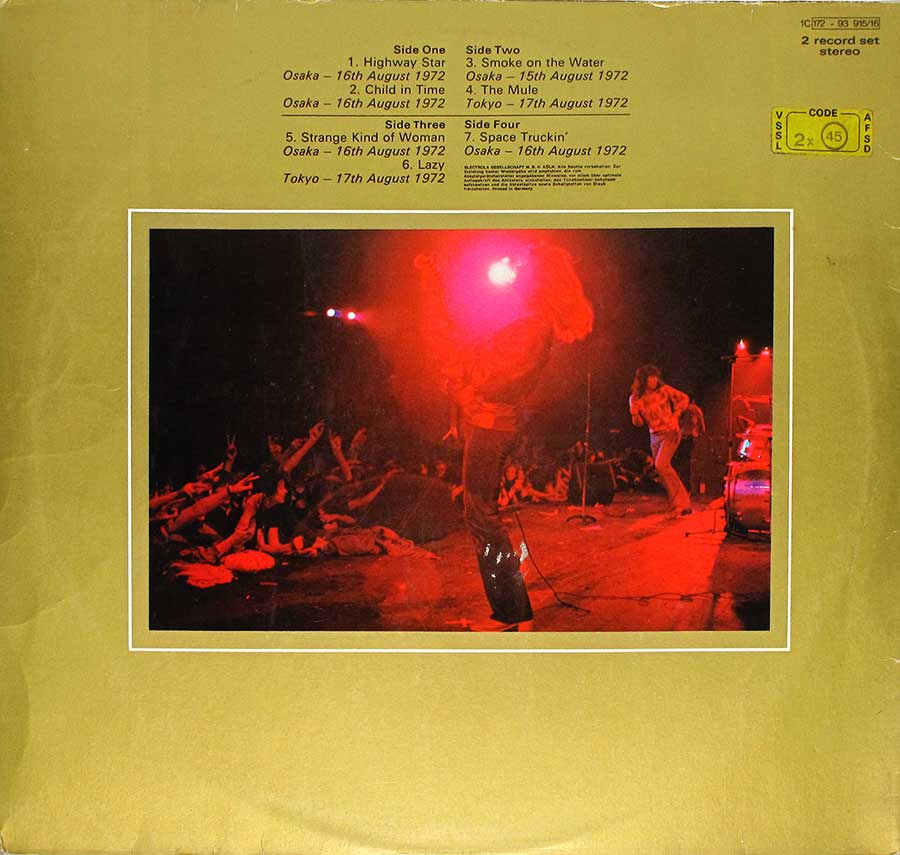
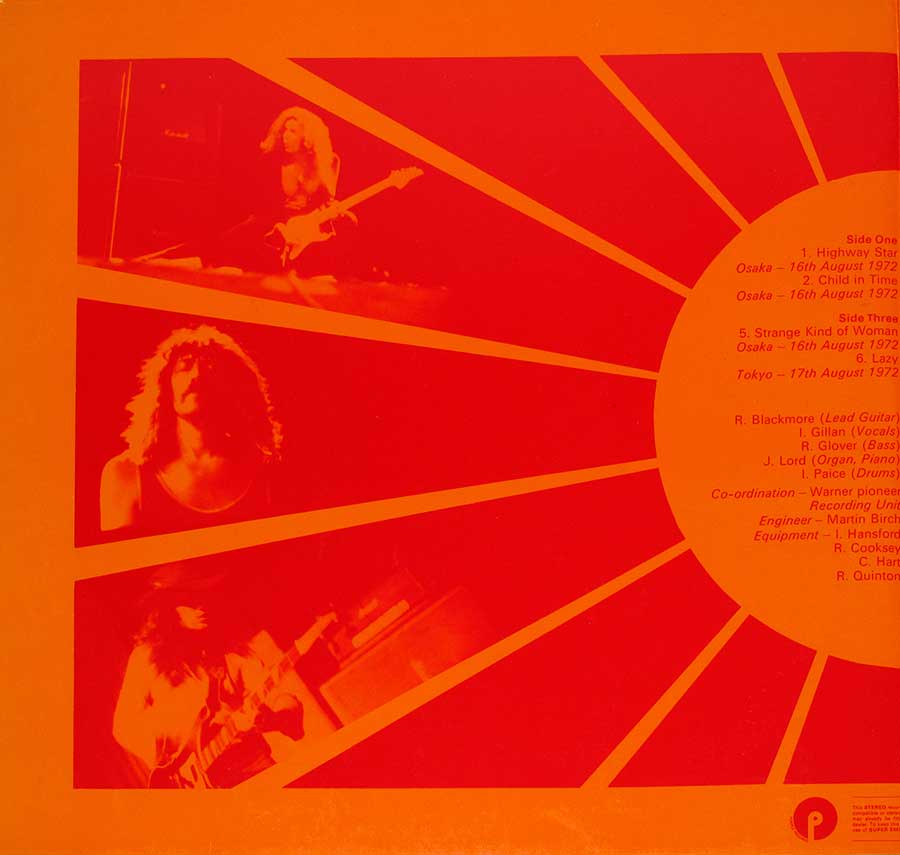
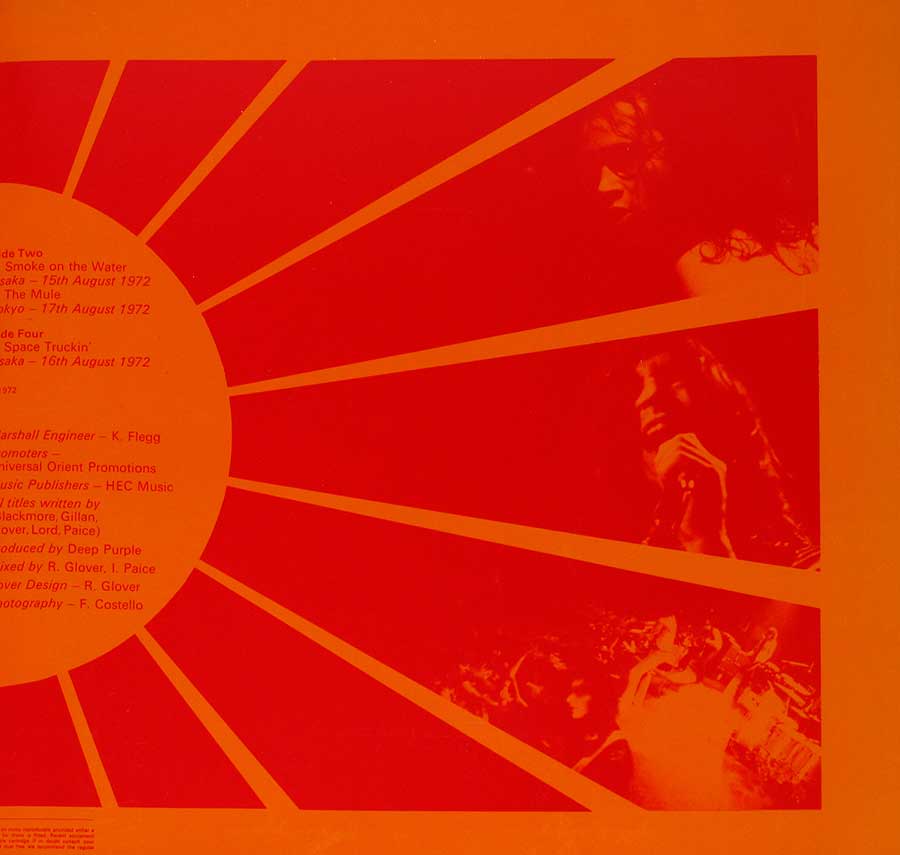
The strange part, and the bit that makes this sleeve more interesting than a mere collector's souvenir, is that the album was not born as some grand, carefully staged live monument for the whole world to kneel before. It came out of the August 1972 Japan dates because that market wanted a live album, while the band itself had never fully trusted the idea. Open the gatefold, stare at those stage photographs for a minute, and the hook appears: this is a line-up at peak force, already carrying the kind of internal tension that never stays neatly filed.
Britain in 1972 was a glorious racket. Glam was busy stealing the shop windows, prog was still building marble staircases, and the heavier end of rock was learning how to sound bigger, dirtier, and more disciplined without turning into sludge. Against Led Zeppelin's elastic blues thunder, Black Sabbath's industrial dread, Uriah Heep's organ-heavy melodrama, Wishbone Ash's twin-guitar drift, and Free's lean street-corner grit, Deep Purple sounded like the most precise brawl in the building.
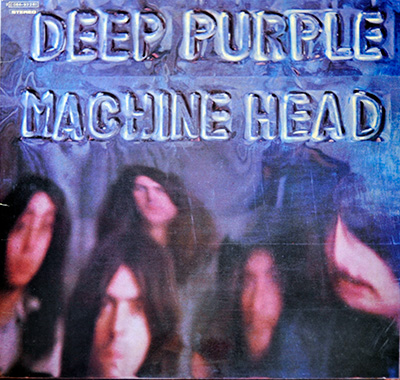
That did not happen by accident. Blackmore, Lord, and Paice had already built the chassis, but when Gillan and Glover arrived in 1969 the band stopped dabbling and started dealing in velocity, bite, and controlled bad temper. By the time "Machine Head" had done its damage earlier in 1972, the stage set was no longer just a list of songs; it had become a pressure system, built to stretch, accelerate, improvise, and occasionally stare into the abyss just to see whether the abyss had decent monitors.
The practical hands matter here. Deep Purple produced the album themselves, Martin Birch captured the Japanese shows, and Glover with Paice handled the mixing, which explains why the record rarely feels prettified for polite company. Fin Costello's photography, folded across the sleeve and inner spread, does not turn the band into aristocrats of rock mythology; it catches the physical fact of them instead: heat, cables, sweat, glare, and that particular look musicians get when the volume is doing half the talking.
Musically, this record works because it refuses studio obedience. "Highway Star" comes off the blocks like a gearbox thrown downstairs, "Child in Time" stretches tension into theatre without going soft, and the Osaka take of "Smoke on the Water" has the right kind of ugly patience before the riff lands and flattens the room. "The Mule" gives Paice the room to prove why Purple never had a merely functional drummer, and the fourth side's "Space Truckin'" is where the band quits pretending songs have edges at all.
There was no grand scandal attached to the album itself, unless you count the usual moaning about long solos, drum features, and hard-rock musicians behaving as though time were an unlimited natural resource. The more stubborn misconception is more interesting: that "Made in Japan" was conceived as the definitive Deep Purple statement from the outset. Not really. The band were wary of live albums, the recordings were meant for a specific market, and the thing became a monster because it caught them without too much varnish. Rock history loves a plan. Rock records usually prefer an accident.
I always like handling gatefolds like this at a table instead of standing at a shelf, because a double live album needs elbow room. The inside spread on a copy like this still gives off that old collector's thrill: not luxury, not audiophile incense, just evidence.
And that is why this German pressing matters beyond catalog number and cardboard architecture. It preserves a Deep Purple that could still balance Blackmore's danger, Lord's grandeur, Gillan's theatrical aggression, Glover's ballast, and Paice's fast-twitch intelligence without collapsing under its own ego. Within a year Gillan and Glover would be gone and the band would mutate again; this set catches the moment before the door swings, which is usually when rock records tell the truth.
References
- High-resolution photos and page details for the German gatefold pressing on Vinyl Records Gallery
- Deep Purple official news page on the August 1972 Japan shows and the Mk II line-up
- Deep Purple official shop overview for "Made In Japan"
- Background details on recording dates, release sequence, and mixing history

.jpg)