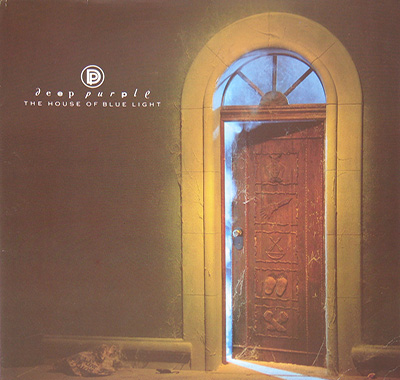
“The House of Blue Light” Album Description:
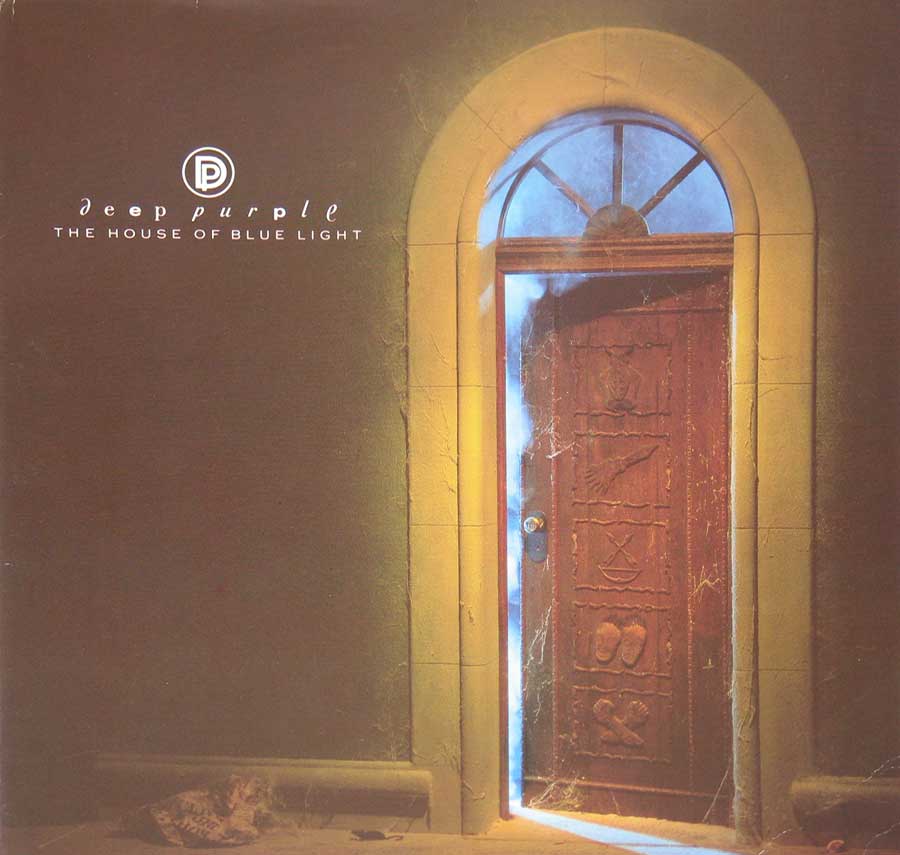
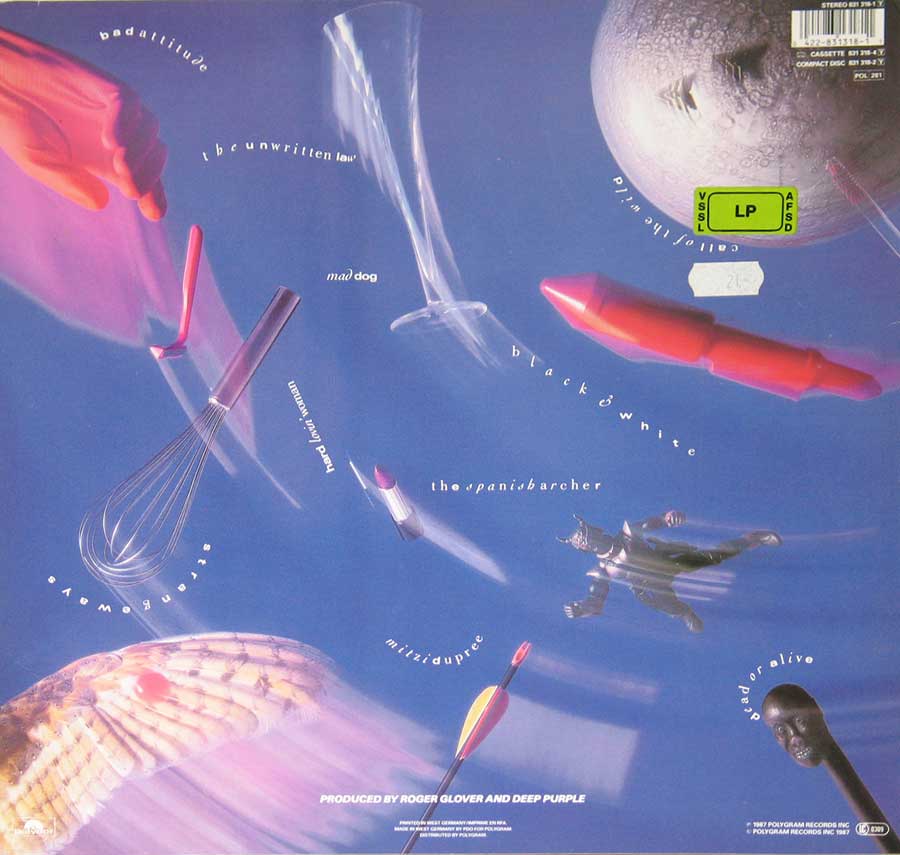
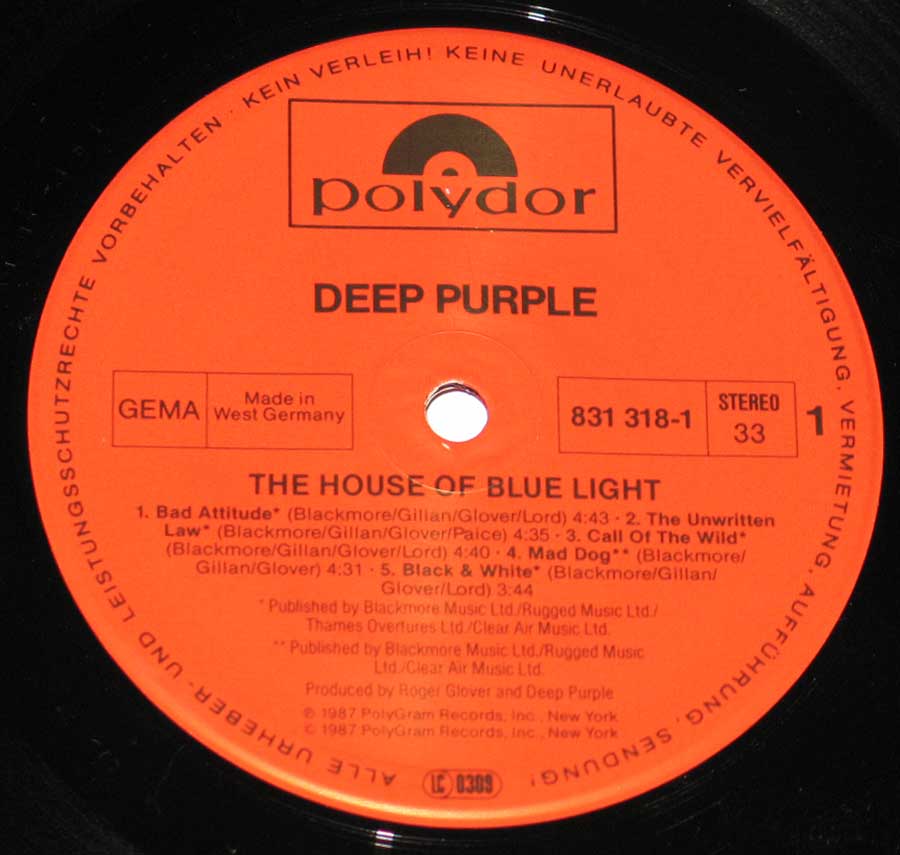
I’ve seen “The House of Blue Light” turn up in the German bins more times than I can count: that cold-blue sleeve, the Polydor stamp, the quiet promise that Mark II are back in the room again — even if the room feels a bit tense. It landed on 12 January 1987, the band’s twelfth studio album, and the second studio swing after the reunion that started with “Perfect Strangers”. The story isn’t “comeback miracle” so much as “old chemistry, new bruises”.
Return of the Titans
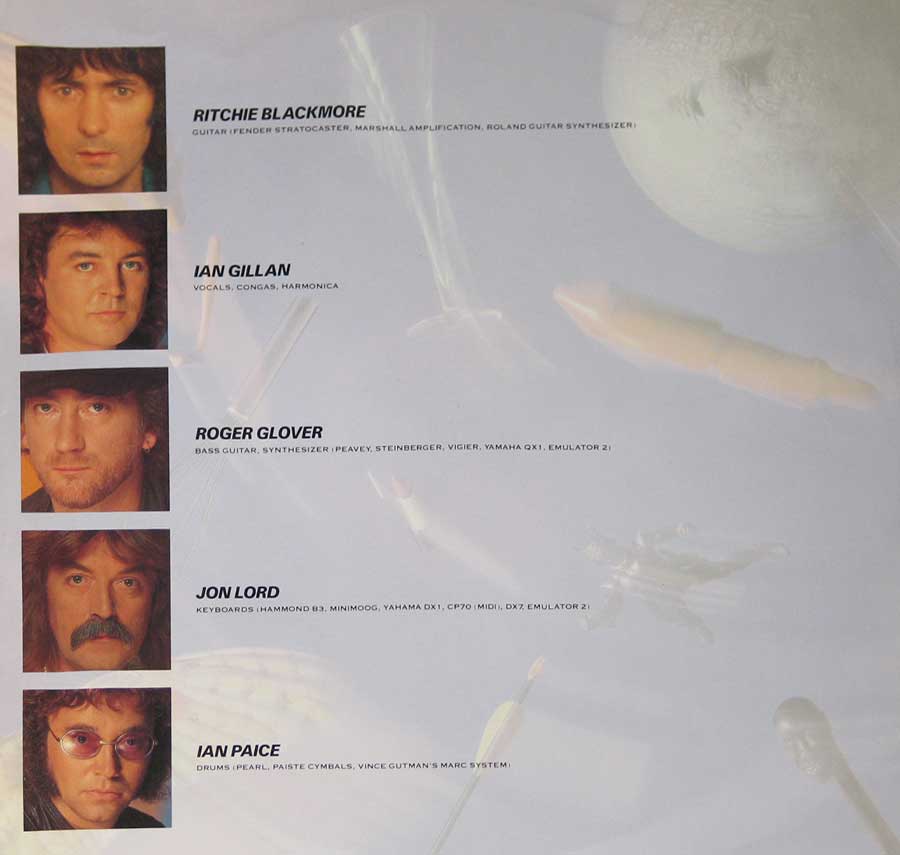
The line-up is the headline before you even play it: Ian Gillan up front, Ritchie Blackmore carving the air, Roger Glover holding the low end (and the steering wheel), Jon Lord making the Hammond snarl again, Ian Paice snapping the whole thing into motion. These are the names that gave us “Machine Head” and “Made in Japan”, so expectations arrive pre-loaded. Sometimes that’s a gift. Sometimes it’s a trap.
Production (with fingerprints, not perfume)
The sleeve credits don’t pretend this is a solo producer vanity project: it’s Roger Glover and Deep Purple. You can hear it. The album doesn’t drift — it’s built, tightened, argued into shape. I like the discipline, but I’ll admit it: a few moments feel slightly over-lit, like somebody turned the studio lamps up one notch too far. Not fatal. Just… noticeable.
Behind the sound (the travel itinerary matters)
The making of it is a weird little triangle on paper: recorded in Stowe, Vermont at the Playhouse with Le Mobile in the mix, engineered by Nick Blagona, then shipped to Munich where Harry Schnitzler handled the mix at Union Studios, and finally polished in New York by Greg Calbi at Sterling Sound. That’s not trivia — that’s the album’s posture. You can feel the American room tone underneath it, then the very European “lock it in” snap when the mix takes over.
Legacy and impact (for collectors, not tourists)
The German LP is collectible for the most honest reason: it’s a solid, common-enough pressing you can actually find, with the kind of packaging you’ll still take out and read — lyrics, photos, the whole ritual. I’ve played it late afternoon while sleeving other records, needle dropping between chores like it’s nothing… and then “nothing” turns into that familiar Purple thunder and I remember why these five were such a problem in the first place. This isn’t the band at their hungriest. It’s the band proving they can still bite. Take it or leave it.
References / citations
Band Members and Musicians on: Deep Purple The House Of Blue Light
|
Band-members, Musicians and Performers
- Ian Gillan - vocals, congas, harmonica
- Ian Gillan – Vocals
Fun bit: the guy who hit those stratospheric notes also played Jesus (1970) before he went full purple thunder. Read more... Ian Gillan, the razor-throated storyteller who helped turn Deep Purple into a stadium engine (1969–1973), then came back for the 1984 reunion and later tours. Before the purple thunder I cut my teeth in Episode Six (1965–1969). In 1970 I also sang Jesus on the original "Jesus Christ Superstar" album—pure theatre, no cape. I went jazz-rock with the Ian Gillan Band (1975–1978), cranked it harder with Gillan (1978–1982), and even took a wild detour fronting Black Sabbath on "Born Again" (1983). Solo records and guest spots followed, but that operatic scream and sly phrasing always gave the game away, whether I was whispering a blues line or detonating a high note over a Marshall stack.
- Ritchie Blackmore - guitar
- Ritchie Blackmore – Guitarist, Songwriter
The guy who made the guitar sound both medieval and radioactive, often in the same solo.
Read more...
Ritchie Blackmore is the sort of name I see on a sleeve and instantly expect sparks: born Richard Hugh Blackmore (1945), he’s an English guitarist who helped hard-rock riffing grow teeth and then politely refused to stop. His era-stamps are basically whole chapters of rock history: Deep Purple (1968–1975, 1984–1993), where the riffs got louder, sharper, and more dramatic; Rainbow (1975–1984, 1993–1997), where he leaned into melody and fantasy like it was a weapon; and Blackmore’s Night (1997–present), where the electric storm calms down into Renaissance-folk textures without losing that unmistakable Blackmore touch. I love that arc: from amp-stacks and arena thunder to lutes-and-candles vibes, like he just swapped dragons for different dragons.
"Blackmore Signature Strats"
I’ve spent too many nights chasing that Blackmore chime. Fender’s Artist Series Strat is a love letter to his ‘70s obsession—Olympic White with a graduated scalloped rosewood board that makes your fingers feel like they’re floating. The electronics are pure Ritchie logic: two Seymour Duncan Quarter Pounds for the bite and a dummy middle pickup. It’s a prop, a plastic decoy for us mortals. Then there’s the Fender Japan ST72-145RB. MIJ builds have a surgical precision, keeping the ‘72 vibe alive for the obsessive collector. We hunt these like lost relics, justifying the cost because a standard neck feels one-dimensional by comparison. It’s a specialized tool for a very specific kind of madness. But then, isn't that the whole point?
- Jon Lord - organ, keyboards
- Jon Lord – Keyboards
On my best days, that Hammond roar still sounds like cathedral pipes hijacked by a Marshall stack—and Jon Lord is the reason.
Read more...
Jon Lord, British keyboardist, composer, and co-founder of Deep Purple, never played “background” the way polite musicians do—he attacked the keys like they owed him money, then turned around and wrote with the discipline of a trained composer. The story starts in the R&B trenches with The Artwoods (1964–1967), then detonates when he helps launch Deep Purple (1968–1976; 1984–2002), where that distorted Hammond became a lead instrument with teeth. After Purple’s first collapse, the road briefly rerouted through Paice Ashton Lord (1976–1978), and then straight into David Coverdale’s orbit with Whitesnake (1978–1984), adding class, weight, and that unmistakable “burning organ” halo to bluesy hard rock. Underneath all the volume, the man kept one foot in the concert hall—because some people can shred and still hear the orchestra in their heads.
- Roger Glover - bass, synthesizer
- Roger Glover – Bass, Producer, Songwriter
If the groove feels like a tank with manners, his name is usually somewhere nearby. Read more... Roger Glover is one of those credit lines I trust on sight: a Welsh bassist, producer, and songwriter who helped define the heavyweight “engine room” of classic hard rock. I mainly tag him to two eras that just refuse to die: Deep Purple (1969–1973, 1984–present), where his bass and writing instincts locked in with that Mark II bite, and Rainbow (1979–1984), where he wasn’t just playing low-end—he was also steering the sound as lyricist and producer. He came up through Episode Six, then spent the 1970s stacking production work and side projects like it was a second career (because, yeah, it basically was), but those Purple and Rainbow years are the real “mythology in the liner notes” stuff.
- Ian Paice - drums
- Ian Paice – Drums
The human engine room of Deep Purple: swing, snap, and zero wasted motion. Read more... Ian Paice, the drummer who turned Deep Purple's thunder into clockwork groove, never flashy, always lethal. From Maze in the mid-60s he joined Deep Purple in 1968, anchoring every era: the Mark I-IV years (1968-1976) and the long-haul return (1984-present). After the split I followed him through Paice Ashton Lord (1976-1978), Whitesnake (1979-1982), and Gary Moore's early-80s line-ups and sessions (1982-1984). He's the only Purple member to play on every studio album, and you can tell why: his swing sits inside the backbeat, pushing the band forward without rushing. Listen for the tight hi-hat chatter, snare cracks like a starter pistol, and fills that sing without stepping on the riff.
|
.jpg)