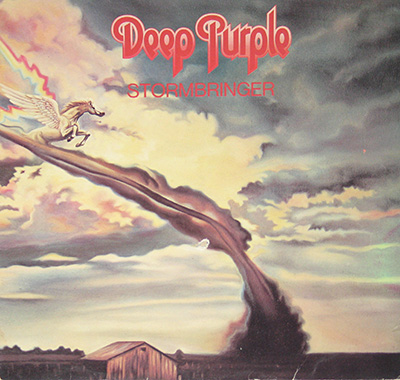
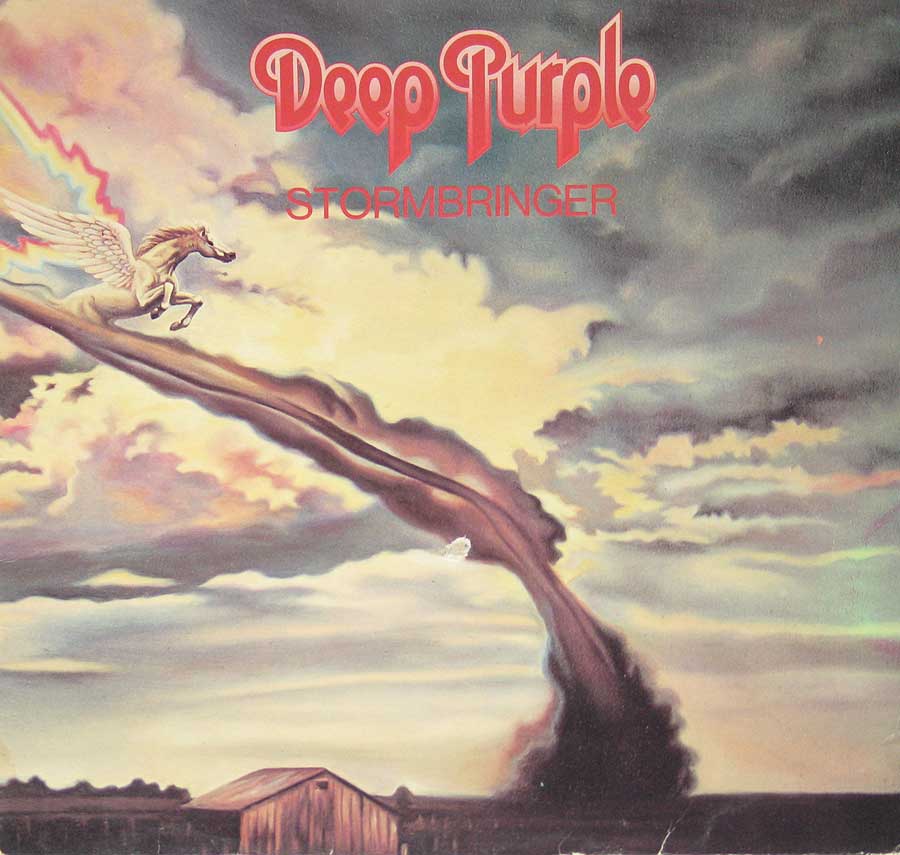
In the heart of the tumultuous early 70s, when rock was still swaggering with its primal energy, Deep Purple unleashed "Stormbringer," a sonic hurricane that would leave a permanent mark on the musical landscape. It was 1974, and the German-pressed vinyl, a testament to the band's burgeoning international appeal, spun its way into the hands of eager listeners, carrying a storm of sound that would both electrify and polarize.
"Stormbringer" was not just an album; it was a declaration of artistic exploration, a testament to a band pushing the boundaries of its own sound. The album's historical context is crucial. Deep Purple, once the pioneers of hard rock, were now venturing into uncharted waters. The blues-infused, riff-heavy sound that had defined their earlier works was now interwoven with elements of funk, soul, and even a hint of nascent disco. This was not the Deep Purple of "Smoke on the Water" or "Highway Star." This was a band in the throes of transformation, unafraid to experiment and risk alienating their diehard fans.
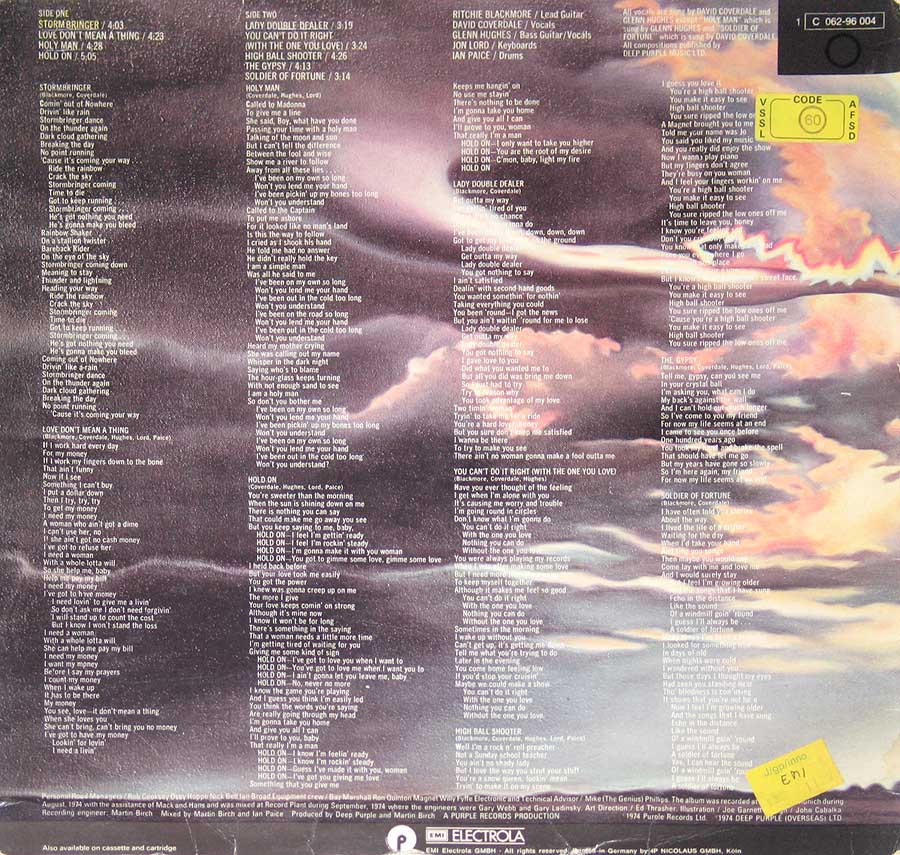
The musical exploration on "Stormbringer" was a double-edged sword. Tracks like the title track and "Lady Double Dealer" showcased a newfound groove, a funk-laden swagger that was both infectious and unexpected. The soulful vocals of David Coverdale, a stark departure from the raw power of Ian Gillan, soared over the music, adding a layer of sophistication and sensuality. Yet, this sonic departure did not come without controversy. The album's funk and soul influences divided fans, with some embracing the band's evolution while others longed for a return to their hard rock roots. The growing tension between Ritchie Blackmore and the rest of the band over the album's direction was palpable, ultimately leading to Blackmore's departure and the formation of Rainbow.
The production team, consisting of Deep Purple themselves and the seasoned Martin Birch, faced the challenge of capturing this eclectic mix of sounds on tape. The recording studio, Musicland Studios in Munich, Germany, became a cauldron of creativity, where the band's sonic experiments were brought to life. The German-pressed vinyl itself, a symbol of the band's international reach, carried the fruits of these labors. The production was crisp and clean, allowing the diverse instrumentation to shine through.
"Stormbringer" was not without its flaws. Some critics derided it as a misguided attempt to chase trends, a betrayal of the band's hard rock roots. Others hailed it as a bold step forward, a testament to the band's willingness to evolve. Regardless of one's stance, "Stormbringer" remains a fascinating and significant chapter in Deep Purple's storied history. It is an album that defies easy categorization, a tempestuous mix of genres and influences that showcases a band at a crossroads, wrestling with its own identity and pushing the boundaries of its sound. The album's legacy is also marked by its notable tracks, including the hard-hitting title track, the funky "The Gypsy," and the soulful ballad "Soldier of Fortune," which have become fan favorites over the years.





.jpg)