In 1974, the world was still licking its wounds from the Vietnam War, Nixon's Watergate scandal was unfolding, and rock 'n' roll was a battleground for souls. Amidst this turbulent backdrop, Deep Purple, the British hard rock behemoths, were in the midst of their own identity crisis. Founding frontman Ian Gillan and bassist Roger Glover had departed, leaving a gaping hole in the band's sound and soul. But like a phoenix rising from the ashes, Deep Purple emerged with a new lineup and a scorching new album: "Burn."
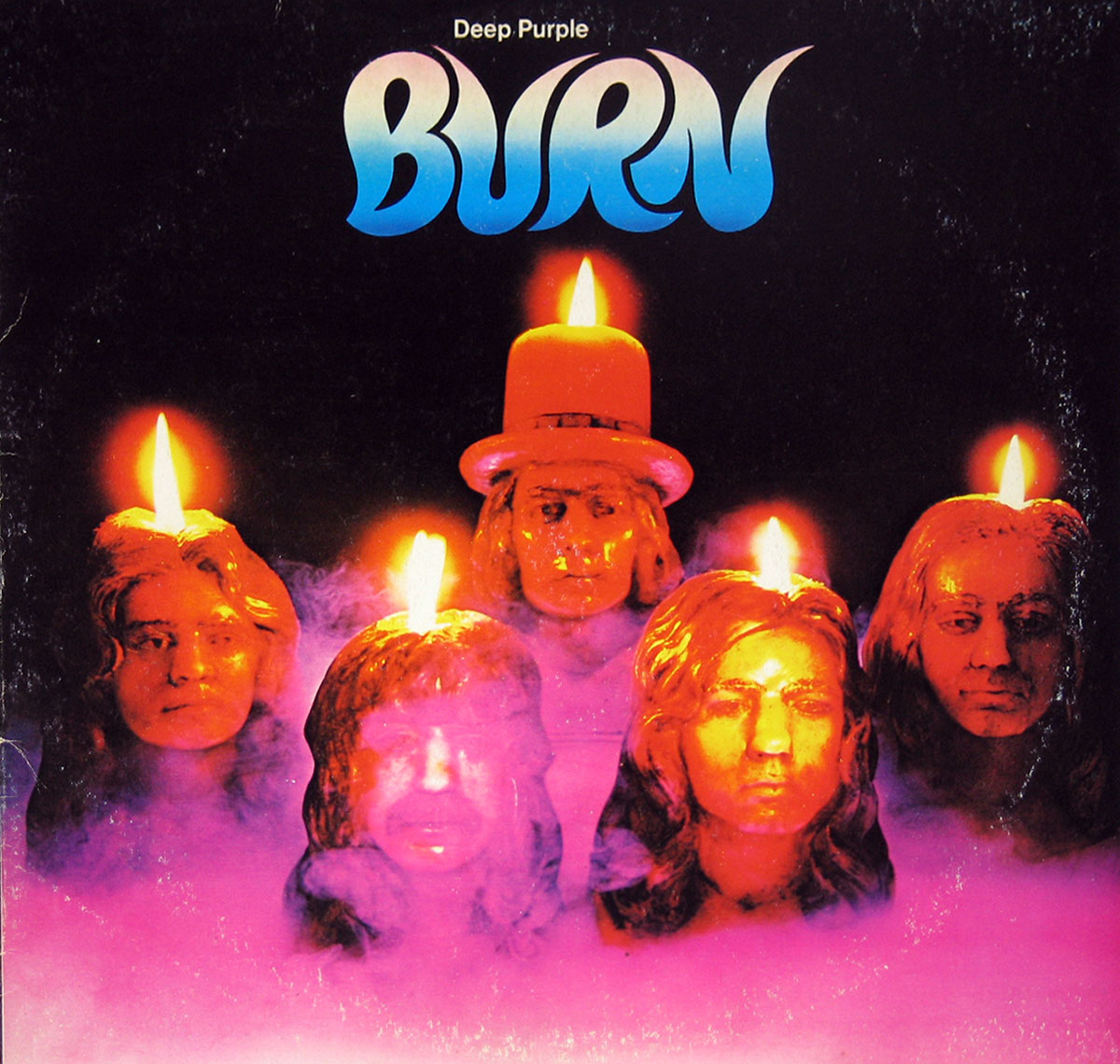
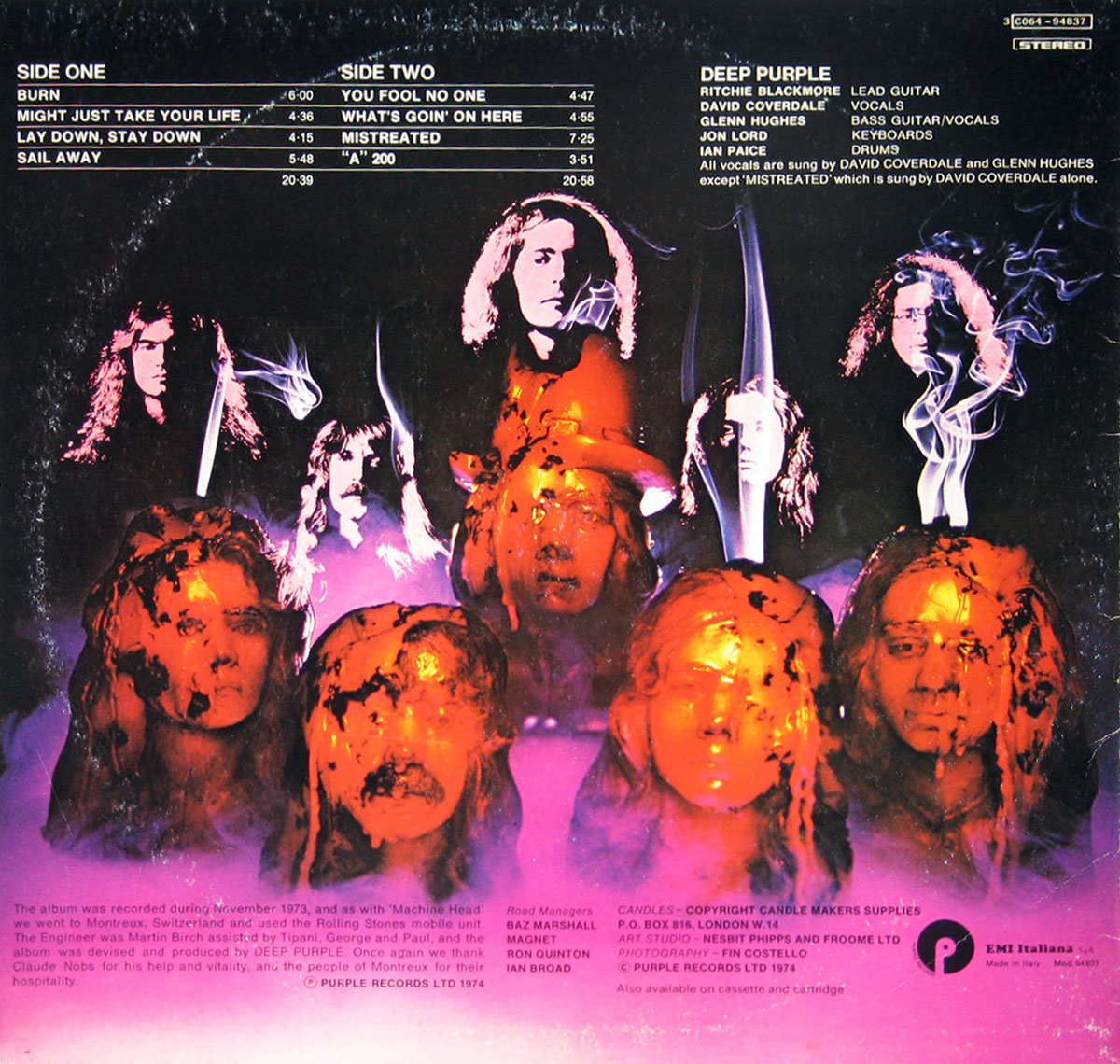
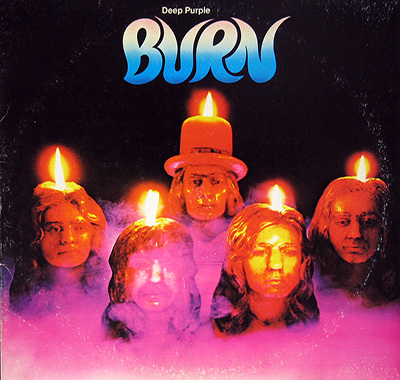
The Italian pressing of "Burn" is a particularly intriguing artifact of this era. It's not just a record; it's a snapshot of a band reinventing itself in a world on fire. The album cover, with its fiery typography and demonic imagery, hinted at the musical inferno contained within. The album itself was a major turning point for Deep Purple, marking the debut of both David Coverdale and Glenn Hughes. Coverdale, with his bluesy swagger, and Hughes, with his funky grooves and high register vocals, brought a fresh energy to the band's sound.
"Burn" was a bold departure from Deep Purple's previous sound. This wasn't your dad's Deep Purple; this was a band embracing a wider range of influences, from soul to jazz to heavy metal. The addition of twin vocals, with Coverdale and Hughes sharing lead duties, added a new dimension to their songwriting.
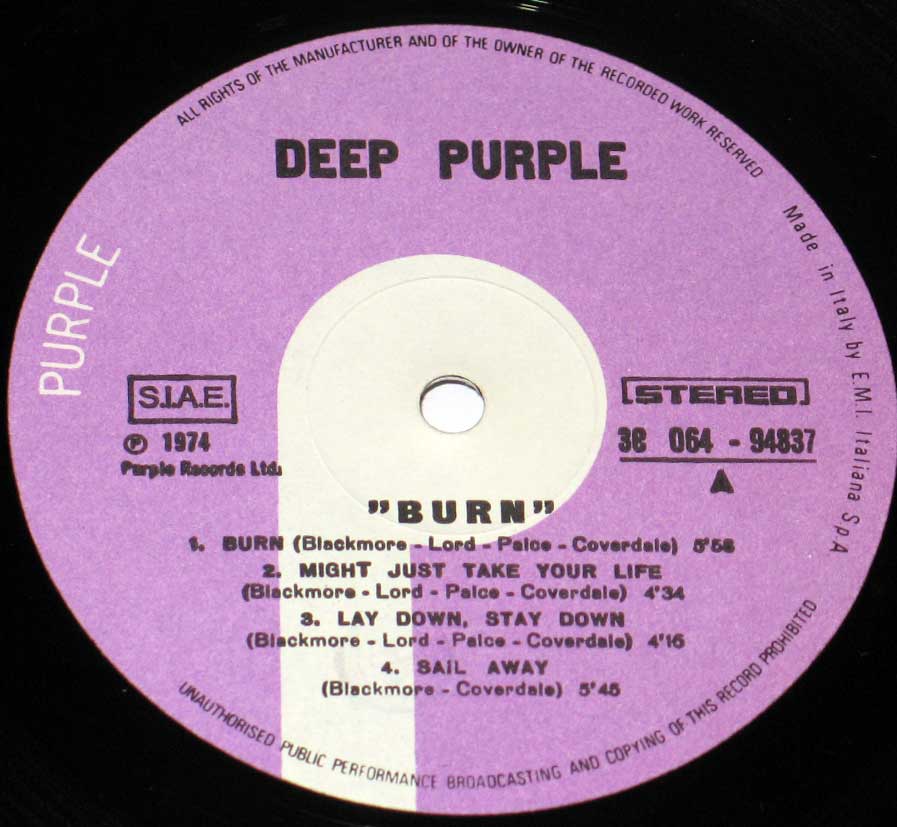
The album opener, "Burn," is a relentless assault of riffs and rhythms, a declaration of the band's newfound energy. It quickly became a staple of their live shows and remains a fan favorite to this day. "Might Just Take Your Life" is a funky, swaggering tune that showcases Hughes' bass prowess and Coverdale's charismatic vocals. It's a testament to the band's willingness to experiment, to push the boundaries of their genre.
"Lay Down, Stay Down" is a bluesy rocker with a driving beat and a soaring chorus. Coverdale's vocals are at their most soulful, while Blackmore's guitar work is a masterclass in controlled chaos. The song's lyrics, exploring themes of defiance and rebellion, resonated with a generation disillusioned with the status quo.
"Sail Away" is a power ballad with a haunting melody and a melancholic atmosphere. It's a reminder that Deep Purple weren't just about aggression; they could also deliver moments of tenderness and vulnerability. "Mistreated" is a blues epic that showcases Coverdale's vocal range and emotional depth. It's a raw, cathartic song that has become a classic in its own right, covered by numerous artists over the years.
"Burn" was recorded at the Montreux Casino in Switzerland, using the Rolling Stones' mobile recording studio. This unconventional setup gave the album a raw, live feel, capturing the band's energy and intensity. The production, helmed by the legendary Martin Birch, is crisp and clear, allowing each instrument to shine through.
The Italian pressing of "Burn" is a sonic testament to this era of Deep Purple. The vinyl crackles with energy, the music leaps out of the speakers with a ferocity that's both exhilarating and terrifying. It's a reminder that rock 'n' roll is more than just entertainment; it's a force of nature, a primal scream against the injustices of the world.
.jpg)