|
Collectors information & Album Description:
The Beatles are arguably one of the most iconic and influential bands in the history of modern music. Their music has been a source of inspiration for generations of musicians and fans alike. One of their most famous albums is the 1969 LP "Abbey Road." .
The Beatles' "Abbey Road" album was released in 1969. It was the band's 11th studio album and the last album recorded before their breakup. The album was recorded at Abbey Road Studios in London and produced by George Martin.
The album features some of the Beatles' most famous songs, including "Come Together," "Something," and "Here Comes the Sun." The album also features the famous medley on Side 2, which includes "Golden Slumbers," "Carry That Weight," and "The End."
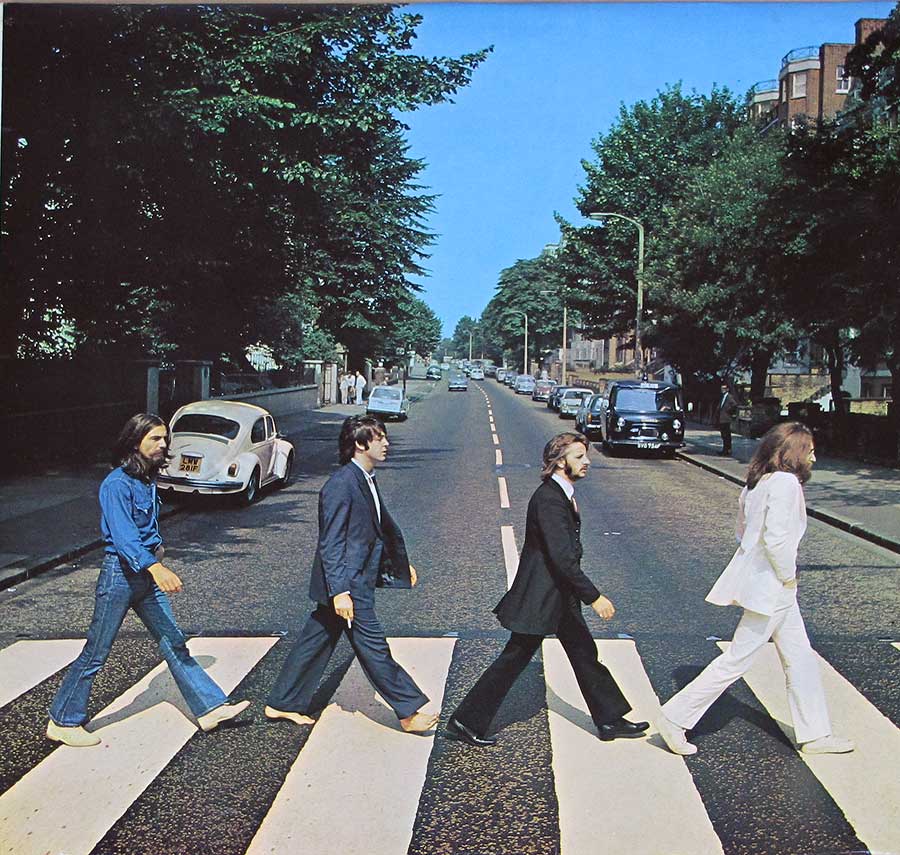
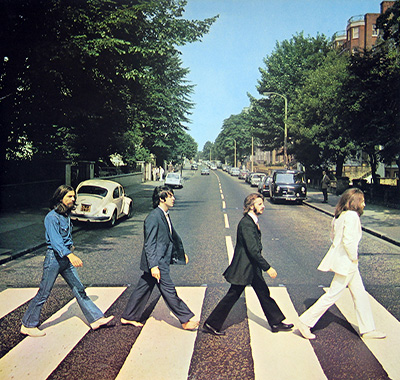
"Abbey Road" is significant for several reasons. Firstly, it marked the end of the Beatles' recording career. The band broke up in 1970, and "Abbey Road" was their last recorded album. Secondly, the album features some of the Beatles' most famous and memorable songs, which have become classics in their own right. Thirdly, the album's cover art has become iconic, featuring the Beatles walking across the zebra crossing outside Abbey Road Studios.
The album is also significant for its use of innovative recording techniques. The Beatles were always pushing the boundaries of what was possible in the recording studio, and "Abbey Road" was no exception. The album features innovative use of stereo panning, sound effects, and studio tricks, such as the use of backward tape loops.
"Abbey Road" had a massive impact on popular music and culture. The album's songs have been covered by countless artists over the years, and the album itself has sold millions of copies worldwide. The album's cover art has also become iconic, with the zebra crossing outside Abbey Road Studios becoming a popular tourist destination.
The album's innovative use of recording techniques also had a significant impact on the music industry. The Beatles' use of stereo panning and sound effects set a new standard for what was possible in the recording studio, and many artists have since tried to emulate their techniques.
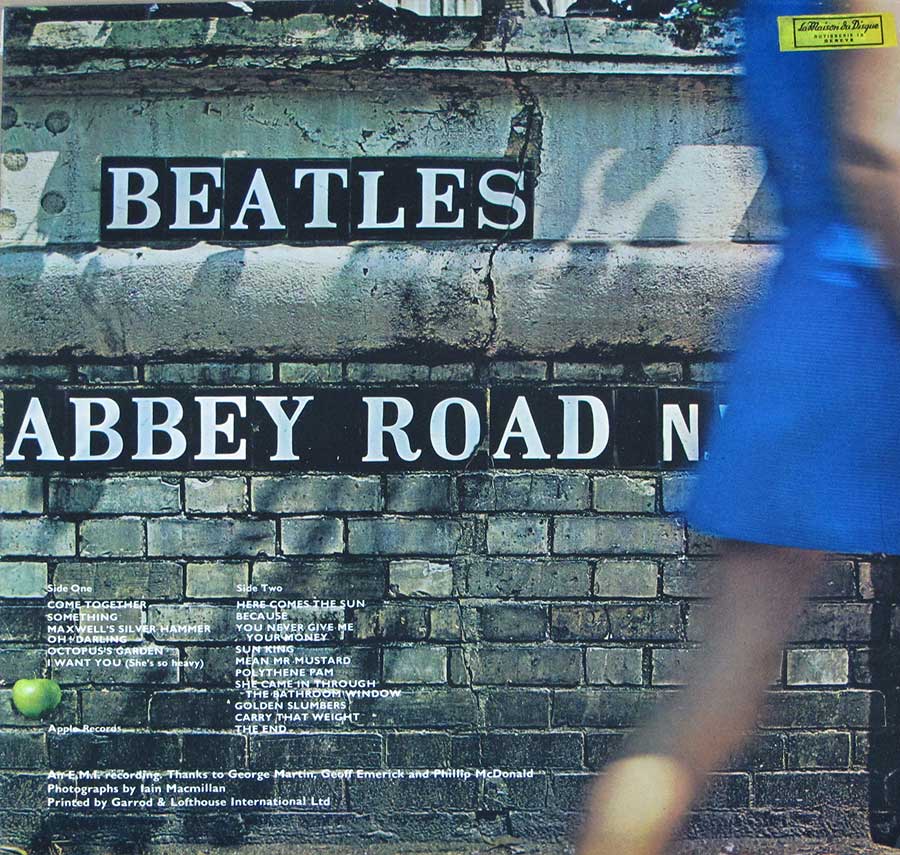
The misaligned apple on the back cover of The Beatles' "Abbey Road" album is a well-known and often-discussed detail among fans and collectors. The apple on the back cover of the album appears to be tilted or misaligned, with the top of the apple not aligning with the stem.
The reason for the misaligned apple is not entirely clear, and there are several theories as to why it was done. One theory is that it was a mistake made during the printing process that was not noticed until the album covers had already been produced. Another theory is that it was a deliberate move by the album's designer, John Kosh, as a playful nod to the band's record label, Apple Records.
In an interview with Rolling Stone magazine, Kosh explained that the misaligned apple was intentional, saying, "It was just a joke, really. We had this big discussion about the typeface and the layout and all that, and then I said, 'Let's just do something silly.' And I turned the apple around."
Regardless of the reason, the misaligned apple has become a famous detail associated with the album and has added to the album's overall mystique and legend. Many fans and collectors consider a misaligned apple to be a sign of an original, early pressing of the album and a desirable addition to their collection.
This first issues of the Beatles "Abbey Road" can be recognized by the following attributes:
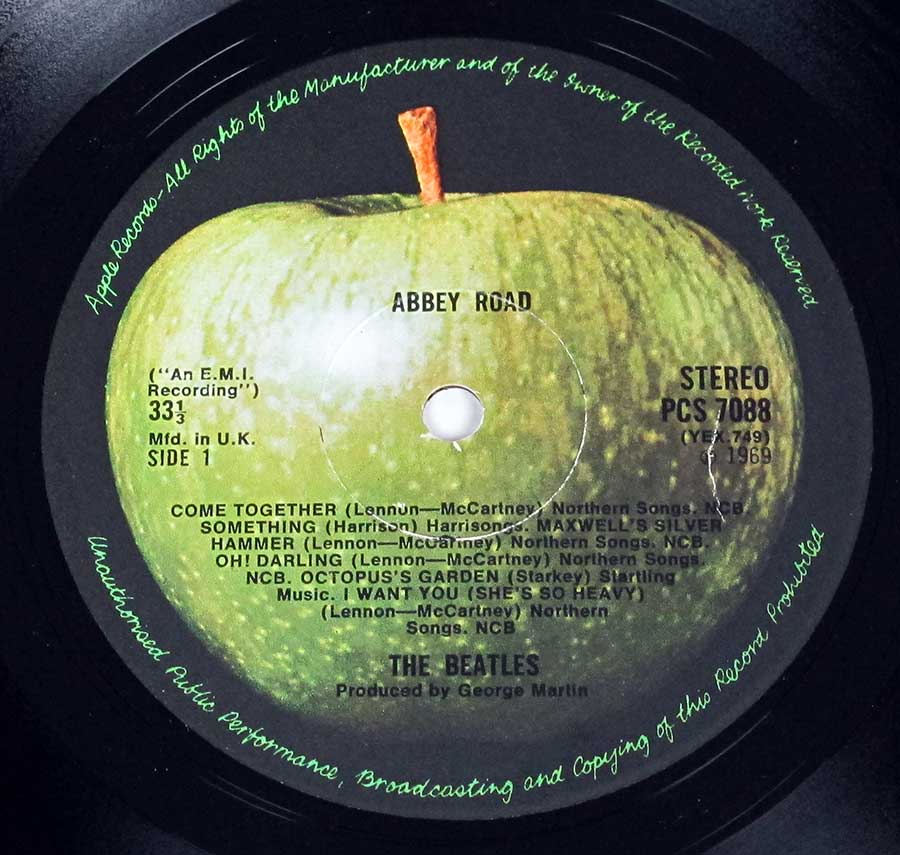
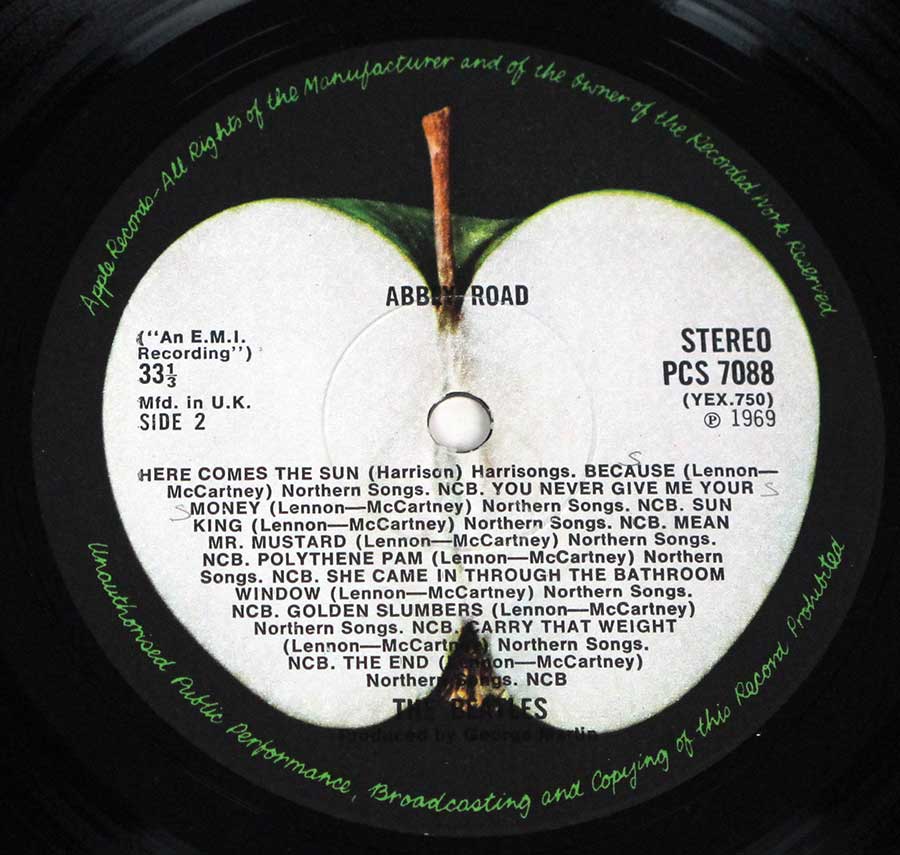
Label: The standard dark green Apple label The label does NOT have "Sold in the U.K..." statement.
The label has "Mfd. in U.K.".
The label has "Produced by George Martin"
Matrix/Stamper codes: YEX 749-2, YEX 750-1
|