"Abbey Road" (1969) Album Description:
"Abbey Road" is what happens when a band is half exhausted, half brilliant, and still too proud to leave the room quietly. The Beatles were fraying by 1969, everybody knows that part, but this record does not sound like four men politely filling out the paperwork. It sounds expensive, tense, sly, and weirdly controlled: Lennon dragging mud in on "Come Together", McCartney tightening every loose screw he can find, Harrison walking in with two songs strong enough to embarrass most people’s entire careers, and Ringo doing the unglamorous work of making the whole thing breathe. British beat music had already swollen into something bigger by then, but here it hardens, stretches, and puts on a sharper suit without forgetting how to write a tune.
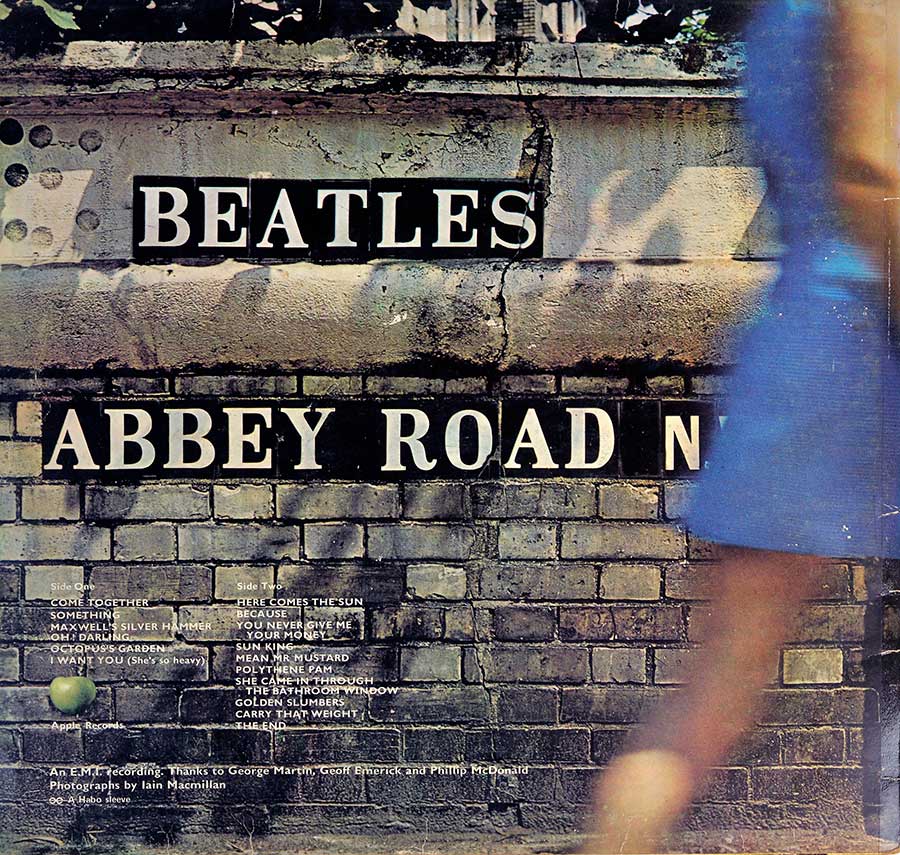
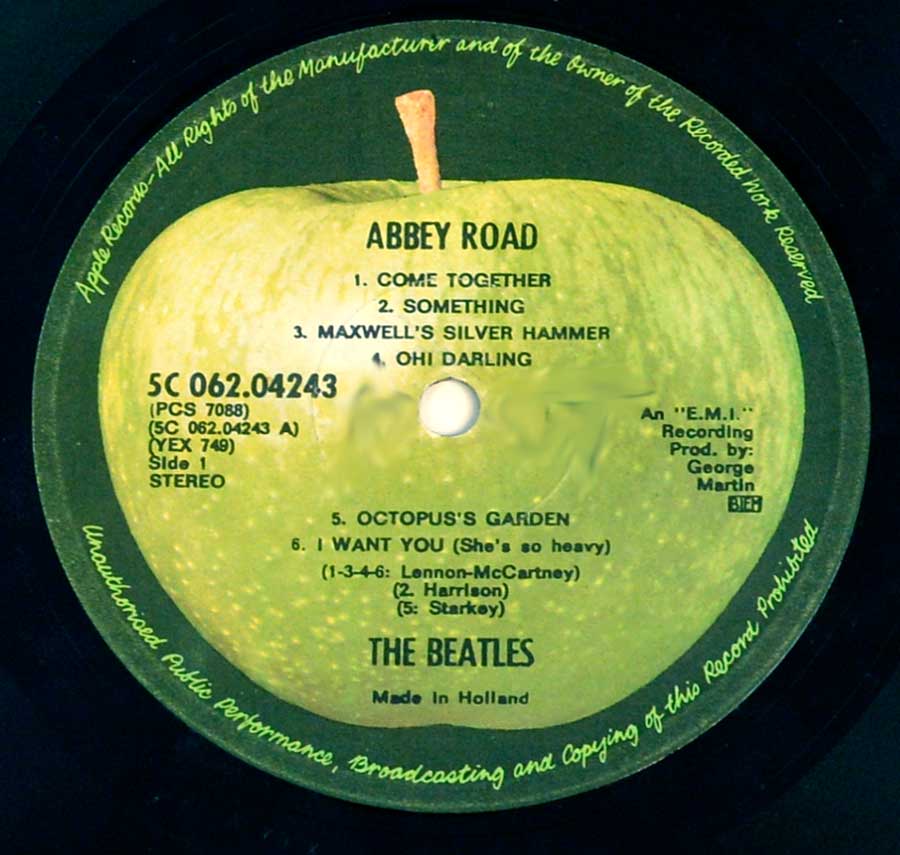
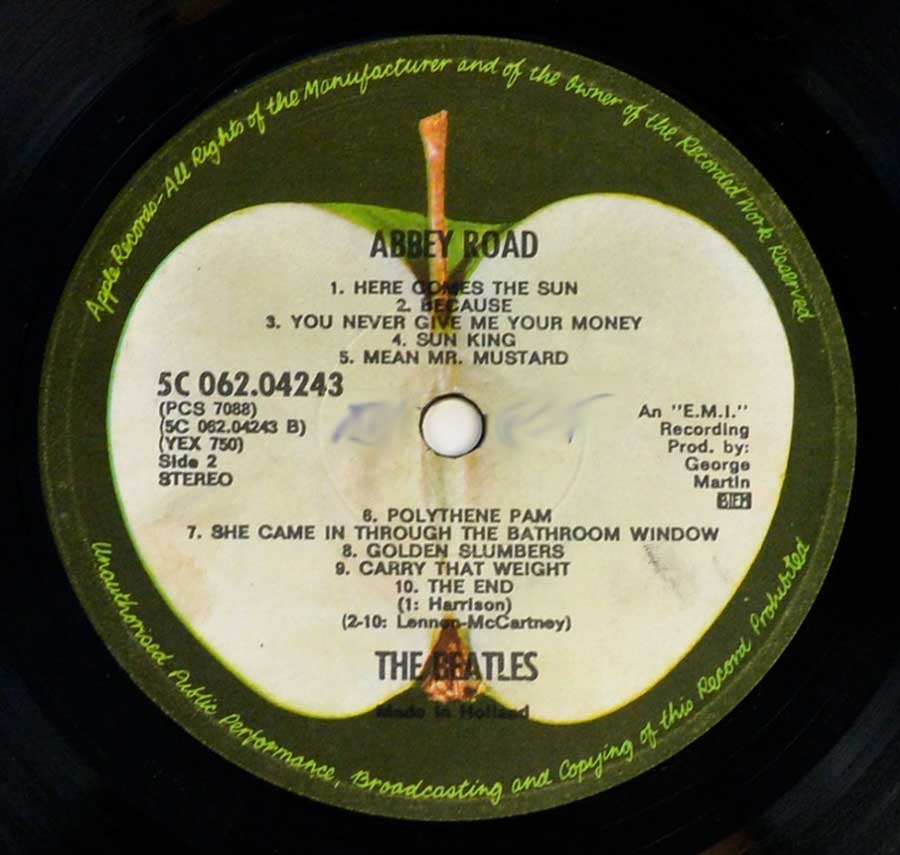
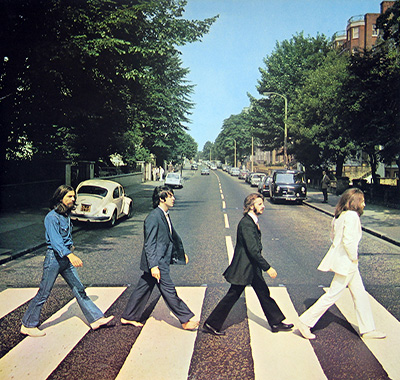
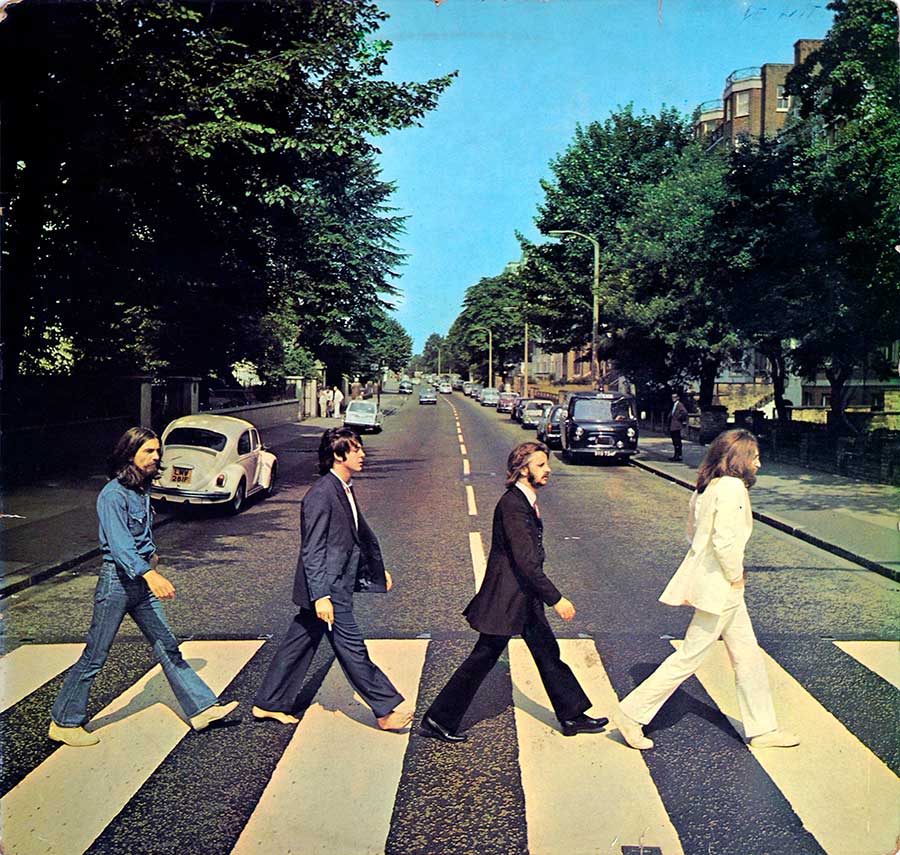
The obvious story is the zebra crossing and the breakup hanging in the air, but the better story is tucked in the details collectors actually handle: the Dutch sleeve with its slightly softer blacks, the back cover text block pressed a touch too tightly, the matte Apple labels, and that small delicious headache where the record itself belongs to a 17-track album while the original cover and labels still act as if "Her Majesty" never happened. Open the rest and the album stops behaving like a monument and starts acting like a real object again, which is much more interesting.
Britain in 1969 was not running on clean Swinging London optimism anymore. The country had protest in the air, money nerves, class tension that never really left, and a pop culture already learning how quickly the party could turn sour. Rock was thickening up. Led Zeppelin had brute force and swagger, The Who were pushing scale and drama, The Rolling Stones were getting dirtier and more feral, and King Crimson had just kicked open the door for full-blown progressive excess. Against that lot, "Abbey Road" did something more cunning: it sounded polished enough to pass for elegance, then slipped in obsession, fatigue, jokes, spite, tenderness, and a long stitched-together suite on Side Two that should by rights feel overdesigned but somehow moves like it has one nervous system.
George Martin deserves real credit here, not the lazy saintly version people wheel out when they cannot be bothered to describe what a producer actually does. He gave the record shape. He kept it from slumping into indulgence. Geoff Emerick and Philip McDonald helped translate all that late-period Beatles ambition into something with punch, width, and discipline, while the studio itself stopped being a room and started behaving like an instrument again. That glossy surface on "Abbey Road" is not softness. It is engineering with a straight back.
Side One still feels like a proper album side, not a theory. "Come Together" lurches in with that narcotic drag, all low-end crawl and side-eye. "Something" turns the whole room warmer without getting sentimental about it. "Maxwell's Silver Hammer" is McCartney’s music-hall mischief run through a grinning meat grinder, which either delights you or makes you want to throw something, sometimes both. "Oh! Darling" is raw-throated and stubborn, "Octopus's Garden" is lighter than its surroundings but not throwaway, and "I Want You (She’s So Heavy)" ends the side like a locked door being kicked again and again until the tape simply gives up.
Side Two is where the record either wins you completely or leaves you admiring it from across the room. "Here Comes The Sun" and "Because" ease you in with air and precision, then the medley begins and the album starts behaving less like a stack of songs and more like a chain of linked impulses. Snatches of music hall, broken confessions, little character sketches, ragged rock and roll, and formal studio stitching all get forced into the same bloodstream. Plenty of progressive records from the period wanted to sound monumental. This one sounds mobile. Big difference.
Harrison is the quiet correction running through the whole thing. By 1969 he was no longer the junior partner expected to wait his turn while Lennon and McCartney argued about the wallpaper. "Something" and "Here Comes The Sun" are not decorative contributions tucked politely into the running order; they are center-of-gravity songs. That matters, because one reason "Abbey Road" feels richer than some earlier Beatles LPs is that the internal power balance had become too unstable to fake anymore. The cracks were real, and the music got sharper because of it.
There was no proper scandal caused by the album itself, unless one counts the endless "Paul is dead" circus, which said more about overheated listeners than about the record. The cover photo practically invited that nonsense: barefoot Paul, funeral-procession theories, the Volkswagen, the usual treasure hunt for people with too much time and not enough daylight. The more useful collector wrinkle is simpler and better. Original copies like this Dutch pressing still carry the old visual truth of the package: the back cover and labels stop at "The End", while the album itself sneaks "Her Majesty" in afterward like a smirk from the cutting room.
Found one Dutch copy years ago in a rack where the owner had filed it under clean pop, which was absurd the moment the needle hit "I Want You". The sleeve felt lighter than a UK one, the print less arrogant, but the record still knew exactly how to darken a room after midnight.
That Dutch pressing angle is worth keeping separate from the music but not ignoring. The front cover image is a little less punchy than the British originals, blacks warmer, contrast slightly backed off. The back cover brickwork flattens sooner, the lower-left track text looks cramped, and the Apple labels have that matte, handled honesty collectors trust more than showroom gloss. "Made in Holland" does not make the album different in spirit, but it does change the way the object ages in your hands. And records are objects before they become opinions, no matter what the hi-fi snobs say.
What still gets me is how unsentimental the record is for something so often treated like a farewell. There is grace here, yes, but also calculation, tension, craft, vanity, exhaustion, and the occasional whiff of someone trying to keep the whole machine from blowing apart before teatime. That is why "Abbey Road" lasts. Not because it floats above human mess, but because it traps the mess inside something that sounds almost impossibly finished.