Album Description:
Historical Context of 1979
The year 1979 was a turbulent and transitional moment in both world history and the music industry. Politically, the Cold War remained tense with events such as the Soviet invasion of Afghanistan looming by year’s end, while in the West, cultural shifts were taking place as the optimism of the early 1970s gave way to a harder-edged realism. Musically, disco fever was still dominating charts, punk rock had shaken up the establishment in the late 1970s, and a new wave of heavy metal was forming in the United Kingdom. It was also the year that Michael Jackson’s “Off the Wall” broke through as a solo sensation, and Pink Floyd released “The Wall,” cementing rock’s ability to combine mass appeal with artistic ambition. Against this backdrop, Scorpions emerged as one of Europe’s most prominent hard rock and heavy metal acts, pushing German rock onto the international stage with their sixth studio album, “Lovedrive.”
The Music Genre and Peers
“Lovedrive” firmly belongs in the hybrid zone between heavy metal and hard rock. This was a period when bands were refining the hard rock structures of the 1970s into something heavier and more melodic. Groups like Judas Priest were defining the metallic template with albums such as “Hell Bent for Leather,” while AC/DC, with “Highway to Hell,” pushed bluesy hard rock toward a stadium-filling sound. Other contemporaries included UFO, Thin Lizzy, and Rainbow—bands whose blend of riffs, soaring vocals, and melodic sensibilities paralleled Scorpions’ evolving direction. Within this environment, Scorpions managed to stand out by combining European precision with a fiery intensity that connected with audiences worldwide.
Musical Exploration in "Lovedrive"
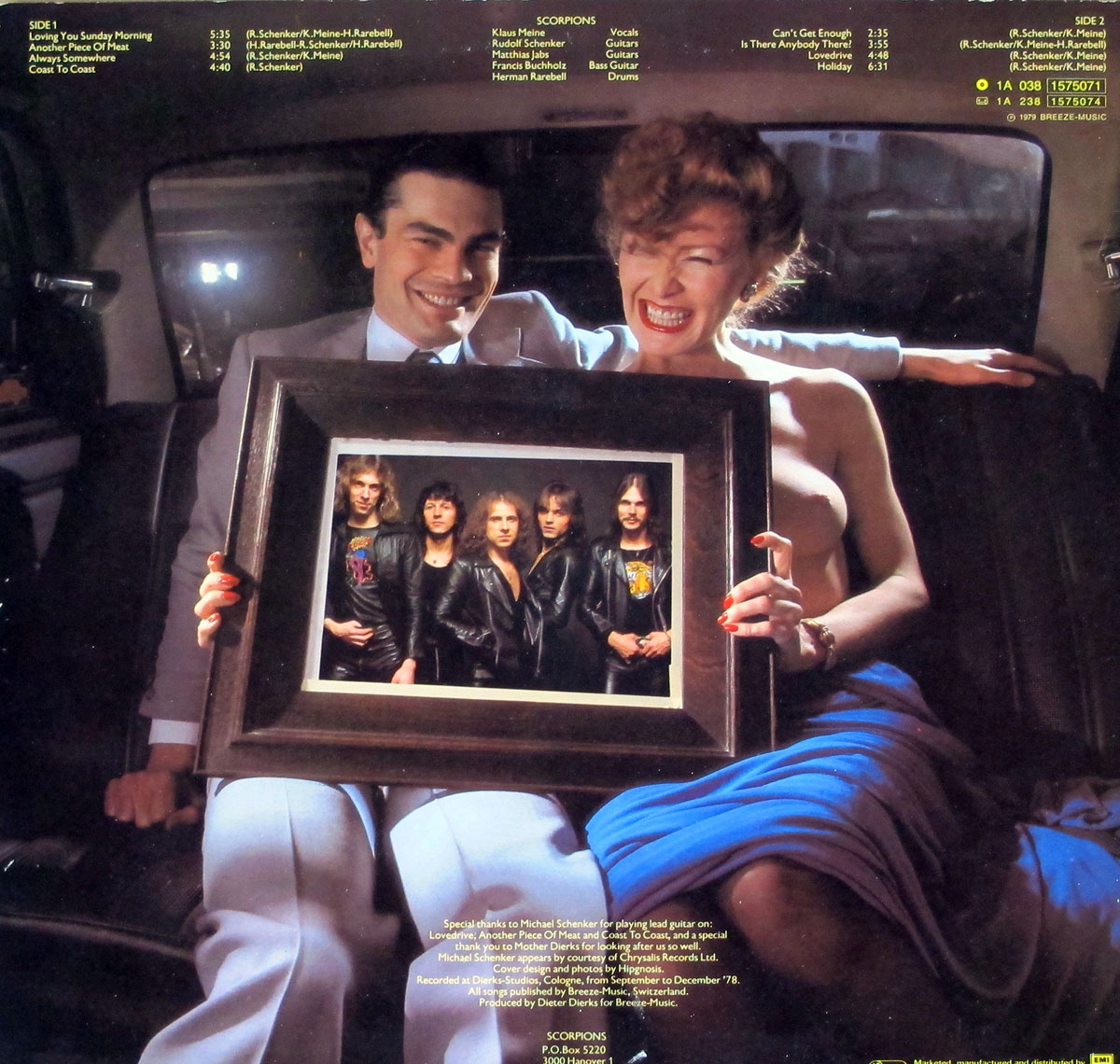
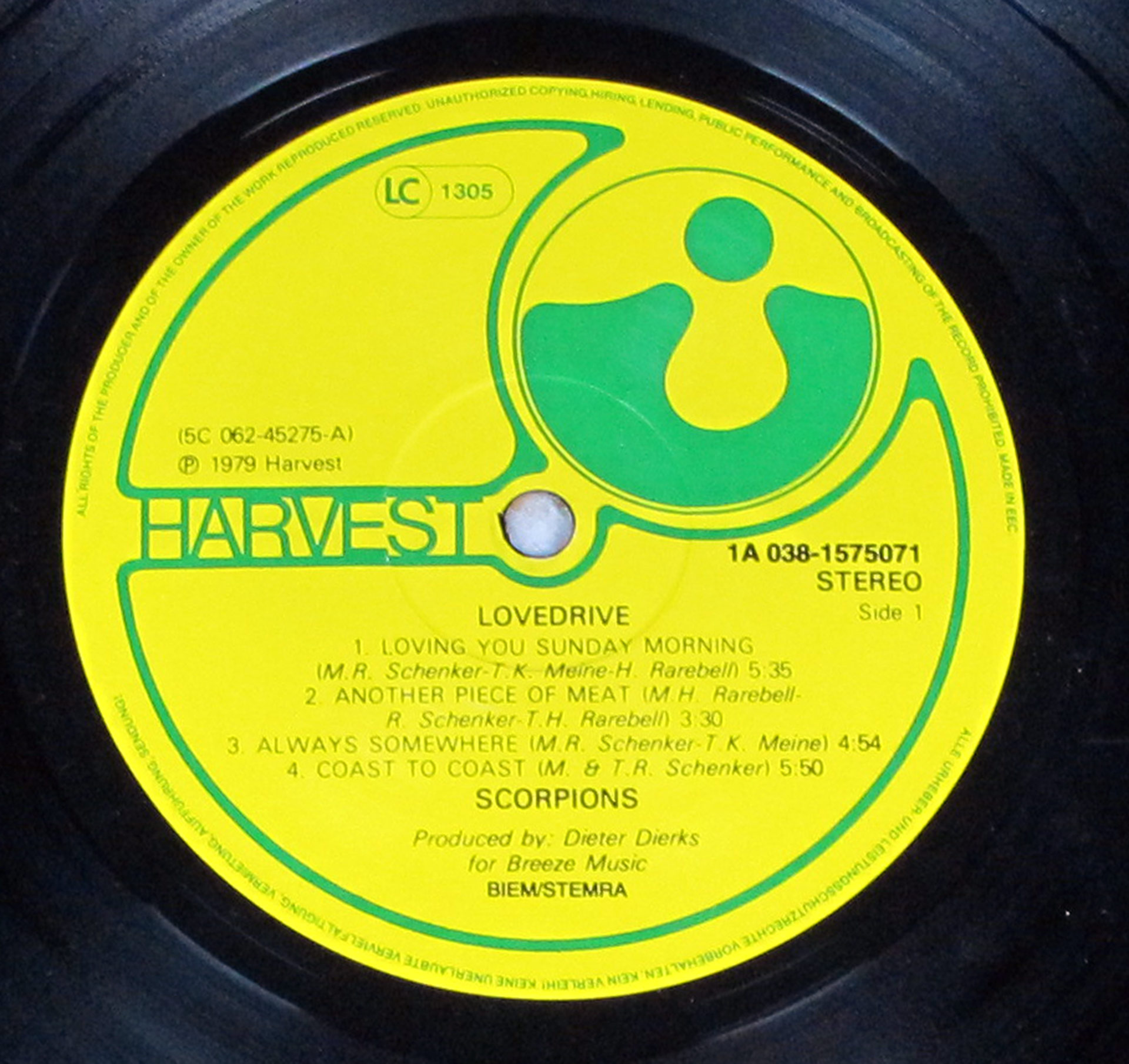
“Lovedrive” marked a turning point in the band’s musical identity. While earlier Scorpions records carried psychedelic and experimental undertones, this album introduced a polished, melodic approach that would define their signature style through the 1980s. The tracks alternate between hard-driving rockers and heartfelt ballads, showcasing both power and sensitivity. Songs such as “Loving You Sunday Morning” and “Another Piece of Meat” exemplify the heavy riff-driven energy, while “Holiday” and “Always Somewhere” highlight their ability to write melodic ballads that resonated deeply with fans. The instrumental “Coast to Coast” further demonstrated their willingness to explore mood and atmosphere without words. This versatility gave the band international appeal and set the stage for their global success in the following decade.
Key Figures in the Recording
Central to the creation of “Lovedrive” was producer Dieter Dierks, a pioneering German producer and studio owner whose technical mastery and disciplined approach helped shape the album’s refined sound. His Dierks Studios became the cradle for many of the band’s most important works. The lineup itself included Klaus Meine’s distinctive and powerful vocals, Rudolf Schenker’s rhythmic guitar drive, and Matthias Jabs, who had just joined the group and immediately made his mark with a fluid, modern guitar style. Michael Schenker, Rudolf’s younger brother and a celebrated guitarist in his own right, contributed lead guitar work on three songs, adding a fiery and unpredictable edge. Together, these figures created a synergy that would push the Scorpions into their classic era.
Scorpions: Formation and Line-up Shifts
The Scorpions were formed in Hannover, West Germany, in 1965 by guitarist Rudolf Schenker. Initially influenced by beat music and psychedelic rock, the band gradually shifted toward hard rock and heavy metal. Throughout the 1970s, the lineup evolved frequently, with notable contributions from virtuoso guitarist Uli Jon Roth, whose neo-classical style left a strong imprint on the band’s sound. By the time of “Lovedrive,” Roth had departed, making way for Matthias Jabs and, temporarily, Michael Schenker. This shuffle brought both stability and creative sparks. Klaus Meine’s role as frontman grew increasingly central, his distinct high-pitched voice becoming a defining element of the Scorpions’ identity. “Lovedrive” thus captures a moment of transition where the band settled into the configuration that would carry them into global superstardom.
Controversies Surrounding the Album
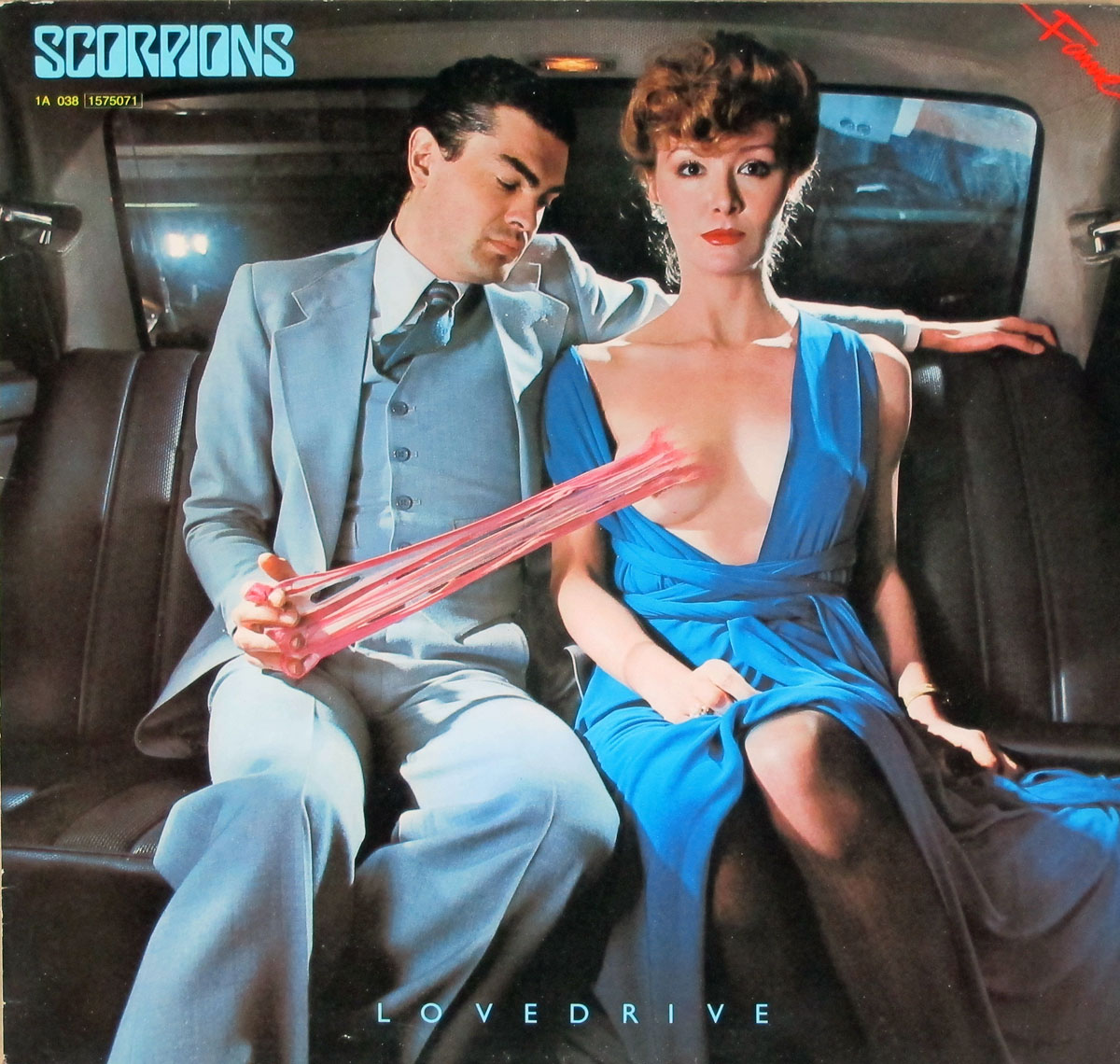
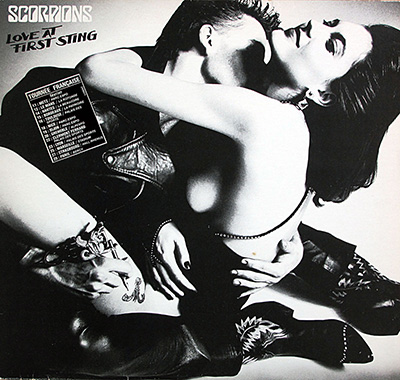
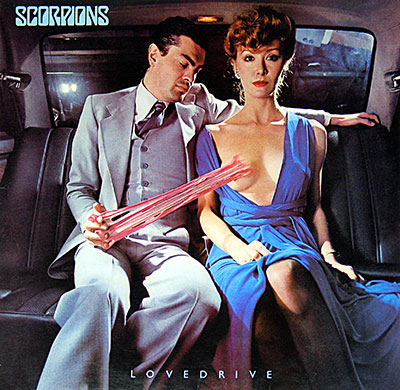
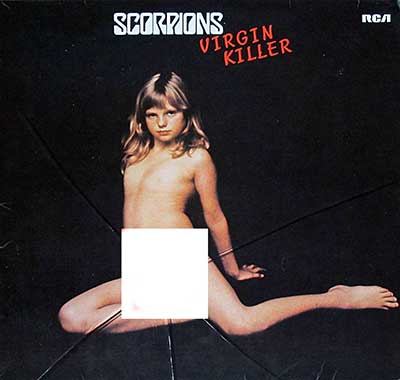
Beyond its music, “Lovedrive” became infamous for its album cover. Designed by the British art group Hipgnosis, the image depicted a suited man and woman in the back of a car, with bubblegum stretched from the woman’s exposed breast to the man’s hand. The provocative artwork sparked outrage and was considered one of the more scandalous covers of its time. In some markets, it was banned or replaced with alternative imagery, while in others it remained uncensored. Despite—or perhaps because of—this controversy, the cover cemented the album’s notoriety and highlighted the Scorpions’ willingness to court the taboo, a pattern that continued with later albums such as “Virgin Killer” and “Love at First Sting.” The debate over its appropriateness underscored the cultural clashes of the era, where artistic freedom collided with social conservatism.
About the model on the cover's photos
Some debate and confusion over the years about the identity of the model on the front cover of the "Lovedrive" LP by The Scorpions. Some sources have identified the model as Caroline Munro, while others have identified her as Lenka or Lena Nitro.