In Trance, the fifth studio album by the German rock band Scorpions, released in 1975, isn't just an album. It's a statement, a rebellion, and a cultural artifact all rolled into one. And when you hold the uncensored UK vinyl pressing in your hands, with the full, unabashed nudity of the cover model staring back at you, it's like holding a piece of rock and roll history that's as raw and unfiltered as the music itself.
Let's rewind a bit. The Scorpions, formed in 1965, were already veterans of the German music scene by the mid-70s. They had honed their hard rock sound through years of relentless touring and a string of albums that were steadily gaining them recognition beyond their homeland. But In Trance was different. It was their breakthrough, the album that catapulted them to international stardom and cemented their place in the annals of rock and roll.
Produced by the legendary
Dieter Dierks
, who would go on to produce many of the Scorpions' most iconic albums, In Trance was recorded at Dierks Studios in Cologne, Germany. The album saw the band pushing the boundaries of their musical exploration, blending their signature hard rock sound with elements of progressive rock and psychedelia. The result was a sonic landscape that was both heavy and melodic, raw and polished, and, above all, undeniably powerful.
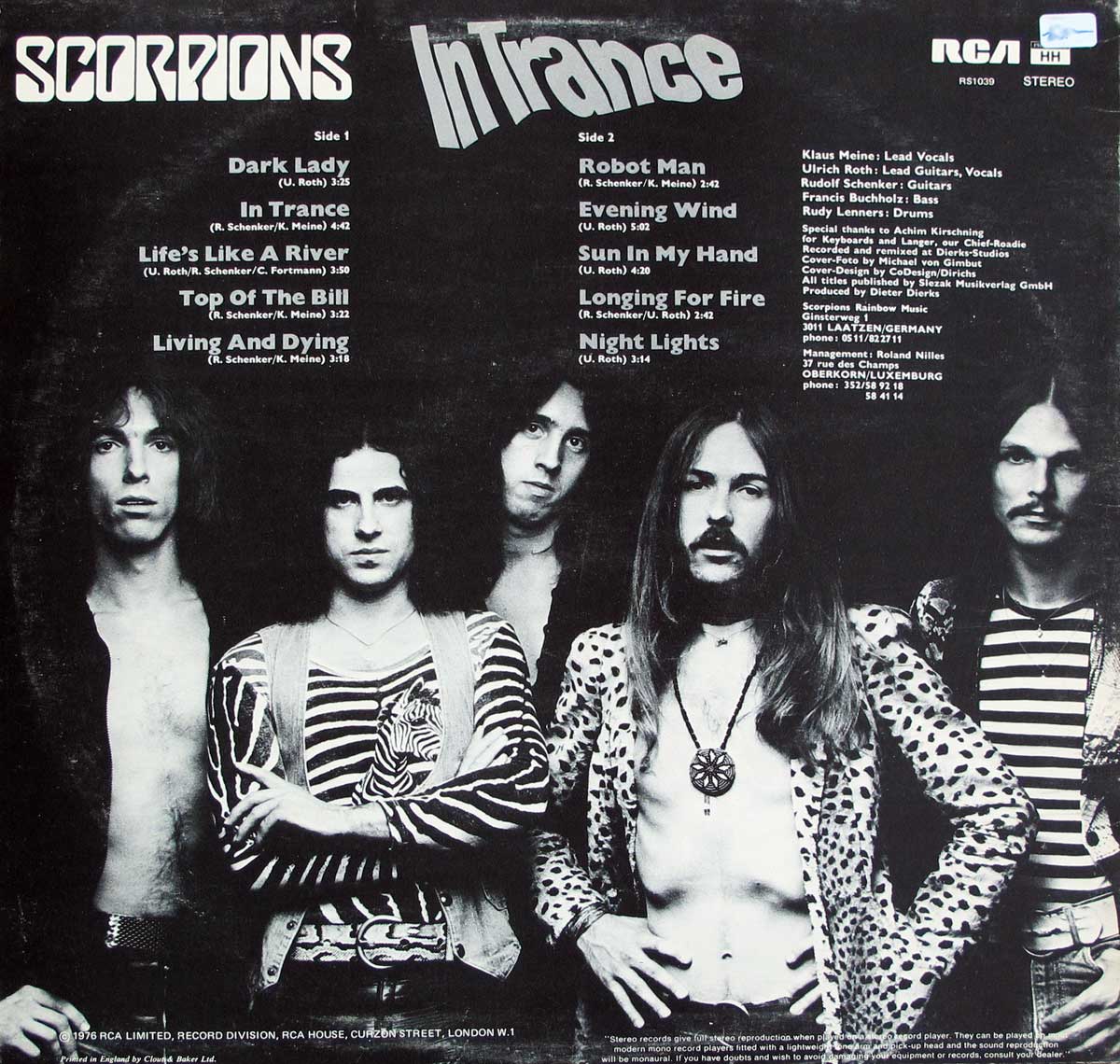
From the opening riff of "Dark Lady" to the epic closing notes of "In Trance," the album is a relentless assault on the senses. Rudolf Schenker's guitar work is a force of nature, Klaus Meine's vocals soar to breathtaking heights, and the rhythm section of Francis Buchholz and Rudy Lenners provides a rock-solid foundation for the band's sonic explorations.
The album's standout tracks, like the anthemic "In Trance," the hard-driving "Robot Man," and the emotionally charged ballad "Life's Like a River," showcase the band's versatility and songwriting prowess. The interplay between Schenker's and Uli Jon Roth's guitars adds another layer of depth and complexity to the music, creating a sound that is both intricate and powerful.
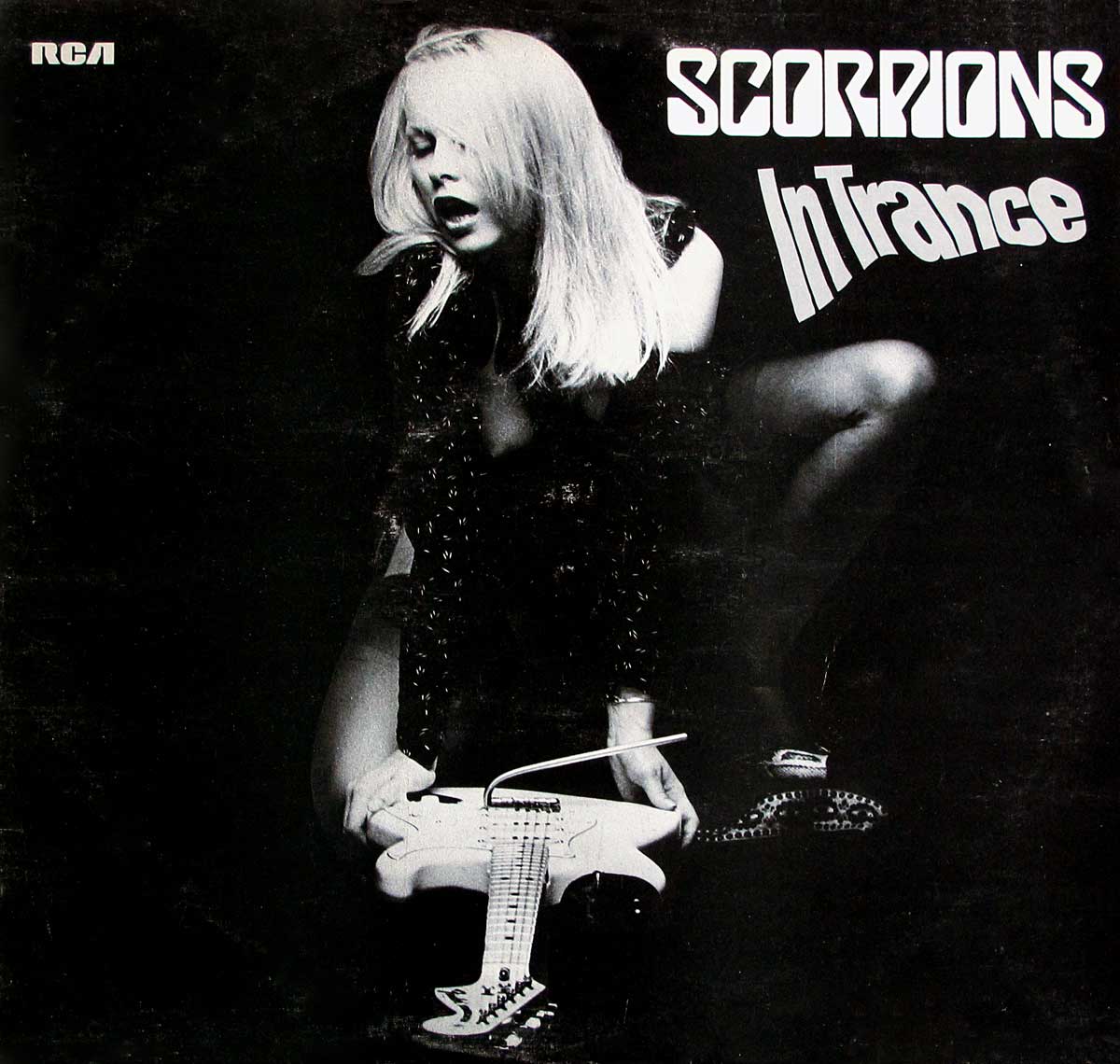
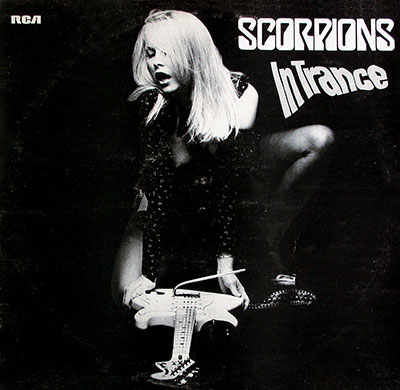
But it wasn't just the music that made In Trance so impactful. The album cover, featuring a young girl with a bare breast exposed, caused a massive uproar upon its release. It was deemed too provocative, too explicit, and was quickly censored or banned in many countries. This controversy, however, only served to fuel the album's notoriety and mystique, turning it into a forbidden fruit that rock fans around the world craved.
The uncensored UK vinyl pressing of In Trance is a testament to the album's rebellious spirit. It's a reminder of a time when rock and roll wasn't afraid to push boundaries, to challenge norms, and to provoke thought. It's a piece of history that captures the essence of a band at the peak of their creative powers, unafraid to express themselves fully and without compromise.
The controversy surrounding the cover art has become an inseparable part of the album's legacy, sparking debates about censorship, artistic expression, and the sexualization of minors. It also highlights the changing cultural landscape, as what was once considered shocking is now often viewed through a more nuanced lens.
The model featured on the front cover of Scorpions' "In Trance" album is Monique Froese. She posed for the cover art, which depicts her smashing a guitar while one of her breasts is exposed.
Monique Froese, born Monique Hubert, is a French model who gained recognition for her appearance on the cover of Scorpions' "In Trance" album. She was born on 19 December 1947, in Nancy, France. Monique Froese's involvement in the music industry is primarily associated with her participation in the album cover shoot.
So, if you're lucky enough to own a copy of this rare and controversial album, cherish it. It's not just a piece of vinyl; it's a portal to a time when rock and roll was dangerous, exciting, and full of unbridled passion. It's a reminder that the Scorpions, with In Trance, created a masterpiece that continues to resonate with fans decades after its release. It's an album that refuses to be silenced, an album that, like the sting of a scorpion, leaves a mark that refuses to fade.