Scorpion's Blackout The Story:
"Blackout" is Scorpions taking German heavy metal/hard rock and turning it into a precision-built arena weapon: razor hooks, tight muscle, and just enough menace to stop it ever feeling polite. Everything moves fast, the choruses hit like a thrown pint glass, and the whole record feels engineered to survive loud rooms, bad decisions, and the kind of nights you only admit to after the third coffee.
Where the band were standing in 1982
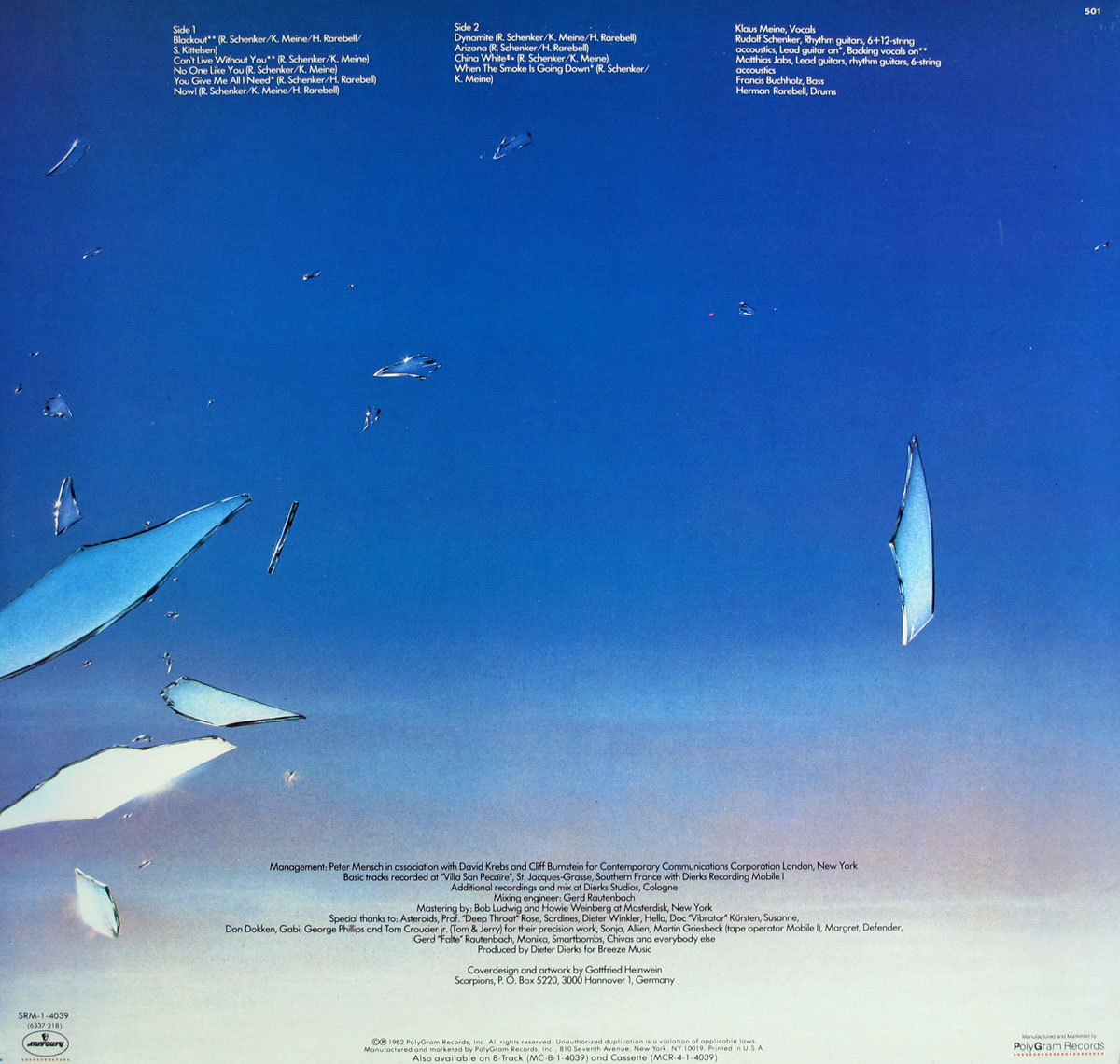
By the time this album hits, Scorpions aren’t acting like newcomers; they’re acting like a band that’s done the mileage and finally learned how to aim. The classic “Blackout” lineup is locked: Klaus Meine out front, Rudolf Schenker steering the riff machine, Matthias Jabs adding bright bite, Francis Buchholz keeping the low end tight, and Herman Rarebell punching the songs forward on drums. That stability matters here, because the record is all timing and control, not messy experimentation.
West Germany, 1982: the backdrop behind the amps
1982 in West Germany is a year of political snap-changes and economic arguments turning into government collapse, with Helmut Kohl taking over as chancellor after a constructive vote of no confidence. That kind of atmosphere doesn’t write riffs for you, but it does feed a culture where pressure feels normal and precision feels necessary. Metal and hard rock thrive in that kind of climate: loud certainty in a world that can’t stop renegotiating itself.
German music at the same moment
Here’s the funny contrast: while German-language pop and new wave were breaking wide with slicker, radio-friendly sounds, Scorpions are doing the opposite kind of crossover. They’re exporting a heavier language to international rock radio without softening the guitars into background decoration. It’s not “metal versus pop” as a moral drama, it’s just two different Germanys happening at once, sharing the same calendar.
What “German heavy metal / hard rock” means on this record
This isn’t the looser, bluesier hard rock of the early ’70s, and it’s not the speed-for-the-sake-of-speed extremity that would get louder later. Think of it as hard rock structure (clear verses, big choruses) with metal weight (tighter attack, thicker guitars, sharper edges). The guitars stay melodic, but they don’t apologize for being heavy.
The 1982 metal neighborhood
In the same year, metal is splitting into distinct flavors: British bands pushing sharper, faster songwriting; American bands leaning into stadium-scale polish; and German acts building their own muscular identity. You can hear Scorpions sitting right in the overlap—European discipline with an arena-sized delivery.
Quick 1982 snapshot
- Germany: Accept are sharpening the blade on “Restless and Wild,” with “Fast as a Shark” often pointed to as an early speed-metal landmark.
- UK: The New Wave of British Heavy Metal is still throwing sparks, with big, dramatic songwriting becoming the standard.
- US: Hard rock is getting cleaner and bigger, built for radio and huge tours, without necessarily getting lighter.
The production: big, clean, and slightly dangerous
Dieter Dierks produces and helps shape the album into something that hits with clarity instead of chaos. The drums are tight and forward, the guitars are bright without going thin, and the vocals sit right where the hooks can do maximum damage. It’s “polished,” sure, but it’s not sterile—more like chrome that still has a blade under it.
Key people behind the recording
- Producer: Dieter Dierks (for Breeze Music)
- Sound/Recording Engineer: Gerd Rautenbach
- Recorded with: Dierks Recording Mobile
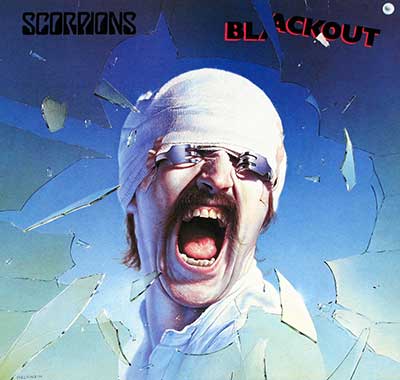
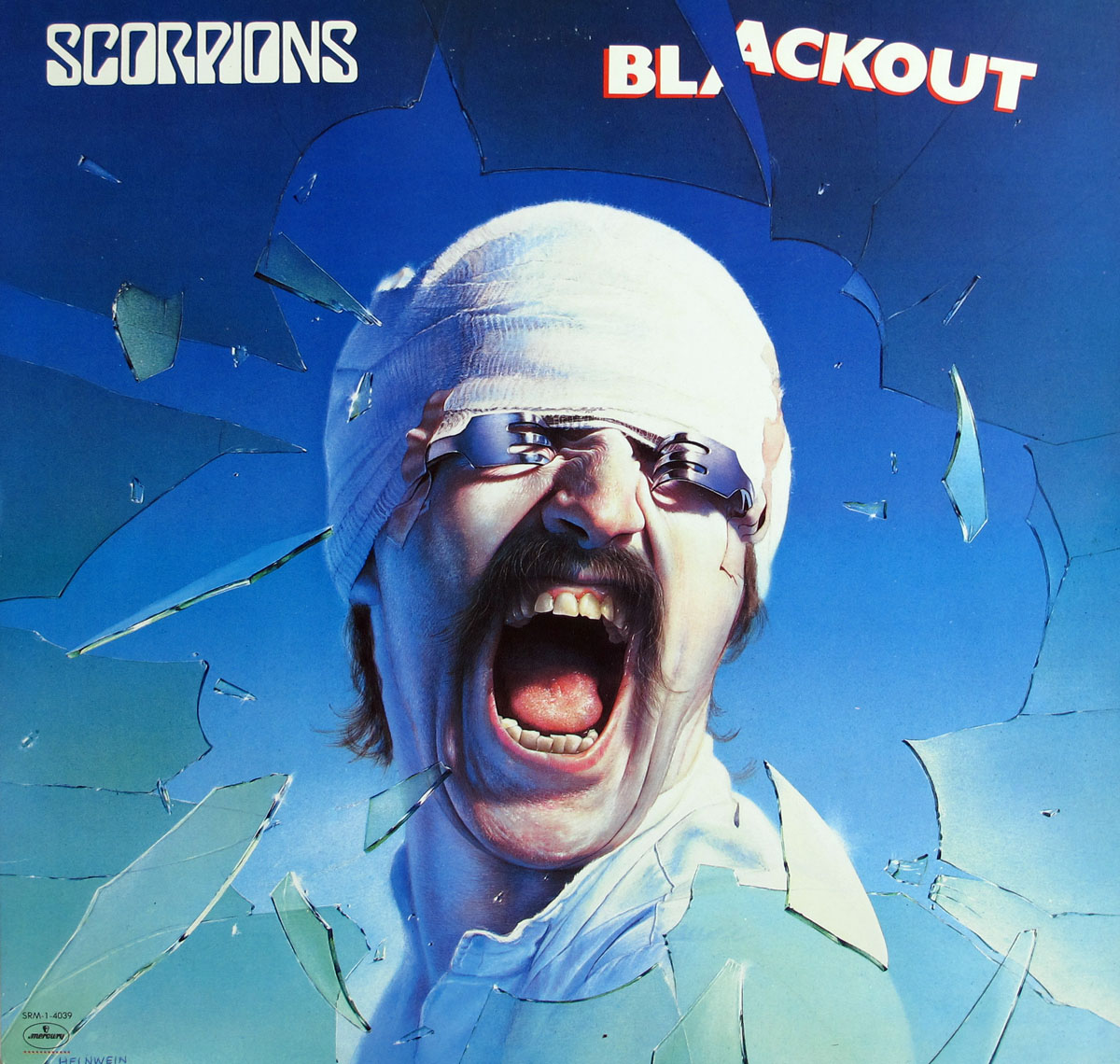
- Cover design: Gottfried Heinwein
- Cover photography: Robert Ellis
Musical exploration: what they’re testing and what they’ve mastered
The album’s main experiment is discipline: taking heavy riffs and making them behave inside pop-level structures without losing heat. Speed shows up in bursts, but it’s always in service of a hook, not a stopwatch. Even when the tempo drops, it’s not “soft”—it’s controlled tension, like the band knows exactly how long to let a room breathe.
Track-by-track map without the fluff
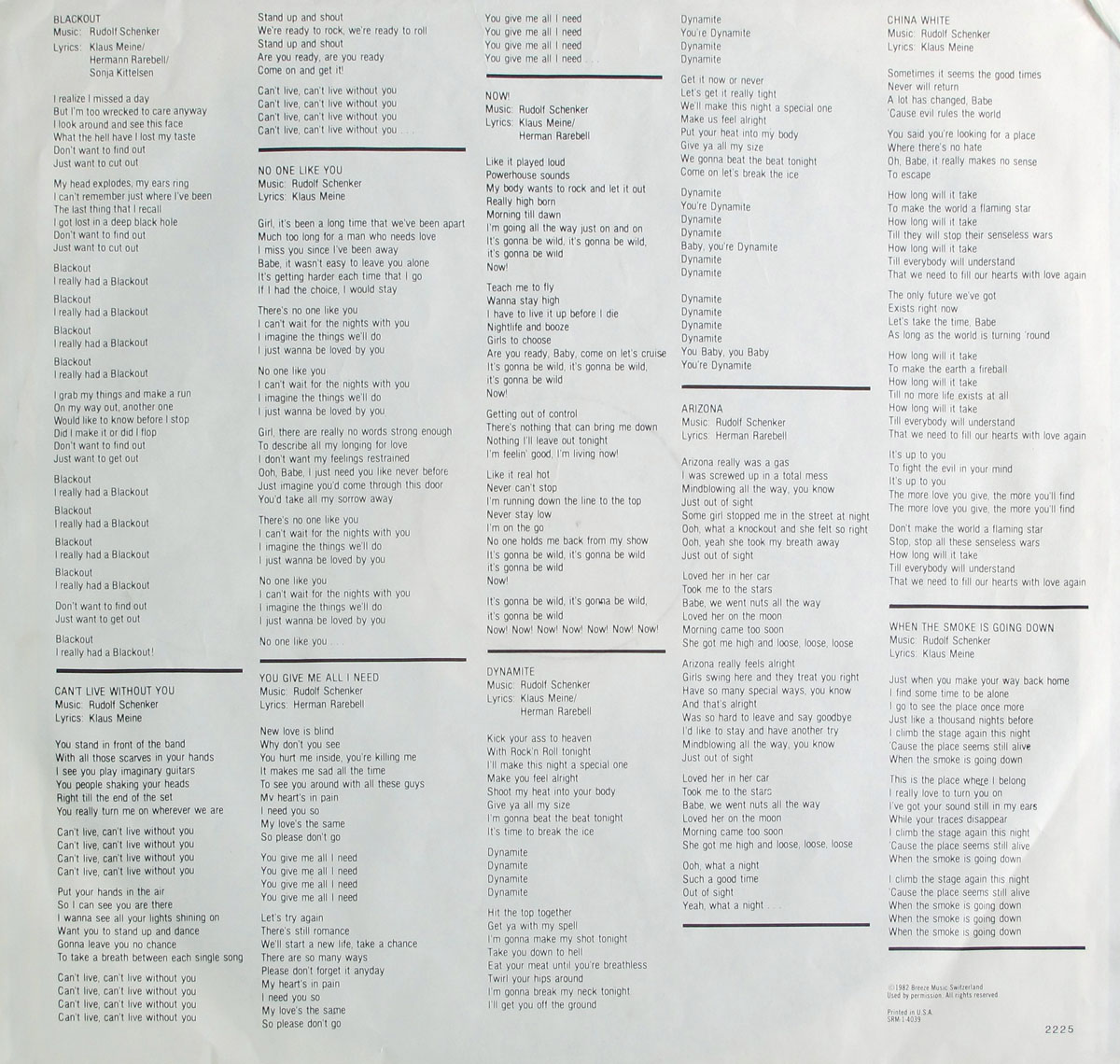
The title track “Blackout” opens like a switchblade—fast, direct, and built to jolt a crowd awake. “Can’t Live Without You” keeps the pressure up, and “No One Like You” delivers the kind of chorus that doesn’t ask for permission. Then “Now!” and “Dynamite” keep the momentum brutal and tidy, like the band is sprinting in formation.
Side two stretches out and gets moodier without losing weight: “Arizona” has that road-song pulse, “China White” sprawls darker and longer, and “When the Smoke Is Going Down” slows the temperature without turning the lights off. The pacing is the quiet trick here—fast songs feel faster because the slower moments are placed with intent, not as filler.
The band story that matters here: formation and the lineup turning point
Scorpions start in Hannover under Rudolf Schenker’s leadership, but their “this is the band” identity took shape through lineup evolution rather than one mythical starting lineup. Matthias Jabs arriving in the late ’70s is one of those changes that isn’t just personnel—it’s a shift in how the guitars speak: tighter, brighter, more surgical. By “Blackout,” the band isn’t trying on identities; they’re refining one.
The real drama: the vocal crisis and the studio contingency plan
The album’s sessions are haunted by something very unglamorous: Klaus Meine’s serious vocal problems and recovery, with the band preparing for the possibility he might not be able to return in time. Reports and later accounts describe Don Dokken stepping in to record guide vocals while Meine recovered, which helped keep the writing and tracking moving instead of freezing the project. The controversy isn’t a tabloid scandal so much as a rock-band survival story: what happens when the voice is suddenly not guaranteed.
Release controversies: what actually caused friction
“Blackout” didn’t arrive with the kind of cover-censorship circus Scorpions had already experienced earlier in their career, but it still carried sparks. The strongest rumors orbit the vocal sessions—how much outside help was used, and where the line is between “backing” and “stand-in,” a debate that follows bands any time survival decisions get made under pressure. And lyrically, tracks like “China White” lean into darker subject matter that can make radio gatekeepers nervous, even when the music is built for arenas.
Album art and visual mood
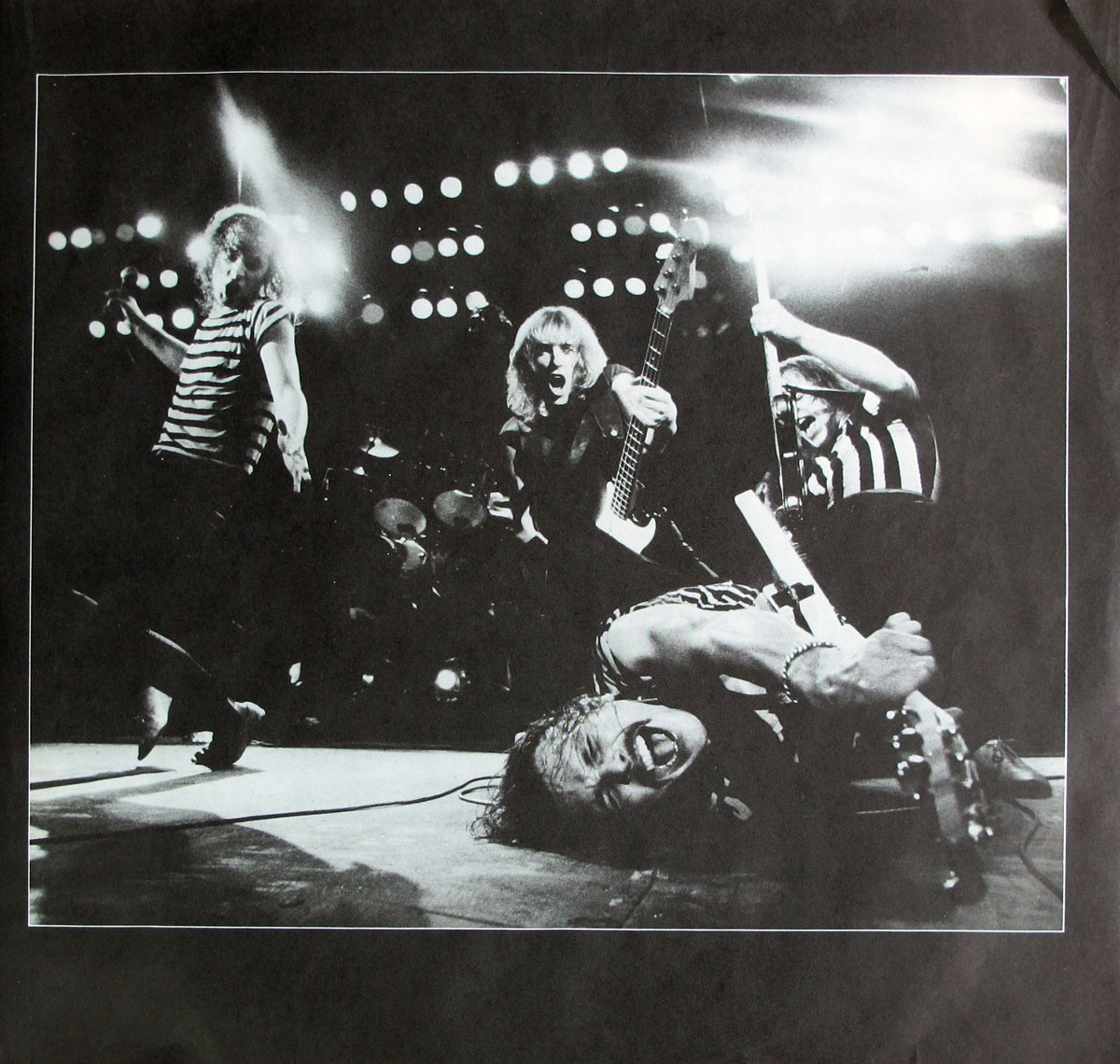
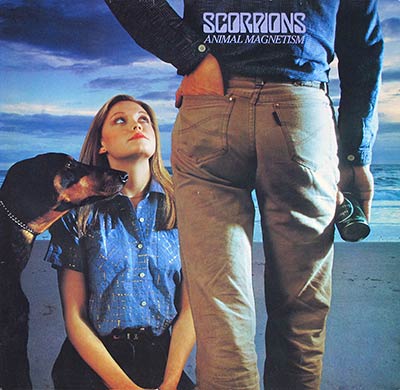
The cover concept sells the title in one brutal image: a face in crisis, a moment of impact frozen into a symbol. It matches the record’s emotional angle—control under stress—without needing to spell anything out. The USA inner sleeve presentation keeps the lyrics and imagery clean and readable, pushing the idea that this isn’t just a riff record; it’s a tight, authored statement.
Why the album holds together
The secret isn’t one song for me, it’s the way the whole album behaves like a single machine: riffs, hooks, and pacing all pulling in the same direction. "Blackout" feels designed, not just slapped together, and that’s exactly why it hits so clean even when it’s flying. If the goal was to sound like Scorpions could stroll into any room in 1982 and own it, then yeah—mission accomplished.