|
Album
Production information for "Master of Puppets":
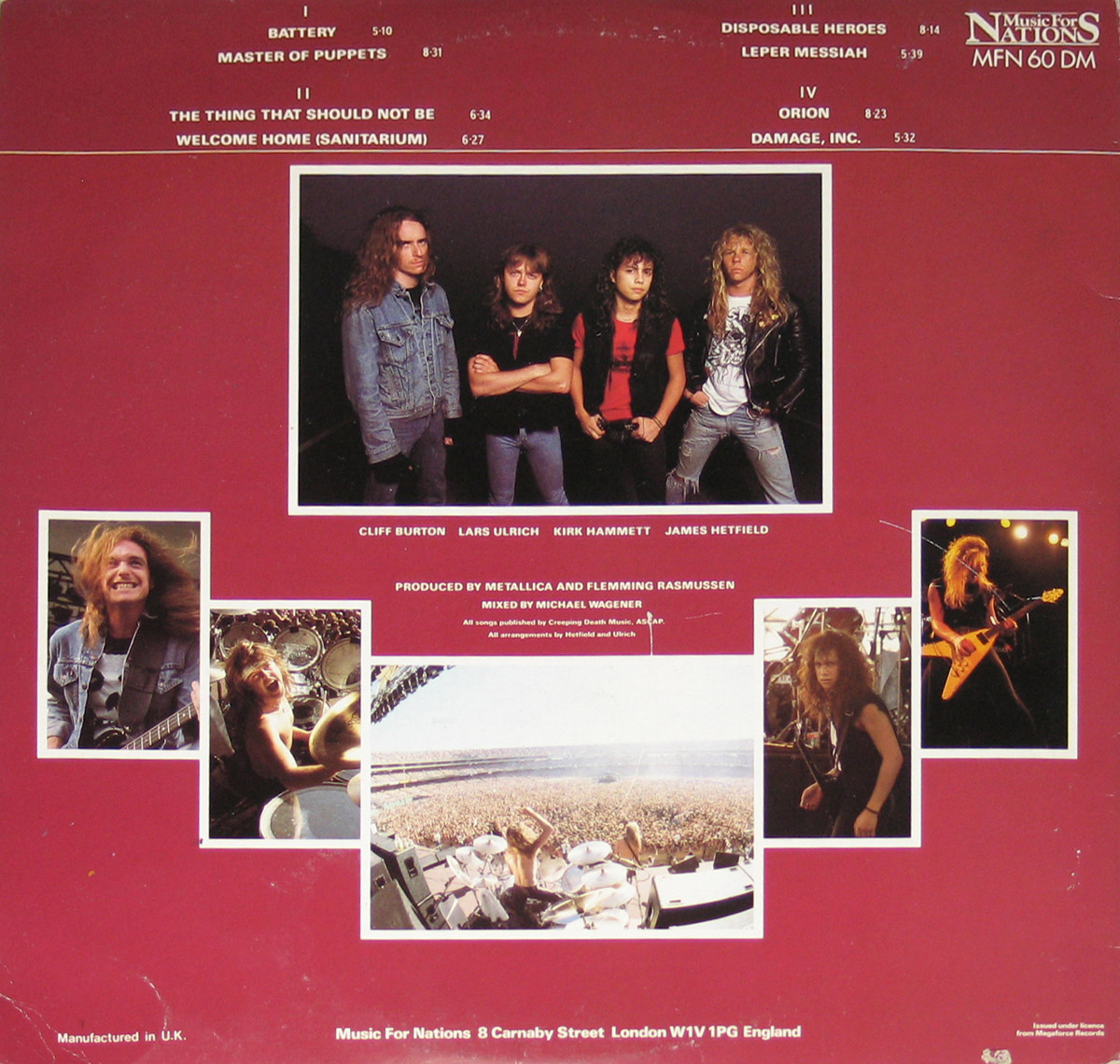
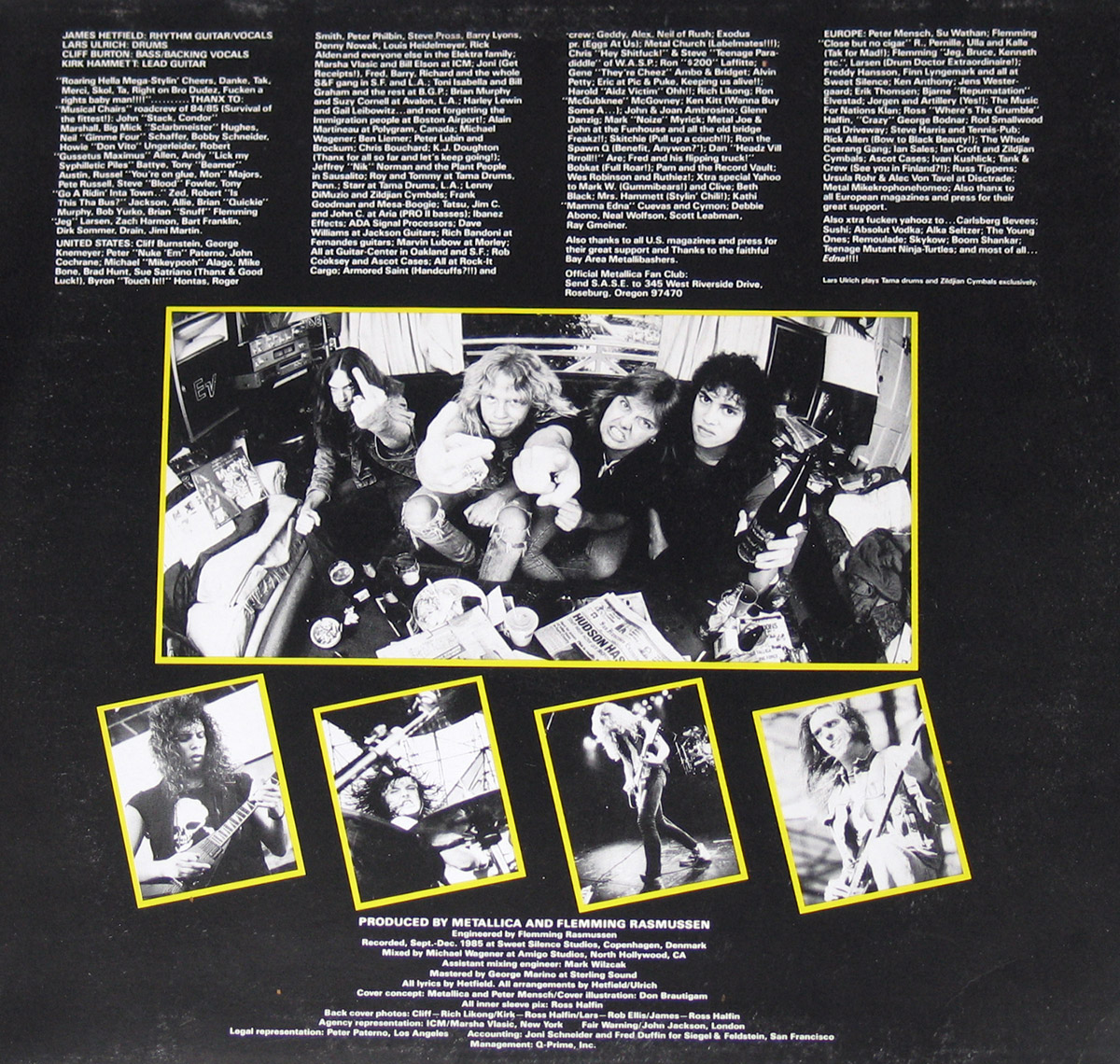
Produced by Metallica and Fleming Rasmussen
Flemming Rasmussen – Producer, Sound EngineerSweet Silence Studios founder/engineer whose fingerprints show up on metal records that sound way bigger than the room they were made in. Read more... Flemming Rasmussen is one of those behind-the-glass names I keep spotting like a quality stamp: a Danish producer and sound engineer, and the founder of Sweet Silence Studios in Copenhagen. His timeline reads like a metal history syllabus I actually want to study: Rainbow (1981), then Metallica (1984–1988: Ride the Lightning, Master of Puppets, ...And Justice for All), followed by Artillery (1990), Morbid Angel (1993), Blind Guardian (1995–1998), Ensiferum (2003–2004), and Evile (2007). He even won a Grammy for producing Metallica’s "One" (1989), which is kind of hilarious when you remember that song is basically anxiety with military boots on.
Michael Wagener - Producer, Mix Engineer
Michael Wagener – Producer, Sound EngineerThe German set of ears that can make a wall of amps sound lethal, not muddy. Read more... Michael Wagener is the German-born producer/engineer who taught heavy guitars to sound huge without turning into soup. Back in the late 1970s and early 1980s he helped shape Accept's steel-plate punch, then in the 1980s Los Angeles grind he became a go-to set of ears for Dokken—tight, glossy, and still mean. By the late 1980s he was guiding arena-sized hard rock for Skid Row and White Lion, and in the 1990s he kept that balance of bite and clarity alive for bands like Extreme. I can spot his signature fast: drums snapping, guitars spread wide, and reverb kept on a short leash. From his WireWorld room in Tennessee, he mixes like a craftsman: edges sharp, low end disciplined, vocals sitting just forward enough to start trouble.
George Marino (1947-2012) - Mastering Engineer
George Marino – Mastering EngineerWhen my site brain goes full 1980s metal mode, his name keeps showing up like a hidden signature in the dead wax. Read more... George Marino is one of those behind-the-glass legends who made heavy music feel larger than the room it was playing in. Before the mastering console became his throne, he was a Bronx guitarist doing the NYC band grind in the 1960s with groups like The Chancellors and The New Sounds Ltd. Then he went pro for real: starting at Capitol Studios in New York (1967), and eventually becoming a long-running force at Sterling Sound (from 1973 onward). For a collector like me—living in that sweet spot where 1980s heavy metal, hard rock, and a dash of prog-minded ambition collide—Marino’s credits read like a stack of essential sleeves: Holy Diver (Dio), Tooth and Nail (Dokken), Stay Hard (Raven), Master of Puppets (Metallica), Somewhere in Time (Iron Maiden), Among the Living (Anthrax), Appetite for Destruction (Guns N’ Roses), Slippery When Wet (Bon Jovi), and Blow Up Your Video (AC/DC). That’s the kind of resume that doesn’t just “master” records—it weaponizes them, but with taste. George Marino Wiki
Mark Wilzcak - Sound Engineer
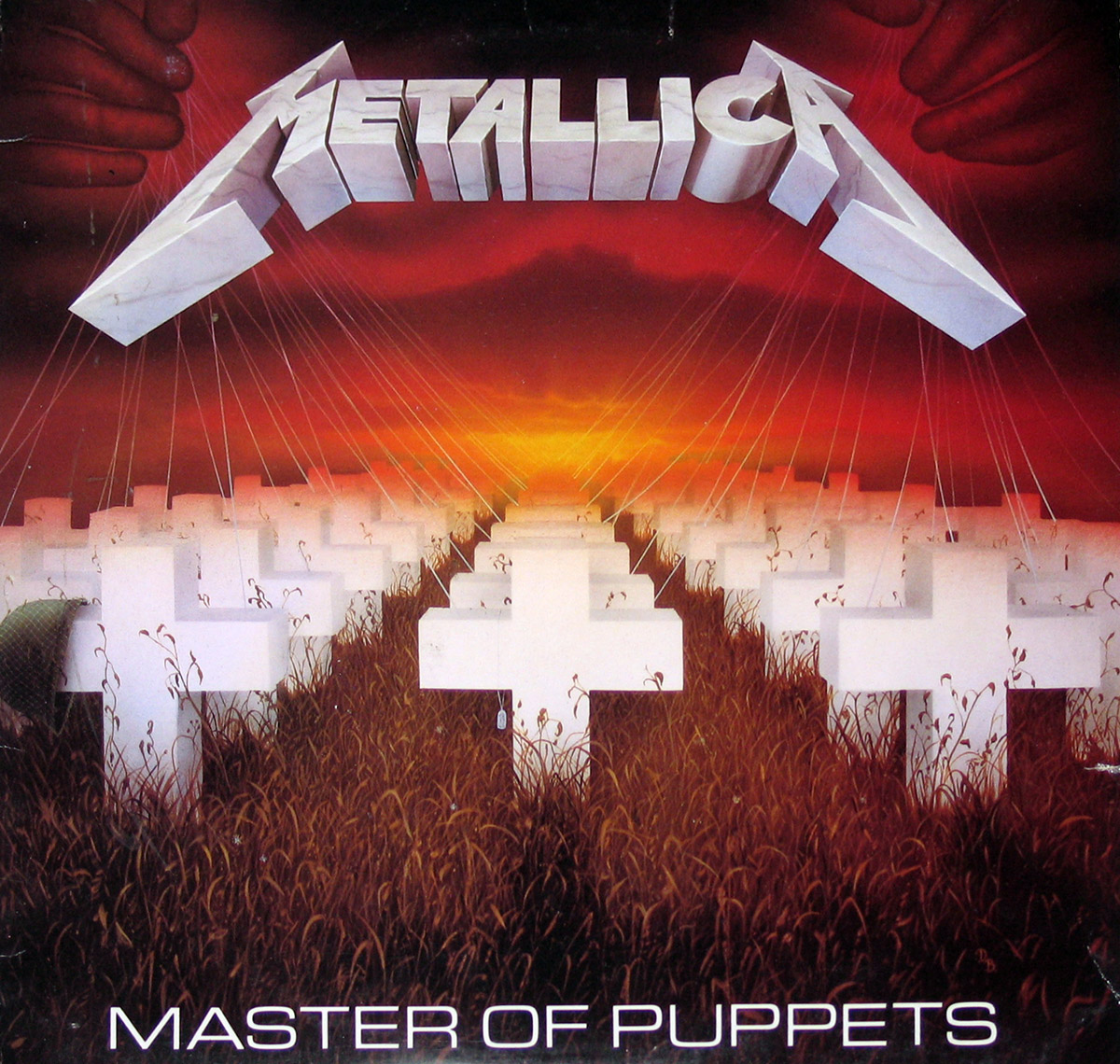
Don Brautigam (1946-2008) - Album artwork
Don Brautigam – American illustrator & album cover artistThe American illustrator who painted Metallica’s “Master of Puppets” (1986) and then kept popping up on heavy hitters: Anthrax (1987–1990), Mötley Crüe (1989), and AC/DC (1990). Read more... Don Brautigam, I think of him as the rare visual storyteller who could bottle a band’s whole atmosphere into one frozen scene. He was an American painter/illustrator and graphic designer (active roughly 1974–2008), known for mixing acrylic painting with airbrush polish until the image felt unreal in the best way. His “periods” with bands read like a timeline of loud history: early credits include James Brown’s “The Payback” (1973) and “Reality” (1974), then Chuck Berry’s “Rockit” (1979), before the metal era hit like a brick through a stained-glass window. In 1986 he painted Metallica’s “Master of Puppets,” then followed with Anthrax’s run of covers — “Among the Living” (1987), “State of Euphoria” (1988), and “Persistence of Time” (1990) — before landing the big glossy menace of Mötley Crüe’s “Dr. Feelgood” (1989) and AC/DC’s “The Razors Edge” (1990). The wild part is how his art doesn’t just decorate the music; it sets the mood before the needle even drops.
Rich Likong - Photography
Robert Ellis - Photography
Robert Ellis – Photographer
The guy with the press pass (and the nerve) who lived on rock tours from 1971 to 1993, catching the moments bands never planned to share.
Read more...
Robert Ellis is the kind of rock photographer I trust because the shots don’t pose, they confess. Seeing his work, the noise comes back in full color: sweat in the stage lights, backstage grins that last ten seconds, and that split-second where a band looks immortal before the van ride ruins everyone’s posture. Credits tell the timeline clean: he starts out in 1968, then lands at New Musical Express (1971–1975), moves through Melody Maker (1975–1976), and keeps rolling as a freelance gun-for-hire for titles like Sounds and Kerrang! (plus the occasional mainstream giant like Time). The real “band periods” here aren’t membership cards, they’re tour years: Ellis is on the road photographing bands across the rock and metal circuit from 1971–1993, then turns the archive into a home base by founding Repfoto in 1982 and later pushing his own book imprint, The Rock Library, in the 2010s. That’s the job done right: stay invisible, keep the shutter honest, and let the music leave fingerprints on the film.
Ross Halfin - Photography
Ross Halfin – Photographer
The guy who made hard rock look like it smelled: sweat, flash powder, and backstage neon.
Read more...
Ross Halfin is the British lens-slinger who turned loud music into evidence, not decoration. Late 1970s had him cutting his teeth for Sounds, stalking the punk spill—The Clash, The Jam, the Sex Pistols—fast, close, no mercy. From 1980 onward he became Kerrang!’s chief photographer and stayed in that trench for about two decades, which says plenty about stamina. The 1980s pushed him deeper into heavy metal: Iron Maiden, AC/DC, Judas Priest, Black Sabbath—tour buses, arenas, and the occasional glamour that still looked slightly dangerous. Since then the circle widened and hardened: Metallica and the big hard-rock orbit, shot with the same blunt honesty. Trust the timing, trust the grin, distrust the posing.
|