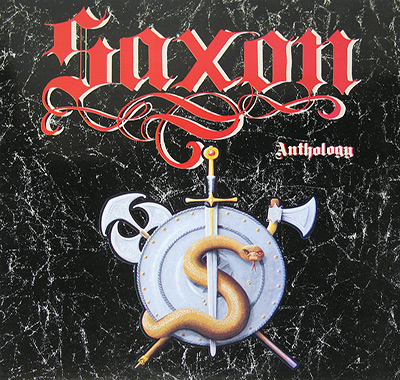
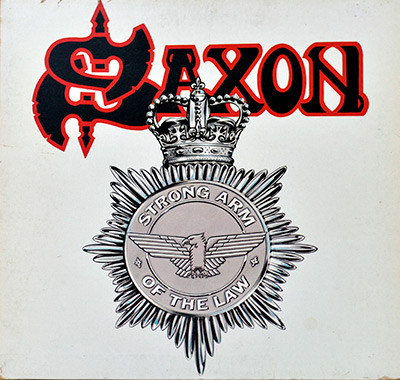
In the heart of 1980, as the tremors of punk were still shaking the foundations of the music world, a new wave of British heavy metal was surging forth. Among the leaders of this charge were Saxon, a band from Barnsley, England, whose second album, "Wheels of Steel," became a defining statement of the NWOBHM movement, solidifying their place in heavy metal history and captivating fans across Europe.
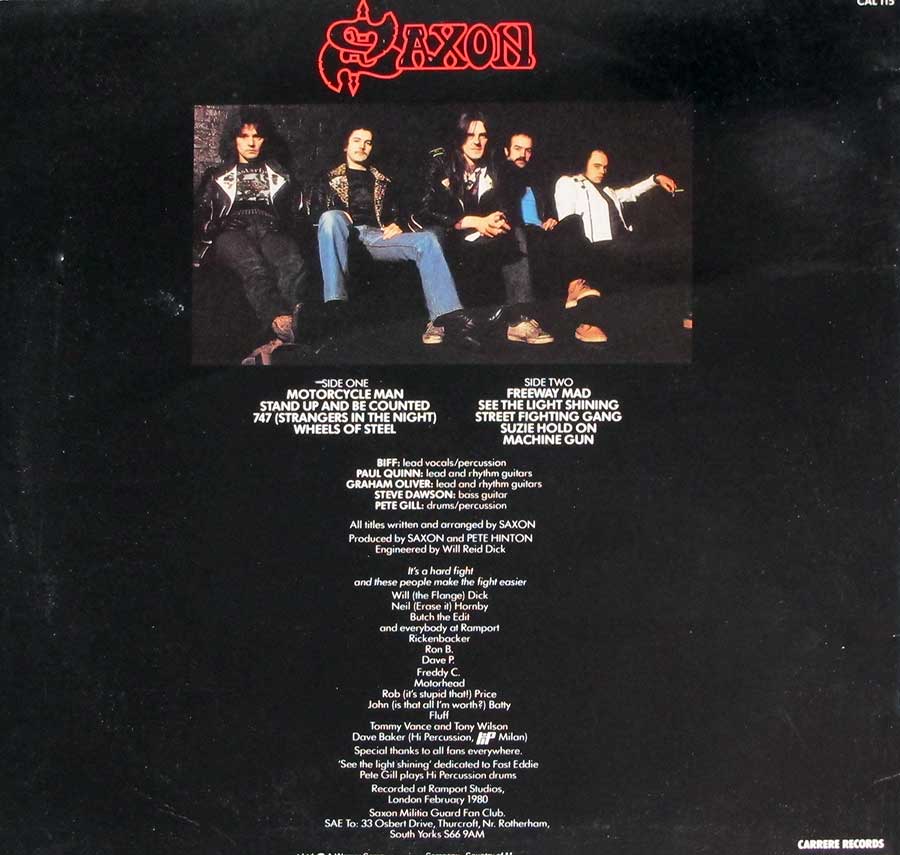
Produced by Saxon themselves along with Pete Hinton, a rising star in the British metal scene who'd already worked with the likes of Demon and would go on to collaborate with Coroner and many others, "Wheels of Steel" was recorded at the renowned Ramport Studios in London in February 1980. The sound engineer was Will Reid Dick, a veteran who'd worked with everyone from the Rolling Stones to Jimi Hendrix, ensuring a powerful and polished sound that resonated with audiences.
The album roared out of the gate with the iconic title track, a high-octane anthem that perfectly captured the energy and excitement of the NWOBHM. Biff Byford's vocals were raw and powerful, Graham Oliver and Paul Quinn's guitars delivered a blistering assault, and the rhythm section of Steve Dawson and Pete Gill provided a relentless, driving beat. This track, along with other hits like "747 (Strangers in the Night)" and "Motorcycle Man," became staples of Saxon's live shows and fan favorites, showcasing the band's ability to blend catchy melodies with heavy instrumentation.
"Wheels of Steel" was more than just a collection of heavy metal anthems. It was a snapshot of a moment in time, a representation of the passion and energy of a new generation of British metal bands. Saxon weren't afraid to tackle social issues in their lyrics, and songs like "747 (Strangers in the Night)" and "Freeway Mad" dealt with themes of alienation and rebellion, resonating with a youth culture seeking an outlet for their frustrations.
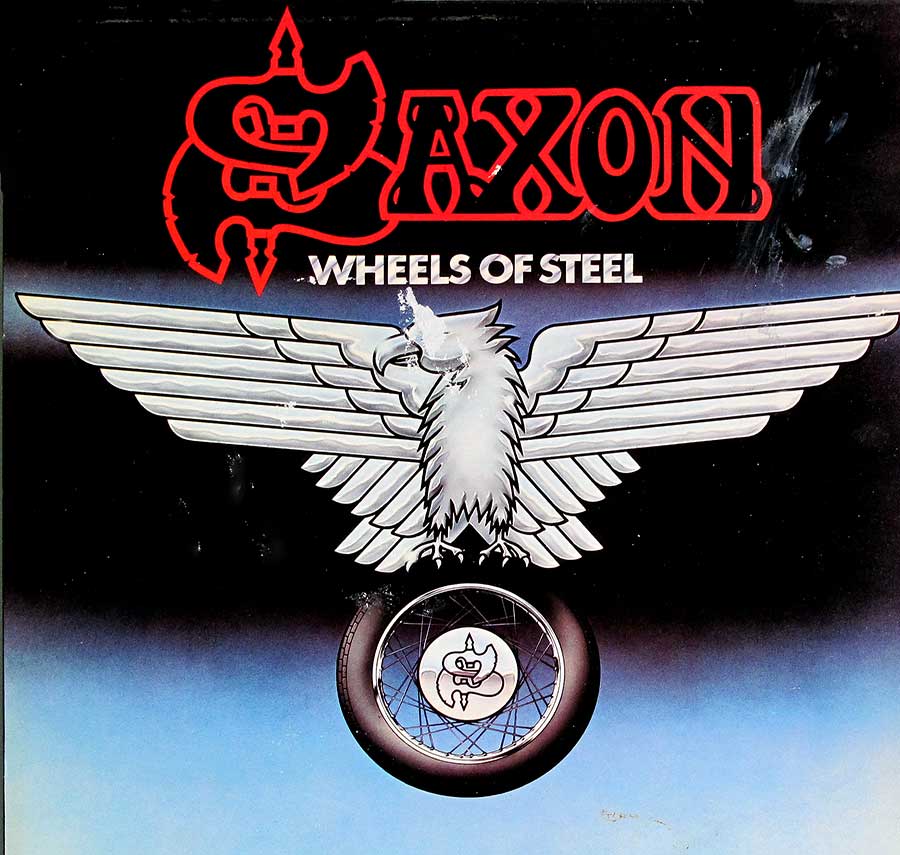
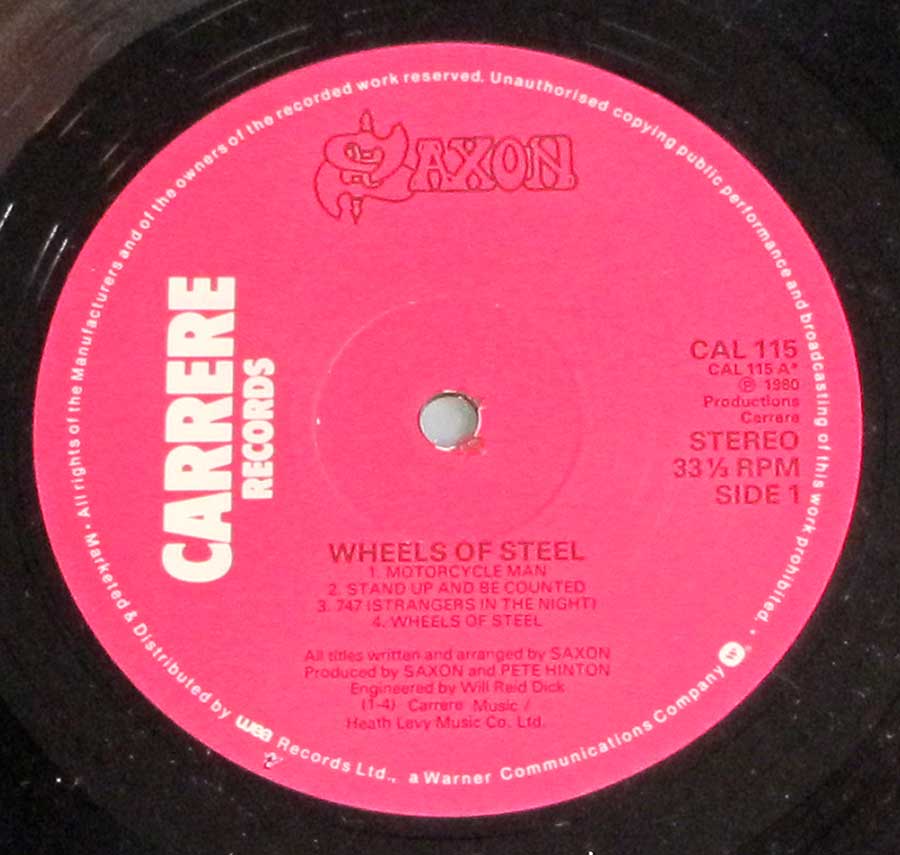
The album's release on the Carrere label with the catalog number CAL 115 further cemented its significance, making it readily available to fans and contributing to its widespread popularity. Its iconic album cover, featuring a motorcycle bursting through a brick wall, became synonymous with the band's image and the raw energy of the NWOBHM movement.
The album wasn't without its controversies. Some critics accused Saxon of being too derivative of their influences, particularly Judas Priest. Others felt that the band's image, with their leather jackets and denim jeans, was too clichéd. But for the legions of fans who embraced the NWOBHM, Saxon were heroes. They represented a return to the raw, unpretentious spirit of heavy metal, a rejection of the excesses of prog rock and the artifice of glam.
"Wheels of Steel" was a landmark album, not just for Saxon, but for the entire NWOBHM movement. It helped to establish heavy metal as a major force in the music world, and its influence can still be heard in the music of countless bands today. The album's success propelled Saxon to international fame, solidifying their position as one of the leading bands of the NWOBHM and paving the way for a long and illustrious career.
In the grand narrative of heavy metal, "Wheels of Steel" stands as a monument to a time when the genre was young, hungry, and full of possibilities. It's a reminder that, even in the darkest of times, the power of rock and roll can never be extinguished.