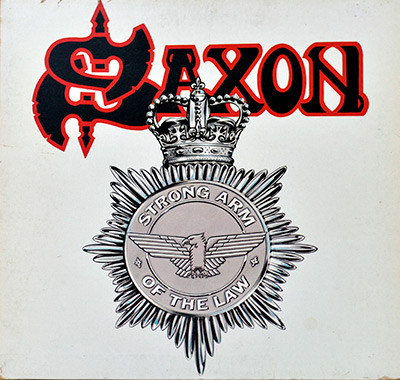
"Power & the Glory" Album Description:
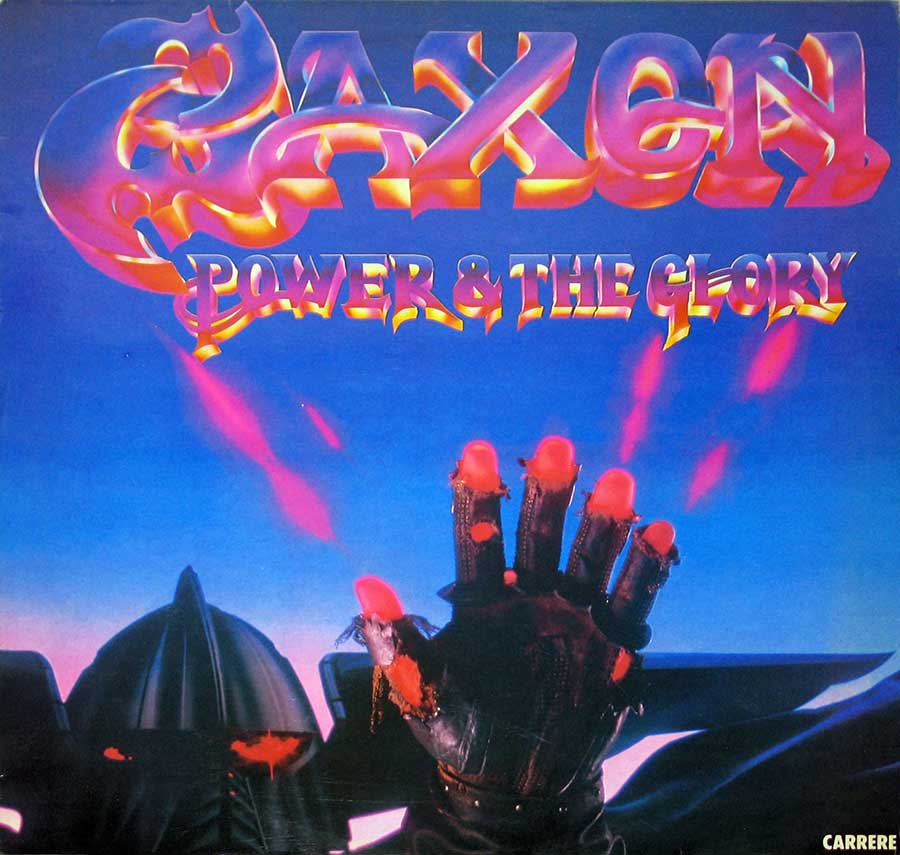
In the vibrant tapestry of the New Wave of British Heavy Metal (NWOBHM) movement, Saxon stands as an iconic presence, and their fifth studio album, "Power & the Glory," released in 1983, is a testament to the band's enduring influence on the heavy metal genre. This article delves into the time period surrounding the album's release, the NWOBHM movement, and the unique production aspects of the French release on Carrere Records.
The NWOBHM Time Period:
The late 1970s and early 1980s marked a pivotal moment in the history of heavy metal, giving rise to the New Wave of British Heavy Metal. This movement, characterized by a raw and energetic sound, emerged as a reaction to the perceived stagnation in the rock and metal scenes of the time. Bands like Iron Maiden, Judas Priest, and, of course, Saxon, were at the forefront, reshaping the landscape of heavy metal with their distinctive style.
"Power & the Glory" and Saxon's Evolution:
Released in 1983, "Power & the Glory" showcased Saxon's evolution both musically and thematically. The album marked a departure from their earlier works, incorporating a more polished sound while retaining the powerful essence that defined their music. Notably, it was the first studio album featuring Nigel Glockler as the drummer, contributing to the revitalization of Saxon's sonic identity.
Carrere France's 12" Vinyl LP Album:
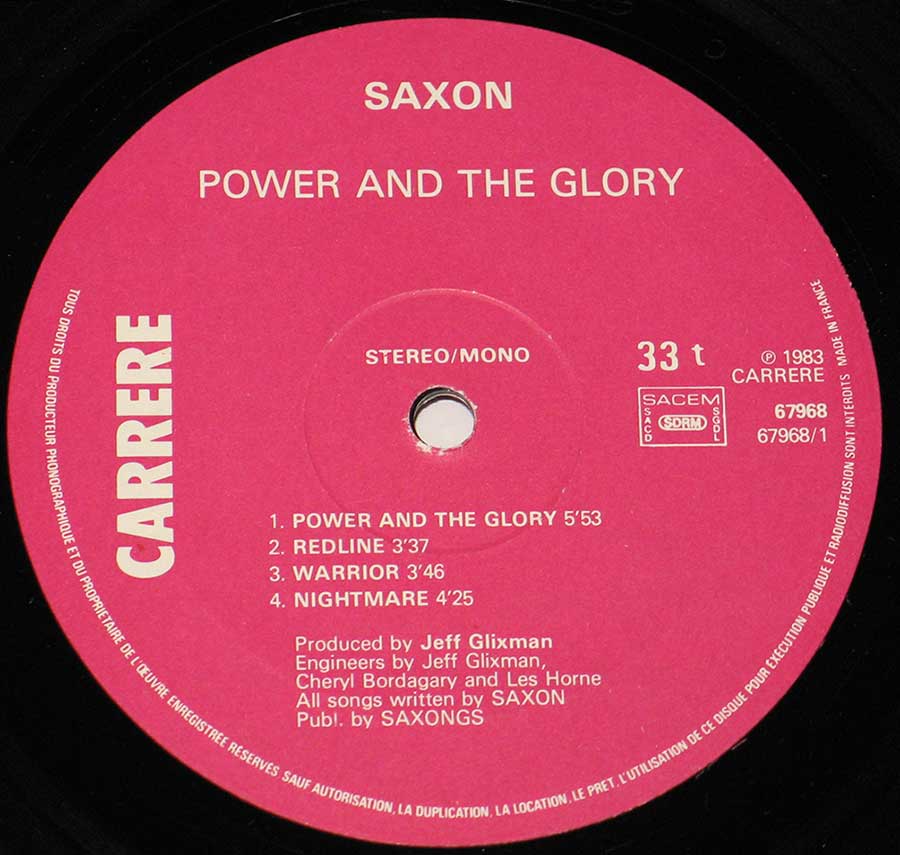
The French release of "Power & the Glory" on Carrere Records adds a fascinating layer to the album's history. Carrere, a French record label, played a significant role in distributing and promoting NWOBHM bands in continental Europe. The 12" Vinyl LP format offered a tangible and immersive experience for fans, becoming a cherished collector's item over the years.
Production and Artistic Elements:
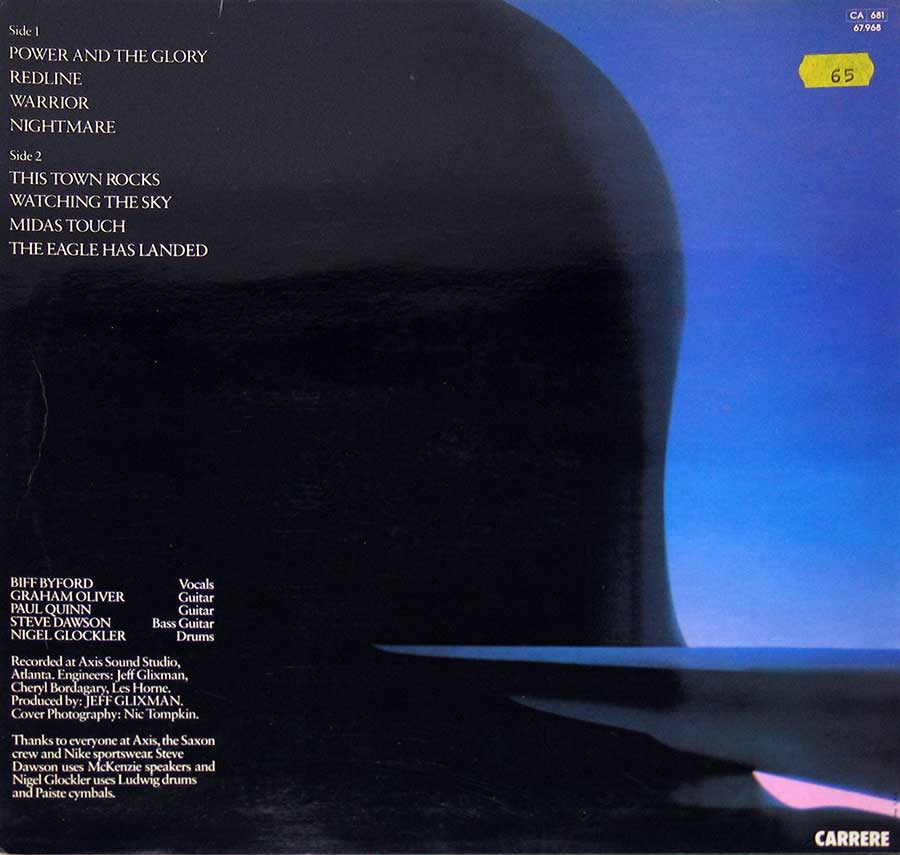
Examining the production aspects of the French release unveils the meticulous attention given to the album's presentation. From the cover art to the vinyl mastering, each element was curated to enhance the overall listening experience. The warm analog sound of the vinyl adds a nostalgic charm, inviting listeners to immerse themselves in the essence of the NWOBHM era.
Band Members and Musicians on: Saxon - Power and the Glory
|
Band-members, Musicians and Performers
- Biff Byford - Vocals
- Biff Byford – Vocals
Saxon's iron-lung frontman since 1976, still turning choruses into marching orders. Read more... Biff Byford, Saxon's storm-tested voice, is the bloke who can turn a chorus into a pub chant and a battle order in the same breath. I first clock him in the mid-1970s fronting Son of a Bitch, then he takes the wheel when Saxon forms in 1976 and never really lets go. The NWOBHM years are where he stamps the passport: "Wheels of Steel" and "Strong Arm of the Law" (1980) push them into headliner territory, and "Denim and Leather" (1981) seals the tribe. The mid-80s gloss got purists grumbling, but he kept touring and recording through the 1990s. Later he went solo with "School of Hard Knocks" (2020) and formed Heavy Water with his son. He never sang like he was asking permission.
- Graham Oliver - Guitar
- Graham Oliver – Guitar
Saxon co-founder (1976–1995), twin-lead architect, later keeping the flame alive with Oliver/Dawson Saxon. Read more... Graham Oliver, Saxon’s original lead guitarist, is the bloke who made those early twin-lead harmonies feel like two motorbikes racing down the same hill. I remember him from the Son of a Bitch days (mid-1970s), then as a Saxon founder from 1976 to 1995 through the classic NWOBHM punch—“Wheels of Steel” and “Strong Arm of the Law” (1980), “Denim and Leather” (1981)—where his tone stayed bright, sharp, and just a bit reckless. After leaving, the band-name dispute turned into paperwork warfare. From the late 1990s into the 2000s he resurfaced with Oliver/Dawson Saxon, keeping the old songs alive with Steve Dawson. Not tidy. Not polite. Very Oliver.
- Paul Quinn - Guitar
- Paul Quinn – Guitar
Founding Saxon guitarist (1975–present; not touring since 2023) with riffs that hit like a rivet gun. Read more... Paul Quinn is the quiet engine of Saxon, a Barnsley guitarist who helped turn late-70s pub grit into NWOBHM muscle. I first clock him in Son of a Bitch (1975-1978), then in Saxon from 1978 onward, locking riffs with Graham Oliver while Biff Byford barked the orders. The early run hit like a double punch: "Wheels of Steel" and "Strong Arm of the Law" (1980), then "Denim and Leather" (1981) when the scene became a tribe. He kept the machine running through the 80s and into the early 90s, even when labels wanted polish and the fans wanted blood. In 2023 he stepped back from touring; Brian Tatler took the live seat, while Quinn stayed on for studio work. Sensible, sure. Still stings.
- Steve Dawson - Bass
- Steve "Dobby" Dawson – Bass guitar
I still hear his bass under "Wheels of Steel" like motorway rumble you can't un-hear. Read more... Steve "Dobby" Dawson, is the Sheffield-born low-end anchor who helped turn pub-blues into full-bore NWOBHM thunder. My first note on him is Blue Condition (1970-1974), tightening into SOB (1974-1975), then Son of a Bitch (1975-1978) before the name finally snapped into Saxon (1978-1986). On record he's the calm steel beam under the early classics, locking in the kick, nudging the chorus, and leaving space for the twin guitars to do their hooligan dance. Worker's punch: steady eighth-notes, clean runs, backing vocals when needed, and absolutely no 'look at me' nonsense. After 1986 he reunited with Graham Oliver for Oliver/Dawson Saxon (1996-2021), touring and recording to keep the original-era spark alive.
|