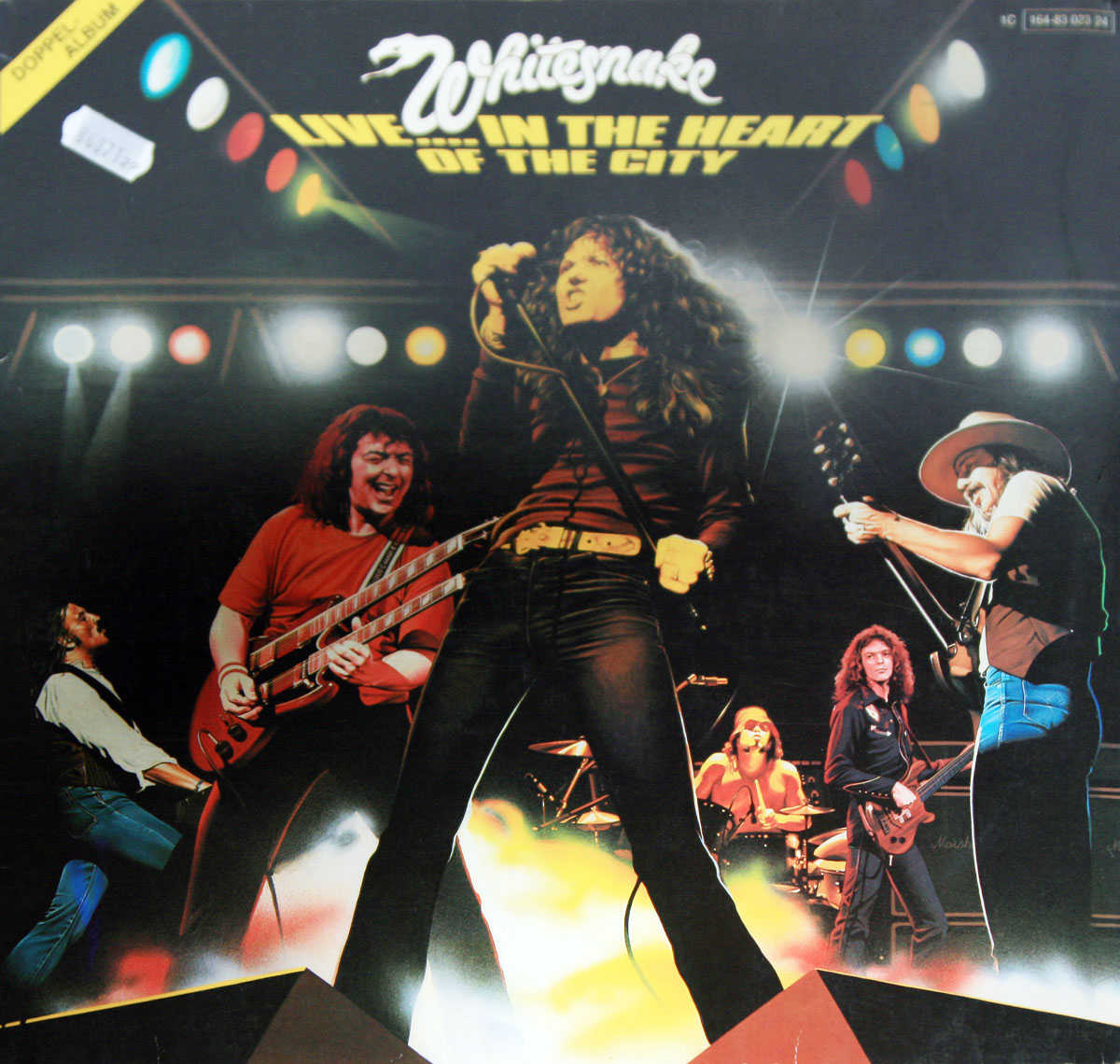
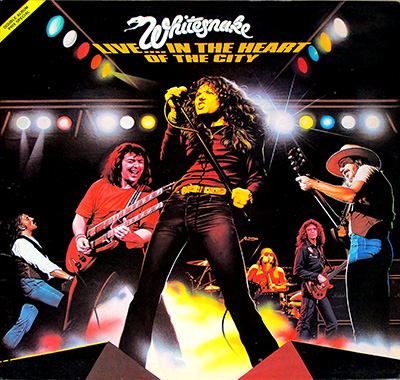
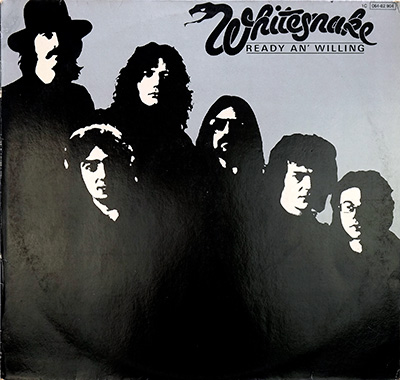
In the roaring history of hard rock, few albums capture the raw, untamed energy of a live performance quite like Whitesnake's "Live...in the Heart of the City." Released in 1980, this double LP set is a sonic time machine, transporting listeners back to an era when rock 'n' roll was still a wild, untamed beast.
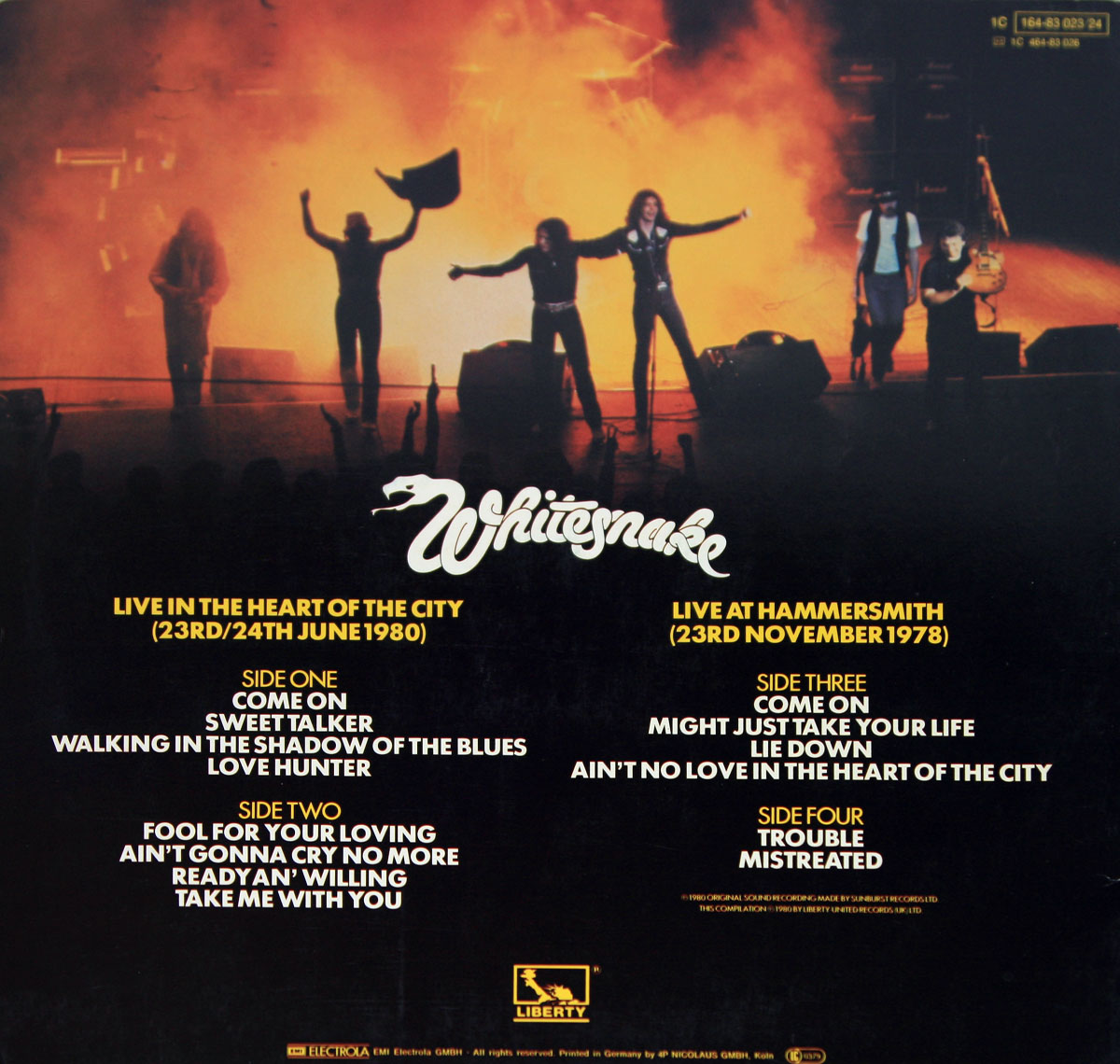
Whitesnake, fronted by the enigmatic David Coverdale, had already carved a niche for themselves in the UK with their bluesy, hard-rocking sound. But "Live...in the Heart of the City" solidified their place as a force to be reckoned with. Recorded during two separate shows at the legendary Rainbow Theatre in London in 1978 and 1980, the album showcases the band at the peak of their powers.
From the opening chords of "Come On," it's clear that this is no ordinary live album. The band is ablaze, fueled by the energy of the crowd and their own undeniable talent. Coverdale's vocals are powerful and soulful, while the twin guitar attack of Micky Moody and Bernie Marsden is nothing short of electrifying.
The album's raw energy and powerful performances have become a major talking point among fans. The band's chemistry is palpable, and their interplay is nothing short of mesmerizing. Coverdale's stage presence is magnetic, and his vocals are at their absolute best. The guitar solos are blistering, and the rhythm section is rock solid.
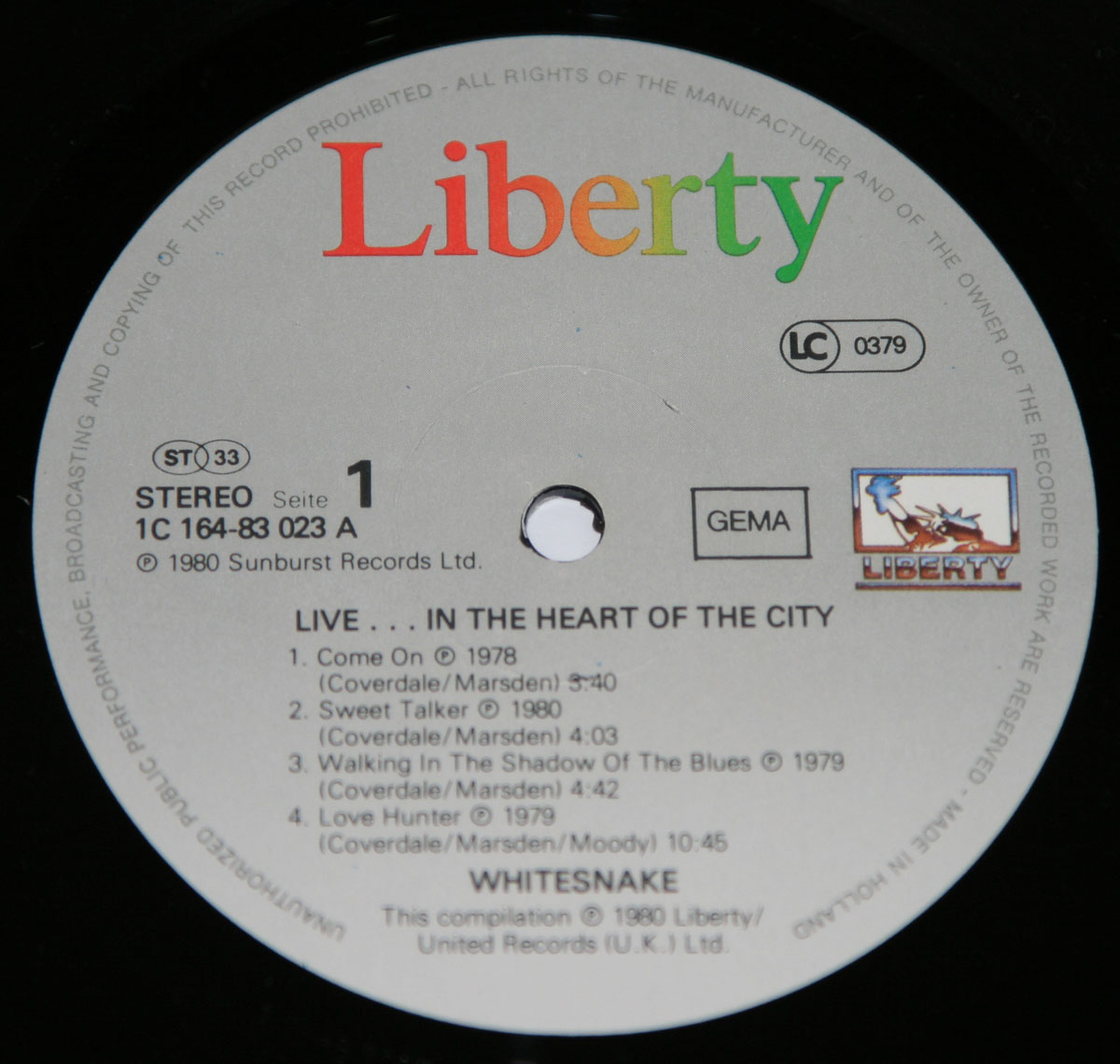
The setlist is a mix of classic Whitesnake tunes and covers, all delivered with a passion and intensity that's impossible to ignore. "Walking in the Shadow of the Blues" is a slow-burning blues number that showcases the band's roots, while "Mistreated" is a powerful ballad that builds to a soaring climax.
Of course, no Whitesnake show would be complete without a few nods to Coverdale's Deep Purple past. The band tears through "Might Just Take Your Life" and "Soldier of Fortune" with a ferocity that rivals the originals.
The inclusion of these Deep Purple covers has sparked debate among fans, with some praising their inclusion and others feeling they detract from the Whitesnake originals. Regardless, they serve as a reminder of Coverdale's impressive musical lineage.
But it's the extended jam on "Ain't No Love in the Heart of the City" that truly steals the show. Clocking in at over 13 minutes, it's a masterclass in improvisation and musical interplay. The band stretches out, exploring every nook and cranny of the song, taking the audience on a wild ride.
This epic jam has become a fan favorite and is often cited as one of the highlights of the album. Its raw energy and improvisational spirit perfectly capture the essence of a live Whitesnake performance.
The production, helmed by Martin Birch, is raw and unpolished, capturing the energy and excitement of the live performance. There's no studio trickery here, just a band laying it all on the line.
The album's raw production has been both praised and criticized. Some fans appreciate its authenticity, while others feel it could have benefited from a more polished sound.
"Live...in the Heart of the City" was released at a time when Whitesnake was undergoing a major transformation. The band's bluesy sound was evolving into a more commercial, hard rock style. This album serves as a bridge between those two eras, showcasing the band's versatility and raw talent.
While the album was initially met with mixed reviews, it has since become a cult classic, revered by fans for its honesty and intensity. It's a reminder of a time when rock 'n' roll was still dangerous and unpredictable.
In the grand scheme of things, "Live...in the Heart of the City" may not be Whitesnake's most commercially successful album. But it's arguably their most vital. It captures the band at a pivotal moment in their career, showcasing their raw talent and undeniable passion. It's a celebration of the power of live music and a reminder that rock 'n' roll will never die.