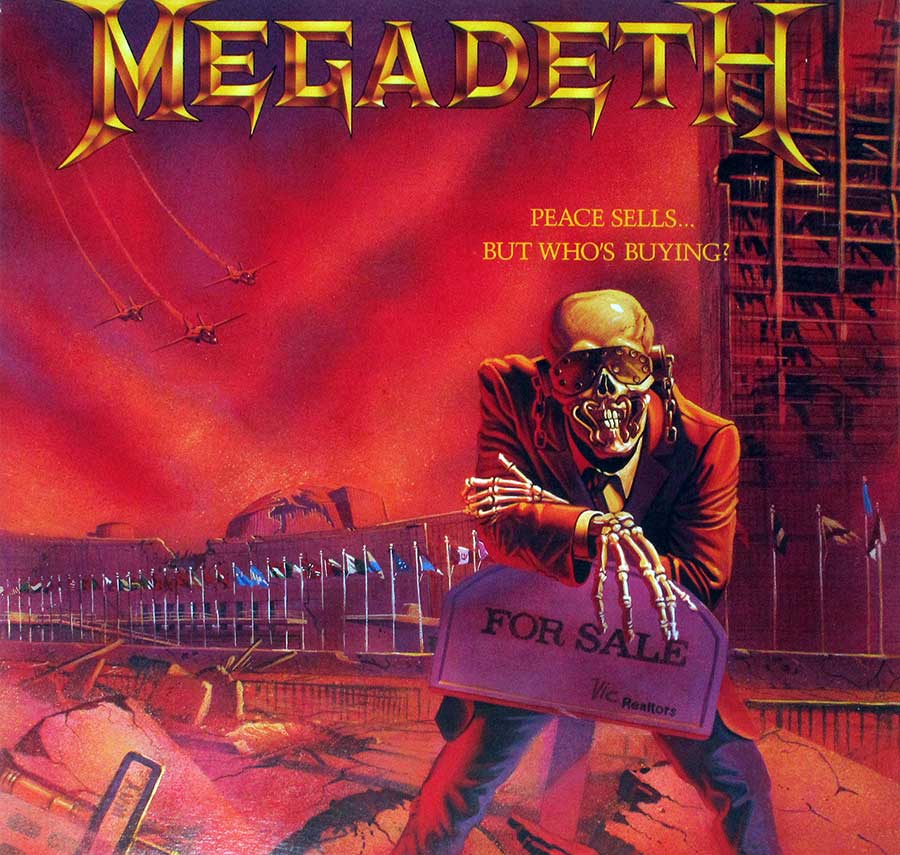
"Peace Sells... but Who's Buying?" (1986) Album Description:
Megadeth hit the major-label runway in September 1986 and still managed to sound like they were sprinting with a knife in one hand and a bill overdue in the other. "Peace Sells... but Who's Buying?" isn’t polite thrash; it’s thrash that learned to aim, with hooks sharp enough to get played on MTV and enough bite left over to make the PMRC crowd clutch pearls. The band’s tone is all tension and sarcasm: fast, clenched, oddly articulate, and absolutely not here to be liked.
1986: what was in the air
America in ’86 was a weird cocktail: Cold War teeth-baring, Washington moral panic, and a radio dial that wanted your rebellion pre-packaged and sponsor-friendly. Heavy metal was getting finger-wagged in Senate hearing daylight while kids were buying louder records at night, and the gap between those two worlds kept widening. Megadeth didn’t sound like they were trying to “represent youth” or any of that civic-brochure junk. They sounded like they had opinions, bills, and a chip the size of a cinder block.
Where it sat in the thrash pile
Thrash in ’86 wasn’t one sound, it was a bar fight with different weapons. Metallica were building cathedrals out of riffs, Slayer were shaving songs down to the bone, and Anthrax were bringing New York stomp and jokes that still landed like punches. Over in the Bay Area, Exodus were still the fastest guys in the room, and across the Atlantic you had Kreator turning speed into ugly engine noise.
- Megadeth: sharper edges, more sneer, more “I read the paper and I hate it.”
- Metallica: big structures, big drama, a stadium brain in a club body.
- Slayer: pure velocity and menace, like a door kicked off its hinges.
- Anthrax: bounce, bark, and streetwise humor with serious chops underneath.
- Exodus/Kreator: rawer, nastier, built for sweat and bruises.
How it hits: attack, space, and that tempo feel
The guitars don’t “crunch,” they slice—tight picking, sharp mutes, and leads that slither instead of soar. The rhythm section keeps the whole thing from turning into a blur: the bass walks and snaps, the drums swing in places where most thrash drummers just sprint, and suddenly the speed has shoulders and hips. There’s room in the mix for air to move, which is exactly why the fast parts feel faster. You can hear the band thinking while they’re throwing punches.
“Wake Up Dead” opens like a paranoid jog up a dark stairwell, all nervous corners and sudden turns. “Peace Sells” is the anthem-with-a-smirk: that bass intro is practically a logo, and the chorus lands because it sounds like it’s arguing with you, not selling you anything. “Good Mourning/Black Friday” is where the record stops pretending it’s civilized—tempo shifts, mood swings, the whole thing sliding from ominous to feral.
The people who made it work in practice
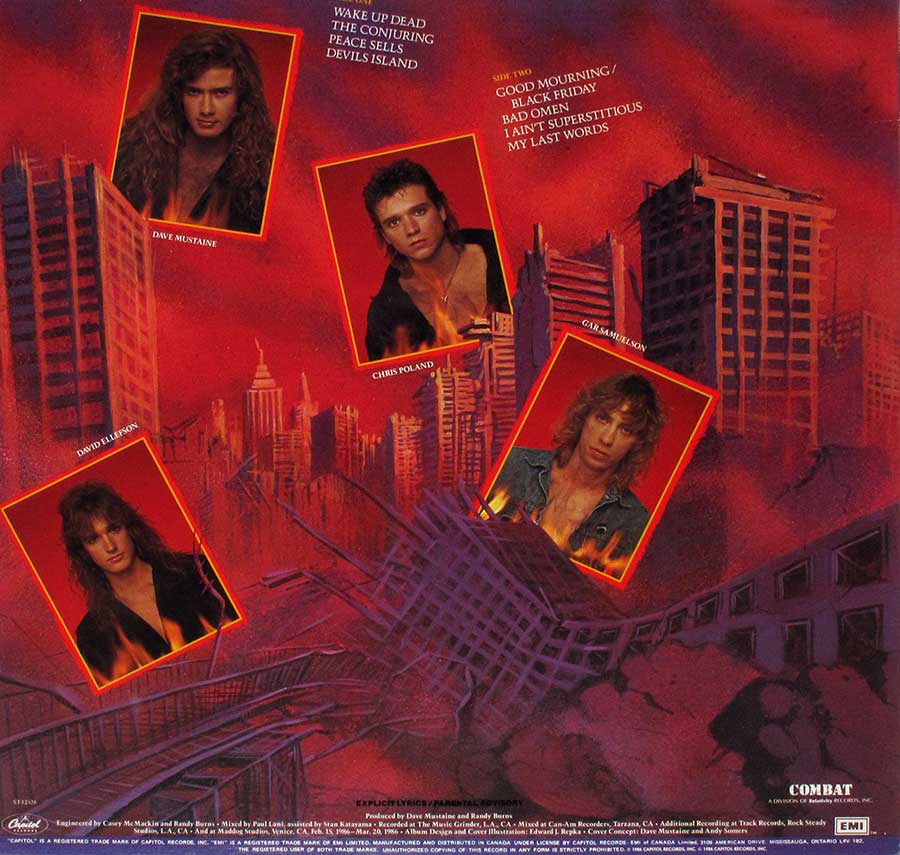
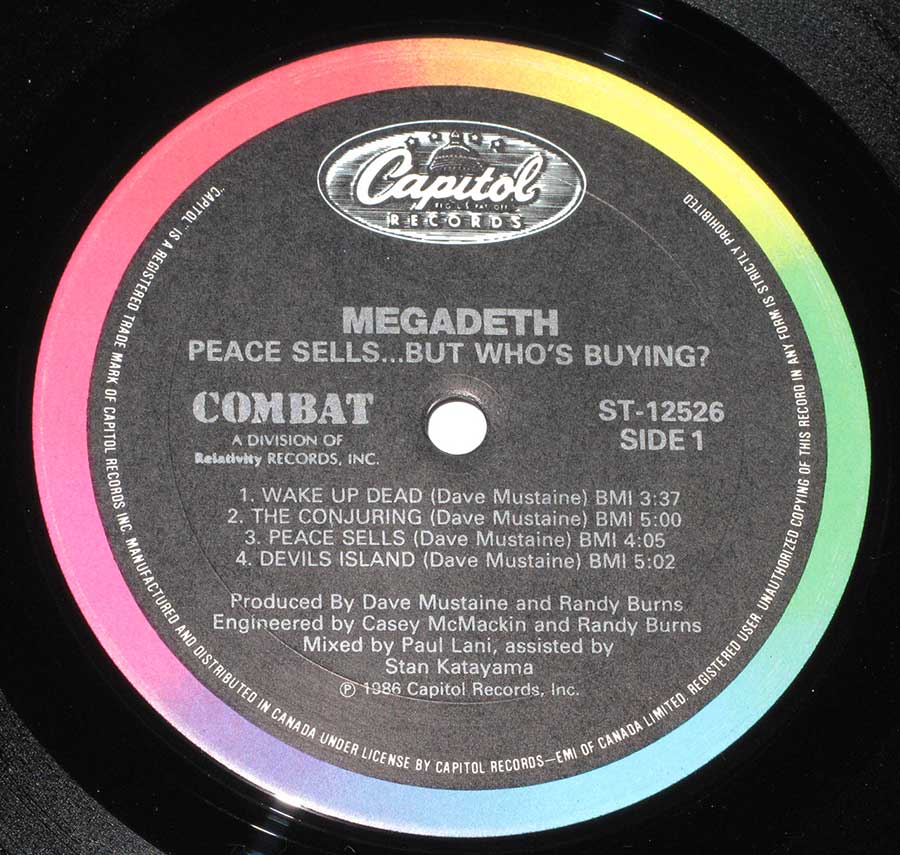
Dave Mustaine co-produced with Randy Burns, and you can feel the push-pull: Mustaine chasing control and detail, Burns keeping the sound hard without turning it into sterile lab metal. Then Capitol brought in Paul Lani for the final mix, which is one of those behind-the-scenes moves that can either save a record or neuter it. Here it mostly sharpens the picture: the instruments separate, the chaos reads.
- Dave Mustaine: riffs like barbed wire; lyrics that glare at politics, hypocrisy, and anyone pretending to be clean.
- David Ellefson: that opening bass line on “Peace Sells” isn’t decoration; it’s the hook you remember in your sleep.
- Chris Poland: leads with a sly, jazzy bend—less “hero pose,” more “watch your wallet.”
- Gar Samuelson: swing and ghost notes inside the speed, making the drums feel human instead of mechanical.
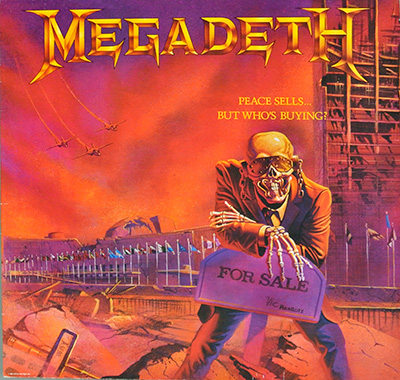
- Ed Repka: cover art that looks like a comic book laughing at the end of the world.

Hard, poster-clean framing with the logo stretched wide across the top, then a big slab of saturated color doing the heavy lifting. The light reads like careful airbrush: smooth gradients, tight highlights, almost no natural softness. Contrast is bold but controlled, with crisp edges built for print, plus a faint halftone bite in the midtones that feels like late-80s offset ink. Plenty of negative space—billboard logic, no clutter.
Band chemistry and fallout
The album’s precision comes from a lineup that could actually play, not just pose, and that matters. Poland and Samuelson brought a rhythmic intelligence that widened the band’s lane—thrash with groove, thrash with timing, thrash that didn’t need to hide behind fuzz and volume. The downside is the classic one: the same scene energy that fuels this stuff also chews people up, and the band’s drug problems weren’t some distant rumor humming in the background. Not long after the promotional run, Poland and Samuelson were out for drug abuse, which is a brutal kind of cause-and-effect you can practically hear between songs.
Controversies and the stuff people get wrong
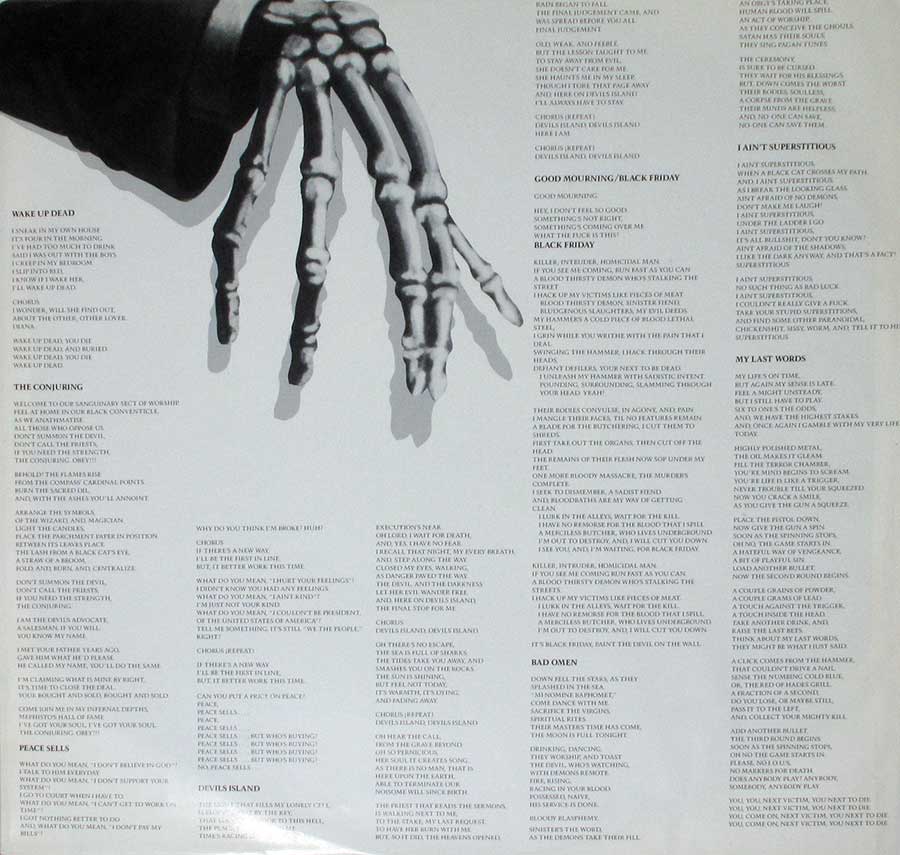
There wasn’t a single clean “scandal of the week” attached to this release, unless you count the era itself—metal getting targeted, misquoted, and treated like a public health hazard by people who probably thought a guitar solo was a gateway drug. The closest thing to a lightning rod inside the album is “The Conjuring,” which openly toys with black-magic language and reads like it knows exactly how it’ll be received. The common misconception is that Megadeth were just doing spooky theatrics; the sharper truth is that a lot of this record is political irritation in guitar form, and it doesn’t bother asking permission.
Also: the title track’s bass intro became an MTV News calling card, and the band still didn’t get the kind of payoff you’d expect for something that ubiquitous. Welcome to the music business—where your hook can become a network bumper and you’re still the guy carrying amps.
One small, everyday vantage point
I remember hearing that “Peace Sells” bass line late at night and thinking it sounded like trouble with a business plan—too catchy to ignore, too sour to be background. Then you’d see the sleeve in a shop bin the next day, and the cover looked like the world outside the window, just drawn with meaner colors.
References
- Wikipedia: "Peace Sells... but Who's Buying?" (background, personnel, MTV News note, release details)
- Megadeth.com: First five major label albums (Billboard 200 peak and sales claims)
- Discogs: "Peace Sells... But Who's Buying?" master entry (credits and session details)
- Wikipedia: Parents Music Resource Center (1980s censorship context)
- Loudwire: anniversary feature (recording window, label situation, context)