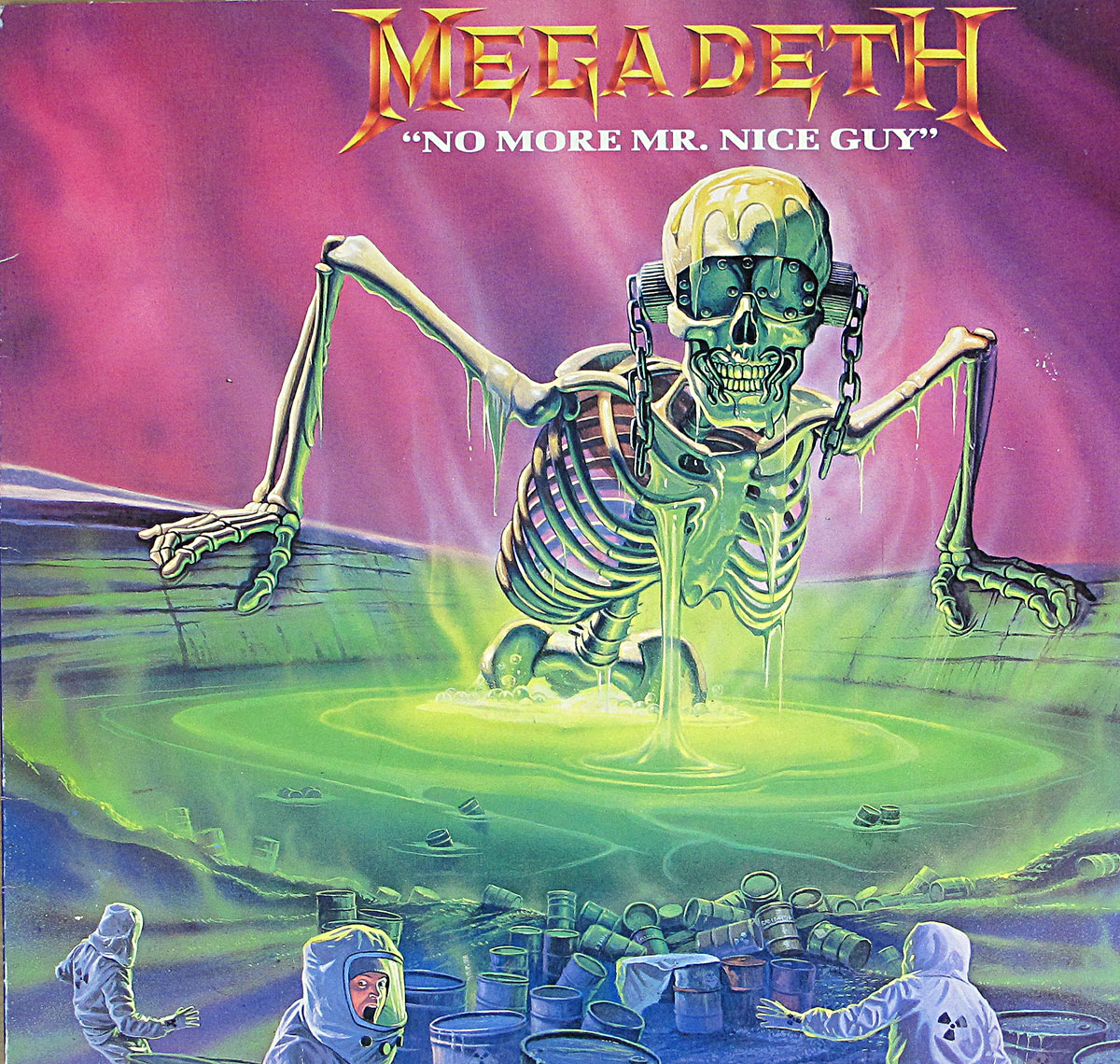
"No More Mr Nice Guy" (1989) Album Description:
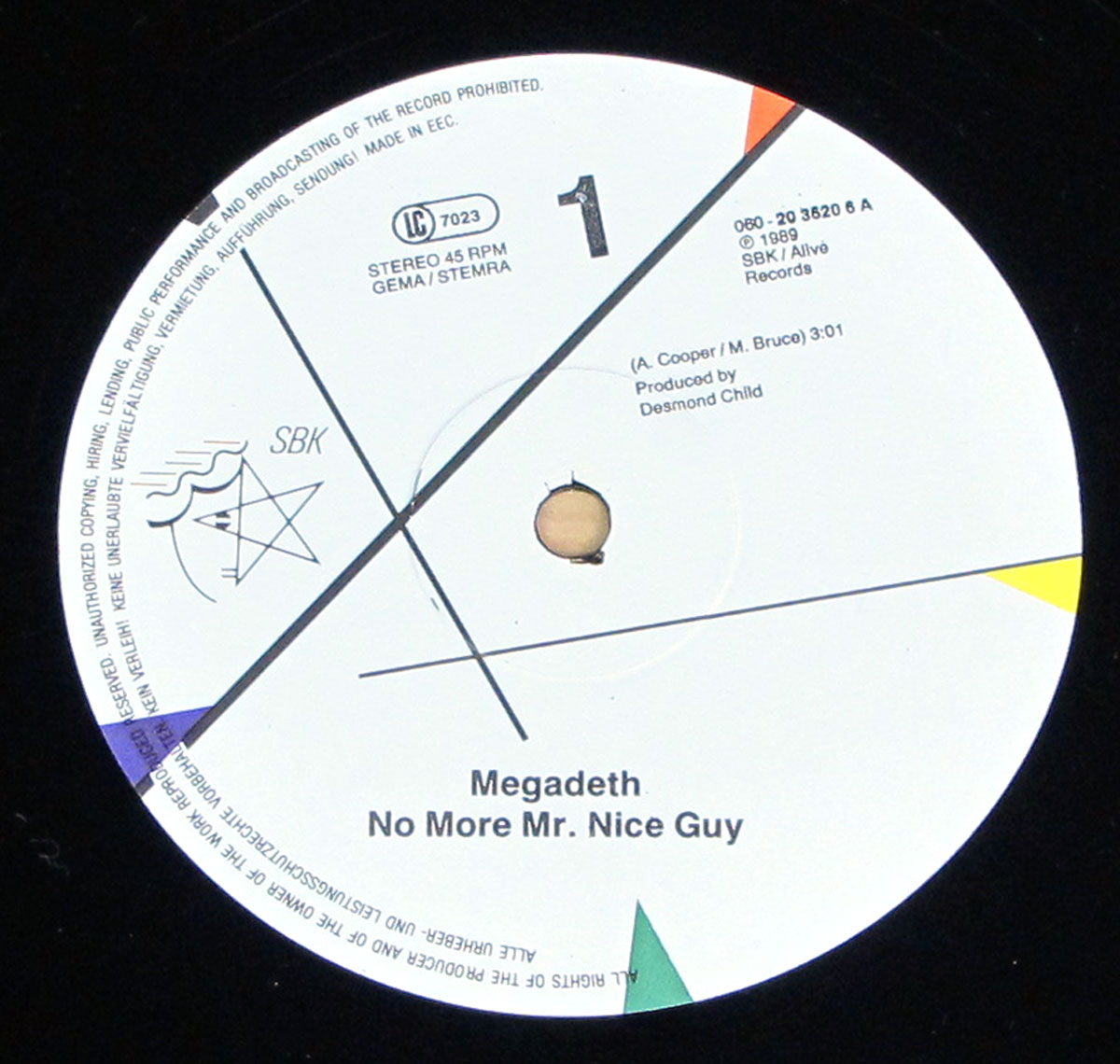
This one isn’t a “single” so much as a little metal crime scene taped to a movie tie-in: Megadeth on side A, then Dead On and Dangerous Toys on the flip, all riding the SHOCKER soundtrack wave. In 1989, that meant you could sneak thrash into places it wasn’t invited, right past the polite people and their polite radio. The title cut comes in hot and sharp, like Mustaine’s grin with the lights turned up—short, loud, and allergic to behaving.
1989 in America: metal with one foot in the gutter, one on a soundstage
The late-’80s U.S. was still coughing up the aftertaste of moral panic, TV outrage, and “think of the children” speeches that always seemed to arrive right after the checks cleared. Meanwhile, the scene behaved like a split personality: hair metal preening under arena lights, thrash grinding its teeth in clubs, and everybody pretending they didn’t watch MTV while secretly watching MTV. Horror movies loved that tension. So did soundtrack people. You could sell menace without having to explain it.
Where this sat in the metal pile
In ’89, thrash was stretching. Some bands were getting slicker, some got meaner, some got lost. Megadeth were in that twitchy middle zone: too technical to be dumb fun, too bitter to be comfort food, and too sharp to fade into the wallpaper.
- Metallica: already thinking in bigger shapes and bigger rooms.
- Slayer: still chasing speed like it owed them money.
- Anthrax: New York bounce, smart-mouth energy, hooks that didn’t apologize.
- Testament: Bay Area muscle with a clean aim.
- Exodus: rawer edge, built for sweat and bruises.
How it feels in the speakers: attack, space, and tempo
“No More Mr Nice Guy” is built to hit fast and leave a dent. The guitars snap instead of bloom, the groove keeps moving even when the riff wants to pick a fight, and the vocal attitude does the rest. It’s not a long story arc; it’s a shove. A chorus you can shout with your friends, even if you don’t like your friends that much.
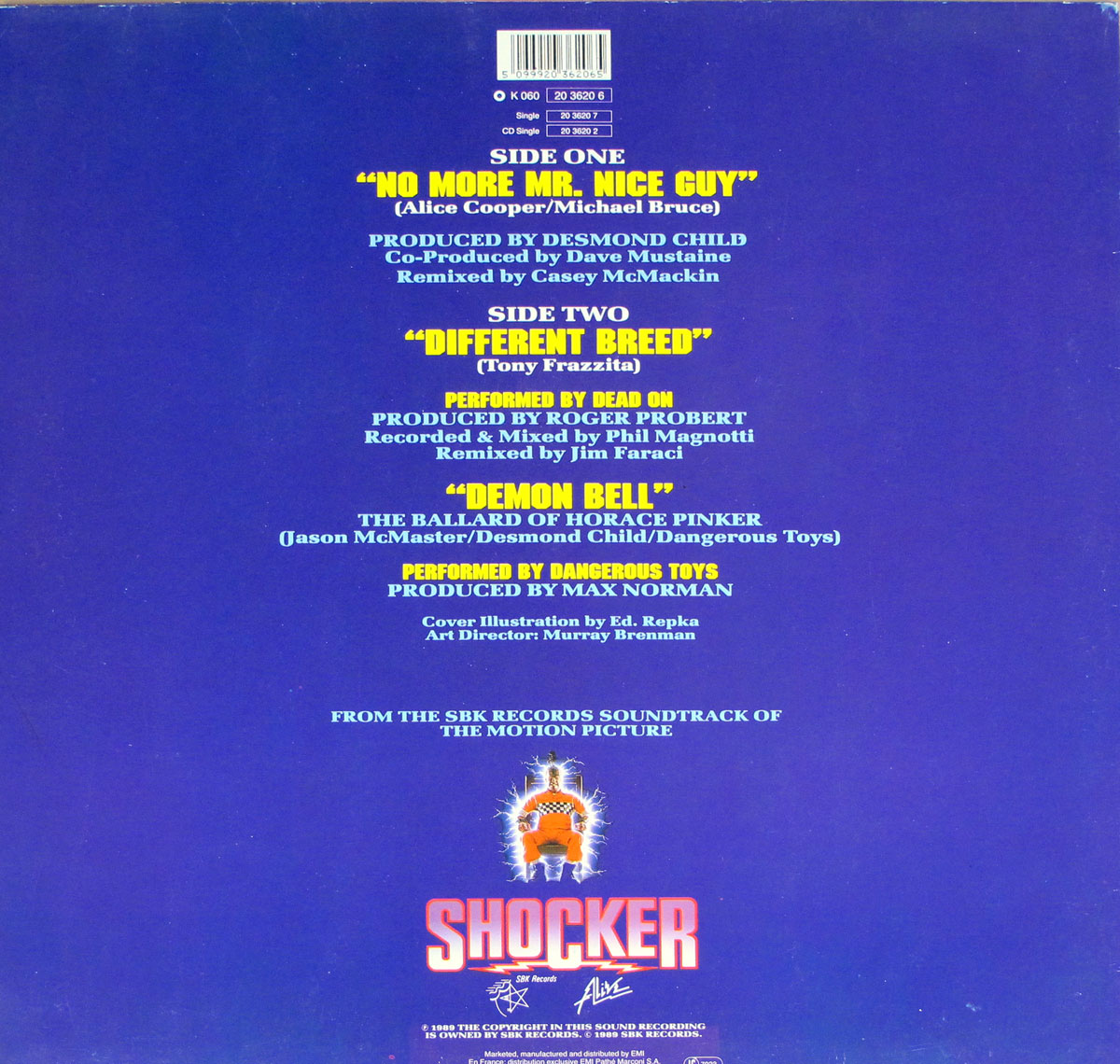
Then the record flips and changes the temperature: “Different Breed” (Dead On) and “Demon Bell” (Dangerous Toys) don’t just fill space, they show what soundtrack metal looked like when labels tried to package “heavy” as a variety box. One side is Megadeth being Megadeth. The other side is the neighborhood.
The people in the credits, and what they actually do
The production line on this page reads like a collision: Desmond Child, Roger Probert, Max Norman. Child is the eyebrow-raiser if you know his usual neighborhood; Norman makes more sense if you want weight without fog; Probert sits in the practical middle, the guy who can keep a band from sounding like it was recorded inside a washing machine. Whatever the exact split of duties, the intent is clear: make it punchy, make it readable, make it work next to a movie logo.
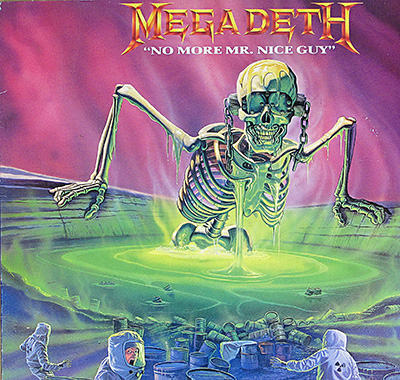
And Ed Repka handling the cover illustration is the final bit of salesmanship with teeth: bright, nasty, comic-book menace that looks great from six feet away, which is exactly how most people first met records in 1989.

It’s horror, but it’s horror with a grin and a switchblade tucked behind its back. The whole cover reads like a warning label blown up to LP size: toxic greens, glossy slime, and hard airbrushed contrast that makes “nice” look like a dumb hobby. It’s not aiming for subtle symbolism—more like a loud, cartoonish sneer at politeness, as if the world’s been marinated in something industrial and the only sane response is to laugh and turn it up. The message feels like: stop pretending everything’s fine, because the rot is already glowing in the dark.
Band motion: lineup as cause-and-effect, not trivia
This era is Megadeth in transition: the band tightening up, personalities colliding, and Mustaine steering like he’s driving on ice. A soundtrack cut is perfect for that moment because it doesn’t require a grand statement, just a clean strike. You can hear a group trying to stay dangerous while also staying employable. That’s not “selling out.” That’s surviving the decade.
Controversy, or the lack of it (and what people get wrong)
There isn’t one neat scandal stapled to this release. The controversy is the era: metal getting treated like a public hazard, horror films getting blamed for the same old social anxieties, and everyone acting shocked that shock sells. The common misconception is funnier: some people assume this track is an Alice Cooper collaboration because the song carries his shadow. It’s a cover, not a duet, and Megadeth aren’t here to share the spotlight anyway.
One quiet personal anchor
I remember seeing the title in a shop bin and thinking, “Soundtrack single? Sure.” Then that first punch lands and suddenly you’re standing there longer than you planned, pretending you’re just browsing while your brain does the math.