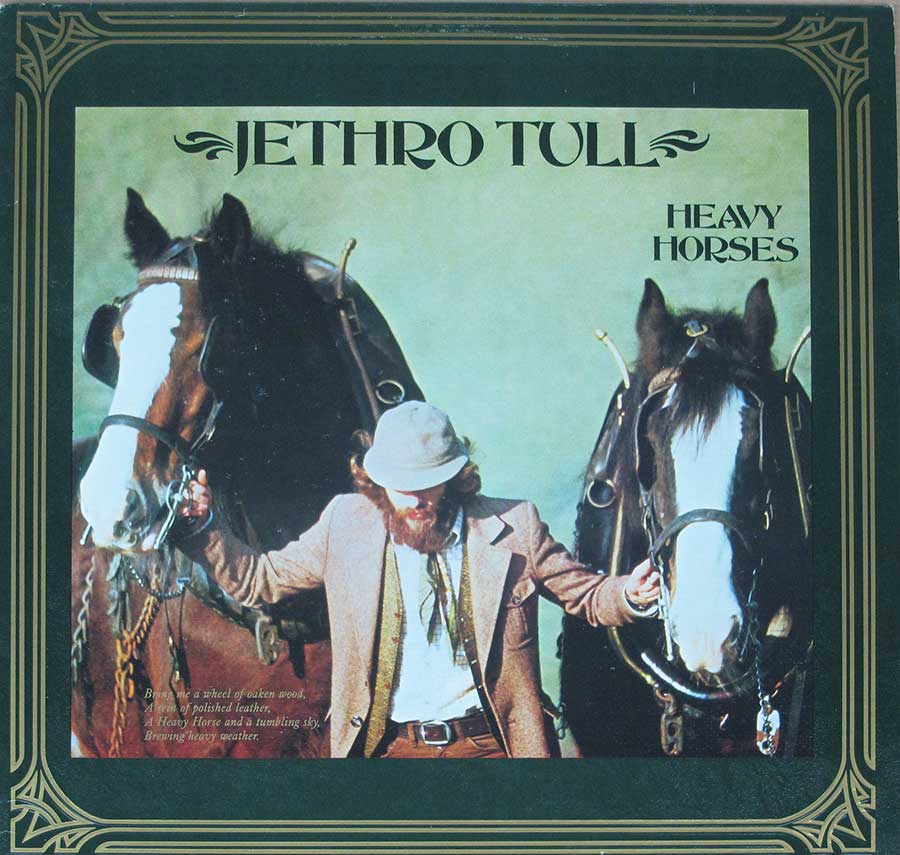
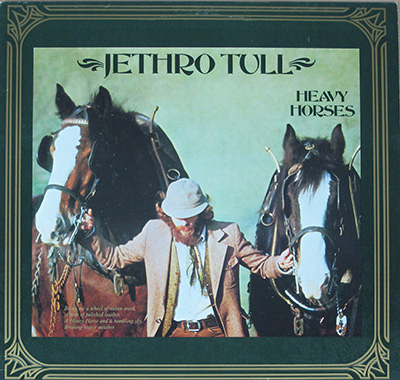
In the realm of progressive rock, where musical landscapes shift and evolve, Jethro Tull's "Heavy Horses" stands as a testament to the band's restless spirit and unwavering commitment to pushing boundaries. Released in 1978, the album arrived at a time when punk's raw energy was shaking the foundations of the music industry. Yet, Jethro Tull, led by the enigmatic Ian Anderson, defied the prevailing trends and crafted a work that celebrated the pastoral beauty of the English countryside while delving into the complexities of rural life.
"Heavy Horses" is an album that embraces its folk roots while incorporating elements of rock, jazz, and even classical music. It's a sprawling, ambitious work that demands the listener's attention and rewards repeated listens. From the opening strains of the title track, with its driving rhythm and Anderson's flute soaring like a bird of prey, to the wistful melancholia of "Acres Wild," the album paints a vivid picture of a world that is both familiar and otherworldly.
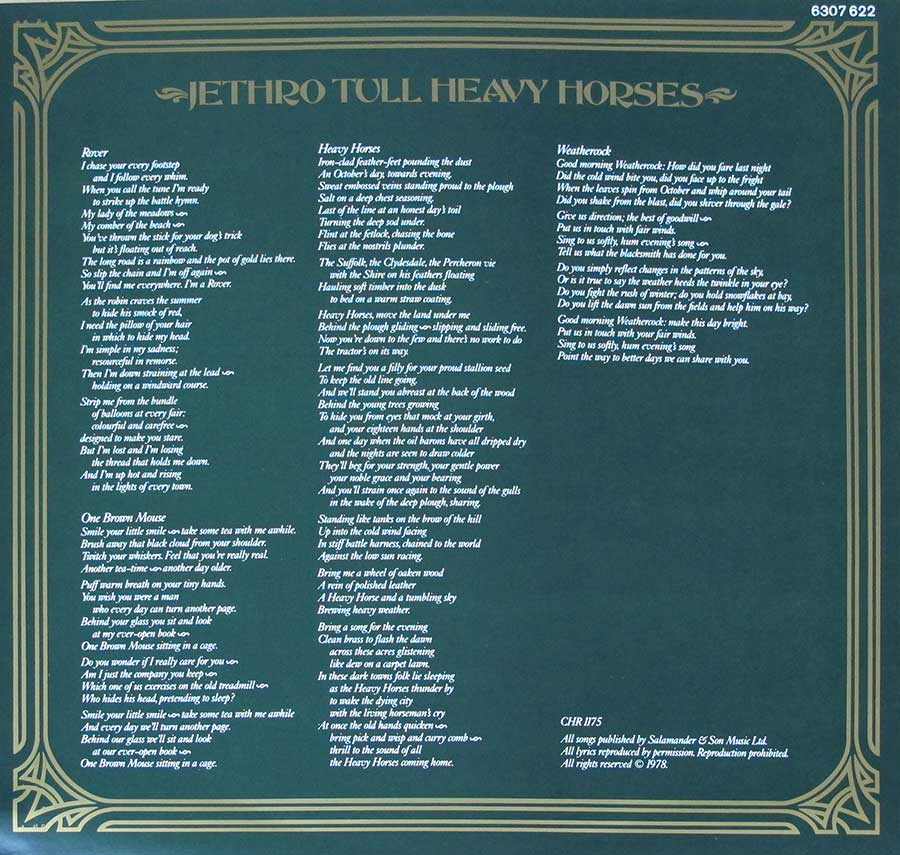
At the heart of "Heavy Horses" lies a deep connection to the land. Anderson's lyrics are steeped in rural imagery, evoking images of rolling hills, sturdy farmhouses, and the tireless toil of those who work the land. But this is not a romanticized vision of the countryside. Anderson confronts the harsh realities of rural life, the struggles of farmers, and the changing face of agriculture. Songs like "Moths" and "No Lullaby" delve into the darker side of rural life, exploring themes of loss, isolation, and the fragility of human existence.
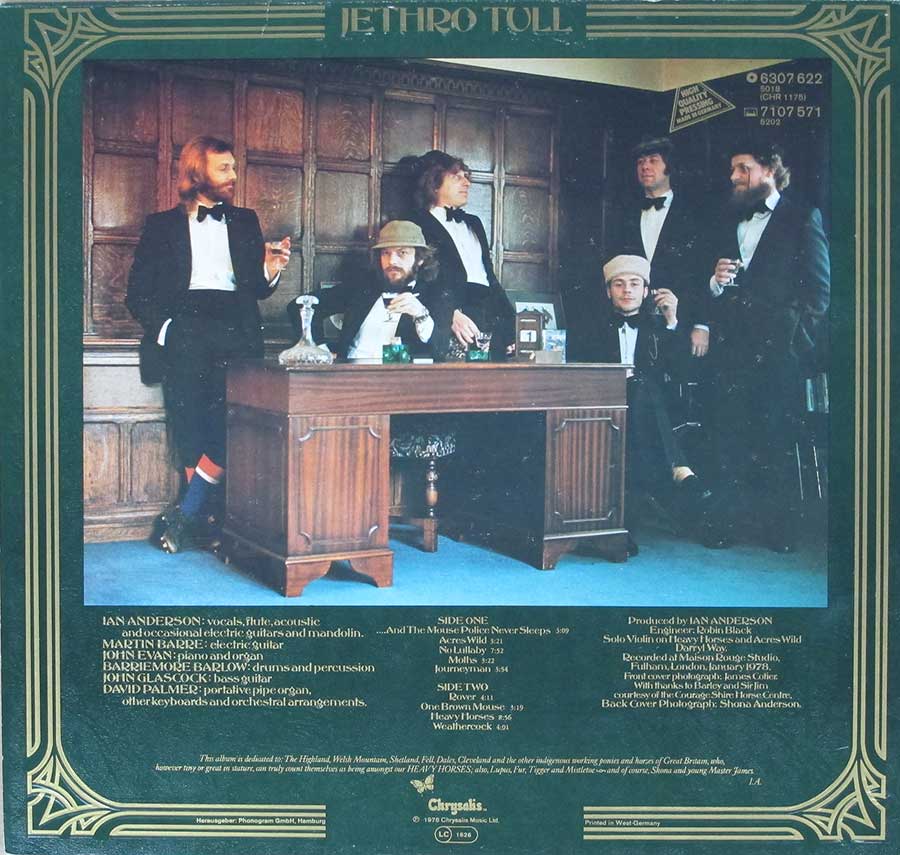
Musically, "Heavy Horses" is a masterclass in progressive folk rock. The band's virtuosity is on full display, with Martin Barre's guitar work weaving intricate patterns around Anderson's flute and vocals. The rhythm section, anchored by Barriemore Barlow's powerful drumming, provides a solid foundation for the band's musical explorations. The album also features a rich tapestry of acoustic and electric instruments, from mandolin and accordion to synthesizer and electric piano. One of the standout tracks, "One Brown Mouse," showcases the band's playful side with its whimsical lyrics and catchy melody.
The production, helmed by the legendary Robin Black, captures the warmth and intimacy of the band's performance while allowing the music to breathe. Recorded at Maison Rouge Studio in Fulham, London, the album's sound is both organic and polished, a testament to the skill of the engineers and the vision of the band.
"Heavy Horses" is not without its controversies. Some critics accused the band of abandoning their rock roots in favor of a more pastoral sound. Others found Anderson's lyrics overly sentimental and nostalgic. Yet, the album's enduring popularity speaks to its power and resonance. Fans have debated the meaning of Anderson's lyrics, with some interpreting them as a commentary on the Industrial Revolution and others seeing them as a personal reflection on the passage of time.