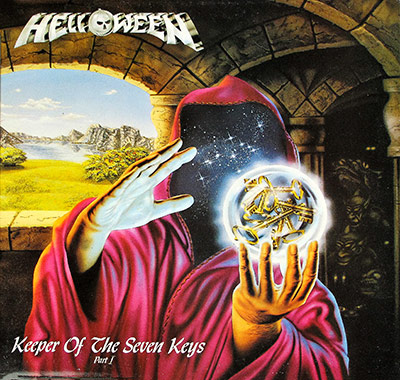
"Keeper of the Seven Keys - Part I" Album Description:
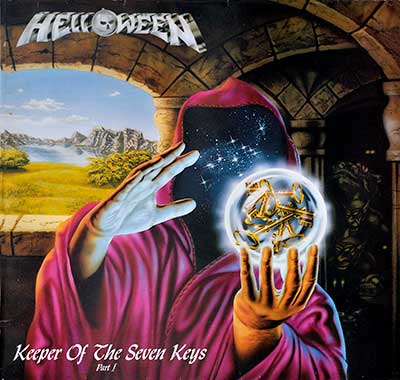
The iconic album "Keeper of the Seven Keys - Part I" by Helloween holds a special place in the annals of heavy metal history. Released as a gatefold 12" vinyl LP, this genuine German issue/pressing boasts distinct features that set it apart, making it a sought-after collector's item for fans of the genre.
The creation history of this album is rooted in the vibrant metal scene of the 1980s. Helloween, a German power metal band formed in 1984, was at the forefront of the burgeoning movement. The band, consisting of members Kai Hansen, Michael Weikath, Markus Grosskopf, Ingo Schwichtenberg, and a young vocalist named Michael Kiske, embarked on a musical journey that would leave an indelible mark on the metal landscape.
"Keeper of the Seven Keys - Part I" was unleashed upon the world on May 23, 1987. The album marked a significant evolution in Helloween's sound, pushing the boundaries of power metal with its ambitious compositions and virtuosic performances. The release is heralded for its melodic sensibilities, intricate guitar work, and the soaring vocals of Michael Kiske.
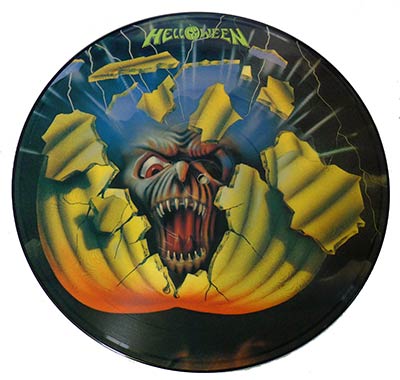
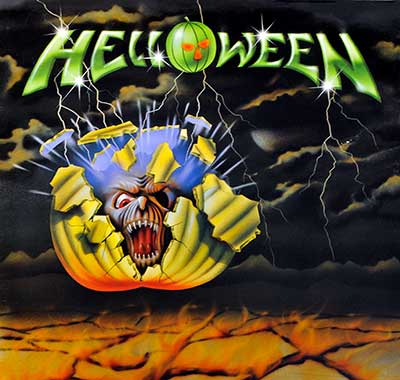
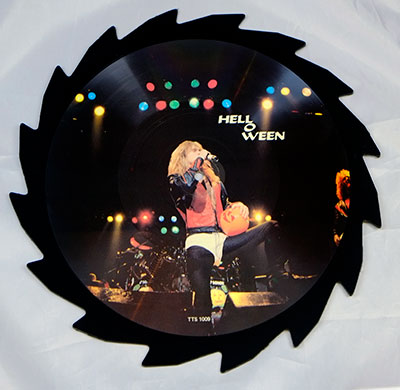
The gatefold 12" vinyl LP format adds to the allure of this edition. The gatefold design allows for a larger canvas, providing ample space for the captivating artwork associated with the album. In the case of this particular release, the distinctive black label with white artwork serves as a visual identifier, distinguishing it from other pressings.
The gatefold sleeve often includes additional elements such as lyrics, band photos, and credits, enhancing the overall listening experience for dedicated fans. The tactile nature of vinyl, combined with the visual elements of the gatefold, creates a multisensory journey that complements the auditory feast offered by the music itself.
Collectors and enthusiasts covet this genuine German issue for its authenticity and the unique characteristics associated with the black label and white artwork. The album's status as a landmark in power metal further adds to its desirability among aficionados of the genre.
|
Album Production information:
The album: "HELLOWEEN - Keepers of the Seven Keys Part I" was produced by:
Tommy Newton, Tommy Hansen Tommy Hansen: the Danish Sound Engineer and Prodicer, delve into his world and the albums that shaped a genre, his lasting influence on heavy metal,
and the stories behind the music.
Tommy Newton – Producer, Sound Engineer, Guitars My kind of studio weapon: Victory's guitarist who helped steer Helloween's "Keeper" era from behind the desk. Read more... Tommy Newton, Stuttgart-born producer, engineer, and six-string troublemaker who helped German hard rock sound bigger than its budget. After early miles with Pancake (1974-?) and Sphinx (to 1981), he joined Fargo (1981-1984) and then co-founded Victory, playing and shaping that machine from 1984-1996 and again 2003-2011. His producer breakthrough landed with Helloween's "Keeper of the Seven Keys" Parts I & II (1987-1988), records credited with million-plus sales. After a USA stint in 1990, he built Stairway to Heaven (1993) and later ran Area 51 Recording Studios in Wathlingen still the kind of control-room muscle you hear before you see.
Sound/Recording Engineer(s):
Tommy Hansen, Tommy Newton
This album was recorded at:
Horus Sound Studio, Hannover , November-December 1986 & January 1987
Horus Sound Studio– Recording studio (Hannover, Germany)
Horus Sound Studio is the Hannover birthplace of Teutonic thrash—founded in 1979, the room where that German riff-machine learned mayhem, and somehow always near the scene of the riff-crime.
Read more...
Horus Sound Studio doesn’t announce itself with fireworks; it just sits there in Hannover and keeps ending up on the back of records that sound like they were forged, not “produced.” The name starts showing up, then showing up again, until it’s basically living on my shelf rent-free.
Frank Bornemann built the place in 1979, and that date matters because it tells you this wasn’t some latecomer cash-in. This was infrastructure. A real room with real walls that could take volume without flinching.
Sleeves get flipped, credits get scanned, and suddenly there it is: Steeltower hammering out
Night of the Dog
(recorded and mixed Jan–Sept 1984), Living Death pushing
Metal Revolution
through the desk (recorded and mixed Aug 1985). Both of them sound like the amps were slightly insulted to be treated “professionally.” Love that. No cap.
Then the bigger names start piling in, and the pattern gets almost suspicious. Kreator tracking and mixing
Terrible Certainty
in 1987. Sabbat cutting
History of a Time to Come
in Sept 1987. Helloween grinding through the winter of 1986–1987. Sodom getting
Agent Orange
mixed there in April 1989. Not a coincidence. More like the studio knew how to keep the edges sharp instead of sanding them down for “radio.”
Plenty of studios capture sound. Horus captures intent—the part where a band decides to stop asking permission. Anyone calling that “just a room” is either lying or has never heard what a good room does to a hungry band.
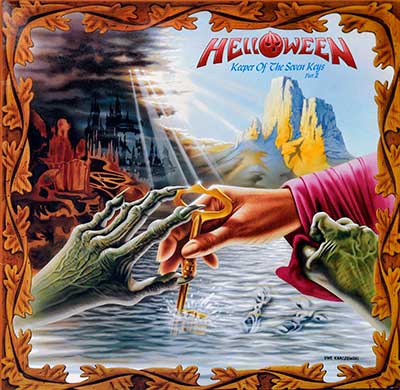
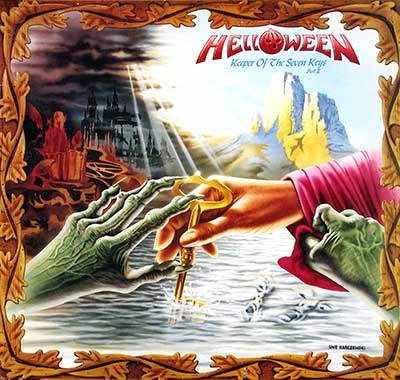
Album cover design:
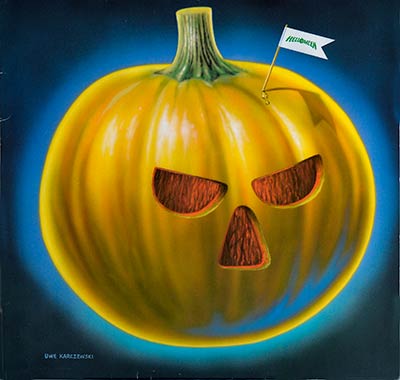
Edda & Uwe Karczewski, Hamburg
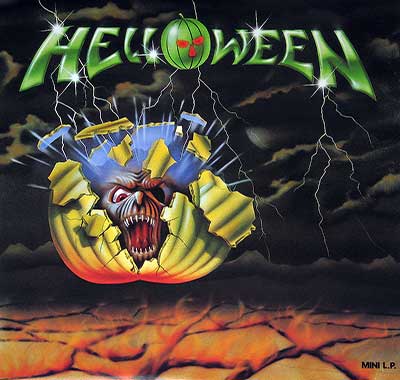
Uwe Karczewski – German graphic artist (album cover designer)The name in the credits that explains why your eyes stay on the sleeve longer than they should. Read more... Uwe Karczewski, I notice him the same way I notice a good riff: not immediately, then suddenly I can’t unsee it. I’ve had nights where the record is already playing and I’m still stuck under a desk lamp, turning the cover like it’s evidence. That’s the Karczewski effect—1980s heavy metal fantasy art that doesn’t politely “support” the music, it shoves it forward. His best-known stretch is tied to Helloween’s early era, with cover credits in the 1985–1988 run: the Helloween EP (1985), Walls of Jericho (1985), Keeper of the Seven Keys: Part I (1987) and ...Part II (1988). And then he shows up again on Iron Angel—Hellish Crossfire (1985) and Winds of War (1988)—because apparently the 80s still needed more fire and steel on cardboard. Some cover art just sits there. His stuff kind of stares back. Uwe Karczewski Wiki
Front cover concept: K. Hansen & Limb
Inner and back cover concept: Limb
Album cover photography: Jurgen Muller
|
|
Record Label & Catalognr:
Noise International N 0057 |
|
Media Format:
12" Vinyl Full-Length Stereo LP Gramophone Record
Album weight: 270 gram |
| Year & Country: 1987 Made in Germany |
Band Members and Musicians on: Helloween Keeper of the Seven Keys Part I
|
Helloween Band Members/Musicians
- Markus Grosskopf - Bass
- Markus Grosskopf – Bass
Some bassists “hold it down.” Grosskopf drags the whole band forward by the belt. You feel it in your ribs before you can even name it. Read more... Markus Grosskopf is Hamburg through and through, and I mean the practical kind of Hamburg: show up, plug in, make it work. Born in 1965 and active since 1978, he’s the founding Helloween bassist who makes speed feel organized—like somebody finally put the chaos on a timetable. The part I always grin at is how unglamorous it starts. He’s a kid with a bass because the room needs one, and suddenly he’s bashing through punky stuff in a space that probably smells like cables and bad decisions. Then he goes looking for something heavier and lands in Kai Hansen’s band Second Hell, right before that early Helloween crew locks in with Michael Weikath and the name becomes official in 1984. I’ve got a dumb little ritual: grey morning, coffee going cold, I throw on an early cut just to check whether the bottom end still feels like steel. It does. Grosskopf doesn’t “support” the guitars—he keeps them honest. And by 1990, when he’s also involved with Mr. Prooster, you can already tell he’s the type who won’t sit still just because the main band is rolling.
- Michael Weikath
- Guitars
- Michael Weikath – Guitar
I keep him filed under “sunlight with a switchblade.” The kind of guitarist who makes a chorus feel friendly right up until it knocks your drink over. Read more... Michael Weikath is Hamburg-born and stubbornly melodic, and I mean that as a compliment and a warning. I’ve heard plenty of fast guitar players. He’s one of the few who sounds like he’s arguing for the hook. Not begging. Arguing. Back when I was still judging bands by how quickly they could light up a cheap club PA, his trail starts in 1978 with Powerfool—kids with amps and ambition, basically, the classic “we’ll sleep later” setup. Then he slides into the early Helloween gravity in 1982, when things are still half-formed and hungry, before the band plants the official flag in 1984 and starts turning Hamburg sweat into something the whole world eventually copies. What I like about Weikath is the discipline. The riffs don’t wander off to show off. They march. They steer the song, they herd the chorus into place, and they don’t apologize for being bright. Some metal people act allergic to joy—like a melody will ruin their leather. Weikath never got that memo, and thank God. His playing keeps saying: you can be fast, sharp, and still sing. And if that bothers you… that’s kind of the point. Michael Weikath Wiki
- Ingo Schwichtenberg
- Drums
- Ingo Schwichtenberg – Drums
He didn’t just keep time. He grabbed it by the collar and yanked it into the spotlight—still grinning. “Mr. Smile” wasn’t a marketing trick. It was the face you got even when the tempo was trying to run away. Read more... Ingo Schwichtenberg is the founding Helloween drummer I think of when people romanticize “the early days” but forget the work. Hamburg bred, active from 1978 to 1993, he played like the kit was a moving vehicle and he’d rather steer than sit politely in the back. That kick wasn’t decoration. It was a decision. Before Helloween was official in 1984, he’d already been grinding through the local trenches with bands like Gentry and Iron Fist—those pre-fame rooms where the air is warm, the amps are cheap, and nobody cares about your “image,” only whether you can hold the song together when everything else gets loud. He learned the hard way. You can hear it. From 1984 until 1993 he’s the engine behind Helloween’s first era, and I’ll be honest: I prefer that urgency to a lot of the later, shinier perfection. He hits like he means it, but he doesn’t smear the music—he snaps it into place. Fast, clean, a little dangerous. The kind of drumming that makes you stand closer to the speakers even though you know you shouldn’t.
- Michael Kiske
- Lead Vocals
Michael Kiske, the legendary German vocalist, is best known for his soaring vocals and dynamic range in Helloween. As the frontman for their iconic Keeper of the Seven Keys albums, he helped define power metal’s golden era. His influence spans solo projects and collaborations, making him one of the genre’s most revered voices.
Learn more in Michael Kiske’s Biography.
- Kai Hansen
- Kai Hansen – Vocals, Guitars
Kai Hansen always shows up before I’m ready, like a starting pistol firing behind the sofa while the coffee is still cooling. Read more... Kai Hansen feels less like a traditional frontman and more like a force that leans too far forward and drags the band with him. In the early Helloween years, guitars came first and vocals followed almost by necessity, from 1984 through the late ’80s when everything still felt fast, risky, and unfinished. When he left in 1989 it wasn’t drama, just impatience in motion. Gamma Ray didn’t slow anything down; it doubled the pressure, speed with a grin that still had teeth. These songs don’t stroll or explain themselves. They shove, they dare, and they expect you to keep up.
|