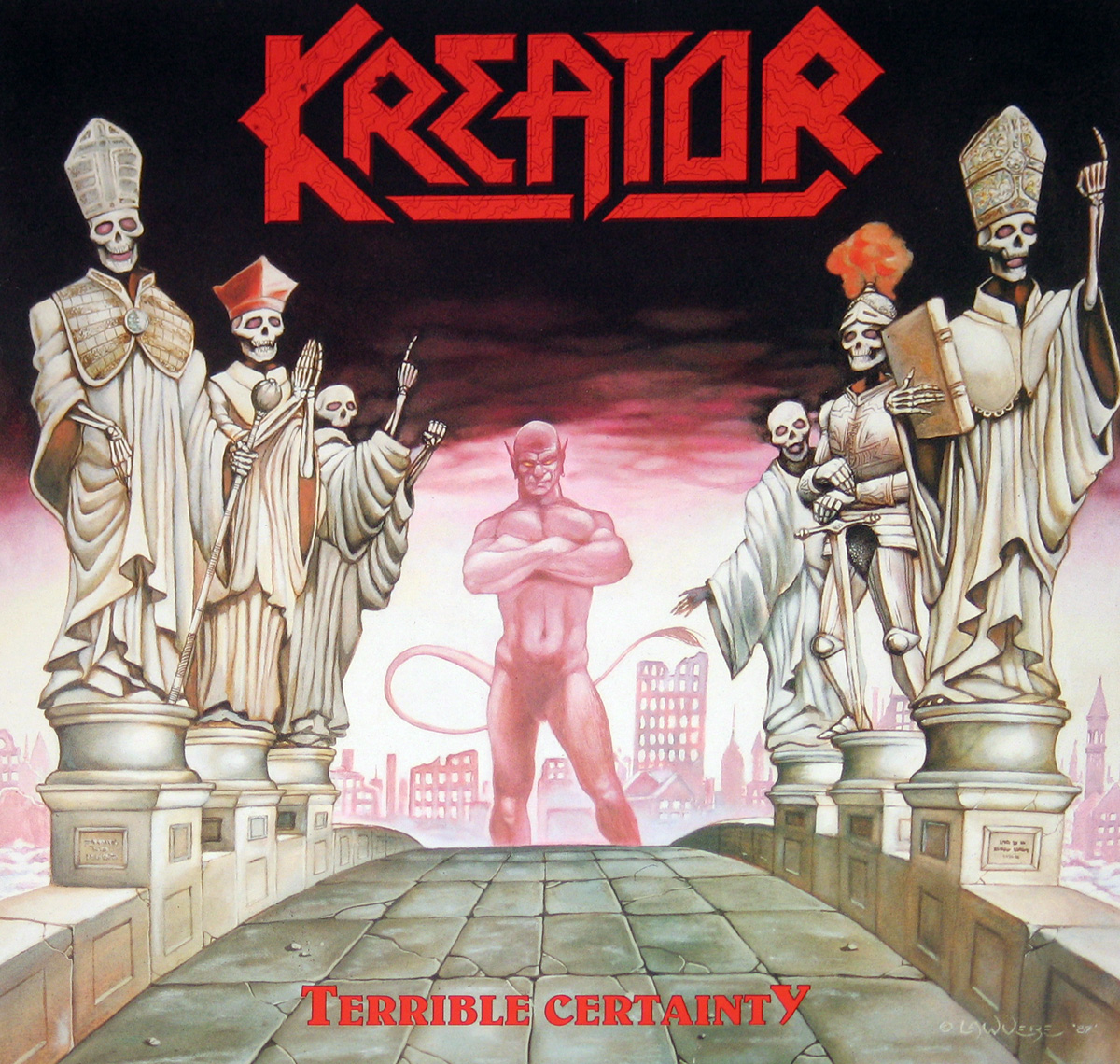
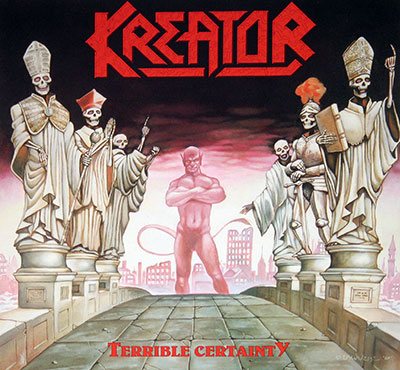
"Terrible Certainty" (1987) Album Description:
KREATOR hit 1987 like a steel door kicked off its hinges, and "Terrible Certainty" is the sound of a band leveling up without sanding off a single sharp edge. It’s fast, mean, and weirdly focused, like they finally decided to aim the chaos instead of just throwing it at the wall.
Introduction
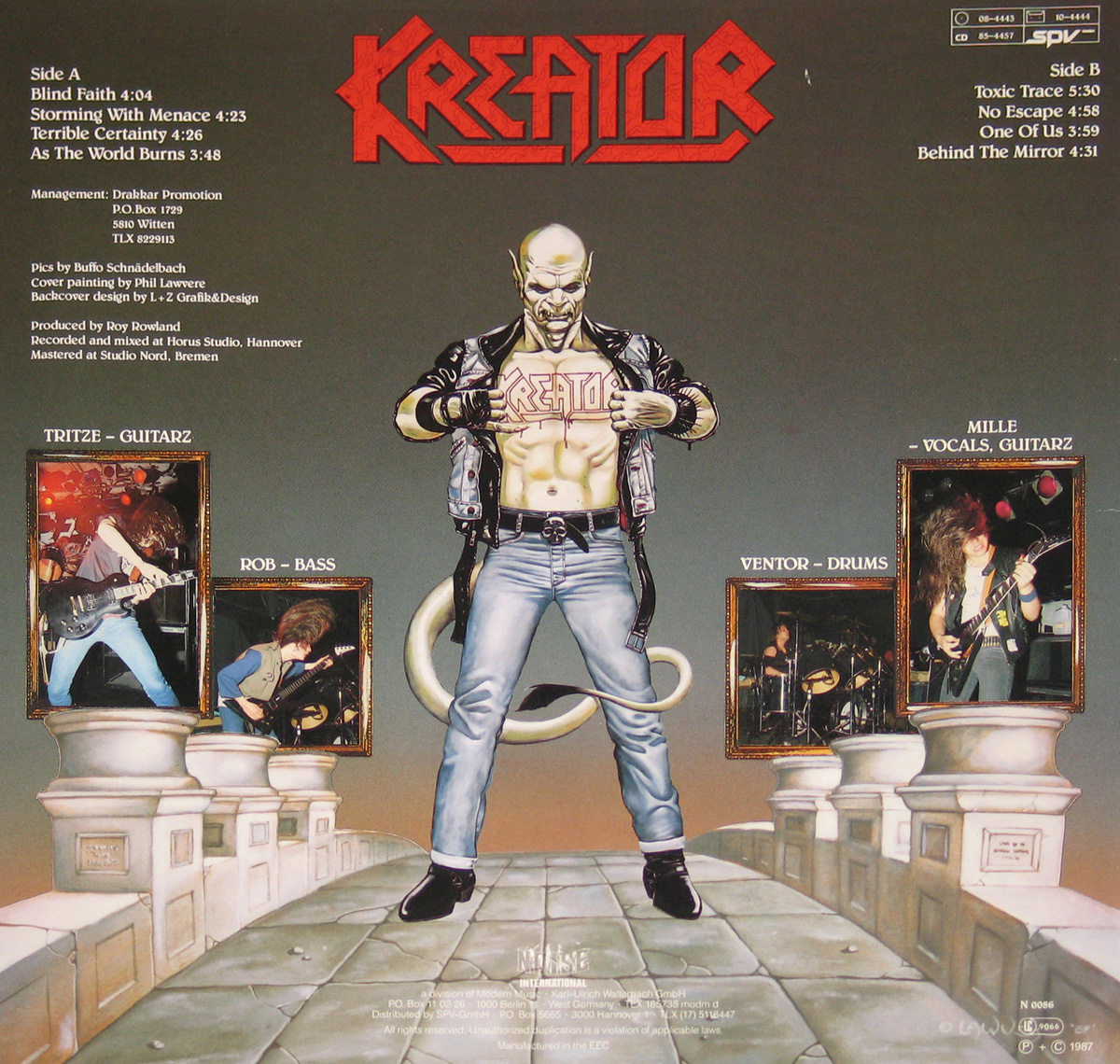
This is the record where Mille Petrozza sounds less like he’s chasing the riffs and more like he’s commanding them. Recorded in Hannover at Horus Sound Studio and steered by Roy "Macaroni" Rowland, it’s Teutonic thrash with a spine: disciplined, hostile, and totally allergic to mercy.
Historical and cultural context
In West Germany in the late 1980s, the air still felt charged with Cold War tension, industry, and that slightly paranoid sense that the future might arrive wearing boots. Metal soaked it up, and thrash turned it into motion: not just speed for speed’s sake, but speed as survival.
By 1987, thrash had grown into a global knife fight: the Bay Area was getting sharper and more “professional,” while Germany doubled down on grit and urgency. "Terrible Certainty" sits right in that moment where the underground is getting noticed, but still refuses to behave.
How the band came to record this album
Coming off the raw brutality of their earlier run, KREATOR arrived at this album like a crew that had toured hard, learned fast, and stopped tolerating their own loose screws. You can feel the ambition: tighter songs, harder turns, and a sense that they wanted to be more than “the loud German kids.”
Noise International gave them a platform, but the vibe here isn’t “label polish,” it’s “we’re going to hit even harder, just cleaner.” Rowland helps bottle that energy without neutering it, which is basically the holy grail of 80s thrash production.
The sound, songs, and musical direction
The guitar tone is razor-straight and unforgiving, the drums snap like machinery, and the whole record moves with that forward-leaning panic that only the best thrash has. It’s not sludge, it’s not glam, it’s not here to flirt; it’s here to sprint.
"Blind Faith" opens the doors with a confident shove, and the title track "Terrible Certainty" feels like a mission statement: speed with purpose, aggression with structure. Then "Toxic Trace" and "Behind the Mirror" keep the pressure up, mixing paranoia and momentum like they’re the same chemical.
Lyrically and atmospherically, the page’s nod to dystopian themes fits: the record has that cold, metallic dread where the world isn’t ending in a fireball, it’s just becoming less human one riff at a time. It’s bleak, but it’s the kind of bleak you can mosh to, so… silver lining.
Comparison to other albums in the same genre/year
In 1987, thrash didn’t have one “correct” sound; it had factions. "Terrible Certainty" holds its own by sounding both more precise and more dangerous than a lot of its peers, like someone tightened the bolts on a weapon and then dared you to stand in front of it.
- Compared to the cleaner, crowd-commanding punch of Anthrax in 1987, KREATOR feels harsher and more industrial, less party pit and more riot drill.
- Next to Germany’s own thrash wave that year, "Terrible Certainty" comes across as unusually controlled, like they’re chasing maximum impact per second.
- If you line it up with other late-80s European extremes, this album is the bridge between raw ferocity and the tighter, more “international” sound the scene was about to chase.
Band dynamics and creative tensions
The lineup here feels locked in: two guitars pushing that serrated rhythm wall, a bass that doesn’t wander, and drums that fire like a metronome with anger issues. You don’t get this kind of tightness by accident; it reeks of rehearsal rooms, long drives, and the quiet terror of wasting your one shot.
The tension you can hear isn’t soap-opera stuff, it’s musical tension: speed versus clarity, chaos versus control. "Terrible Certainty" wins because it refuses to pick just one.
Critical reception and legacy
This album has the kind of reputation that doesn’t need hype stickers: it’s a cornerstone for anyone who wants to understand why Teutonic thrash mattered. It helped cement KREATOR as more than a regional phenomenon, and it still gets referenced because it captures that era’s brutal efficiency without sounding dated in the wrong ways.
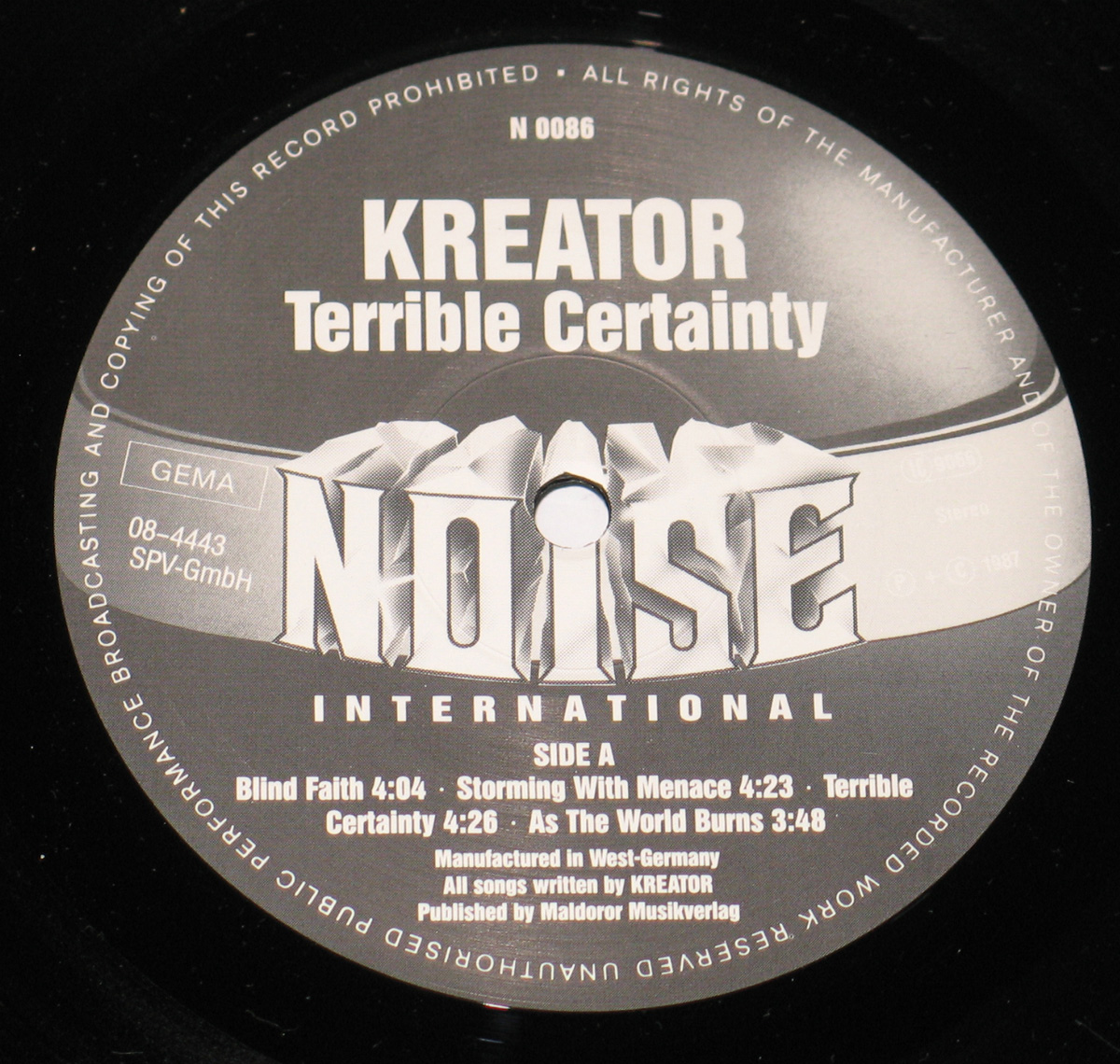
On vinyl, it’s also a perfect time capsule: sleeve in hand, you can practically smell the rehearsal sweat and cheap beer trapped between the grooves. Some records age like antiques; this one ages like a weapon you forgot you owned.