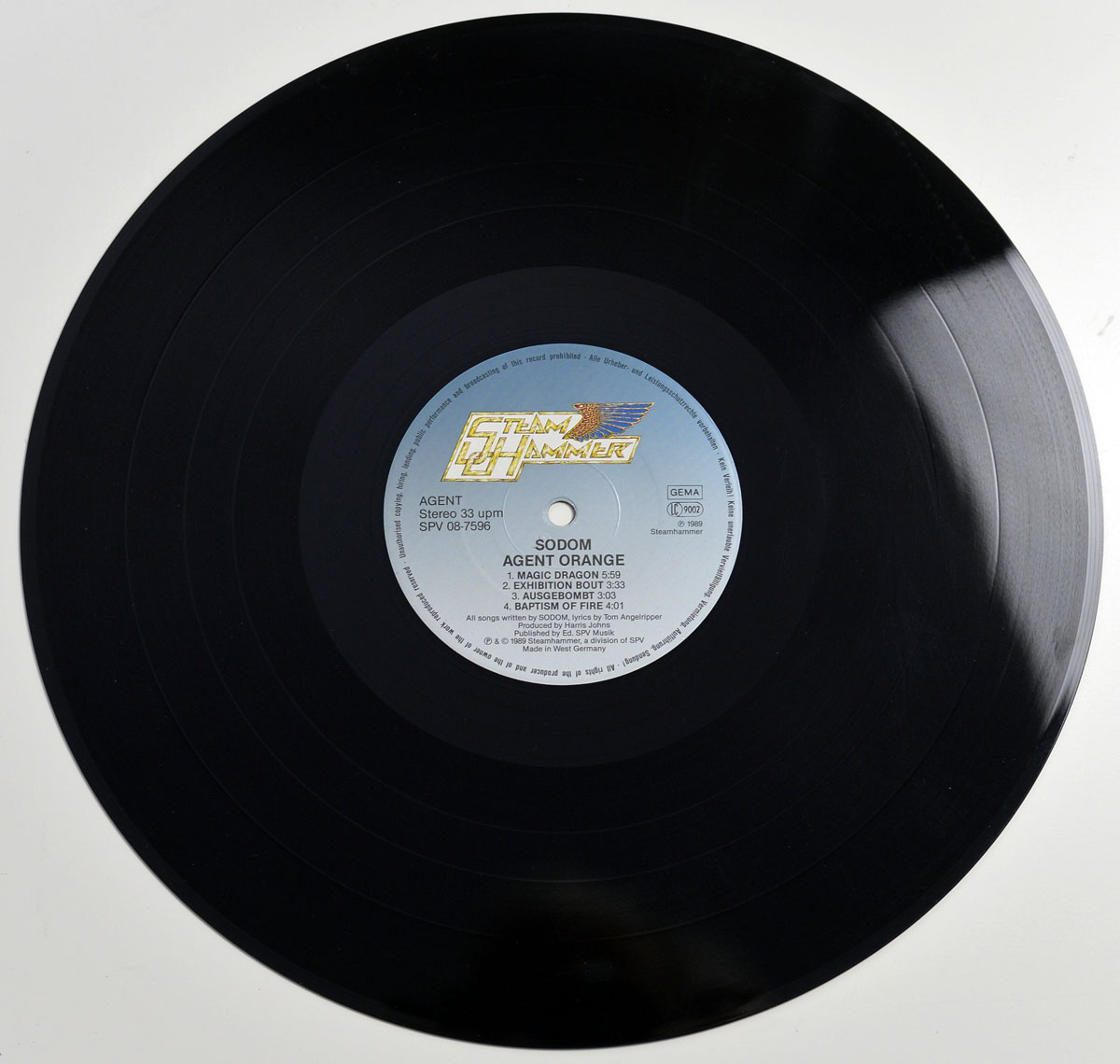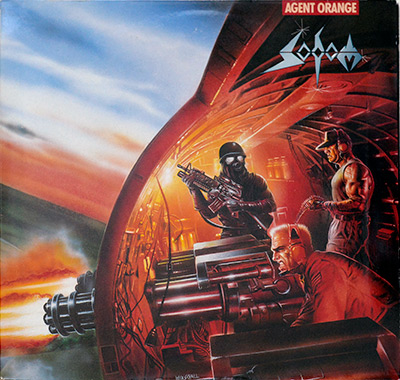
"Agent Orange" (1989) Album Description:
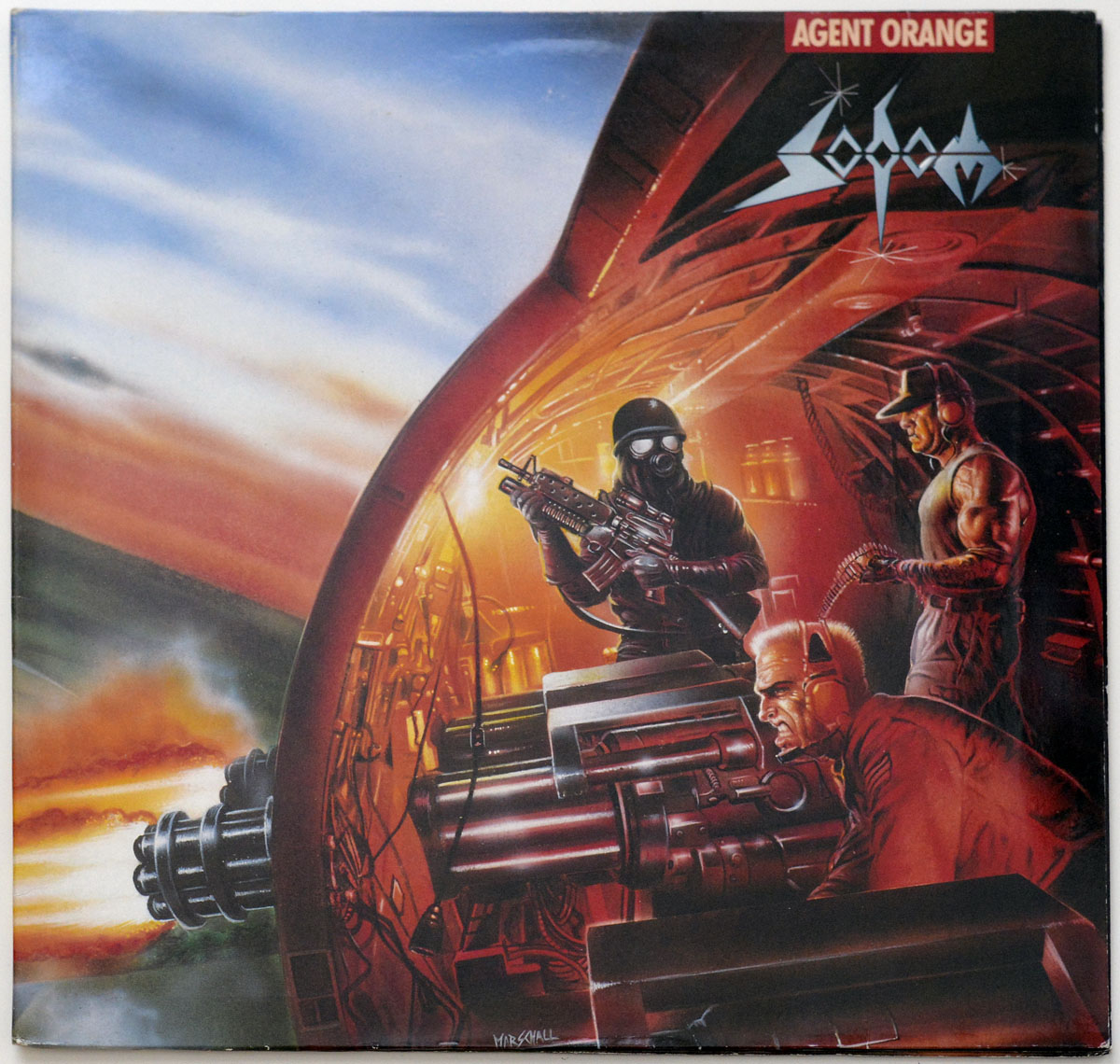
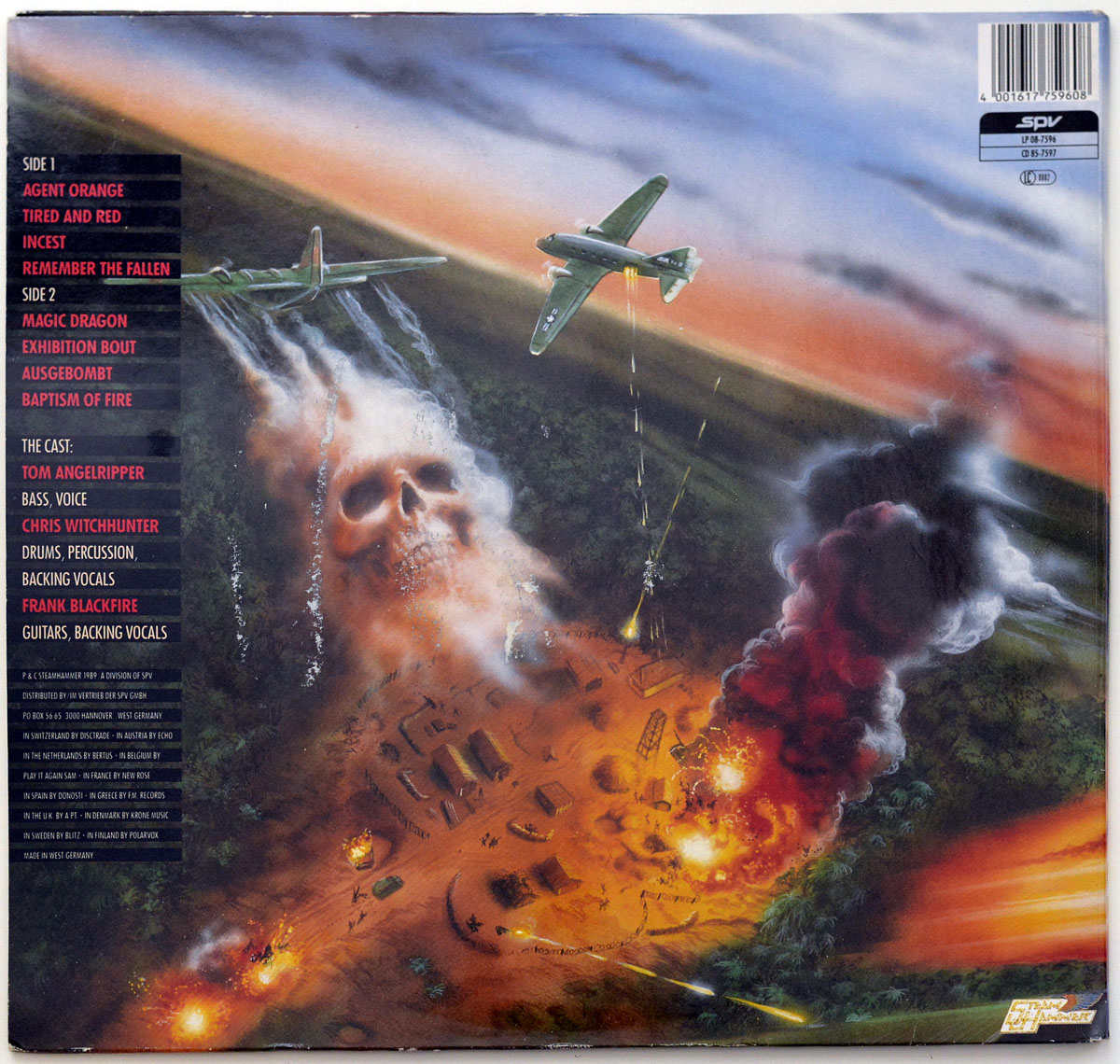
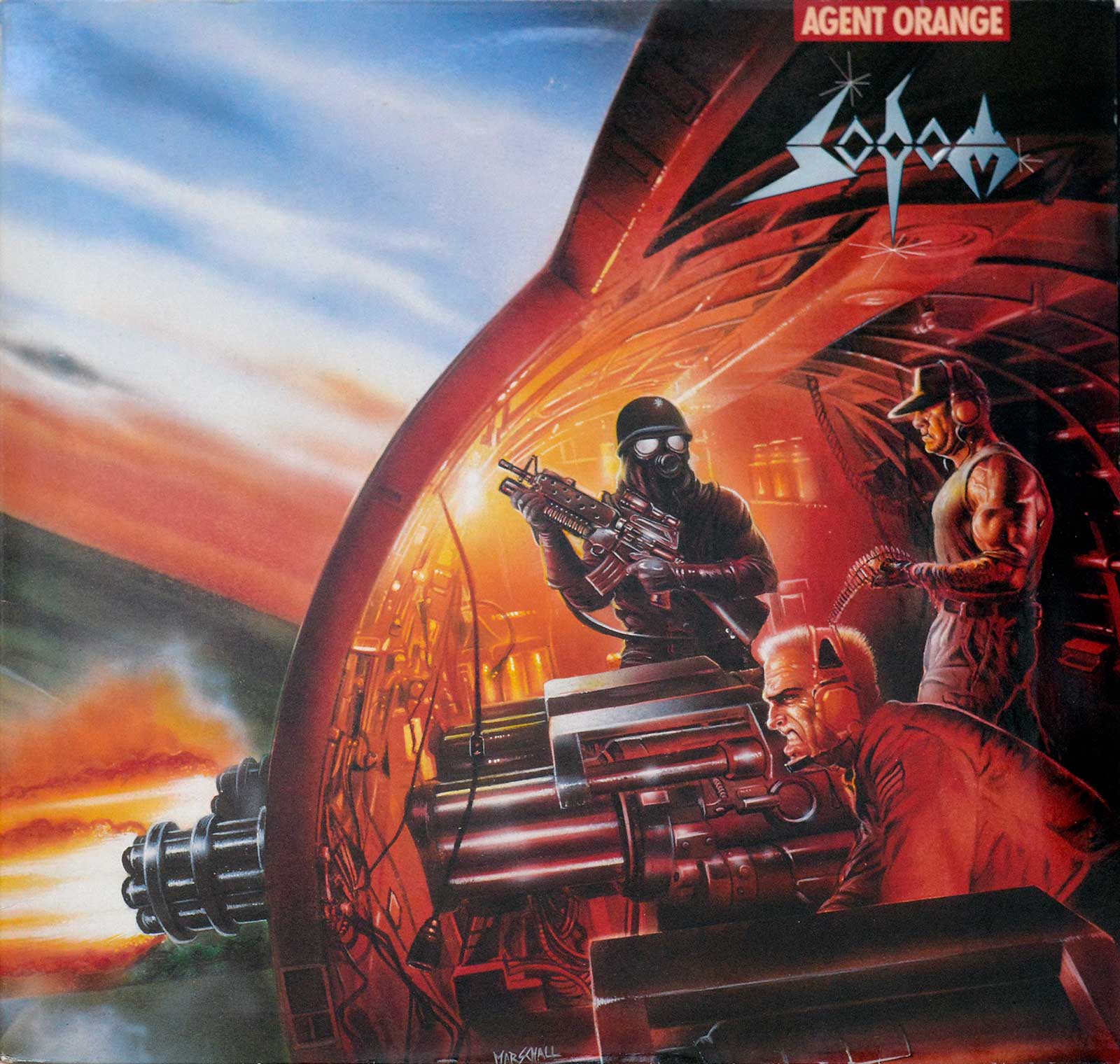
"Agent Orange" doesn’t arrive. It kicks the door in. Eight tracks, gatefold, that scorched-orange stare from Andreas Marschall on the front like a warning sign you can’t peel off. It hit on 1 June 1989, and the first thing I noticed wasn’t “speed” or “aggression” (yeah, thanks): it was how the whole record feels pressed into your chest, like the room got smaller.
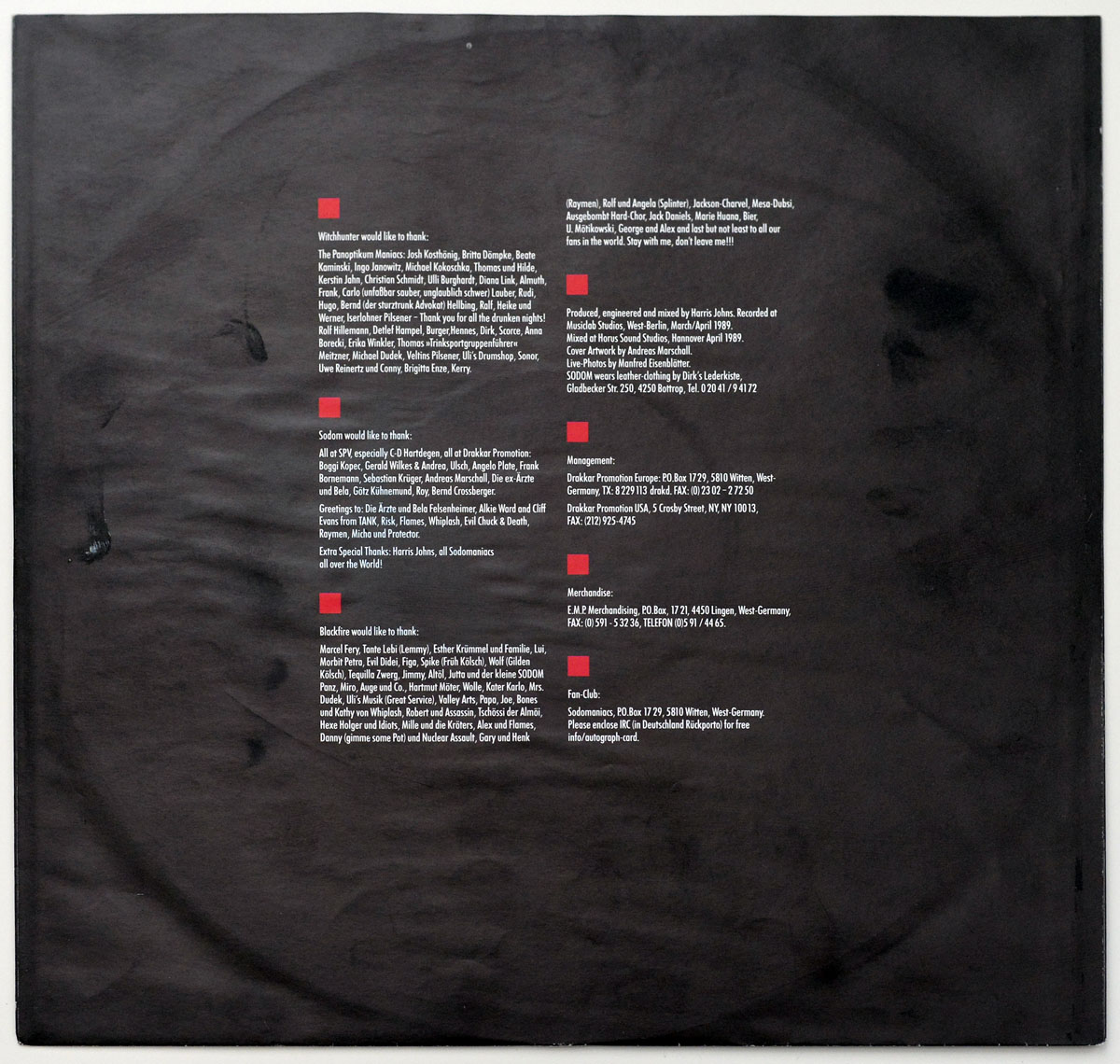
Here’s what still hooks me: this is Sodom getting cleaner without getting polite. The tapes rolled at Musiclab in West Berlin in March/April ’89, then Harris Johns dragged the mix over to Horus Sound in Hannover in April and made every hit easier to name. That clarity doesn’t soften the violence — it makes it meaner. And once you hear how that trick works, you start noticing other things… uncomfortable things.
West Germany, 1989: noisy, tense, not finished
1989 in West Germany wasn’t a postcard. It was diesel breath, concrete, and a weird sense the map might change while you’re still paying for your beer. West Berlin had that island-attitude — loud by necessity — and "Agent Orange" feels like it was recorded with the windows shut tight because nobody trusted the street.
People love to talk about the Wall like it fell in a neat, cinematic slow-motion. In real life, it was months of nervous laughter and bad predictions. This album sits right in that jittery gap — still inside the old cage, already rattling the bars.
Teutonic thrash in ’89: the arguments were the soundtrack
I remember the scene less as “a movement” and more as a series of loud opinions in small rooms. Someone swearing Kreator were turning into machines. Someone else insisting Destruction were the only ones who kept the knives out. Tankard getting dismissed as party clowns by people who clearly weren’t listening. And Coroner — those cold Swiss surgeons — making everyone else sound like they’d left fingerprints on the riff.
Sodom didn’t try to win the debate with theory. They just brought a bigger hammer.
The sound: close-miked punishment, no fog to hide in
The guitars don’t “sit” in the mix. They crowd it. The attack is dry, the edges are hard, and when the rhythm locks, it locks like a factory gate. Tom Angelripper’s voice is still that rusted hinge — half bark, half sneer — and the bass doesn’t decorate; it shoves.
Drums snap with that marching-boot impatience. Not flashy. Not cute. Just forward motion and impact.
Harris Johns: the guy who made ugliness readable
Johns produced, engineered, and mixed it, and you can tell he didn’t let the band blur themselves into “rawness” as an excuse. You hear pick scrape, cymbal bite, the little pauses where the tension hangs in the air like cigarette smoke refusing to leave. Musiclab gave it the boxed-in pressure; Horus Sound straightened the spine.
Frank Blackfire’s last stand (for a long while)
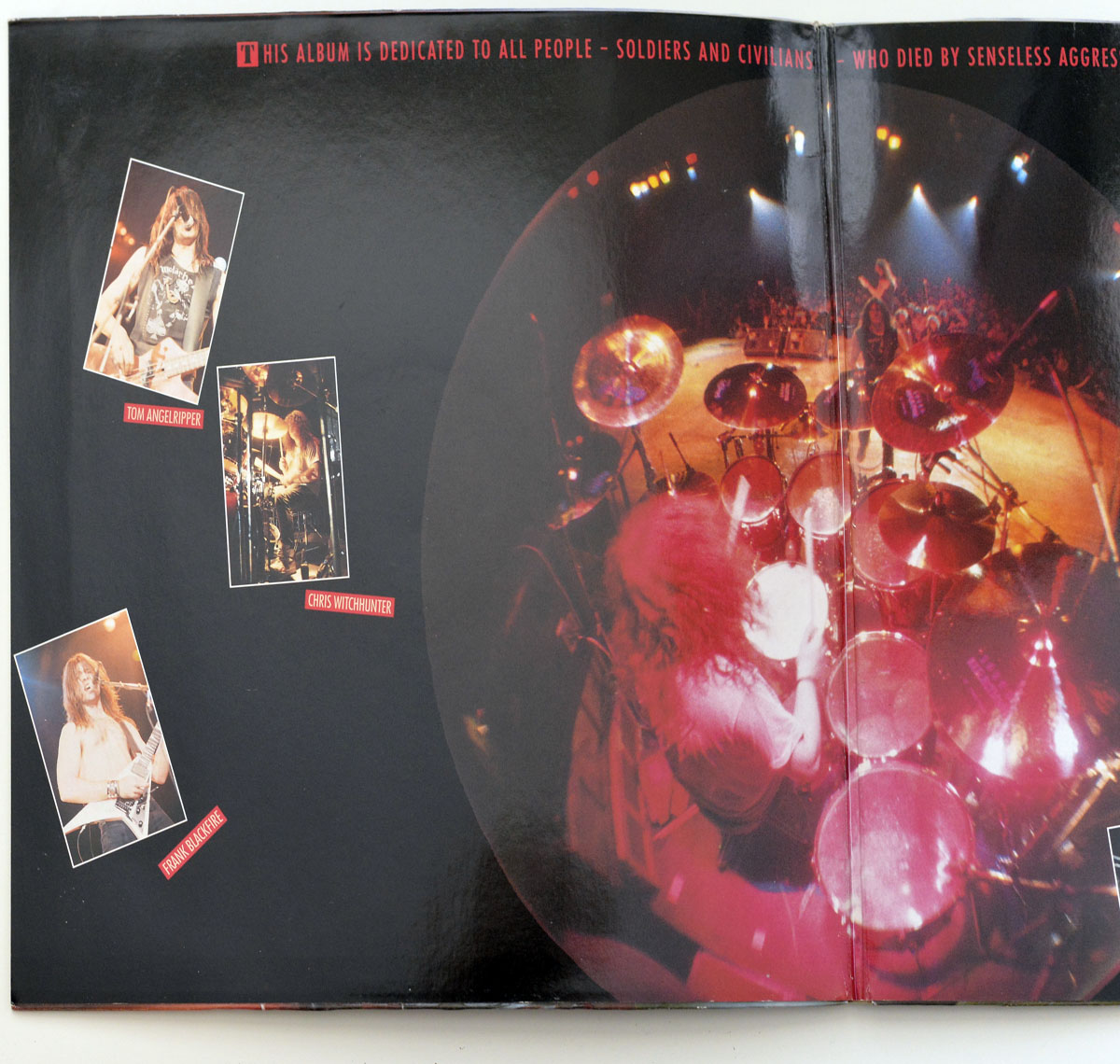
The line-up matters here because it behaves like a single animal. Blackfire’s guitar work brings discipline — riffs that turn corners instead of just sprinting down a hallway. Witchhunter plays like hesitation is a personal insult. Angelripper keeps the whole thing welded together.
It’s also the last Sodom studio album with Blackfire until his much-later return. You can hear the band squeezing the tube before it runs out — not dramatic, just… final.
Songs that leave bruises
I don’t romanticize tracklists. These are the moments that actually stick:
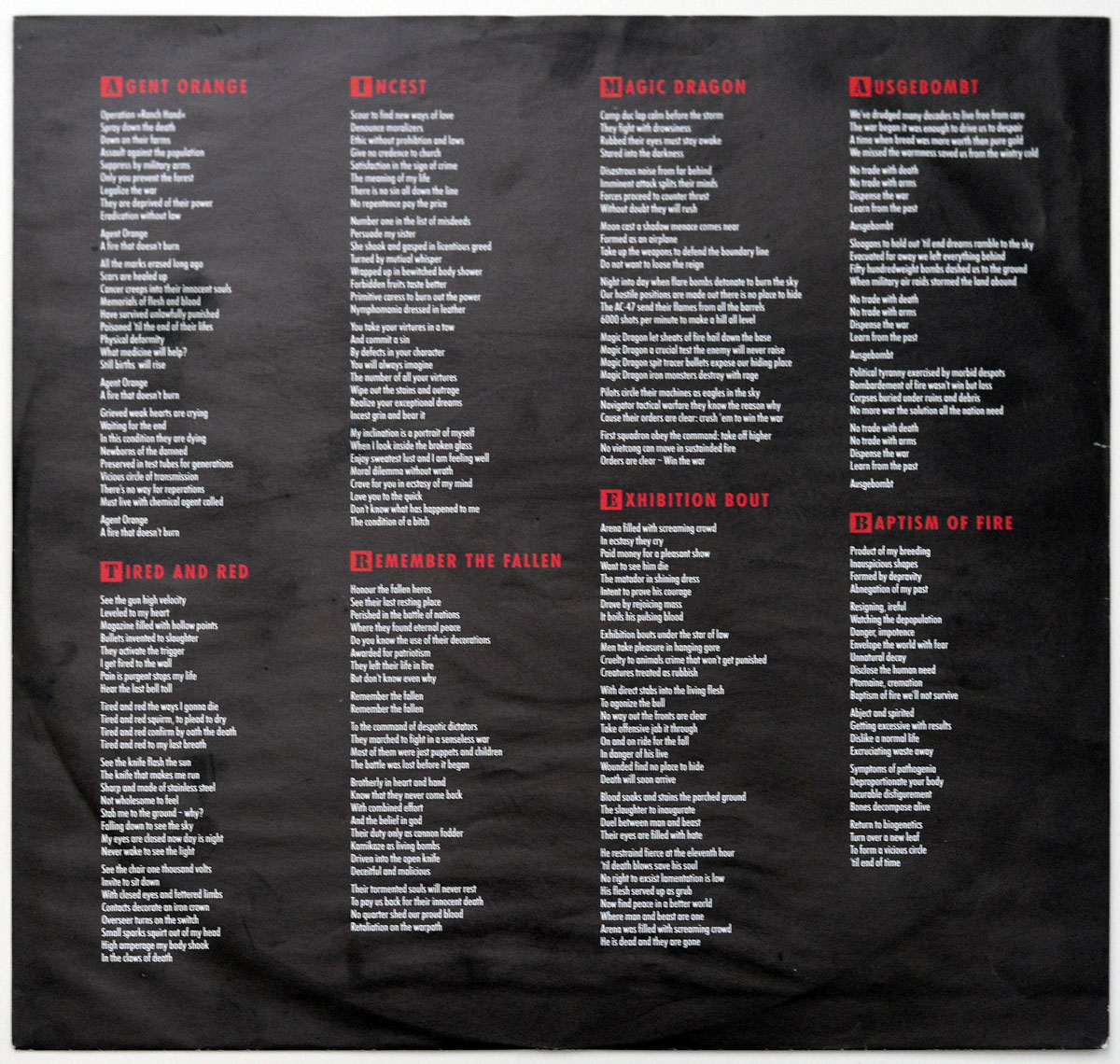
- "Agent Orange" — the title track stomps more than it races; the hook feels like a siren you can’t ignore.
- "Tired and Red" — pure spite with structure, which is scarier than chaos.
- "Remember the Fallen" — a chorus that digs in and refuses to blink.
- "Ausgebombt" — blunt enough to survive translation; later issued with German lyrics on the "Ausgebombt" EP.
Controversy: mostly misunderstanding
No big public scandal landed on this one — no televised pearl-clutching moment where everyone pretends they just discovered loud guitars. The more common problem was dumber: people hearing war imagery and assuming celebration. "Agent Orange" doesn’t cheer for war; it grinds your nose in it.
Another misconception is pure bar-talk: inflated chart claims. The boring truth is the best kind — it entered the German album charts on 24 July 1989 and peaked at #36. For Sodom, that was the crack in the wall.
One quiet anchor
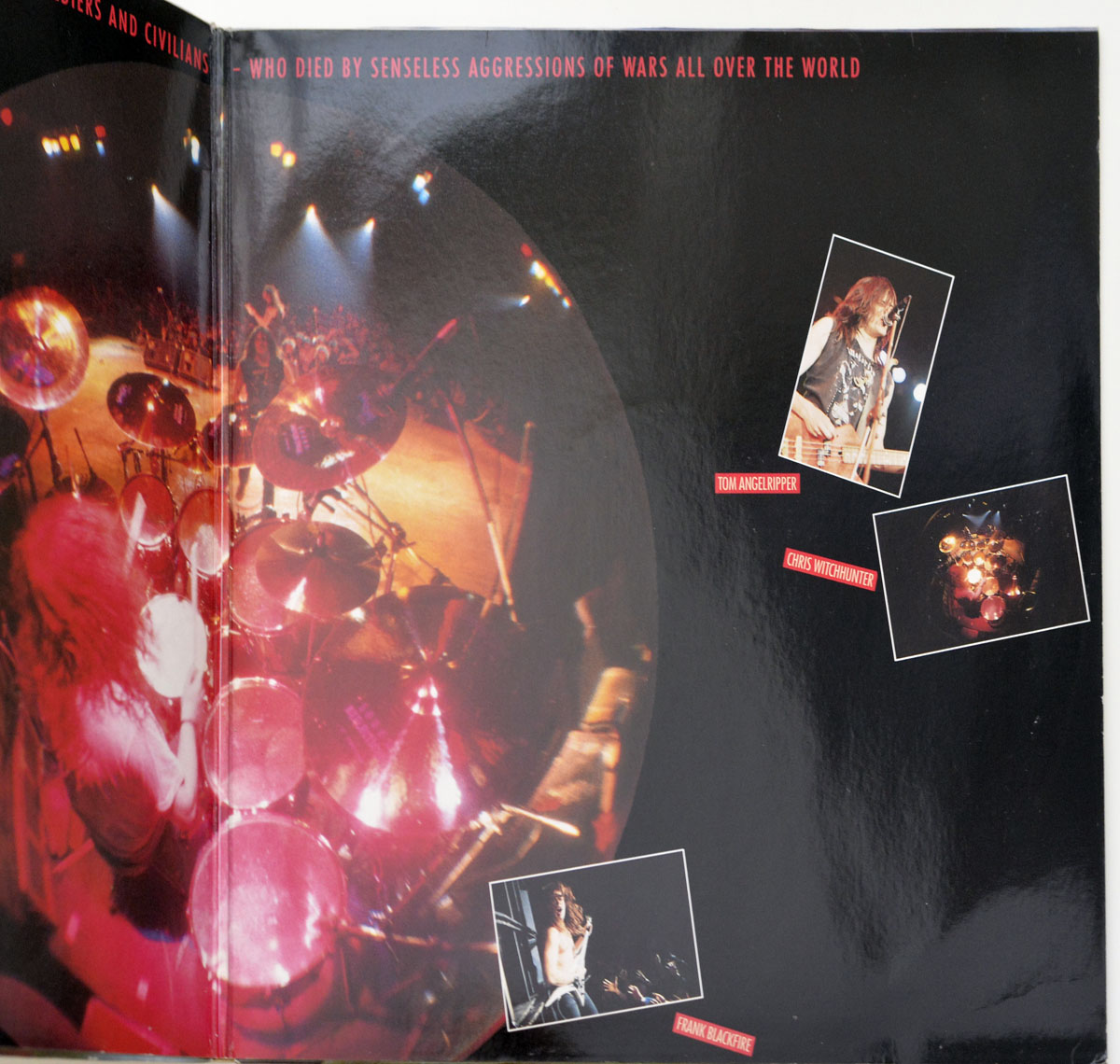
I still see it in my head: fluorescent lights, a rack of imports, and that gatefold half-open like it’s daring you to touch it. You don’t “sample” a sleeve like this. You either take it home or you leave it alone and spend the rest of the day pretending you didn’t want it.
References
- Vinyl-Records.nl: "SODOM - Agent Orange" (high-resolution photos)
- Offizielle Deutsche Charts: Sodom - "Agent Orange" (chart entry 24.07.1989, peak #36)
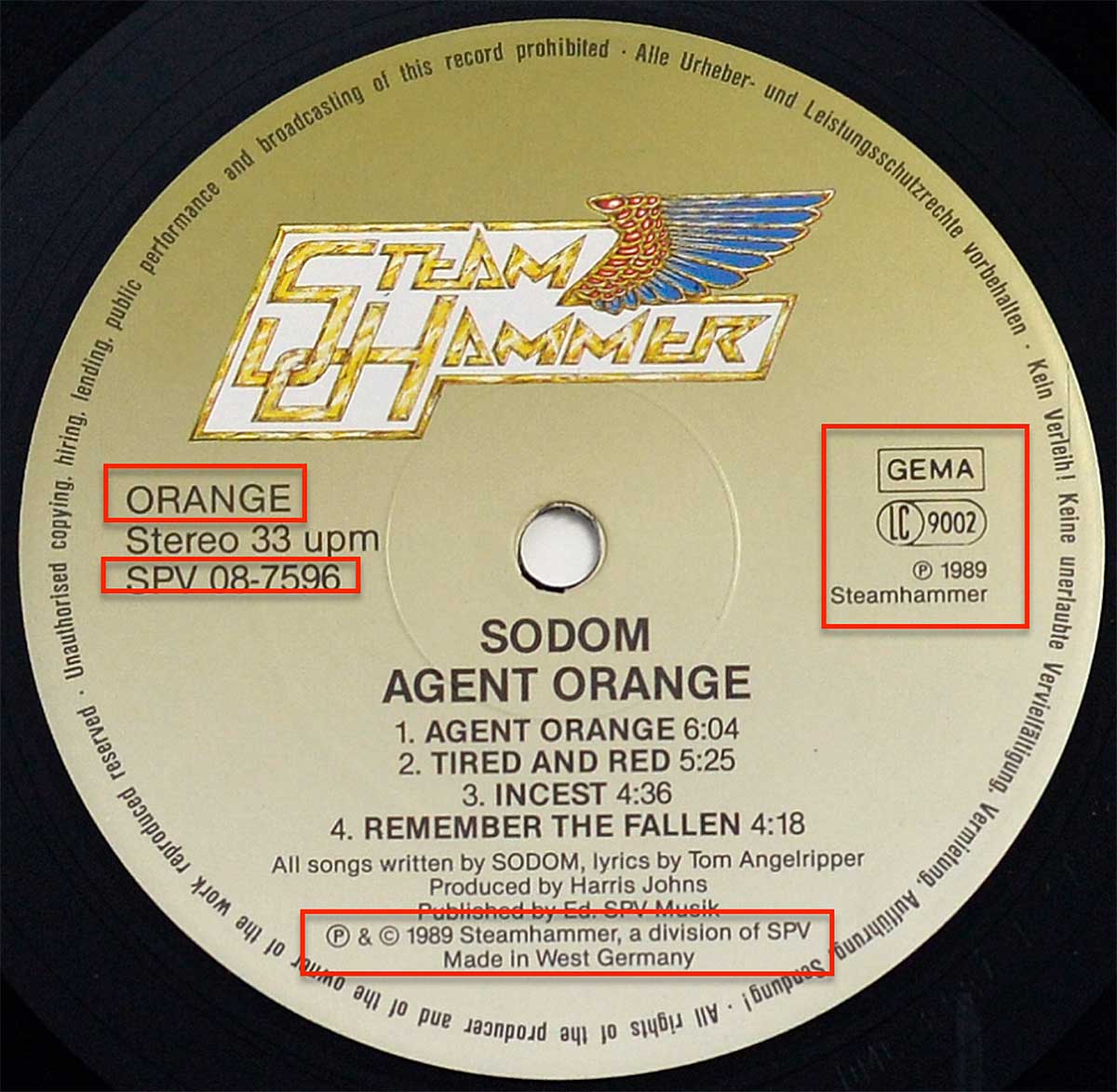
- Encyclopaedia Metallum: "Agent Orange" (release date, catalog ID SPV 08-7596)
- Wikipedia: "Agent Orange" (release date, personnel, recording)
- Discogs: "Agent Orange" master release (versions/credits)
- Louder: German thrash context (Sodom/Kreator/Destruction/Tankard)
Bottom line? This record doesn’t ask to be admired. It just keeps playing, like a machine you can’t shut off without consequences.