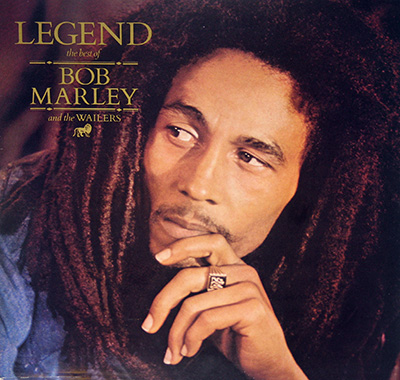
"Legend: The Best of Bob Marley" Album Description:
"Legend: The Best of Bob Marley" stands as an iconic compilation album that pays homage to the musical genius of the legendary Bob Marley and his band, The Wailers. Released in 1978, this collection encapsulates the essence of Marley's illustrious career, spanning from 1964 to 1981.
The album serves as a comprehensive journey through Marley's most memorable hits, showcasing his unparalleled talent and profound impact on the world of music. From anthems of love and unity like "One Love" and "Is This Love" to powerful messages of social justice in tracks such as "Get Up, Stand Up" and "Redemption Song," "Legend" captures the soul-stirring essence of Marley's artistry.
Upon its release, "Legend" received widespread acclaim for its impeccable selection of tracks and seamless flow, making it a must-have for both die-hard fans and newcomers to Marley's music alike. Its timeless appeal continues to resonate with audiences across generations, solidifying its status as one of the best-selling reggae albums of all time.
What sets "Legend" apart is not only its remarkable commercial success but also its ability to transcend cultural boundaries and inspire change. Marley's profound lyrics and infectious rhythms serve as a catalyst for social consciousness, igniting a global movement for peace, love, and equality.
"Buffalo Soldier" The Song's Story
Bob Marley's music transcended borders and genres, becoming a powerful voice for social justice and Pan-African identity. One song that exemplifies this perfectly is "Buffalo Soldier."
The song doesn't center on sunny beaches or romantic woes – it delves into a potent chapter of American history: the story of the African-American cavalry regiments established after the Civil War. These regiments, nicknamed "Buffalo Soldiers" by the Native American tribes they encountered in the West, played a crucial role in securing the frontier.
"Buffalo Soldier" isn't simply a historical recount; it's a deeply layered exploration of race, identity, and the yearning for freedom.
A Tribute to Forgotten Heroes
The lyrics open with a stark image: "Stolen from Africa/ Brought to America/ Fighting on arrival/ Fighting for survival." These lines paint a raw picture of the forced migration that brought Africans to America and the fight for basic rights that continued even after the abolition of slavery.
Marley then sings, "Look at them Buffalo Soldier/ Dreadlocked Rasta don't care/ Carry their guns on their shoulders/ A-war away from home." This verse highlights the complex situation these soldiers faced. They were Black men fighting for a nation that hadn't granted them full citizenship.
Irony and the Search for Belonging
The song doesn't shy away from the irony. Lines like "Tell them what it's like to live in fear/ I don't want to live in fear" underscore the struggle for Black identity in a society fraught with racial prejudice.
A Call to Arms
The "woy! yoy! yoy!" chant in the bridge is a powerful moment. While some believe it references a children's TV show theme song, within the context of the song, it takes on a new meaning. It can be interpreted as a defiant cry for unity and resistance, a call to arms for continued struggle for equality.
| Album Summary: |
The Wailers 1972-1981 |
Music Genre: |
Reggae Music |
| Collector's info: |
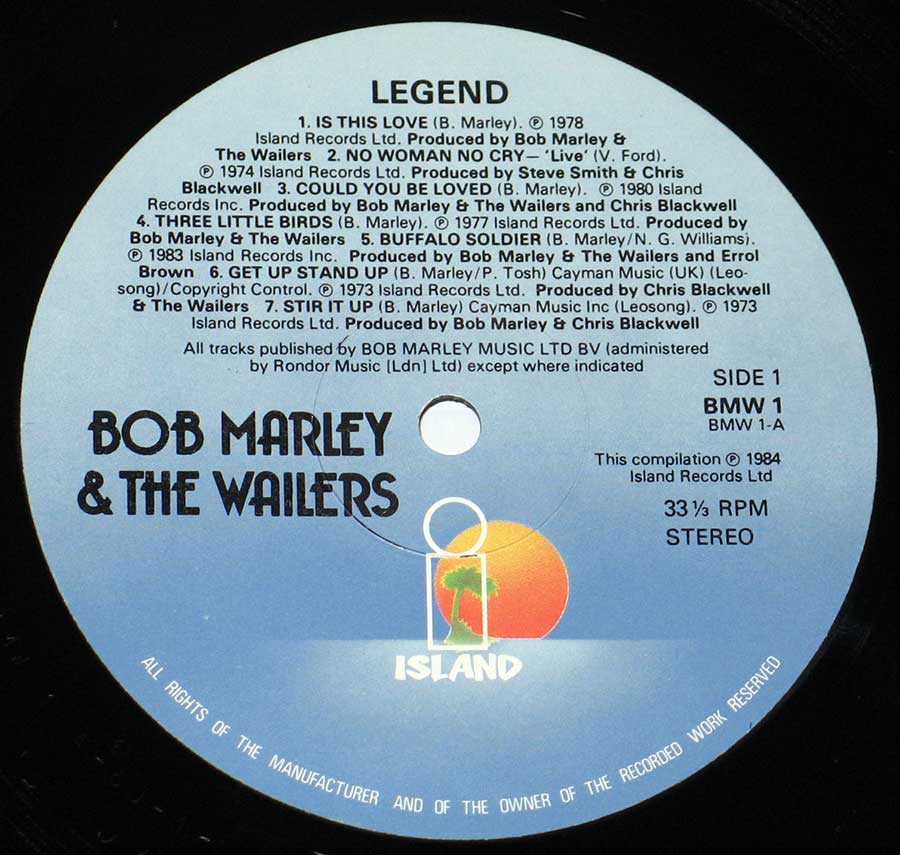
Note 1: Bob Marley and the Wailers largely printed on the left half of the record's label
Note 2: Album back cover does NOT have a bar-code.
Note 3: Blue color Island Records label
Gatefold/FOC (Fold Open Cover) Album Cover Design,
This album includes the original black custom inner sleeve. |
| Album Production: |
Producers: Bob Marley, Steve Smith, Chris Blackwell Chris Blackwell – Producer, Sound Engineer Island Records’ founder: the guy who helped turn Marley into a global force, then built Compass Point Studios as his sun-soaked sound laboratory. Read more... Chris Blackwell is the Island Records boss I always pegged as a gambler with taste. I watched him break out the Spencer Davis Group (1964-1967), then keep one foot in rock while betting hard on Jamaica. He backed Traffic in the late 1960s and early 1970s, and pushed The Harder They Come (1972) into the UK like contraband culture. In 1972 he funded Bob Marley & The Wailers and helped produce "Catch a Fire" and "Burnin'" (1972-1973), polishing the sound just enough for London and New York without sanding off the rebel edges; he stayed in their corner through Marley's Island years (1972-1980). In 1977 he built Compass Point Studios in Nassau, a tropical lab that later pulled in acts worldwide. |
| Record Label: |
Island Records BMW 1 |
| Record Format |
12" LP Vinyl Gramophone Record |
Year & Country: |
1984 Made in England |
BOB MARLEY & THE WAILERS
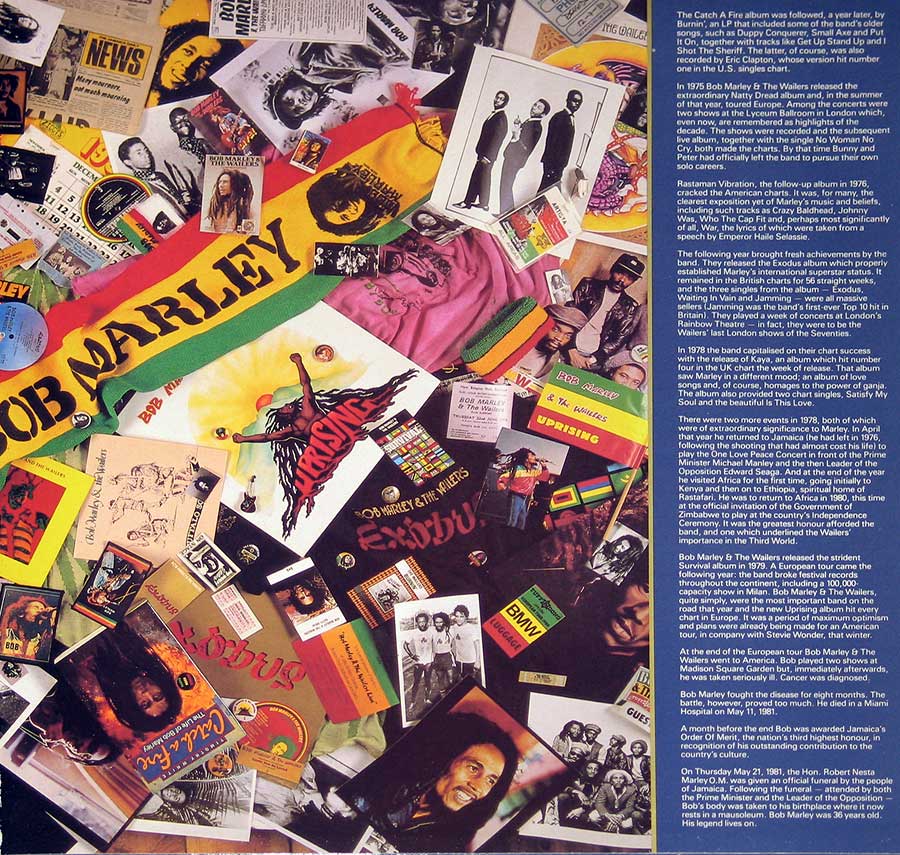
A Transcript of the orginal album cover liner notes, with the history of Bob Marley's recordings during the period 1964 until 1981.
"I love the development of our music. How we've tried to develop, y'know? It grows. That's why every day people come forward with new songs. Music goes on forever" -- Bob Marley.
We remember the brilliant and evocative music Bob Marley gave the world; music that stretched back over nearly two decades and yet still remains timeless and universal. Bob Marley & The Wailers worked their way into the very fabric of our lives.
The superlatives, perhaps, come easy when speaking of Bob Marley & The Wailers and their music. Marley himself had been called 'the first Third World superstar', 'Rasta prophet', visionary, revolutionary artist. They were not, however, mere hyperbole. He was one of the most charismatic and challenging performers of our time. Bob Marley's career, astonishingly, stretched back over 20 years. During that time Marley's growing style encompassed every aspect in the rise of Jamaican music, from ska through to contemporary reggae. That growth, of course, was well reflected in the maturity of the Wailers' music.
Bob's first recording attempts came at the beginning of the Sixties. His first two tunes, cut as a solo artist, meant nothing in commercial terms and it wasn't until 1964 Ñ as a founder member of a group called the Wailing Wailers Ñ that Bob first hit the Jamaican charts.
The record was Simmer Down, and over the next few years the Wailing Wailers Ñ the nucleus of which was Bob, Peter Mackinitosh and Bunny Livingston Ñput out some 30 sides that properly established them as one of the hottest groups in Jamaica. Mackintosh, of course, later shortened his surname to Tosh while Livingston is now called Bunny Wailer. Despite their popularity the economics of keeping the group together proved too much and the two other members Ñ Junior Braithwaite and Beverley Kelso Ñquit. At the same time Bob joined his mother in the United States. End of the Wailing Wailers, Chapter One.
Marley's stay in America was short-lived, however, and he returned to Jamaica to join up again with Peter and Bunny. By the end of the Sixties, with the legendary reggae producer Lee 'Scratch' Perry at the mixing desk, The Wailers were again back at the top in Jamaica. The combination of Wailers and Perry resulted in some of the finest music the band ever made. Such tracks as Soul Rebel, Duppy Conquerer, 400 Years and Small Axe were not only classics, but they defined the future direction of reggae. It's difficult, of course, to properly understand Bob Marley's music without considering Rastafari. His spiritual beliefs, by now, are too well known to necessitate further explanation. It must be stated, however, that Rastafari is at the very core of the Wailers' music.
In 1970 Aston Familyman Barrett and his brother Carlton (bass and drums respectively) joined the Wailers. They came to the band unchallenged as Jamaica's HAAARDEST rhythm section; a reputation that was to remain undiminished during the following decade. Meanwhile, the band's own reputation was, at the start of the Seventies, an extraordinary one throughout the Caribbean. But internationally the band was still unknown.
That was to change however in 1972 when the Wailers signed to Island Records. It was a revolutionary move for an international record company and a reggae band. For the first time a reggae band had access to the best recording facilities and were treated in each the same way as, say, a rock group. Before the Wailers signed to Island it was considered that reggae sold only on singles and cheap compilation albums. The Wailers' first album
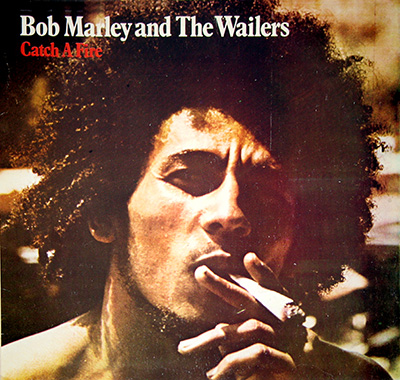
"Catch A Fire"
broke all the rules: it was beautifully packaged and heavily promoted. And it was the start of a long climb to international fame and recognition.
The
"Catch A Fire"
album was followed, a year later, by
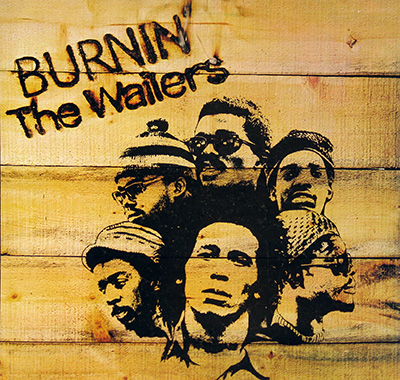
"Burnin'""
, an LP that included some of the band's older songs, such as Duppy Conquerer, Small Axe and Put It On, together with tracks like Get Up Stand Up and I Shot The Sheriff. The latter, of course, was also recorded by Eric Clapton, whose version hit number one in the U.S. singles chart. In 1975 Bob Marley & The Wailers released the extraordinary
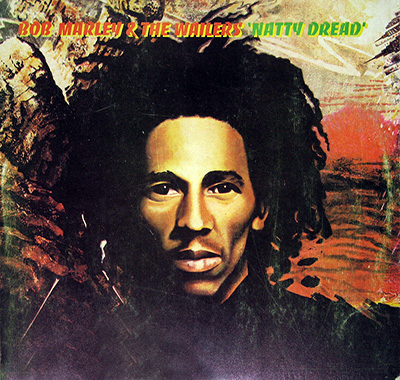
"Natty Dread"
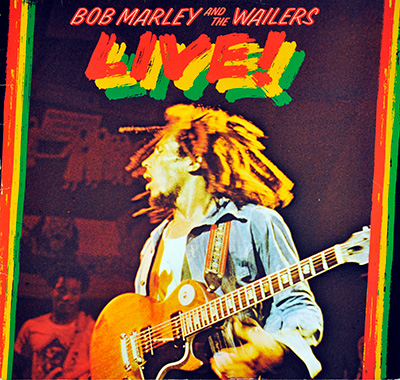
album and, in the summer of that year, toured Europe. Among the concerts were two shows at the Lyceum Ballroom in London which, even now, are remembered as highlights of the decade. The shows were recorded and the subsequent live album, together with the single "No Woman No Cry"", both made the charts. By that time Bunny and Peter had officially left the band to pursue their own solo careers.
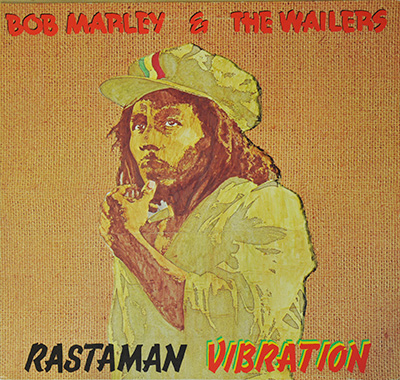
Rastaman Vibration
, the follow-up album in 1976, cracked the American charts. It was, for many, the clearest exposition yet of Marley's music and beliefs, including such tracks as Crazy Baldhead, Johnny Was, Who The Cap Fit and, perhaps most significantly of all, War, the lyrics of which were taken from a speech by Emperor Haile Selassie.
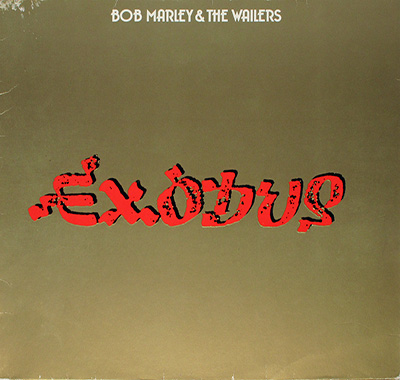
The following year brought fresh achievements by the band. They released the
Exodus
album which properly established Marley's international superstar status. It remained in the British charts for 56 straight weeks, and the three singles from the album Ñ Exodus, Waiting In Vain and Jamming - were all massive sellers (Jamming was the band's first-ever Top 10 hit in Britain). They played a week of concerts at London's Rainbow Theatre Ñ in fact, they were to be the Wailers' last London shows of the Seventies.
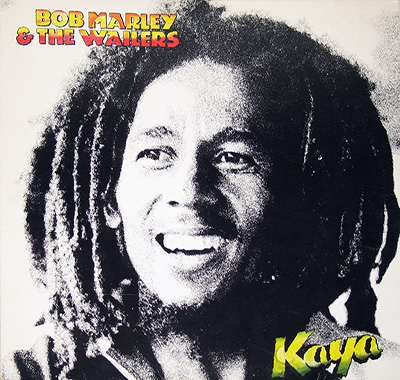
In 1978 the band capitalised on their chart success with the release of
Kaya
, an album which hit number four in the UK chart the week of release. That album saw Marley in a different mood, an album of love songs and, of course, homages to the power of ganja. The album also provided two chart singles, Satisfy My Soul and the beautiful Is This Love.
There were two more events in 1978, both of which were of extraordinary significance to Marley. In April that year he returned to Jamaica (he had left in 1976, following the shooting that had almost cost his life) to play the One Love Peace Concert in front of the Prime Minister Michael Manley and the then Leader of the Opposition Edward Seaga. And at the end of the year he visited Africa for the first time, going initially to Kenya and then on to Ethiopia, spiritual home of Rastafari. He was to return to Africa in 1980, this time at the official invitation of the Government of Zimbabwe to play at the country's Independence Ceremony. It was the greatest honour afforded the band, and one which underlined the Wailers' importance in the Third World. Bob Marley & The Wailers released the strident
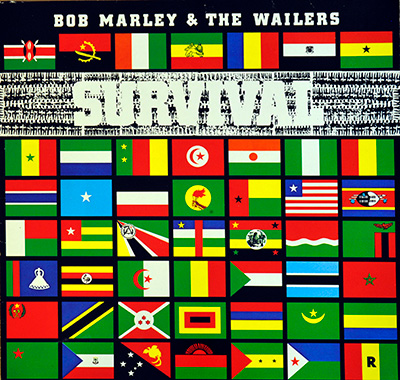
Survival
album in 1979. A European tour came the following year: the band broke festival records throughout the continent, including a 100,000-capacity show in Milan. Bob Marley & The Wailers, quite simply, were the most important band on the road that year and the new Uprising album hit every chart in Europe. It was a period of maximum optimism and plans were already being made for an American tour, in company with Stevie Wonder, that winter.
At the end of the European tour Bob Marley & The Wailers went to America. Bob played two shows at Madison Square Garden but, immediately afterwards, he was taken seriously ill. Cancer was diagnosed.
Bob Marley fought the disease for eight months.The battle however proved too much. He died in a Miami Hospital on May 11, 1981.
A month before the end Bob was awarded Jamaica's Order Of Merit, the nation's third highest honour, in recognition of his outstanding contribution to the country's culture.
On Thursday May 21, 1981, the Hon. Robert Nesta Marley O.M. was given an official funeral by the people of Jamaica. Following the funeral - attended by both the Prime Minister and the Leader of the Opposition Ñ Bob's body was taken to his birthplace where it now rests in a mausoleum.
Bob Marley was 36 years old.
His legend lives on.
Band Members and Musicians on: Bob Marley & The Wailers Legend the best of Bob Marley
|
|
|
Complete Track Listing of: Bob Marley & The Wailers Legend the best of Bob Marley
|
Side One:
- Is this Love
- No Woman No Cry
- Could You Be Loved
- Three Little Birds
- Buffalo Soldier
- Get Up Stand Up
- Stir it Up
Side Two:
- Only Love/People Get Ready
- I Shot the Sheriff
- Waiting in Vain
- Redemption Song
- Satisfy my Soul
- Exodus
- Jamming
|
Front Cover Photo Of BOB MARLEY & THE WAILERS - Legend The Best Of Bob Marley 12" Vinyl LP Album
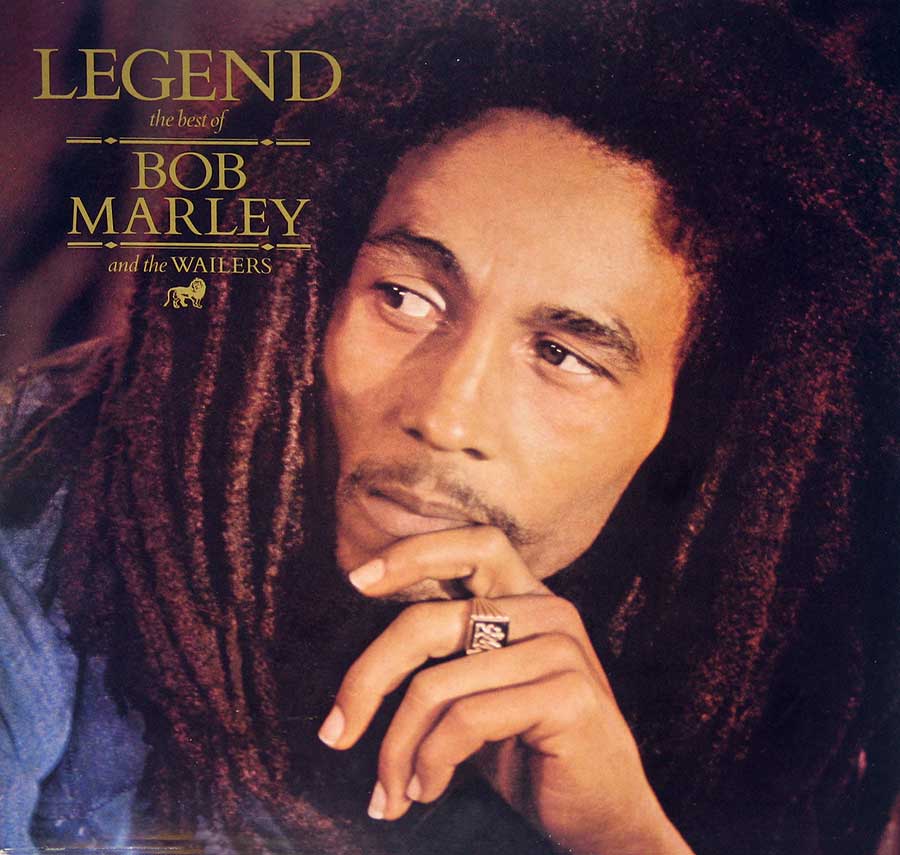
Note: The photos on this page are taken from albums in my personal collection. Slight differences in color may exist due to the use of the camera's flash. Images can be zoomed in/out ( eg pinch with your fingers on a tablet or smartphone ).
Photo One Of The Inner Gatefold BOB MARLEY & THE WAILERS - Legend The Best Of Bob Marley 12" Vinyl LP Album
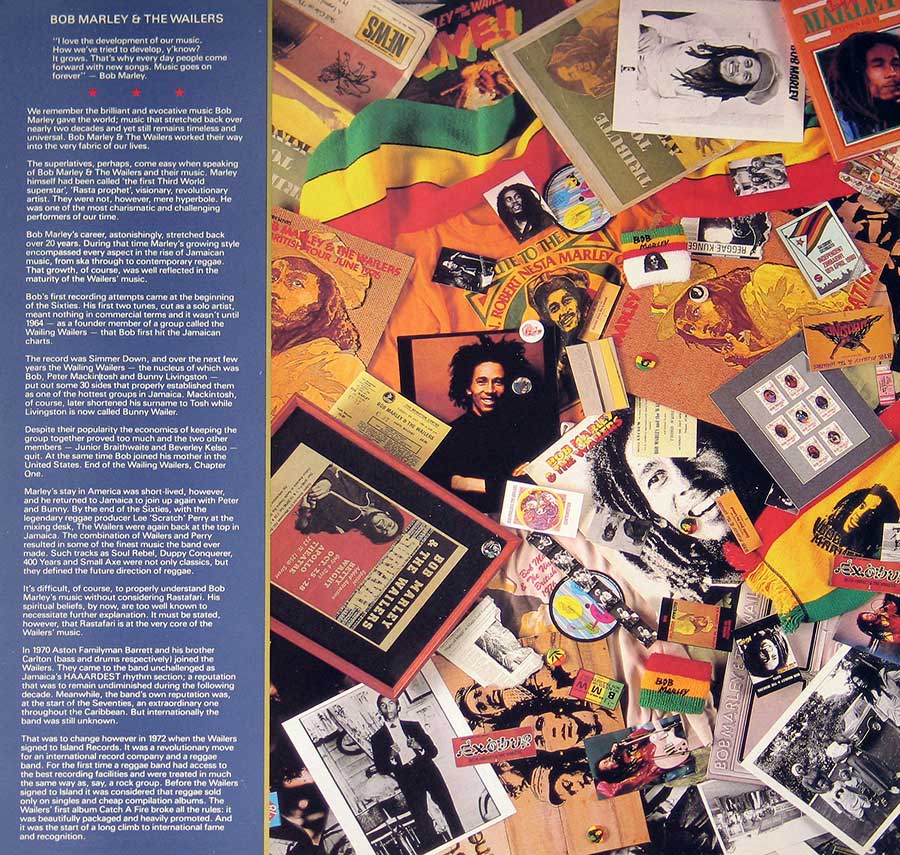
Photo Two Of The Inner Gatefold BOB MARLEY & THE WAILERS - Legend The Best Of Bob Marley 12" Vinyl LP Album
Close up of Side One record's label BOB MARLEY & THE WAILERS - Legend The Best Of Bob Marley 12" Vinyl LP Album
"Legend The Best Of Bob Marley" Record Label Details: Blue Colour ISLAND BMW 1 , This Compilation ? 1984 Island Records Ltd Sound Copyright