"Animals" Album Description:
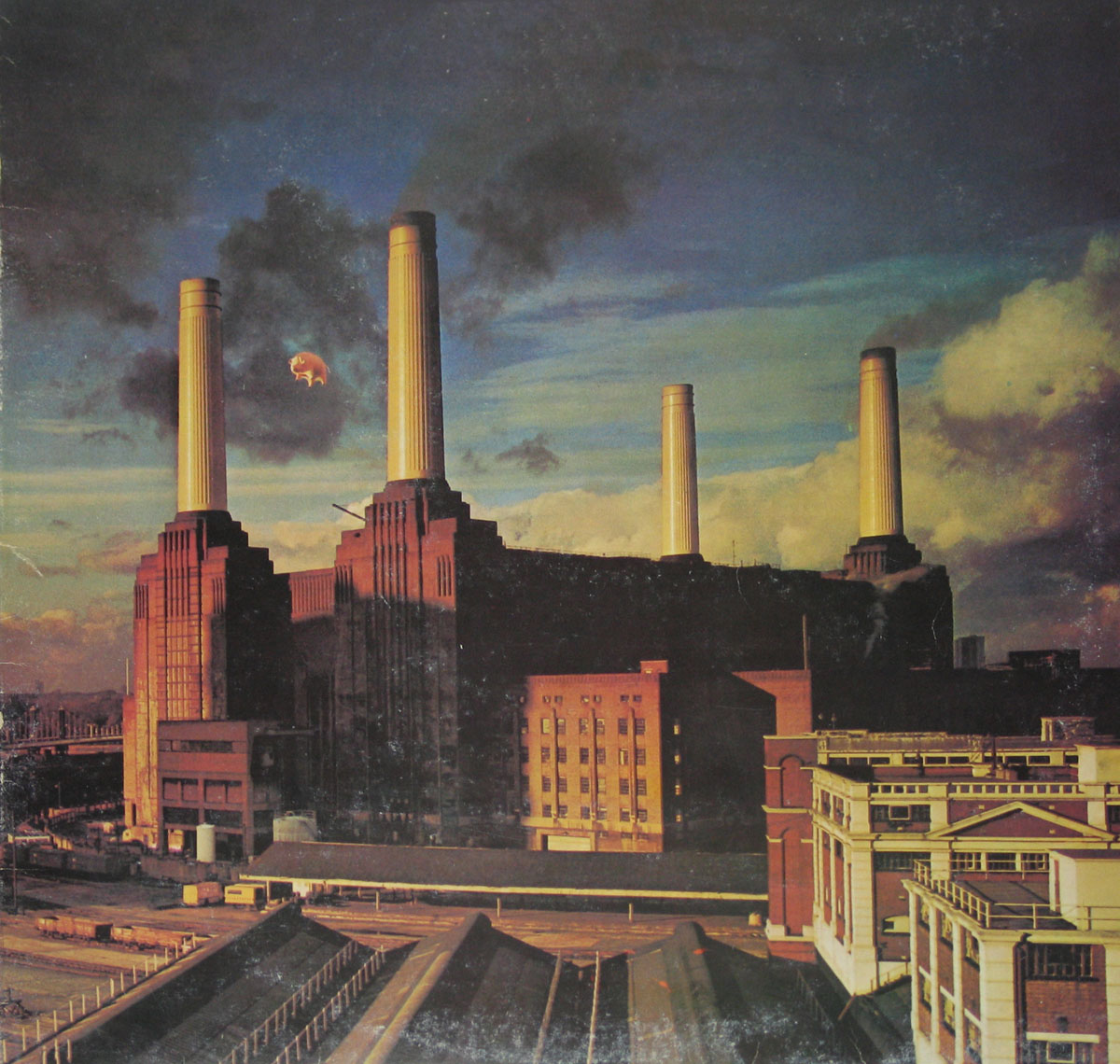
In the late 1970s, amidst the dynamic musical landscape of Europe, Pink Floyd's album "Animals" made its mark with an indelible fusion of progressive rock and social commentary. Released on the Jugoton label in Yugoslavia, this 12" Vinyl LP became a noteworthy contribution to the era's musical tapestry.
Jugoton Record Company: A Hub of Musical Innovation
Jugoton, once a stalwart record company in the former Yugoslavia, played a pivotal role in shaping the musical tastes of the region. The release of Pink Floyd's "Animals" under the Jugoton banner was emblematic of the company's commitment to bringing diverse and influential sounds to its audience.
A Gatefold Spectacle: Artistry Inside and Out
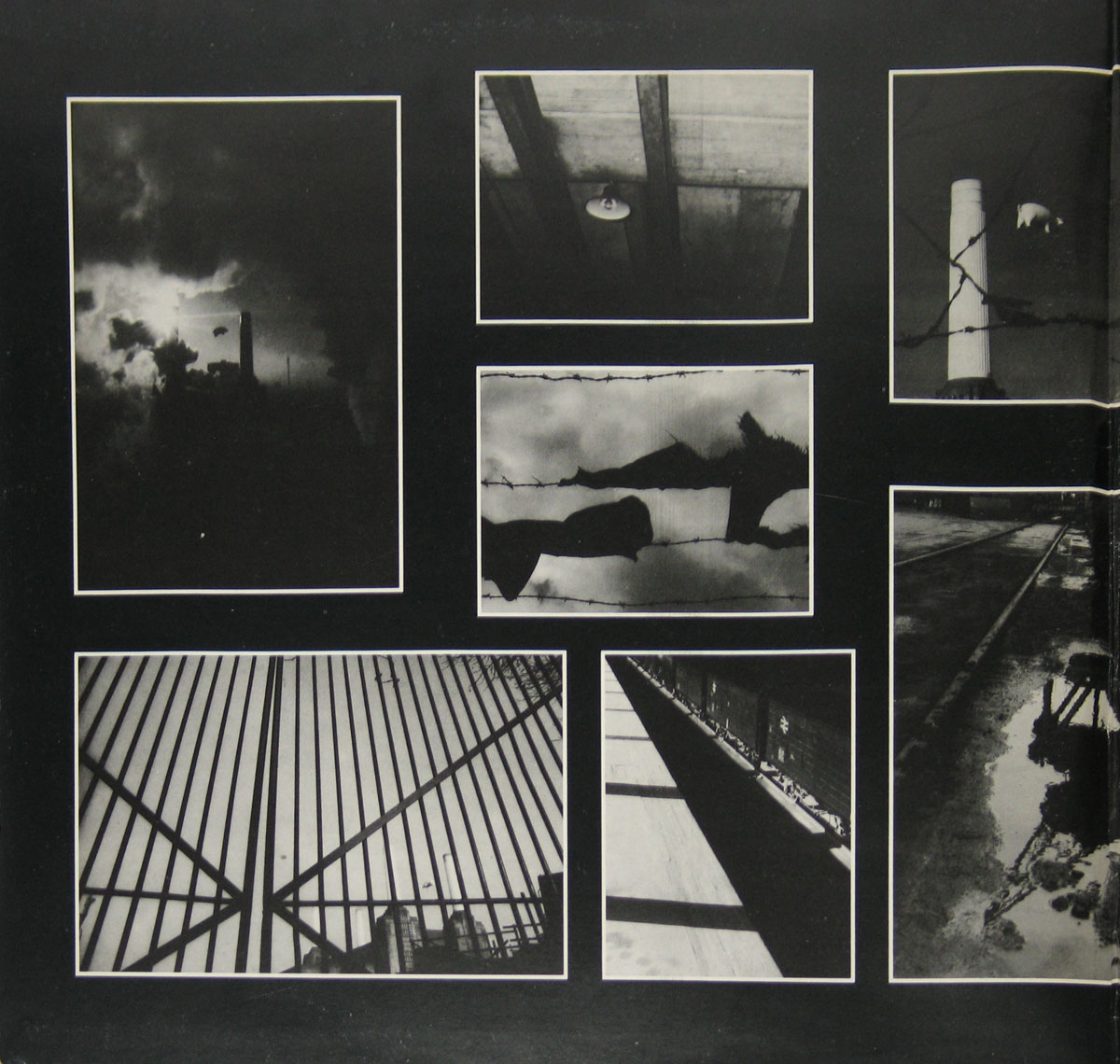
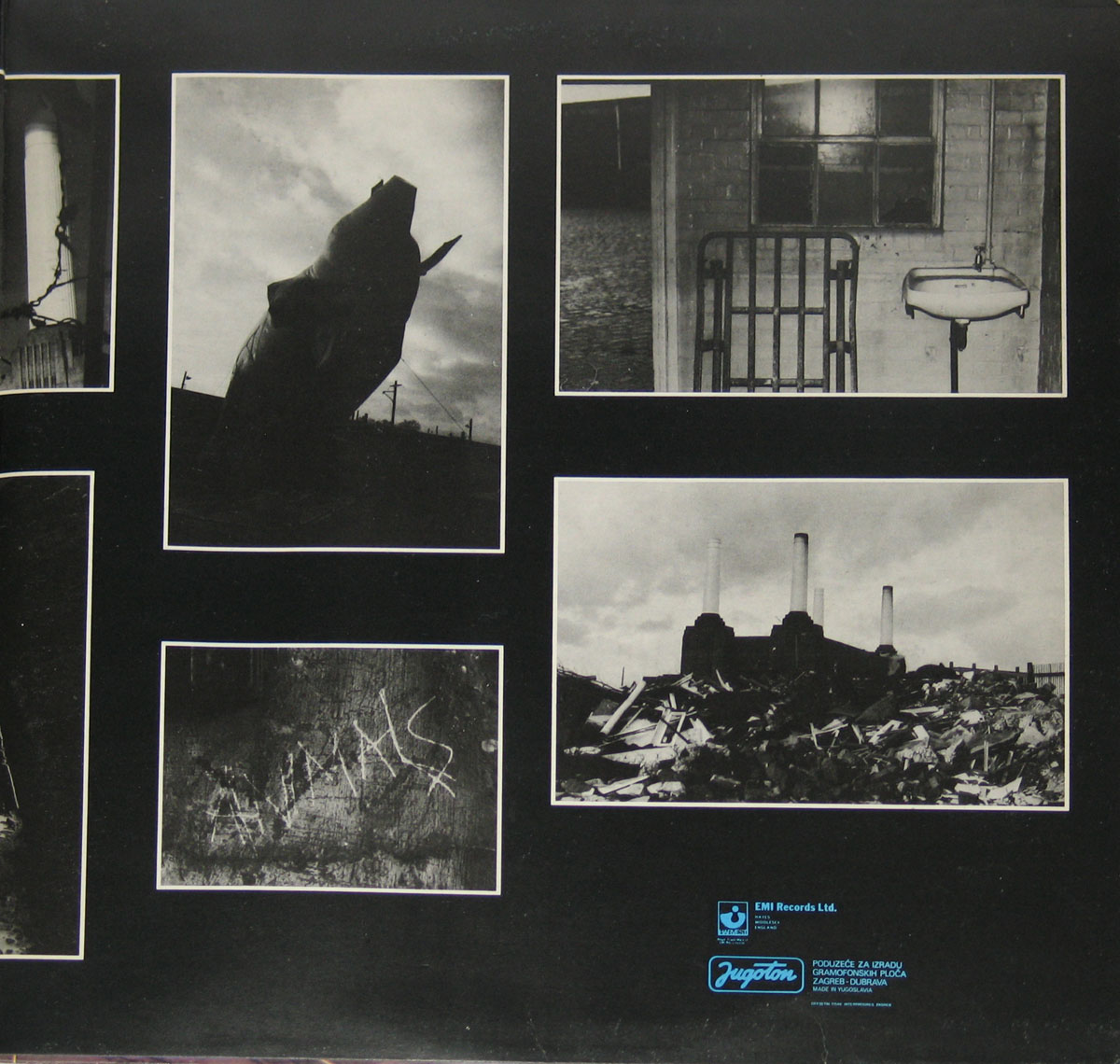
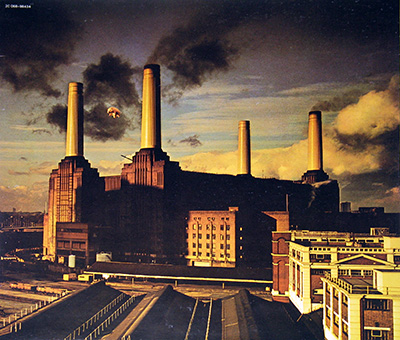
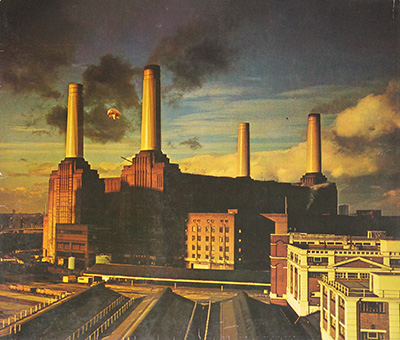
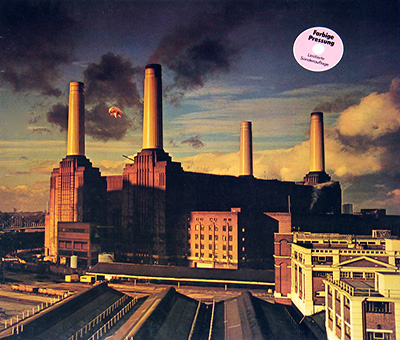
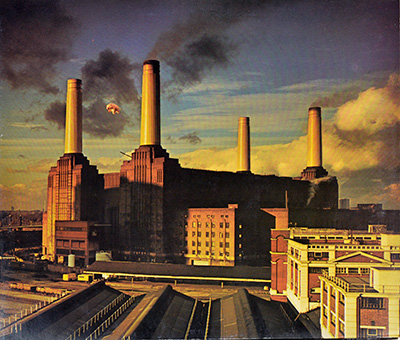
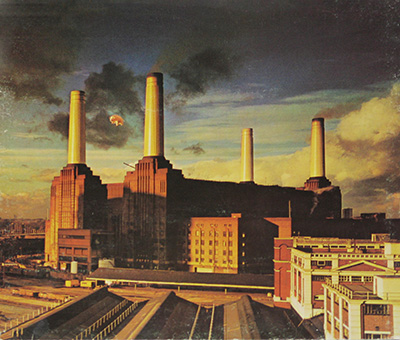
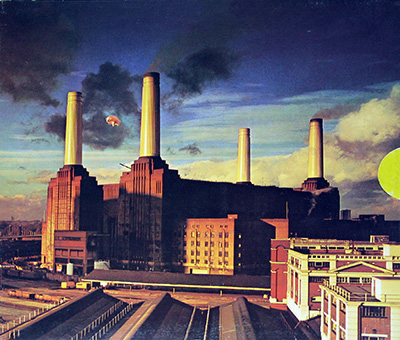
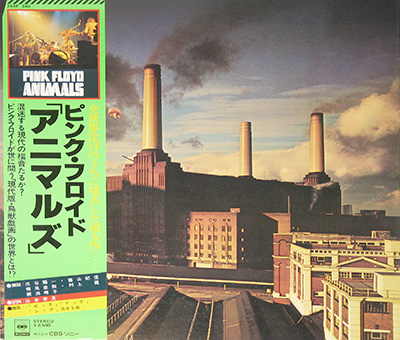
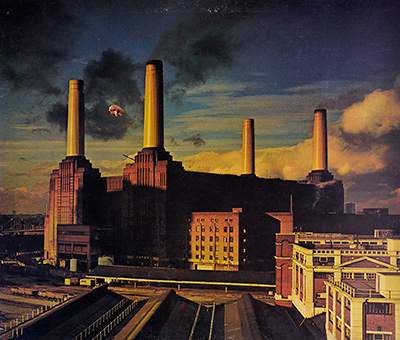
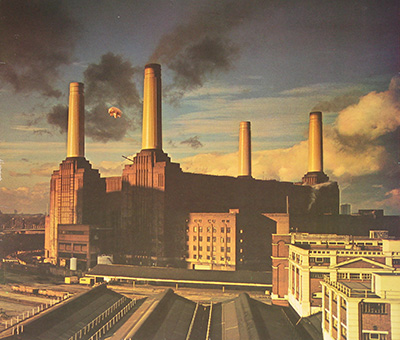
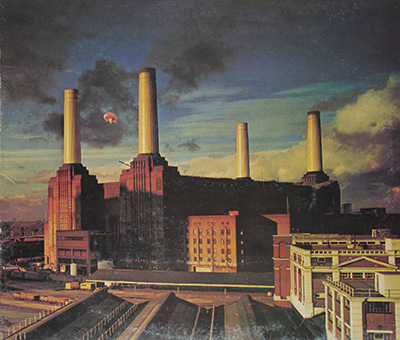
The album's gatefold cover design, a trademark of the era, added a layer of visual storytelling to the auditory experience. With artwork and photos adorning the inside cover pages, the visual elements complemented the sonic journey crafted by Pink Floyd.
Production Credits: Crafting Sonic Landscapes
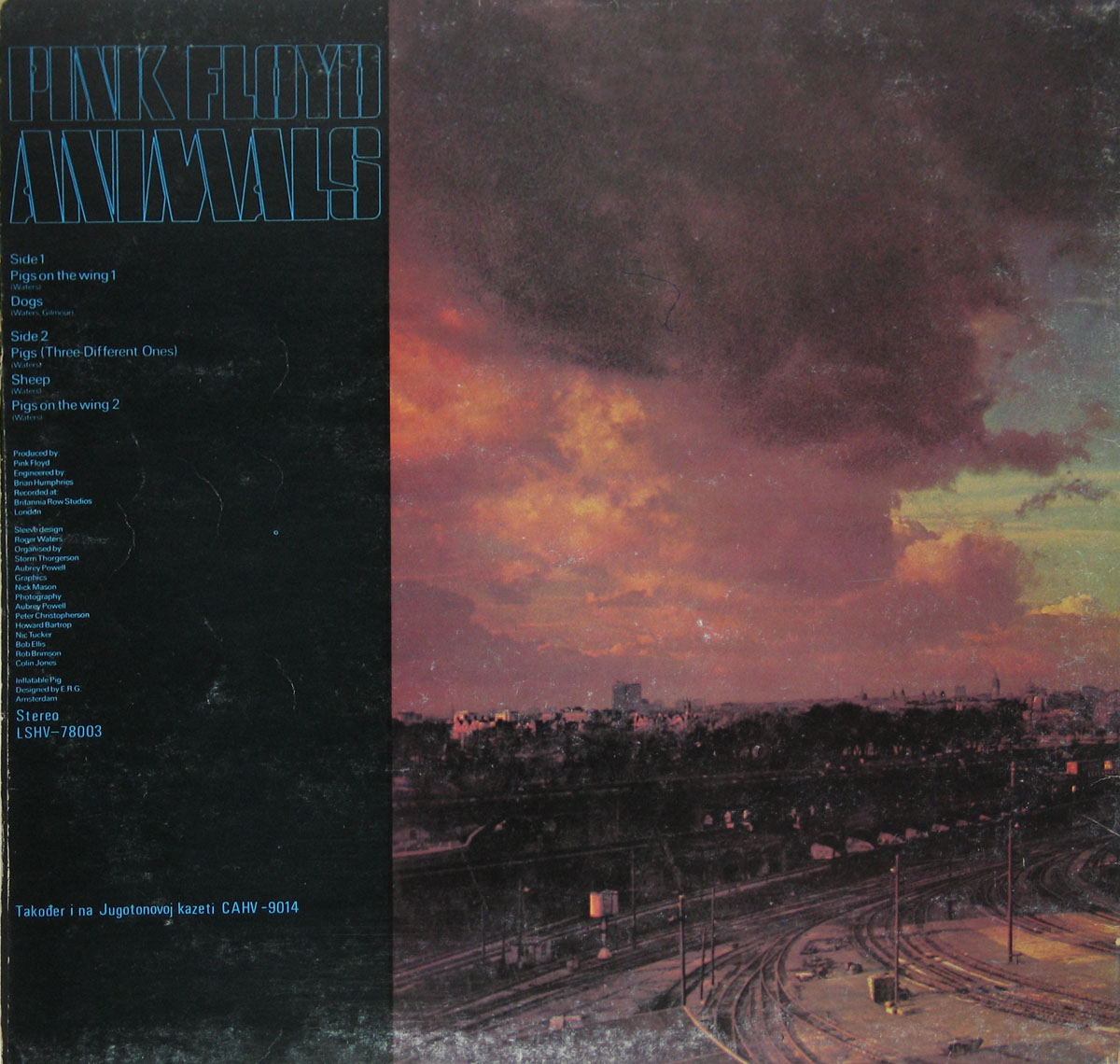
"Animals" stands as a testament to collaborative artistry. Produced by Roger Waters and Pink Floyd Music Publishers Ltd in 1977, the album was meticulously engineered by Brian Humphries at the renowned Britannia Row Studios in London. The meticulous attention to detail is evident in every note, showcasing the band's dedication to sonic excellence.
The sleeve design, a crucial aspect of the album's identity, was masterminded by Roger Waters. The creative forces behind the Hipgnosis Design Group, Storm Thorgerson and Aubrey Powell, organized the visual elements, contributing to the album's iconic look. Graphics were handled by Nick Mason, while a cadre of talented photographers, including Aubrey Powell, Peter Christopherson, Howard Bartrop, Nic Tucker, Bob Ellis, Rob Brimson, and Colin Jones, captured the essence of the music visually.
Notably, the album features an Inflatable Pig designed by E.R.G Amsterdam (Eventstructure Research Group Amsterdam)
, adding a distinctive touch to the visual aesthetics.
Contextual Significance: A Sonic Mirror of the Times
"Animals" wasn't merely an album; it was a reflection of the socio-political climate of the late 1970s. Pink Floyd's lyrics and musical arrangements addressed the issues of power, inequality, and societal discord. The Yugoslavian release of the album within this context served as a conduit for listeners to engage with the global conversations of the time.
Music Genre:
Acid Psych Prog Music |
Album Production:
Roger Waters Pink Floyd Music Publishers Ltd 1977 ,
Engineered by Brian Humphries,
Brian Humphries – Sound engineerI know Brian Humphries as one of those essential studio men whose work helped shape the dark weight of Black Sabbath and the wide-screen atmosphere of Pink Floyd. Read more... Brian Humphries was the sort of engineer I never ignore, because his name turns up exactly where the sound gets deeper, heavier and more cinematic. In 1970 he co-engineered Black Sabbath's "Paranoid", helping trap that blunt, iron-lunged force without polishing away its menace. With Pink Floyd, he entered the frame in 1969 on "Animals" and "Ummagumma", also working on music connected to "Zabriskie Point". He returned in the mid-1970s as front-of-house mixer during 1974, 1975 and 1977, then engineered "Wish You Were Here" in 1975 and "Animals" in 1977. By the late 1970s he was also tied to Britannia Row, right at the point where Floyd's sound became vast, cold and beautifully unsettling.
Recorded Brittania Row Studios, London,
Sleeve design by Roger Waters,
Organized by Storm Thorgerson, Aubrey Powell (
both founders of the Hipgnosis Design Group)
Graphics: Nick Mason
Photography; Aubrey Powell, Peter Christopherson, Howard Bartrop, Nic Tucker, Bob Ellis, Rob Brimson, Colin Jones
Inflatable Pig designed by E.R.G Amsterdam (Eventstructure Research Group Amsterdam)
|
Record Label & Catalognr:
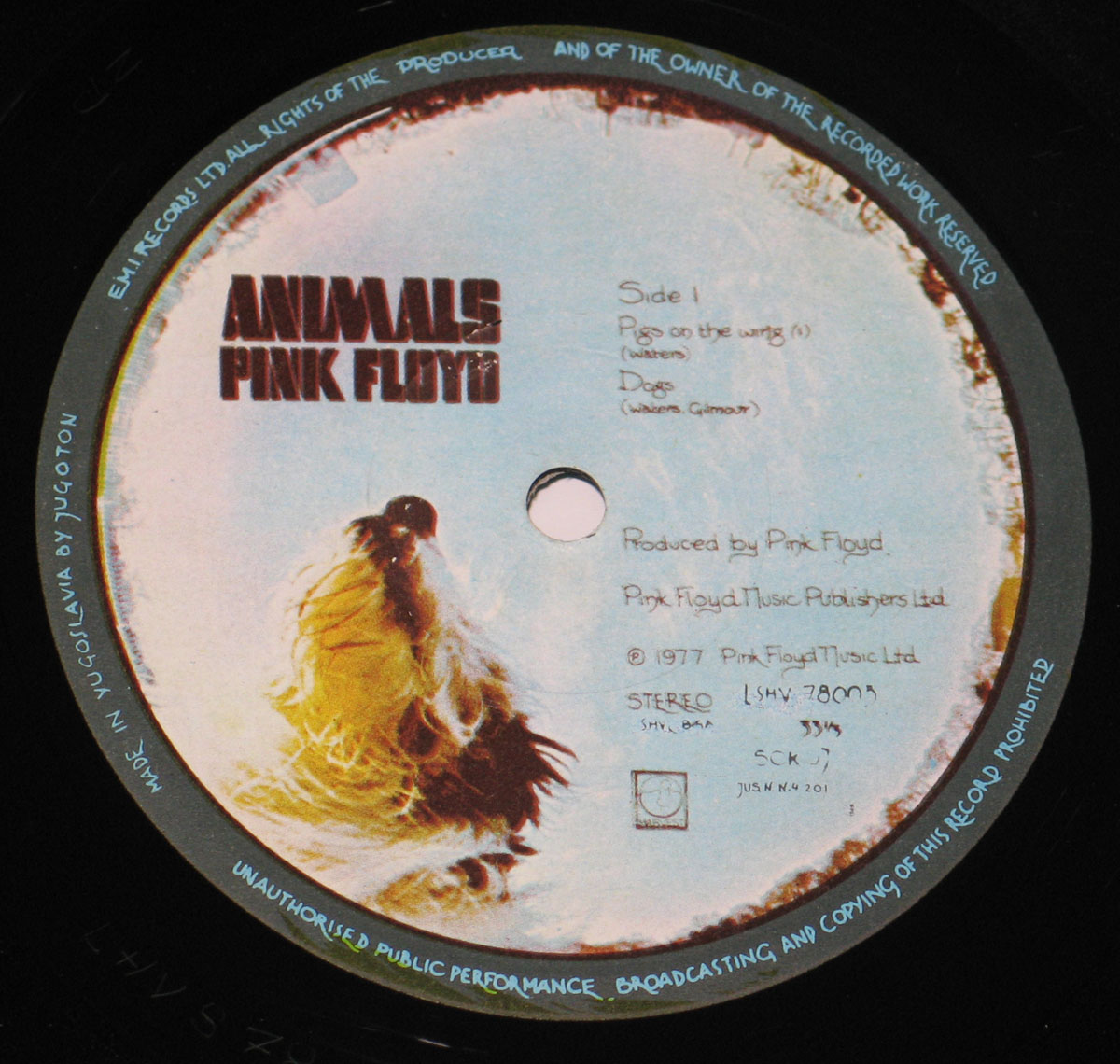
Jugoton LSHV 78003
Jugoton Record Company Jugoton, once a prominent record company based in the former Yugoslavia, played a significant role in shaping the music industry within the region during its existence. Established in 1947 in Zagreb, Croatia, Jugoton became a key player in the production and distribution of music, contributing to the vibrant cultural scene of the time.
Read more...
In the context of the period spanning from its inception to its eventual dissolution in the early 1990s, Jugoton operated within the unique socio-political landscape of Yugoslavia. The company navigated through different political and cultural shifts, providing a platform for artists from various Yugoslav republics to showcase their musical talents. This inclusivity was a crucial aspect of Jugoton's contribution, fostering a sense of unity and shared identity through music.
Jugoton's role in the production of music albums and singles cannot be understated. The company collaborated with a diverse array of musicians, spanning genres such as rock, pop, folk, and new wave. Some of the most iconic and influential Yugoslav artists, including Bijelo Dugme, Azra, and Prljavo Kazalište, released their albums under the Jugoton label.
The record company played a pivotal role in introducing Yugoslav music to international audiences, facilitating the export of albums and contributing to the global recognition of artists from the region. This international outreach added a layer of cultural exchange, bringing the sounds of Yugoslavia to a wider audience and contributing to the global music tapestry.
As the 1990s unfolded and Yugoslavia underwent tumultuous changes, Jugoton faced challenges related to the political transformations in the region. The breakup of Yugoslavia had a profound impact on the company, leading to its eventual dissolution in 1991. The demise of Jugoton marked the end of an era, but its legacy lives on through the enduring impact of the music it produced and the artists it supported.
|
Album Packaging:
Gatefold/FOC (Fold Open Cover) Album Cover Design with artwork / photos on the inside cover pages.
This album includes the original custom inner sleeve with album details, complete lyrics of all songs by and photos.
|
Media Format:
12" Full-Length Vinyl LP Gramophone Record
Album weight: 270 gram |
Year and Country:
1977 Made in Yugoslavia |
Band Members and Musicians on: Pink Floyd Animals |
Band-members, Musicians and Performers
-
Roger Waters - Vocals, bass, acoustic guitar, rhythm guitar, vocoder, tape effects, sleeve design
- Roger Waters – Bass, vocals, songwriter
Roger Waters is the guy I blame (politely) when a Pink Floyd song stops being “spacey vibes” and starts staring straight through you with lyrics that feel like a courtroom cross-examination. Read more... Roger Waters is, to my ears, Pink Floyd’s razor-edged storyteller: bassist, singer, and the main lyric engine who pushed the band from psychedelic drift into big, human-scale themes. His key band period is Pink Floyd (1965–1985), where he became the dominant writer through the 1970s and early 1980s, before leaving and launching a long solo career (1984–present). After years of public tension, he briefly reunited with Pink Floyd for a one-off performance at Live 8 in London on 2 July 2005—basically the musical equivalent of spotting a comet: rare, bright, and gone again. Since the late 1990s he’s toured extensively under his own name, staging huge concept-driven shows that revisit Floyd classics like "The Dark Side of the Moon" (notably on the 2006–2008 tour) and "The Wall" (2010–2013), because apparently subtlety is not the point when you’ve got something to say.
- David Gilmour - Guitars, bass, vocals, talkbox, synthesizer
- David Gilmour – Guitar, vocals
David Gilmour is the voice-and-fingers combo I hear whenever Pink Floyd turns from “spacey” into straight-up cinematic: he joined in 1967 and basically helped define what “guitar tone with emotions” even means. Read more... David Gilmour is, for me, the calm center of Pink Floyd’s storm: an English guitarist, singer, and songwriter whose playing can feel gentle and devastating in the same bar. His earliest band period worth name-dropping is Jokers Wild (1964–1967), before he stepped into Pink Floyd in 1967 as Syd Barrett’s situation unraveled. From there his main performing era is Pink Floyd (1967–1995), including the post-Roger Waters years where the band continued under his leadership and released "A Momentary Lapse of Reason" (1987) and "The Division Bell" (1994), with a later studio coda in "The Endless River" (2014). Outside Floyd, he’s had a long solo run (1978–present) with albums ranging from "David Gilmour" (1978) to "Luck and Strange" (2024), and he even did a sharp side-quest in 1985 with Pete Townshend’s short-lived supergroup Deep End. And for one historic night, the classic lineup reunited at Live 8 in Hyde Park, London on 2 July 2005—one of those “you had to be there (or at least press play)” moments.
- Richard Wright - Hammond organ, Fender Rhodes piano, Yamaha piano, ARP synthesizer, backing vocals
-
Nick Mason - Drums, percussion, tape effects, sleeve graphics
- Nick Mason – Drums, percussion
Nick Mason is the steady heartbeat I always come back to in Pink Floyd: the only constant member since the band formed in 1965, quietly holding the whole weird universe together while the rest of the planet argues about everything else. Read more... Nick Mason is Pink Floyd’s drummer, co-founder, and the one guy who never clocked out: his main performing period with Pink Floyd runs from 1965 to the present, and he’s the only member to appear across every Pink Floyd album. Outside the mothership, he’s had a very “I’m not done yet” second act: in 2018 he formed Nick Mason’s Saucerful of Secrets (2018–present) to bring the band’s early psychedelic years back to the stage. He’s also stepped out under his own name with projects like the solo album "Nick Mason’s Fictitious Sports" (released 1981), which is basically him taking a left turn into jazz-rock just to prove he can. And yes, he was part of that blink-and-you-miss-it full-band moment at Live 8 in London in 2005, when the classic lineup briefly reunited and reminded everyone why this band still haunts people.
|