LED ZEPPELIN II - 12" Vinyl LP Album

- SUPER-GROUP Volume 4 release, with Gatefold Album Cover

“Led Zeppelin II” is the second studio album by the English rock band Led Zeppelin, released in October 1969 on Atlantic Records. Recording sessions for the album took place at several locations in the United Kingdom and North America from January to August 1969. This web page has photos of album covers, inner sleeves, record labels together with production details, musicians and track-listing.

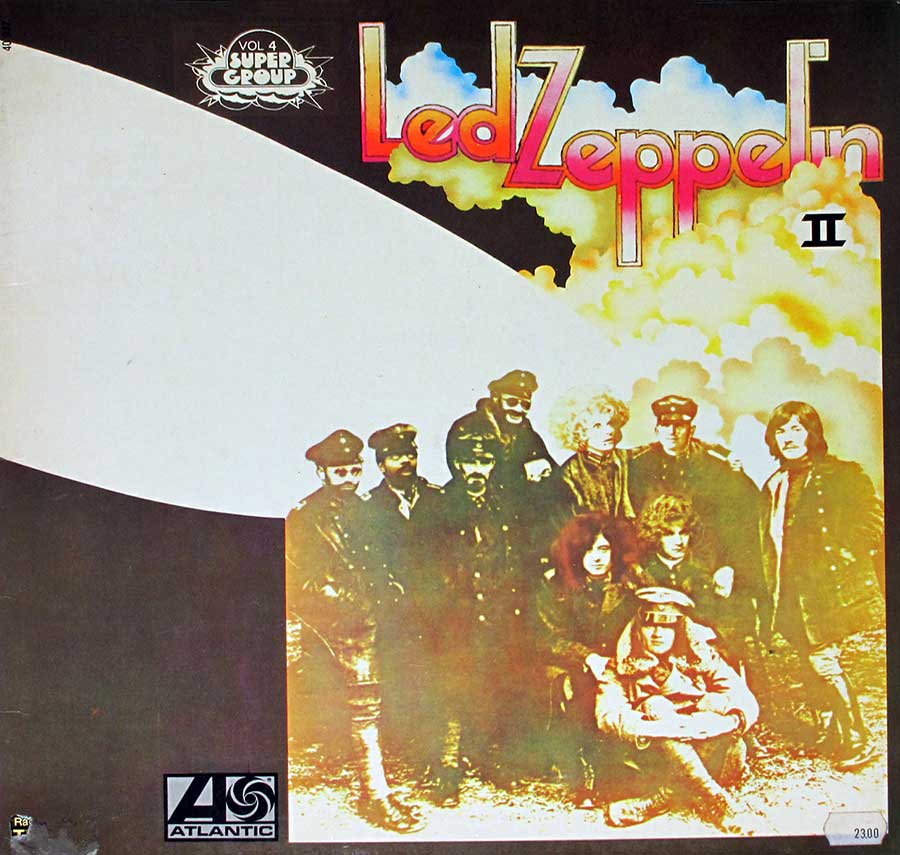
Front Cover Photo Of LED ZEPPELIN II - SUPER-GROUP VOL 4

Led Zeppelin II: The Hammer of the Gods Strikes Again
Album Description:

The year was 1969. The Summer of Love had given way to a darker, more uncertain era. The Vietnam War raged on. The Manson Family murders had shattered the illusion of peace and love. The world was changing, and rock and roll was changing with it. In the midst of this turmoil, Led Zeppelin unleashed their second album, simply titled "Led Zeppelin II".

From the opening salvo of "Whole Lotta Love," it was clear that this was no mere follow-up to their debut. This was a declaration of intent. A sonic assault that pushed the boundaries of rock and roll, blues, and folk. It was raw, primal, and unapologetically loud. Jimmy Page's guitar riffs were like lightning bolts, John Bonham's drumming was thunderous, John Paul Jones' bass lines were the bedrock, and Robert Plant's vocals were a banshee wail.

The album was a whirlwind tour of musical exploration. From the bluesy swagger of "The Lemon Song" to the Eastern-tinged psychedelia of "Ramble On," Zeppelin showed their versatility and willingness to experiment. The album's centerpiece, "Whole Lotta Love," was a sonic collage of heavy riffs, psychedelic interludes, and Plant's orgasmic moans. It was a song that pushed the limits of both musical and sexual boundaries, and it became an instant classic, renowned for its innovative use of the theremin and its iconic guitar solo.

Another standout track was "Heartbreaker," a showcase for Page's blistering guitar work and Plant's powerful vocals. The song's breakneck pace and raw energy perfectly captured the spirit of the band's live performances. "Ramble On" offered a gentler side of Zeppelin, with its acoustic guitars and evocative lyrics inspired by J.R.R. Tolkien's "The Lord of the Rings." This blend of hard rock and folk influences would become a hallmark of the band's sound.

The recording of "Led Zeppelin II" was as chaotic and frenetic as the music itself. The band recorded in various studios across the US and UK, often in between tour dates. The album was produced by Jimmy Page, who pushed the band to their limits, capturing their raw energy and power. The result was a sound that was both immediate and timeless, setting a new standard for rock production.

Of course, "Led Zeppelin II" was not without its controversies. The band was accused of plagiarism for "The Lemon Song," which borrowed heavily from Howlin' Wolf's "Killing Floor." There were also rumors of occult influences and backmasking, fueled by Page's fascination with the works of Aleister Crowley. But these controversies only added to the band's mystique, contributing to their image as rebellious rock stars.

"Led Zeppelin II" was a landmark album that cemented the band's status as rock and roll titans. It was an album that captured the spirit of a turbulent era, a time of change and uncertainty. It was an album that pushed the boundaries of what was possible in rock music, and it continues to inspire and influence musicians to this day. Its iconic album cover, featuring a stark black and white photo of the band superimposed over a World War I zeppelin, further solidified their image as a force to be reckoned with.

In the world of rock history, "Led Zeppelin II" stands as a testament to the power of rock and roll. It is an album that is both a product of its time and a timeless classic. It is an album that continues to resonate with listeners across generations, and it is a reminder of the power of music to move, inspire, and transform.
Music Genre:

  70s English Hard Rock 

Album Production Information: T

he album: "Led Zeppelin II" was produced by: Jimmy Page.

Sound & Recording Engineers: Edwin H. Kramer, Andrew Johns, George Chkiantz, Chris Huston.

  • Edwin H. “Eddie” Kramer – Producer, Audio Engineer

    The guy who could take Hendrix saying “make it sound green” and somehow turn that into real audio.

    Edwin H. “Eddie” Kramer, in my book, is rock’s ultimate behind-the-glass magician: starting in London studios in the early 1960s, then going full-throttle with Jimi Hendrix from 1967–1970, capturing Woodstock (1969), engineering major Led Zeppelin work from 1969 onward, steering Electric Lady Studios as engineering director in 1970–1974, and later locking in that arena punch with Kiss through the mid/late 1970s (and beyond). When I see his credit, I expect big guitars, bigger atmosphere, and a mix that still feels alive.

  • Andy Johns - Sound engineer, producer Andy Johns is one of those names I keep bumping into when I trace why certain records sound massive instead of merely loud. From the late ’60s into the ’70s he helped define the studio sound of bands like Led Zeppelin, The Rolling Stones, Free, Humble Pie and later Van Halen, capturing raw power without sanding off the danger. His work feels hands-on, instinctive, and gloriously unpolished — exactly how rock was meant to hit.
  • Art Work: David Juniper

    Record Label & Catalognr:

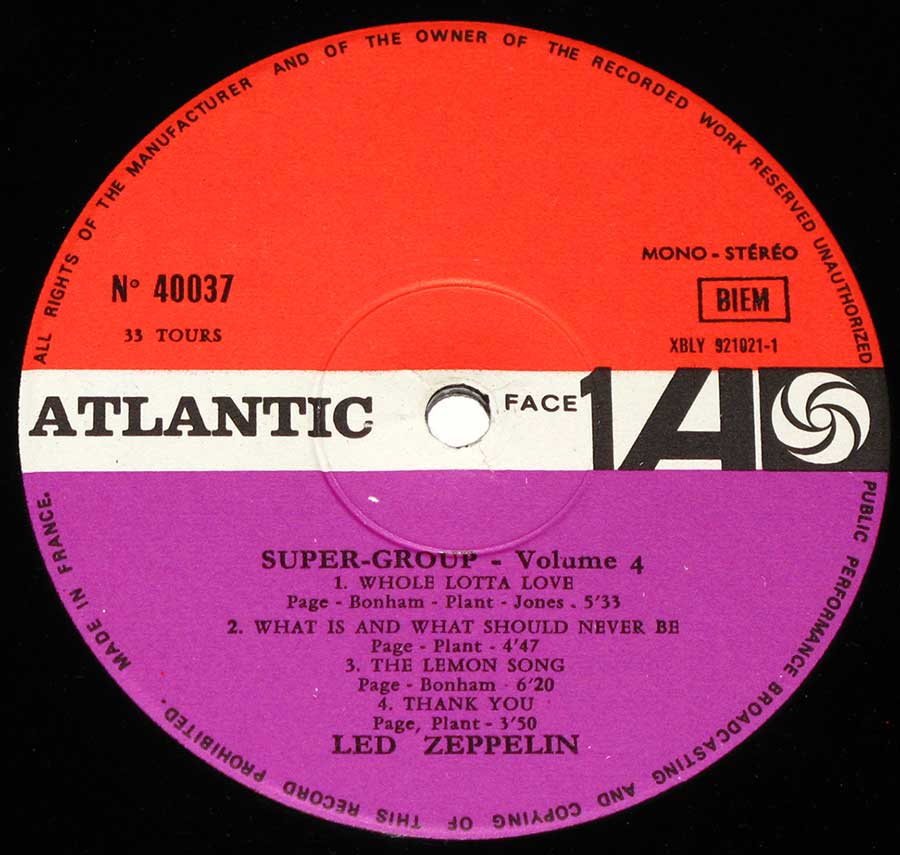
      Atlantic 40037  

    Album Packaging:

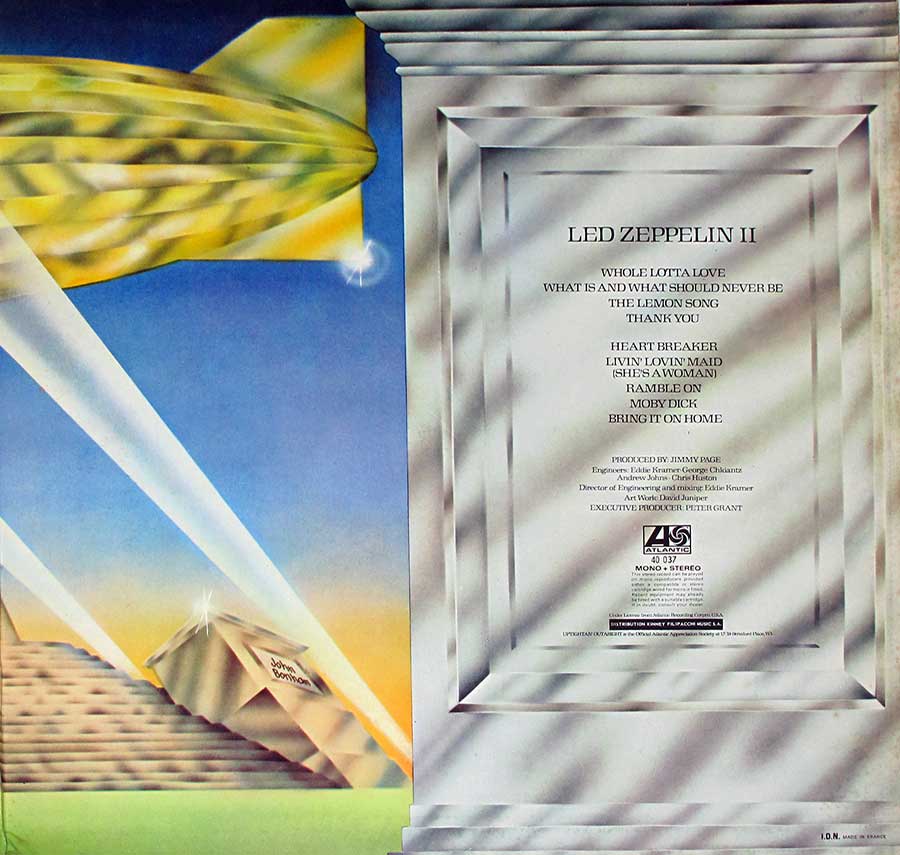
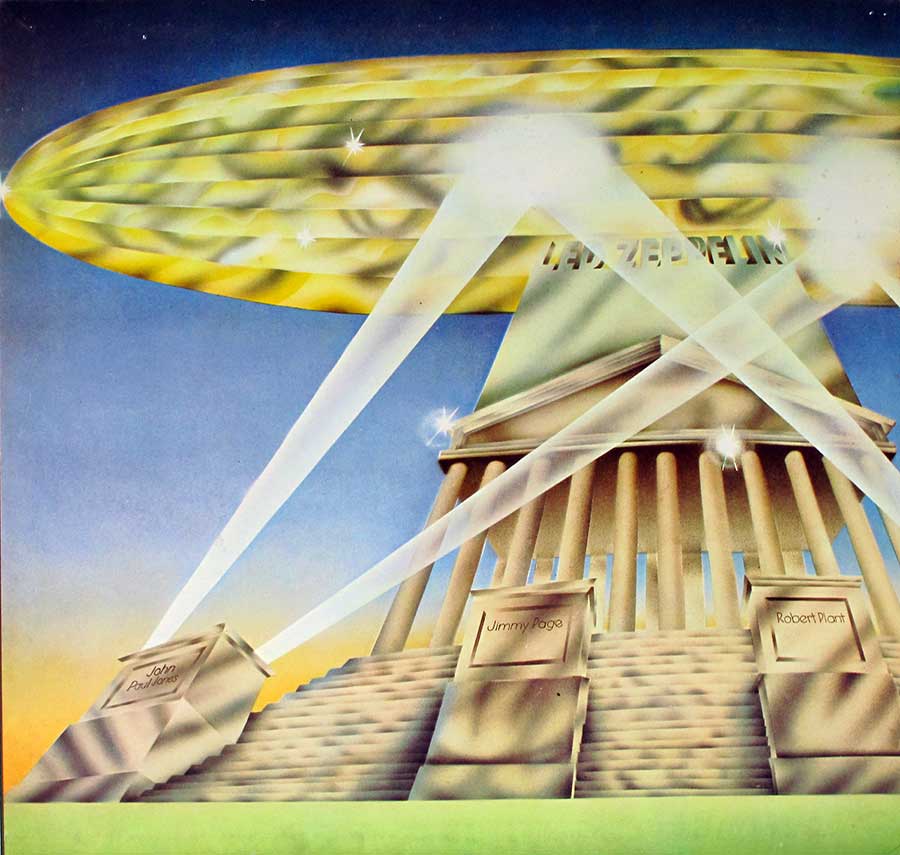
    Gatefold/FOC (Fold Open Cover) Album Cover Design with artwork on the inside cover pages.

    Media Format:

      12" Vinyl Stereo Full-Length Long-Play  Gramophone Record
    Album weight: 290 gram  

    Year & Country:

      1969 Made in France  
    Band Members and Musicians on: Led Zeppelin II
      Band-members, Musicians and Performers
    • Jimmy Page - acoustic guitar, electric guitar, pedal steel guitar, backing vocals, producer
    • Jimmy Page – Guitars

      Jimmy Page, born January 9, 1944, is the legendary guitarist and sonic architect behind Led Zeppelin’s groundbreaking sound, famous for riffs that could level buildings and still somehow swing.

      Jimmy Page became rock royalty as Led Zeppelin’s guitarist, arranger, and studio mastermind, shaping the band’s huge 1970s sound with inventive riffs, layered textures, and a producer’s obsession for detail. His live performances mixed precision with danger, stretching songs into epic improvisations without losing the groove. After Led Zeppelin ended in 1980, Page stayed active through projects like The Firm and a run of high-profile collaborations, keeping his influence all over rock well into the 1980s and beyond. Even when he wasn’t on the radio every five minutes, his fingerprints were still on the genre’s DNA.

    • Robert Plant - vocals, harmonica
    • Robert Plant – Lead Vocals

      Robert Plant, born August 20, 1948, is the iconic English frontman of Led Zeppelin, whose soaring vocals and magnetic stage presence helped define hard rock and heavy metal.

      Robert Plant rose to global fame as the voice of Led Zeppelin, shaping the sound of 1970s rock with his dynamic range and blues-infused power. After the band disbanded in 1980, he built a remarkably diverse solo career, exploring blues, folk, world music, and Americana. His willingness to evolve artistically rather than repeat past glories has secured his reputation as a restless innovator and enduring rock pioneer.

    • John Paul Jones - bass guitar, organ, backing vocals
    • John Paul Jones – Bass Guitar

      John Paul Jones, born January 3, 1946, was Led Zeppelin’s quietly brilliant bassist and multi-instrumentalist, the man who added brains, depth, and unexpected color to the band’s colossal sound.

      While Page, Plant, and Bonham grabbed headlines, Jones built the architecture underneath them. His fluid basslines drove songs like “Ramble On,” while his keyboards and orchestral arrangements transformed tracks such as “No Quarter” into moody epics. Trained, disciplined, and endlessly curious, he brought a session musician’s precision to a band famous for excess. After Led Zeppelin ended in 1980, Jones expanded into production, film scoring, and adventurous collaborations, proving he was never just “the bass player.” His legacy rests in the details—the subtle moves that turned great riffs into fully realized compositions.

    • John Bonham - drums, backing vocals
    • John Bonham – Drums

      John Bonham (1948–1980) was Led Zeppelin’s powerhouse drummer, whose thunderous attack and deep groove redefined what rock drumming could sound like in the 1970s.

      Bonham’s playing combined raw force with surprising finesse, turning tracks like “Moby Dick” and “When the Levee Breaks” into masterclasses in power and feel. He had that rare ability to sound both loose and absolutely locked in, swinging like a jazz drummer while hitting like a demolition crew. His massive bass drum tone and inventive fills became a blueprint for generations of hard rock and metal drummers. When he died in 1980, Led Zeppelin chose to end the band rather than replace him, a decision that says everything about how central he was to their sound. His legacy still echoes every time a drummer dares to hit hard and groove harder.

    Complete Track Listing of: "Led Zeppelin II"
      Side One:
    1. Whole Lotta Love
    2. What is and what Should Never Be
    3. The Lemon Song
    4. Thank You!
      Side Two:
    1. Heartbreaker
    2. Living Loving Maid (She's Just a Woman)
    3. Ramble On
    4. Moby Dick
    5. Bring it on Home
    Front Cover Photo Of LED ZEPPELIN II - SUPER-GROUP VOL 4
    Front Cover Photo Of LED ZEPPELIN II - SUPER-GROUP VOL 4

    Description

    Note: The images on this page are photos of the actual album. Slight differences in color may exist due to the use of the camera's flash. Images can be zoomed in/out ( eg pinch with your fingers on a tablet or smartphone )

    Photo One Of The Inner Gatefold LED ZEPPELIN II - SUPER-GROUP VOL 4
    Photo of the left page inside cover LED ZEPPELIN II - SUPER-GROUP VOL 4


    Photo Two Of The Inside Pages LED ZEPPELIN II - SUPER-GROUP VOL 4
    Photo of the right page inside cover LED ZEPPELIN II - SUPER-GROUP VOL 4


    Close up of record's label LED ZEPPELIN II - SUPER-GROUP VOL 4 Side One:
    Close up of record's label LED ZEPPELIN II - SUPER-GROUP VOL 4 Side One


    LED ZEPPELIN Vinyl Records and Albums Discography

    LED ZEPPELIN Related Rock Bands and Similar Music

    Cream

    Another influential British rock band, featuring Eric Clapton on guitar. Cream explored a wider range of styles than Led Zeppelin, but their blues-rock foundation and improvisational jams share some similarities. Cream

    Deep Purple

    Pioneered hard rock and heavy metal, with influences from blues and psychedelia. Known for their powerful vocals, driving riffs, and complex instrumentals. Deep Purple

    Jimi Hendrix

    A legendary guitarist known for his innovative playing style and use of effects pedals. While not strictly a band, Hendrix's influence on rock guitar is undeniable, and his music shares some elements of blues and psychedelia with Led Zeppelin. Jimi Hendrix

    The Who

    Pioneered power pop and mod rock, known for their energetic live performances and Pete Townshend's distinctive guitar work. The Who's music is often heavier and more aggressive than Led Zeppelin's, but both bands share a love for extended jams and powerful vocals. The Who