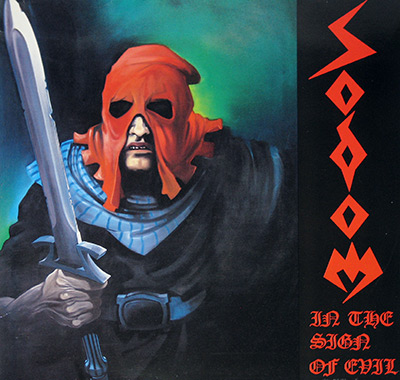
"In The Sign Of Evil" (1984) Album Description:
Sodom didn’t so much arrive with this 12" EP as they kicked the door off the hinges and left splinters in the amp stack. As a German pressing on Devil’s Game (DG No 001) — literally the label’s first shot fired — "In The Sign Of Evil" feels like the moment the Teutonic underground stopped flirting with danger and decided to marry it, in a smoky registry office, with the witnesses all wearing denim and bad intentions.
1) Introduction on the band and the album
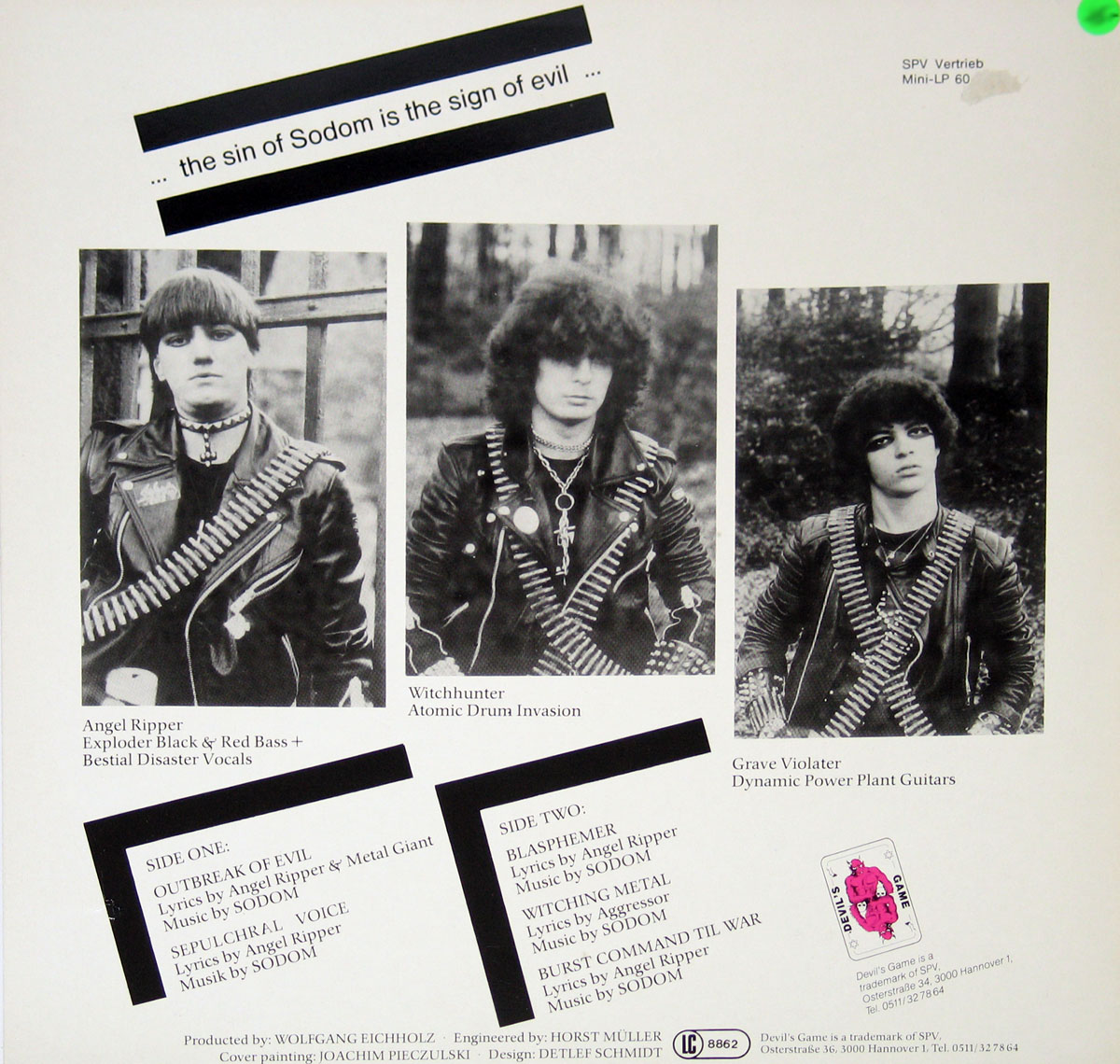
I always come back to this record when I want to remember what “early extreme metal” actually meant: not polished, not safe, not trying to charm anyone. It’s Sodom in their primal three-piece form — Angelripper, Witchhunter, Grave Violator — carving out that filthy crossroads where thrash speed meets first-wave black-metal nastiness.
The best part is how this EP still feels like a collector’s artifact, not just a playlist: the original custom inner sleeve with lyrics and photos makes it a little time capsule of a band building a world while the rest of Germany is still pretending polite music is the only music.
2) Historical and cultural context
1984 in Central Europe is all Cold War tension, divided cities, and an underground youth culture that’s allergic to anything sanitized. Metal isn’t just entertainment here — it’s a pressure valve, traded hand-to-hand, dubbed tape-to-tape, spreading faster than anyone in a suit can understand.
This is also the era when the German-speaking scene starts becoming its own beast: what later gets called Teutonic thrash — harsher, grimier, and less interested in American slickness. Sodom are right in that formative blast radius, and this EP is one of the early scorch marks.
3) How the band came to record this album
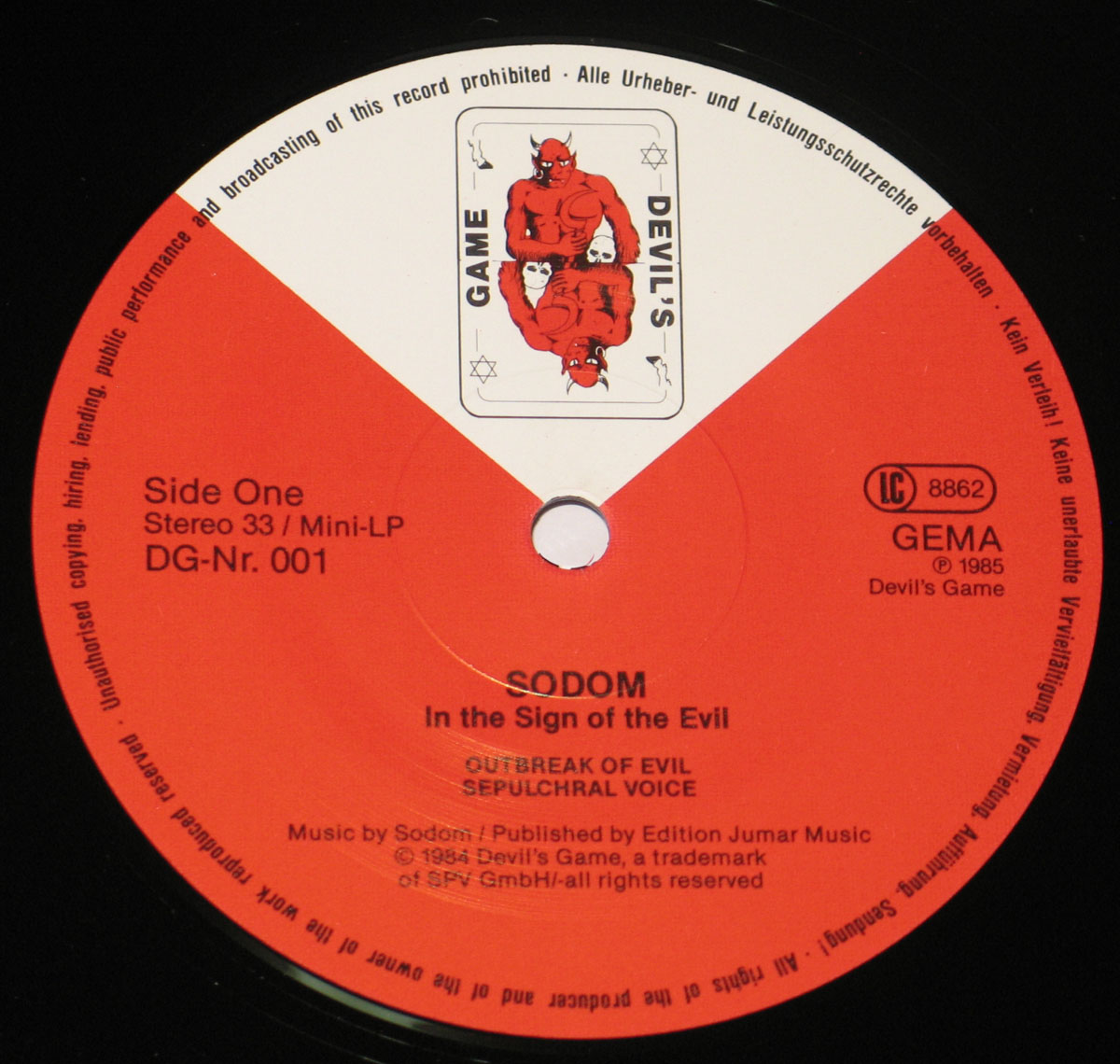
There’s something beautifully feral about the story baked into the catalog number: Devil’s Game DG No 001. New label, first release, and they choose this — five tracks that sound like they were recorded with the lights off and the demons on payroll.
The production names matter here because they point to the moment when chaos gets captured instead of cleaned: Wolfgang Eichholz as producer and Horst “TheCrazy Frog” Muller on sound engineering. That combo doesn’t polish the edges; it makes sure the edges are sharp enough to cut through the cheap needles and battered speakers this EP first lived on.
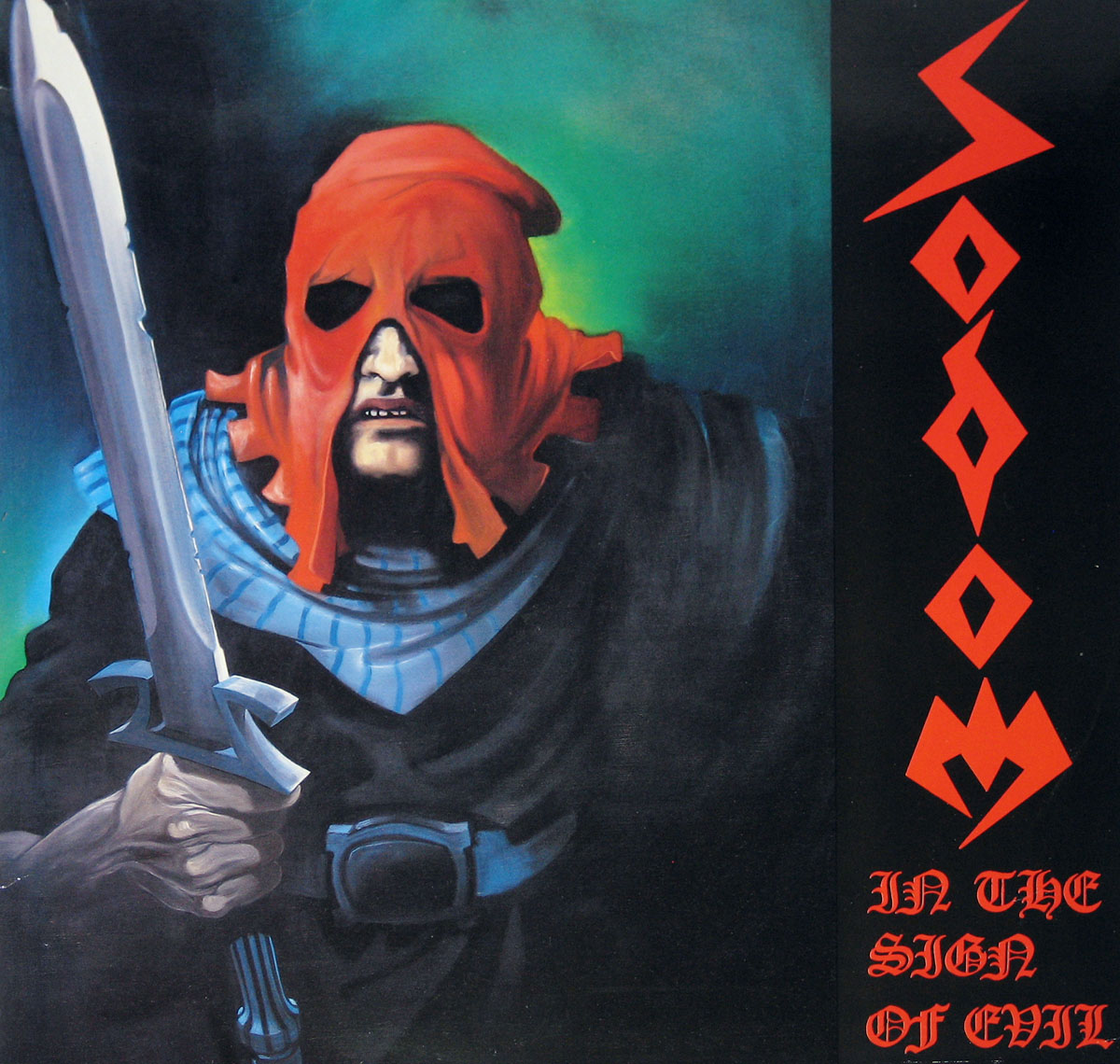
And visually, you’ve got an album cover painting credited to Joachim Pieczulski — the kind of credit line that tells you the band understood early: sound is only half the spell.
4) The sound, songs, and musical direction
Sonically, this EP lives on momentum. It’s fast, raw, and kind of gloriously unhinged — like the band is sprinting downhill and only steering by instinct. The riffs aren’t trying to be elegant; they’re trying to be inevitable.
"Outbreak of Evil" feels like the thesis statement: a blunt-force opener that doesn’t ask permission. "Sepulchral Voice" drags you into the crypt air, where the atmosphere is half the violence. And when "Blasphemer" and "Witching Metal" hit, it’s less about complexity and more about conviction — the band committing to a mood and refusing to blink.
By the time "Burst Command ’Til War" is done, I always get that early-Sodom feeling: this isn’t just aggression, it’s a band discovering that speed plus ugliness can become its own kind of beauty. Uncomfortable beauty. The best kind.
5) Comparison to other albums in the same genre/year
If you drop a needle on "In The Sign Of Evil" next to other 1984-era extreme releases, you can hear the shared DNA — but also what Sodom does differently: they sound less ceremonial and more like a street fight.
- Bathory – "Bathory" (1984): similarly raw and influential, but Bathory leans colder and more mythic; Sodom feel more immediate, more beer-and-bruises.
- Hellhammer – "Apocalyptic Raids" (1984): the same stink of early extremity, but Hellhammer moves like a doom-laden tank; Sodom are the motorcycle with no brakes.
- Destruction – "Sentence of Death" (1984): closer cousins in the German scene, but Sodom are nastier around the edges here, flirting harder with the blackened vibe.
6) Controversies or public reactions
The title alone ("In The Sign Of Evil") and the whole occult-and-war stink of early extreme metal were basically guaranteed to freak out somebody’s parents, somebody’s local paper, and definitely somebody’s church group. In the mid-80s, that was half the point: metal as a middle finger to polite society’s idea of “appropriate.”
But the real “controversy” is musical: this EP sits in that blurry zone where some listeners call it thrash, others call it first-wave black metal, and the band themselves just sound like they’re trying to be the loudest thing in the room. Some people heard “primitive.” Others heard the blueprint.
7) Band dynamics and creative tensions
The lineup here is tight and simple: three players, no safety net. Angelripper’s bass-and-vocals anchor the whole thing with that bulldozer drive; Witchhunter pushes it forward like he’s racing the song to the finish line; Grave Violator throws riffs that feel scraped out of concrete.
I can’t claim soap-opera drama that isn’t on the sleeve, but you can hear the human tension anyway: young band energy, limited time, limited polish, massive ambition. This is what it sounds like when a group decides, together, that subtlety is overrated.
8) Critical reception and legacy
This EP has the kind of legacy that shows up in the way later scenes talk about it: as part of the first wave of black metal, and as an early cornerstone of the nastier side of German thrash. The songs didn’t stay frozen in 1984 either — they got revisited and re-recorded decades later, which is basically the band admitting, “Yeah, these riffs still bite.”
And as a collector, I love that the record’s story keeps looping back through Sodom’s live history too. These tracks became staples — the kind of material bands keep playing because fans keep demanding it, and because it still works when the room is hot and the beer is cheap.
9) Reflective closing paragraph
When I pull this one out, it’s not for audiophile perfection — it’s for attitude. "In The Sign Of Evil" is a snapshot of a scene learning how to sound evil without sounding fake, and a band learning how to turn rawness into identity. Decades later, the grooves still smell faintly of sweat, ink, and that specific mid-80s optimism where everyone secretly believed the underground could swallow the world whole.