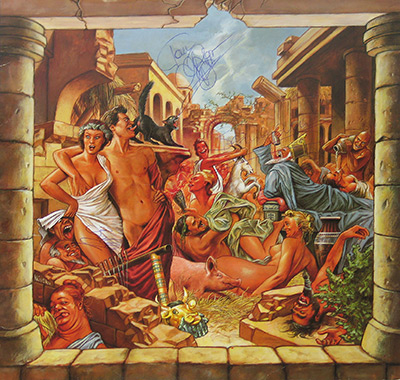
SODOM ( THRASH Metal , Germany ) Collector's Album Cover Gallery & Information

SODOM ( Heavy Metal , Germany ) Banner photo

Sodom is a German heavy metal trio from Gelsenkirchen, formed in 1981. Along with the bands Kreator and Destruction , Sodom is considered one of the "big three" of Teutonic thrash metal. While the other two bands created a sound that would influence death metal, Sodom's music style would greatly influence many late-1980s and early-1990s black metal bands, among others.

SODOM: A Brief Overview

SODOM comes from Gelsenkirchen in the Ruhr, and the start date depends on which metal historian you corner: late 1981 or 1982. Either way, the early shape is clear enough—Tom "Angelripper" Such on bass and vocals, Frank "Aggressor" Terstegen on guitar, and drummer Rainer "Bloody Monster" Focke, with Christian "Witchhunter" Dudek stepping in soon after. The important part? The band didn’t arrive polished. It arrived loud.

Thrash in Germany didn’t grow in a greenhouse. It grew in concrete rooms with cheap amps and bad decisions. SODOM’s sound runs fast and nasty, but it isn’t just speed for sport—those riffs feel like machinery kicking into gear. Lyrics keep circling war, death, and the kind of darkness that looks better spray-painted on a wall than explained in a thesis.

First time hearing early SODOM on an old tape, the word that stuck wasn’t “thrash.” It was that old scene term: witching metal. Because that’s what it felt like—primitive, cursed, and weirdly proud of its own ugliness.

Early Years

The early releases don’t politely introduce themselves. "In the Sign of Evil" snarls, stumbles, and somehow wins anyway. "Obsessed by Cruelty" pushes further into that first-wave black metal shadow, but the punk rot is already in there too—short fuses, hard stops, riffs that don’t ask for approval. Lineups shift, as they do, but Tom stays the fixed point: the same voice, the same bass shove, the same stubborn refusal to clean it up for outsiders.

Breakthrough

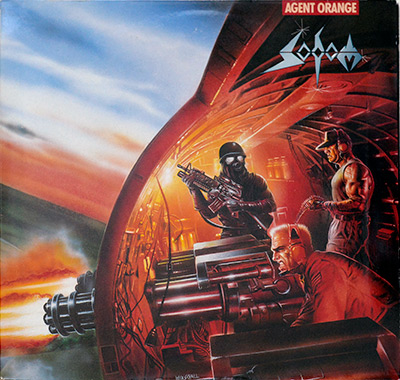
"Agent Orange" (1989) is the moment the chaos gets aimed. Not “mainstream success” like a pop crossover—more like the band finally locking the target in the sights. Produced by Harris Johns, it’s widely treated as their commercial breakthrough, and it’s also their third studio album, not the fifth. "Ausgebombt" shows up tied to that era as a separate EP/single release, and it sounds exactly like the title: bombed-out, bitter, and grinning through broken teeth.

Recent Years

The later decades are basically proof of stamina. SODOM keeps touring, keeps recording, keeps dragging the old spirit forward without turning it into a nostalgia act. "Genesis XIX" lands in 2020 and is commonly counted as their 16th studio album—still war-soaked, still pissed off, still sounding like a band that prefers the industrial backstreets to the red carpet.

Calling SODOM “pioneers” is technically fine, but it’s also a bit too respectful and tidy. Better to remember them as one of the few bands that never pretended this music was meant to be comfortable. If it feels like rust under the fingernails, that’s the point.

References

Biography of Tom Angelripper - Vocals/Bass:

Tom Angelripper is Thomas Such, born 19 February 1963 in Gelsenkirchen, West Germany — Ruhr-country, where the air historically tasted like work. Bass in hand, coal-dust on the boots (literally, if the biographies are to be believed), and that voice: not “aggressive,” more like a bark thrown across a loading dock at 2 a.m.

The Sodom origin story gets messy fast, because metal history loves to sand off the rough edges. The clean version: the band forms around 1981/82 in Gelsenkirchen, with early rehearsals tied to Frank “Aggressor” Terstegen and drummer Rainer “Bloody Monster” Focke, and Tom locks in soon after and becomes the permanent engine. Either way, the result is the same: Sodom starts sounding like a fight you didn’t plan to be in.

Motörhead and Venom sit in the DNA, sure. But that’s just ingredients. The real thing is intent. Angelripper’s bass doesn’t politely underpin the guitar — it shoves the songs forward, like the whole band is late and the van won’t start unless the riff hits hard enough.

Lyrics go where they always go with him: war, rubble, rot, the ugly machinery behind “civilized” life. Not subtle. Good. Thrash wasn’t built for subtle. The voice sells it because it sounds like it’s been lived in, not coached.

Lineups spin around him for decades, because that’s what happens when one person is the constant and everyone else is a rotating cast of talented trouble. Some bands “evolve.” Sodom mostly sharpens. Albums like "Persecution Mania" and "Agent Orange" don’t feel like career milestones — they feel like documents from a particular kind of European frost, where the riffs come out clean and cold and mean.

Then there’s Onkel Tom Angelripper, which is basically proof the man has a sense of humor and refuses to act “important.” "Ein Strauß bunter Melodien" (1999) and "Ich glaub' nicht an den Weihnachtsmann" (2000) are the kind of side-step that irritates purists and amuses everyone else. Personally, purists can go organize their patch collection by thread count.

Calling him an “icon” feels too tidy, too polite. Better to say this: when Angelripper is on stage, Sodom doesn’t pretend to be anything else. No redemption arc. No inspirational glow-up. Just the Ruhr grind turned into riffs, and it still bites.

References

Biography of Frank Blackfire - Guitars:

Frank Blackfire (Frank Gosdzik) comes from Essen, born 24 February 1966, which is about the most Ruhr-area origin story possible: grey skies, stubborn energy, and a guitar tone that sounds like it’s been sharpened on concrete.

First time his name really bites is the late-80s Sodom run. 1987 is the pivot — the band gets a proper blade instead of a blunt club. The "Expurse of Sodomy" era already shows it: riffs stop wobbling and start marching, like the music just found its boots and decided it’s done asking permission.

"Persecution Mania" doesn’t feel “virtuosic.” It feels weaponized. Blackfire’s playing isn’t there to impress guitar nerds (though it does). It’s there to push Tom Angelripper’s songs forward, to drag them by the collar if needed. That’s the Teutonic trick: discipline without losing ugliness.

Then "Agent Orange" lands in 1989 and the riffs bite cleaner, harder — still toxic, just better aimed. Last Sodom studio album with him, and it shows: the guitar parts don’t just fill space, they steer. Anything after that claiming he played on "Tapping the Vein" is wishful thinking or lazy copy-paste. Different guitarist, different era.

Jump to Kreator and the story gets annoyingly “credits vs reality.” Public sources argue about how much he played on "Extreme Aggression" — even Frank himself has said he didn’t play on it — but the important bit is simpler: once he’s properly on record with Kreator, starting with "Coma of Souls" (1990) and later "Renewal" (1992), the band gets a colder edge, more atmosphere in the mid-tempos, less blur in the attack. That’s his fingerprint: not flashy. Focused.

Side note that matters because it kills a common myth: Assassin’s "Interstellar Experience" (1988) isn’t him. He joins Assassin much later, in 2016, after Michael Hoffmann exits. Timeline matters — thrash history gets mangled fast when people write it like a motivational poster.

Solo-wise, the “own band, 1990” thing is wrong too: "Back on Fire" is a 2015 release, and the title is basically a dare. Not everything needs a tidy “legacy” bow. Some players just keep showing up, plugging in, and proving the old riffs still have teeth.

References

Biography of Chris Witchhunter - Drums:

Chris Witchhunter (Christian Johannes Dudek) came out of the Ruhr like a power tool with a grudge — born 18 December 1965 in Gelsenkirchen, not some postcard version of Germany. The name sounds like teenage fantasy. Good. The drumming didn’t.

Early Sodom needed a drummer who could keep the wheels on while the whole thing tried to fly apart. Witchhunter jumps in around 1982 and the band starts moving like it means it. Not “tight” in a polite way — tight like bolts cranked down until the metal groans.

A battered tape of "Persecution Mania" lived near the player for ages, because that album has his stamp all over it: the kick drum pushing forward, the snare snapping back, the whole kit sounding like it’s been dragged down a concrete stairwell and then dared to do it again. Then comes "Agent Orange" and suddenly the violence has discipline. The swing is gone. Marching boots, straight line, no apology.

The thing that sticks isn’t “influence” — that word gets tossed around like a free patch at a festival. It’s his sense of pressure. Fills don’t decorate, they shove. The tempo doesn’t politely rise, it accelerates like somebody just spotted blue lights in the rearview mirror.

Side trails happened, because the 80s German scene was basically one long rehearsal-room ecosystem: he even helped out live with Destruction for a stretch, and there’s that infamous almost-story where Bathory rehearsed with him and then… nothing. Typical. Half the legend of Teutonic thrash is aborted plans and arguments over beer money.

Reality bites in 1992. Alcohol trouble, forced out of Sodom, and the clock keeps ticking anyway. Then, in 2007, he’s back behind the kit to re-record the old stuff for "The Final Sign of Evil" — not a grand comeback, more like a last flare in the dark. He dies days before his 43rd birthday, early September 2008, age 42 (you’ll see 7 September in some places, 8 September in others). Liver failure. Either way, the end lands hard.

Plenty of drummers are fast. Fewer sound dangerous without turning to mush. Witchhunter had that ugly, Teutonic “get in the van, play the show, repeat” stamina baked into his hands — and it still leaks out of the speakers if you let it. Anybody calling this “just history” isn’t listening.

References

SODOM's Vinyl Record Discography: A Thrash Metal Journey Through the 1980s.

SODOM - Agent Orange
SODOM - Agent Orange  album front cover vinyl record

"Agent Orange"was produced by Harris Johns, who had previously worked with bands such as Kreator and Destruction. The album's sound is a mix of thrash metal, black metal, and hardcore punk. The songs are fast, aggressive, and heavy, and they feature some of Sodom's most memorable riffs and solos.

Agent Orange 12" Vinyl LP
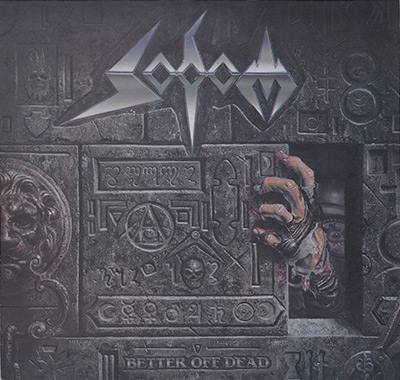
SODOM - Better Off Dead
Album cover for Sodom’s Better Off Dead featuring a dark stone wall with engraved symbols, a skeletal hand reaching out from an opening, and a single eye peering from the shadows

"SODOM - Better Off Dead" stands as a testament to the ferocity of German Thrash Metal. Released on [Long European Date Format: August 1990], this album marked the fourth offering from the iconic band Sodom, propelling them further into the realms of metal greatness.

Better Off Dead 12" Vinyl LP
SODOM - Expurse of Sodomy
SODOM - Expurse of Sodomy album front cover vinyl record

In The Realm Of Thrash Metal, The German Band Sodom Has Solidified Their Place As One Of The Genre's Most Influential Acts. Among Their Extensive Discography, "Expurse Of Sodomy" Stands Out As A Memorable Ep That Encapsulates The Band's Raw Energy And Intense Musical Prowess.

Expurse of Sodomy 12" Vinyl LP
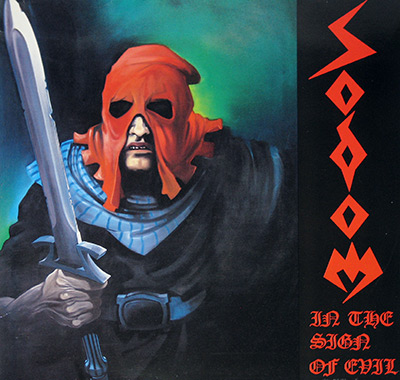
SODOM - In The Sign Of Evil
SODOM - In The Sign Of Evil  album front cover vinyl record

Sodom's first record, "In The Sign Of Evil", released by Devil's Game (DG No 001) in 1984. The album showcases the band's mastery of German Death Thrash Metal, establishing their influential presence in the genre.

In The Sign Of Evil 12" Vinyl LP
SODOM - Mortal Way of Live
SODOM - Mortal Way of Live album front cover vinyl record

The creation of "Mortal Way of Life" was not merely a recording endeavor but a sonic journey that reflected the band's dedication to delivering an authentic thrash metal experience. To delve into the album's creation history, we must first understand the backdrop of Sodom's ascendancy in the metal scene.

Mortal Way of Live 12" Vinyl LP
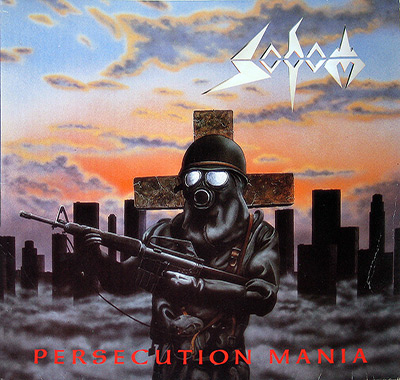
SODOM - Persecution Mania
SODOM - Persecution Mania  album front cover vinyl record

At its core, "Persecution Mania" captures the essence of what made Sodom such a force to be reckoned with. Led by the indomitable Tom Angelripper on vocals and bass, the band unleashed a sonic assault that would leave listeners in awe. Frank Blackfire's searing guitar work tore through the speakers

Persecution Mania 12" Vinyl LP