"Wish You Were Here" Album Description:
Exploring the nuances of Pink Floyd's "Wish You Were Here" 12" Vinyl LP Album in the Netherlands, marked with the distinctive catalog number 5C 062-96918, reveals a fascinating dimension of the band's discography within the context of its time period.
Released in an era characterized by a dynamic musical landscape and the rise of progressive rock, "Wish You Were Here" made its debut in September 1975. The European vinyl edition, specifically the Netherlands release with catalog number 5C 062-96918, stands as a noteworthy artifact of that period.
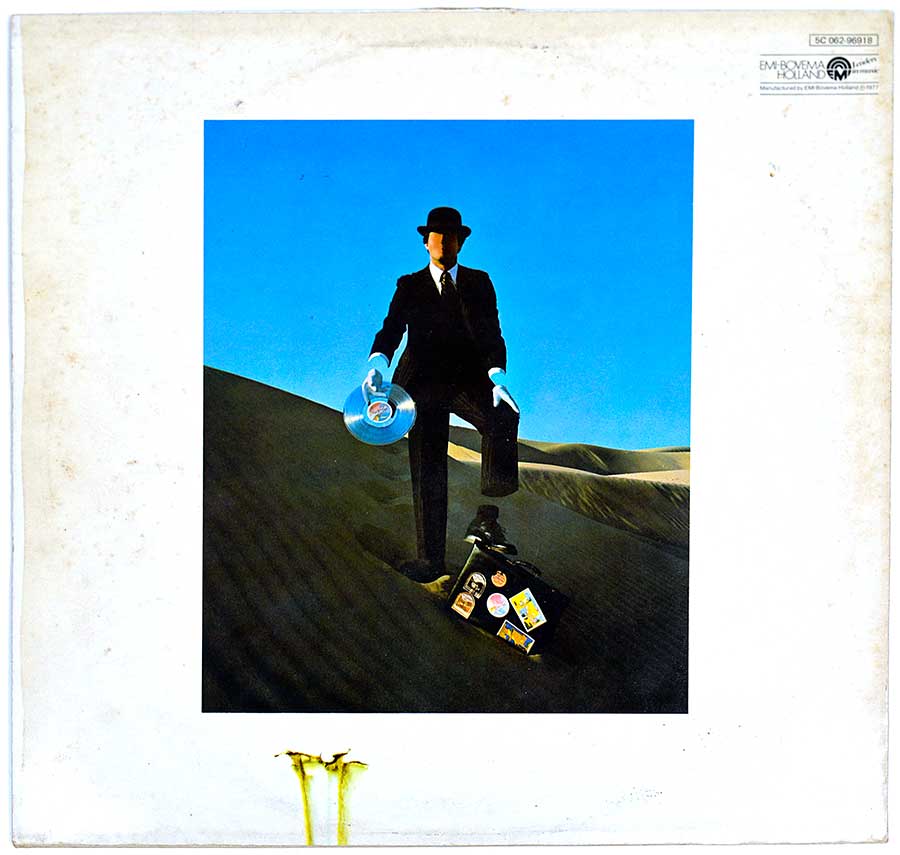
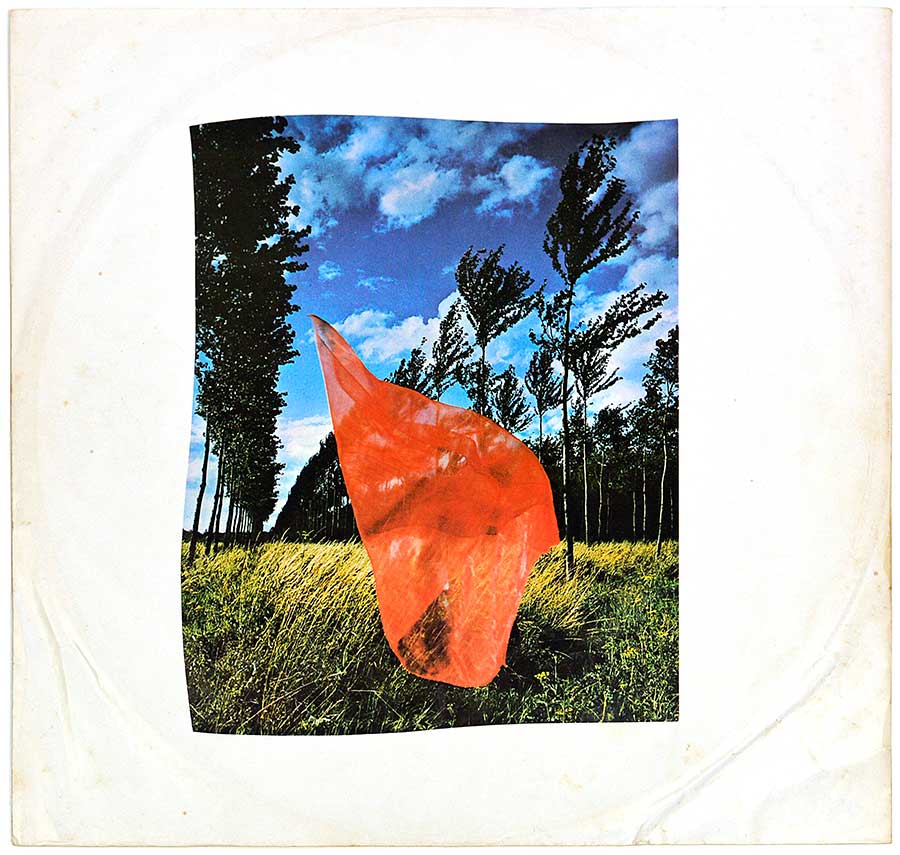
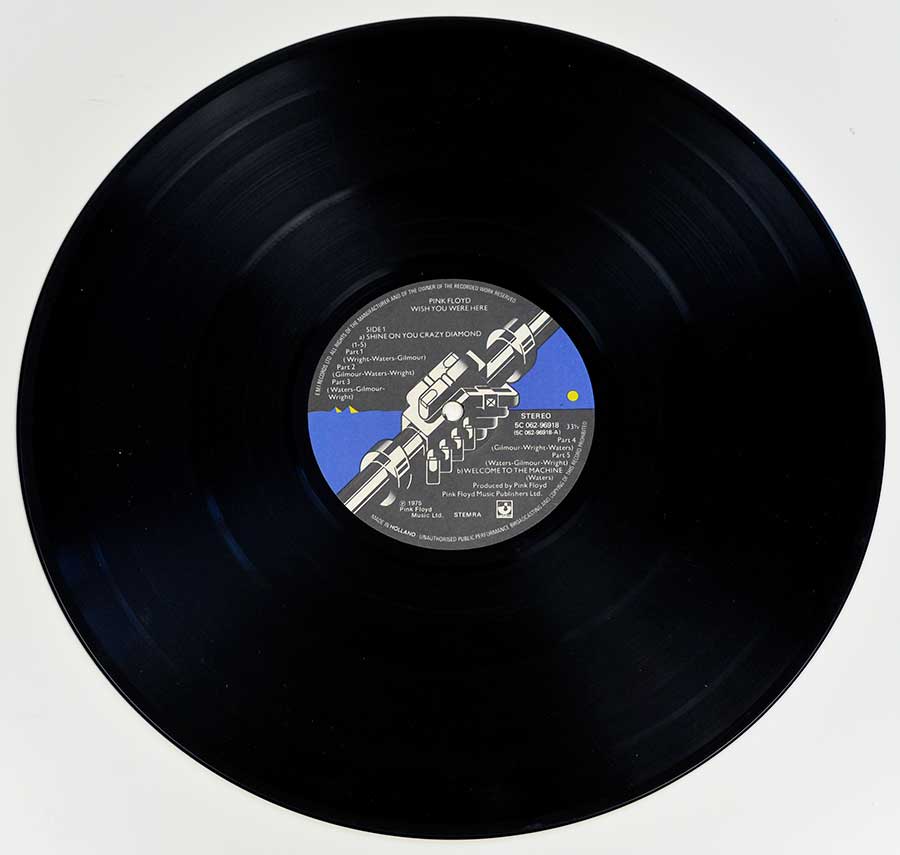
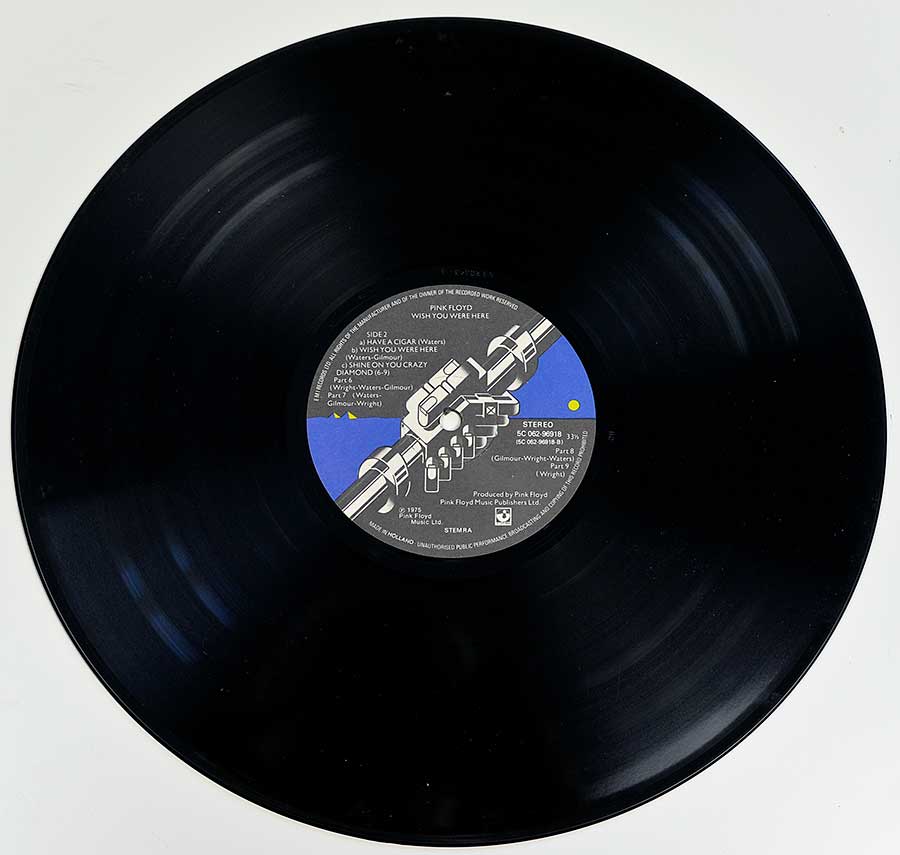
The catalog number serves as more than just a mere identifier; it encapsulates the intricate web of production, distribution, and categorization during the 1970s. In the case of "Wish You Were Here," the consistent printing of the catalog number on the album back cover, inner sleeve, and labels, such as 5C 062-96918, underscores a meticulous attention to detail and uniformity in design – hallmarks of the era's commitment to visual aesthetics.
In the realm of production, the vinyl LP format itself was a prevailing medium for music consumption during this time. The warmth and depth of analog sound, coupled with the tangible experience of handling a physical record, contributed to the immersive nature of the listening experience. The 12" format allowed for extended musical journeys, providing artists like Pink Floyd with the canvas to craft expansive sonic landscapes.
The choice of the Netherlands as a focal point for this release also carries significance. Europe, with its diverse music scenes and receptive audiences, played a pivotal role in shaping the trajectory of progressive rock. The Dutch market, in particular, fostered an environment where experimental and innovative sounds found a receptive audience. Pink Floyd's decision to release "Wish You Were Here" with a consistent catalog number in the Netherlands speaks to the strategic approach in navigating the intricacies of the European music market.
The meticulous detailing of catalog numbers on album covers and labels wasn't merely a functional aspect; it reflected a commitment to quality control and a desire to create a cohesive visual identity for the release. This attention to detail mirrored the band's approach to their music – a meticulous crafting of sonic landscapes, conceptual depth, and emotional resonance.
|
Album Fact Sheet: PINK FLOYD - Wish You Were Here (5C 062-96918)
|
|
Music Genre:
Prog Rock / Psych/Acid Rock
|
Album Production information:
The album: "PINK FLOYD - Wish You Were Here (5C 062-96918) was produced by:
Pink Floyd
Sound/Recording Engineer(s): Brian Humphries, Peter James
Brian Humphries – Sound engineerI know Brian Humphries as one of those essential studio men whose work helped shape the dark weight of Black Sabbath and the wide-screen atmosphere of Pink Floyd. Read more... Brian Humphries was the sort of engineer I never ignore, because his name turns up exactly where the sound gets deeper, heavier and more cinematic. In 1970 he co-engineered Black Sabbath's "Paranoid", helping trap that blunt, iron-lunged force without polishing away its menace. With Pink Floyd, he entered the frame in 1969 on "Animals" and "Ummagumma", also working on music connected to "Zabriskie Point". He returned in the mid-1970s as front-of-house mixer during 1974, 1975 and 1977, then engineered "Wish You Were Here" in 1975 and "Animals" in 1977. By the late 1970s he was also tied to Britannia Row, right at the point where Floyd's sound became vast, cold and beautifully unsettling.
This album was recorded at: Abbey Road Studios, January to July 1975
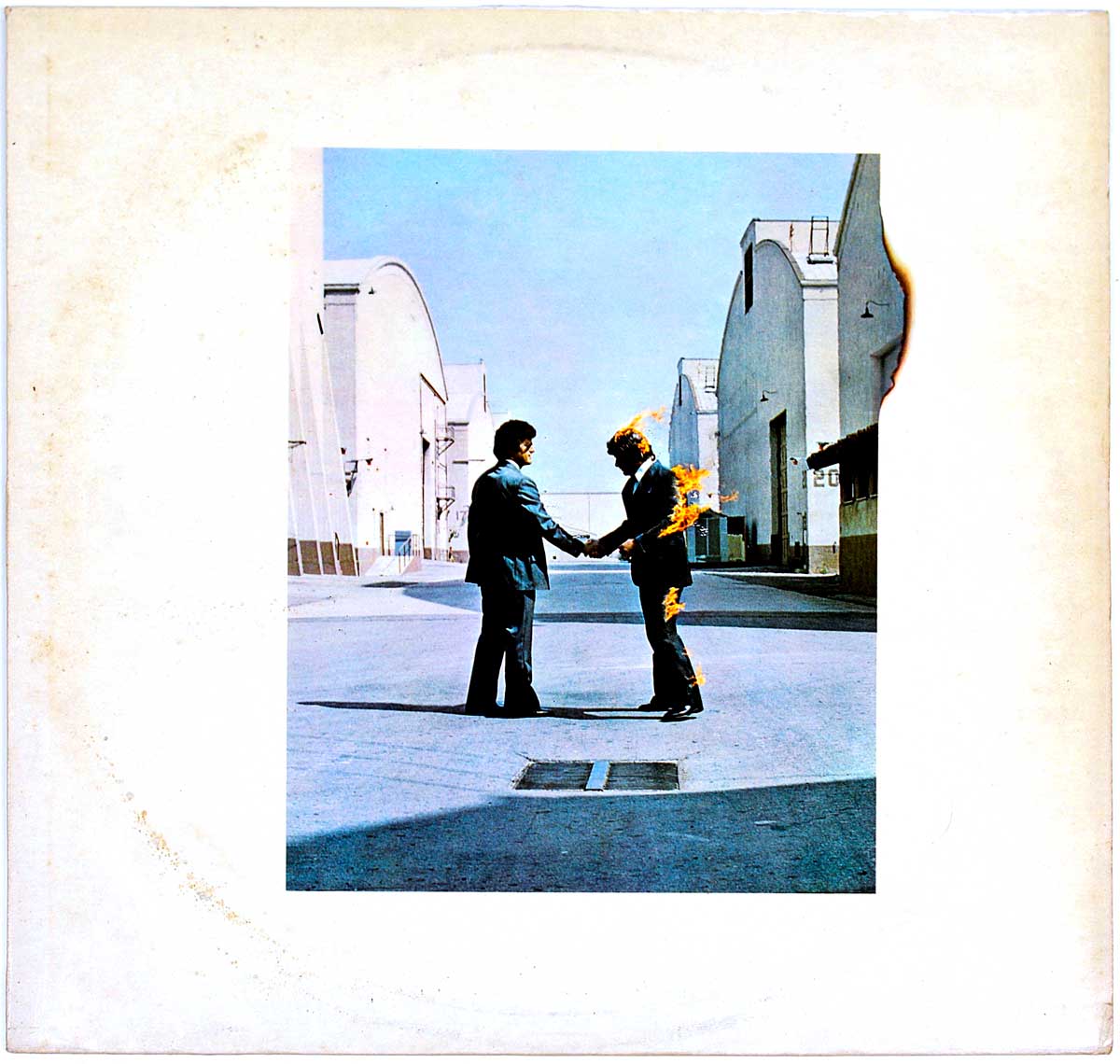
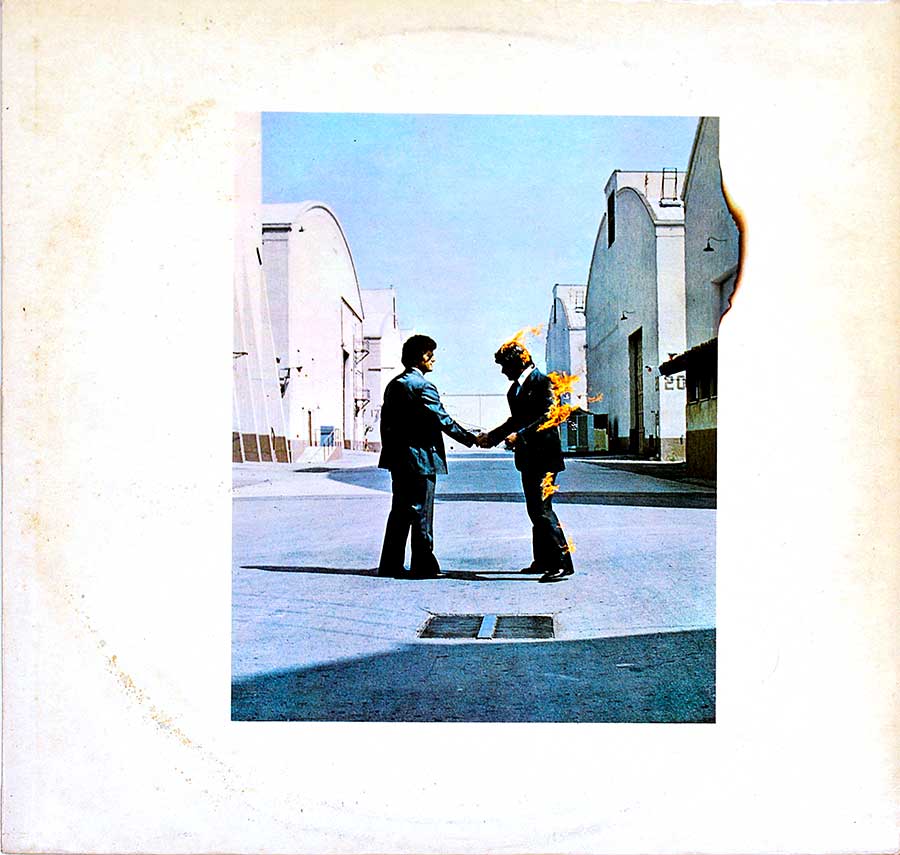
Album cover design and photography by Hipgnosis assisted by Peter Christopherson, Jeff Smith, Howard Bartrop and Richard Manning
Album Graphics by George Hardie
Hipgnosis – British album cover art design groupHipgnosis is my favorite proof that a record sleeve can be a full-on mind game, not just a band photo with better lighting. Read more... Hipgnosis is the legendary London-based art design group that turned rock sleeves into visual myths. The core duo, Storm Thorgerson and Aubrey "Po" Powell, were childhood friends of the Pink Floyd inner circle in Cambridge—a connection that allowed them to bypass the stiff mandates of EMI’s in-house design department in 1968. Their debut, "A Saucerful of Secrets," was only the second time in EMI history (after The Beatles) that an outside firm was granted creative control. The very name "Hipgnosis" was a piece of found art; Syd Barrett, during one of his more enigmatic phases, scrawled the word in ballpoint pen on the door of the South Kensington flat he shared with the duo. Thorgerson loved the linguistic friction of it: the "Hip" for the new and groovy, and "Gnosis" for the ancient, hidden knowledge. While Peter Christopherson later joined as a third partner in 1974, that initial Barrett-endorsed moniker defined a decade of surrealist mastery for bands like Led Zeppelin, Genesis, and 10cc, before the group dissolved in 1983. |
|
Record Label & Catalognr:
Harvest – 5C 062-96918
Yellow Dots on the record label
|
|
Album Packaging:
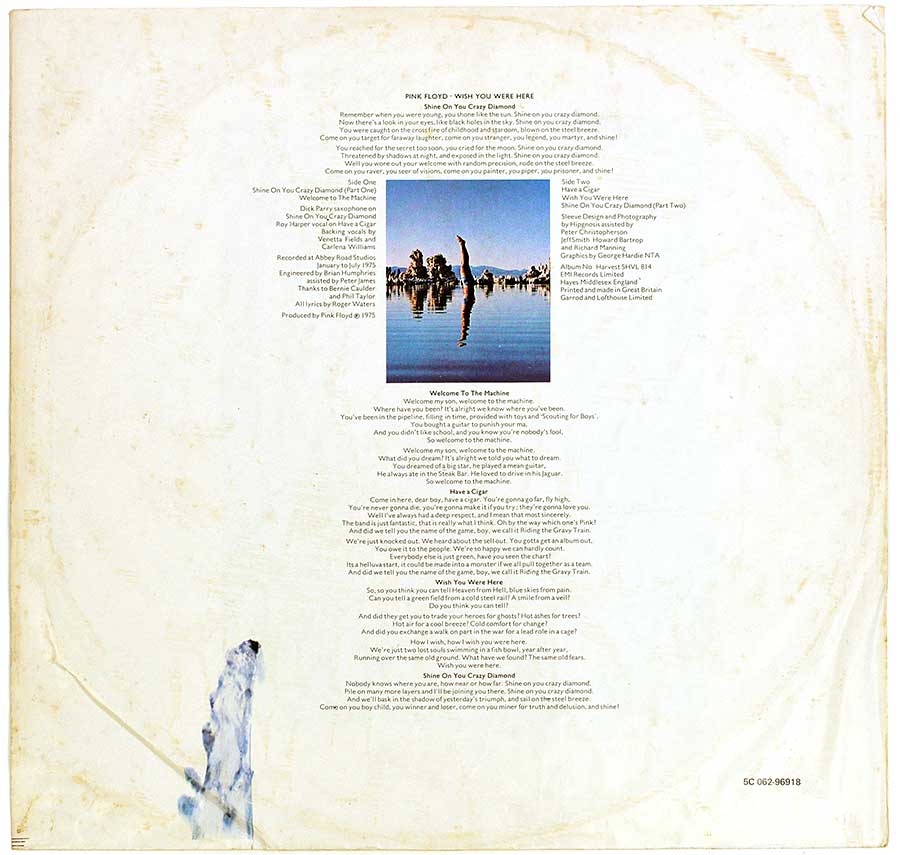
This album "Wish You Were Here (5C 062-96918) " includes the original custom inner sleeve with album details, complete lyrics of all songs by and artwork
|
|
Record Format:
12" Vinyl Stereo Gramophone Record
Total Album (Cover+Record) weight: 280 gram
|
|
Year & Country:
1975 Netherlands
|
Personnel/Band Members and Musicians on: PINK FLOYD - Wish You Were Here (5C 06296918)
|
Band-members, Musicians and Performers
- Roger Waters - bass, vocals
- Roger Waters – Bass, vocals, songwriter
Roger Waters is the guy I blame (politely) when a Pink Floyd song stops being “spacey vibes” and starts staring straight through you with lyrics that feel like a courtroom cross-examination. Read more... Roger Waters is, to my ears, Pink Floyd’s razor-edged storyteller: bassist, singer, and the main lyric engine who pushed the band from psychedelic drift into big, human-scale themes. His key band period is Pink Floyd (1965–1985), where he became the dominant writer through the 1970s and early 1980s, before leaving and launching a long solo career (1984–present). After years of public tension, he briefly reunited with Pink Floyd for a one-off performance at Live 8 in London on 2 July 2005—basically the musical equivalent of spotting a comet: rare, bright, and gone again. Since the late 1990s he’s toured extensively under his own name, staging huge concept-driven shows that revisit Floyd classics like "The Dark Side of the Moon" (notably on the 2006–2008 tour) and "The Wall" (2010–2013), because apparently subtlety is not the point when you’ve got something to say.
- Nick Mason - percusssion
- Nick Mason – Drums, percussion
Nick Mason is the steady heartbeat I always come back to in Pink Floyd: the only constant member since the band formed in 1965, quietly holding the whole weird universe together while the rest of the planet argues about everything else. Read more... Nick Mason is Pink Floyd’s drummer, co-founder, and the one guy who never clocked out: his main performing period with Pink Floyd runs from 1965 to the present, and he’s the only member to appear across every Pink Floyd album. Outside the mothership, he’s had a very “I’m not done yet” second act: in 2018 he formed Nick Mason’s Saucerful of Secrets (2018–present) to bring the band’s early psychedelic years back to the stage. He’s also stepped out under his own name with projects like the solo album "Nick Mason’s Fictitious Sports" (released 1981), which is basically him taking a left turn into jazz-rock just to prove he can. And yes, he was part of that blink-and-you-miss-it full-band moment at Live 8 in London in 2005, when the classic lineup briefly reunited and reminded everyone why this band still haunts people.
- Dave Gilmour - Guitar, vocals
- David Gilmour – Guitar, vocals
David Gilmour is the voice-and-fingers combo I hear whenever Pink Floyd turns from “spacey” into straight-up cinematic: he joined in 1967 and basically helped define what “guitar tone with emotions” even means. Read more... David Gilmour is, for me, the calm center of Pink Floyd’s storm: an English guitarist, singer, and songwriter whose playing can feel gentle and devastating in the same bar. His earliest band period worth name-dropping is Jokers Wild (1964–1967), before he stepped into Pink Floyd in 1967 as Syd Barrett’s situation unraveled. From there his main performing era is Pink Floyd (1967–1995), including the post-Roger Waters years where the band continued under his leadership and released "A Momentary Lapse of Reason" (1987) and "The Division Bell" (1994), with a later studio coda in "The Endless River" (2014). Outside Floyd, he’s had a long solo run (1978–present) with albums ranging from "David Gilmour" (1978) to "Luck and Strange" (2024), and he even did a sharp side-quest in 1985 with Pete Townshend’s short-lived supergroup Deep End. And for one historic night, the classic lineup reunited at Live 8 in Hyde Park, London on 2 July 2005—one of those “you had to be there (or at least press play)” moments.
- Rick Wright - keyboards, vocals
- Richard Wright – Keyboards, vocals
Richard Wright is the secret atmosphere machine in Pink Floyd: the guy who can make one chord feel like a whole weather system, and then casually add a vocal harmony that makes it hit even harder. Read more... Richard Wright (born Richard William Wright) is, for me, the understated genius of Pink Floyd: co-founder, keyboardist, and occasional lead vocalist whose textures are basically baked into the band’s DNA. His main performing period with Pink Floyd runs from 1965 to 1981 (including the early albums through the massive arena years), then he returned as a full member again from 1987 to 1994 for the later era tours and albums. In between those chapters, he didn’t just vanish into a fog machine: he released a solo album, "Wet Dream" (1978), and later "Broken China" (1996), and he also had a proper side-project moment with Zee (1983–1984), which produced the album "Identity" (1984). He passed away in 2008, but his playing still feels like the part of Pink Floyd that makes the air shimmer.
|
 album front cover mediumsize.jpg)
 album front cover mediumsize.jpg)
 album front cover mediumsize.jpg)
 album front cover mediumsize.jpg)
 album front cover mediumsize.jpg)
 album front cover mediumsize.jpg)
 album front cover mediumsize.jpg)
 album front cover mediumsize.jpg)
 album front cover mediumsize.jpg)
 album front cover mediumsize.jpg)
 album front cover mediumsize.jpg)