"Wish You Were Here" (1975) Album Description:
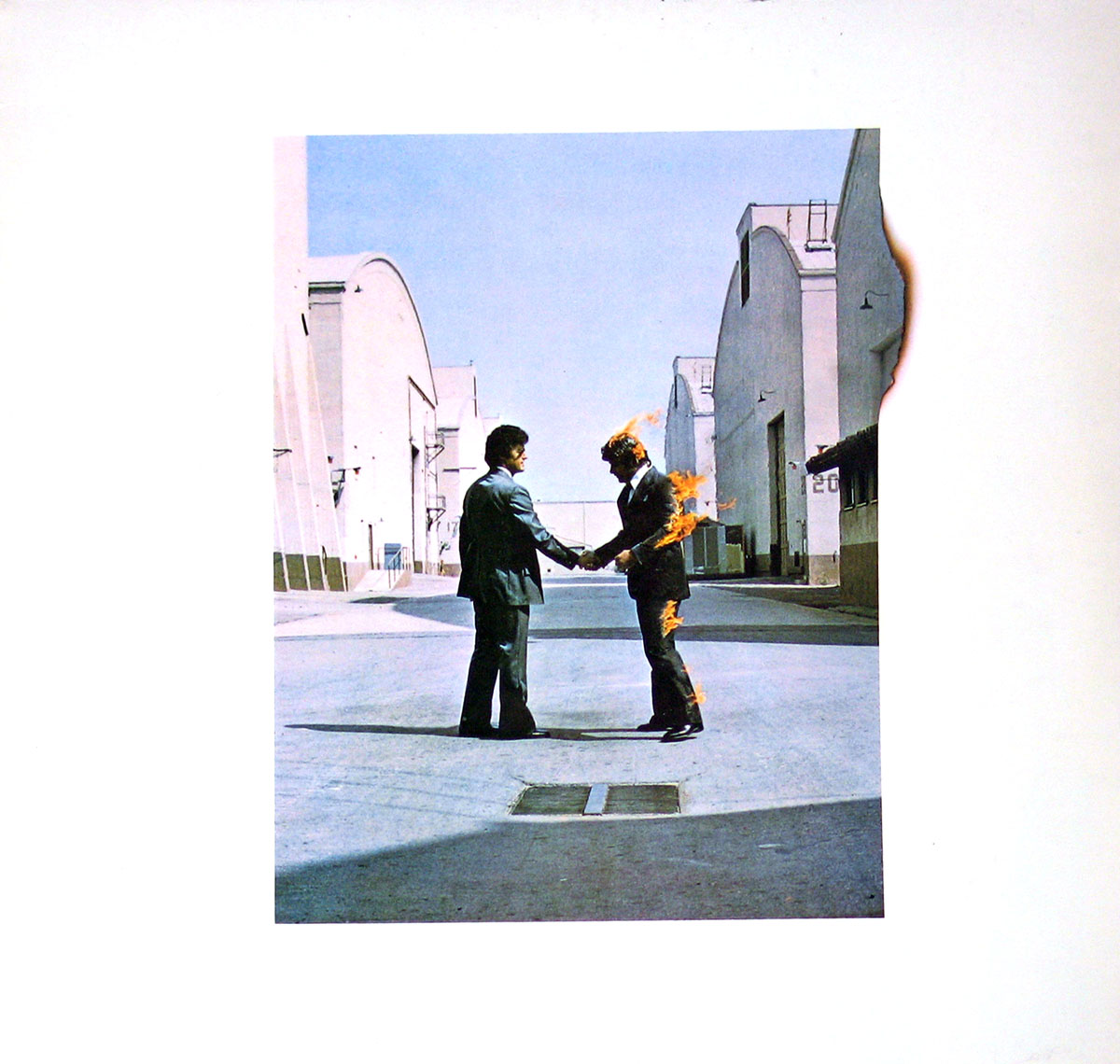
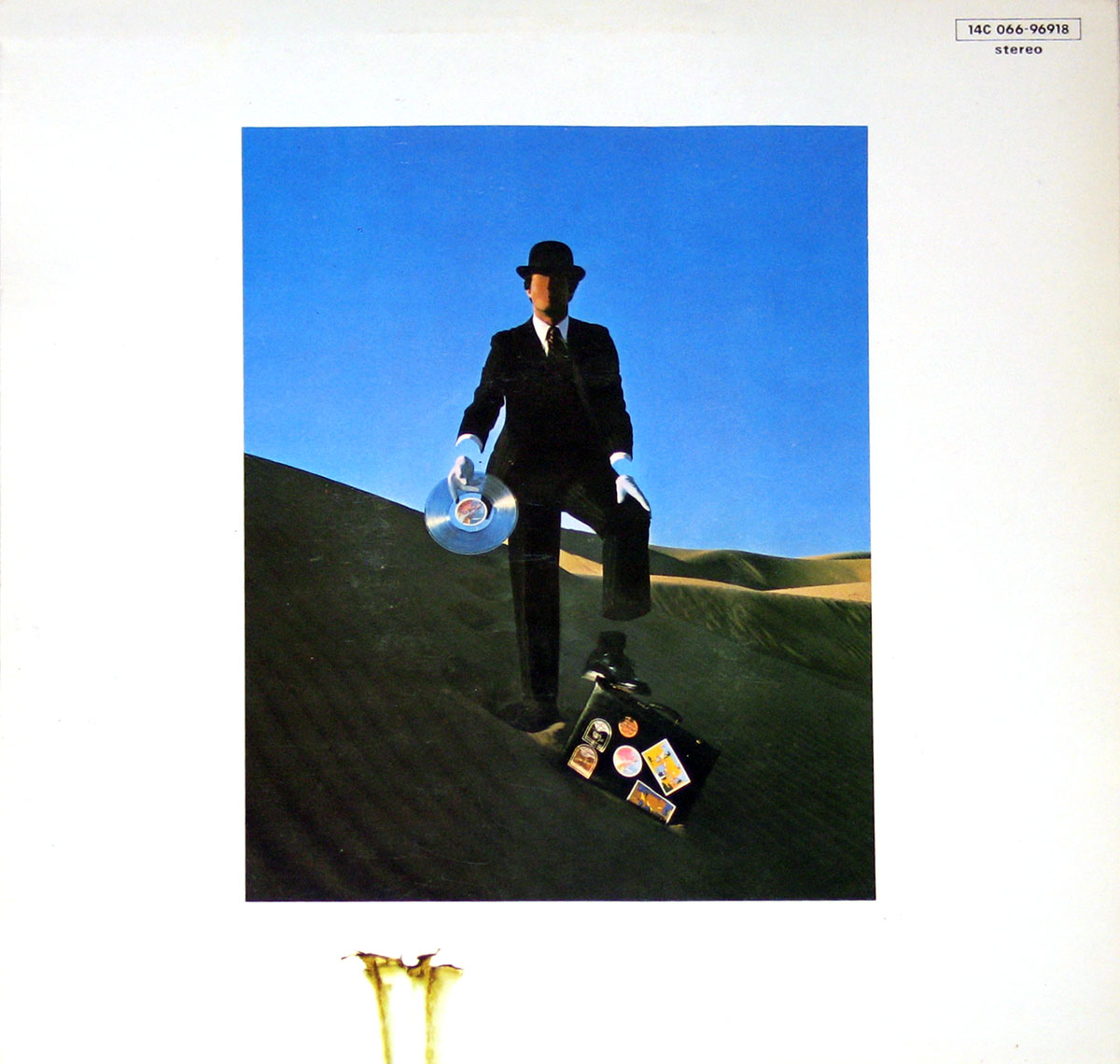
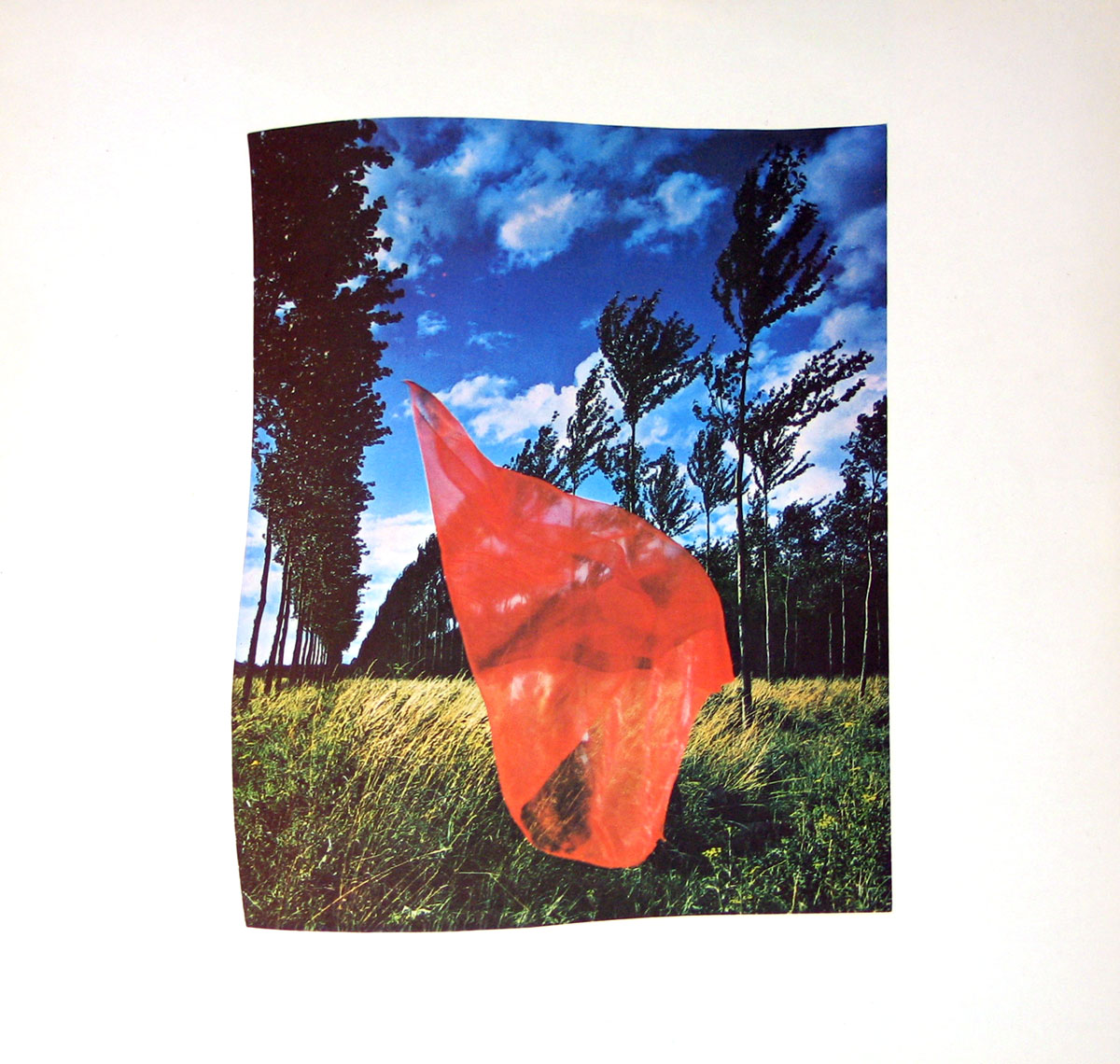
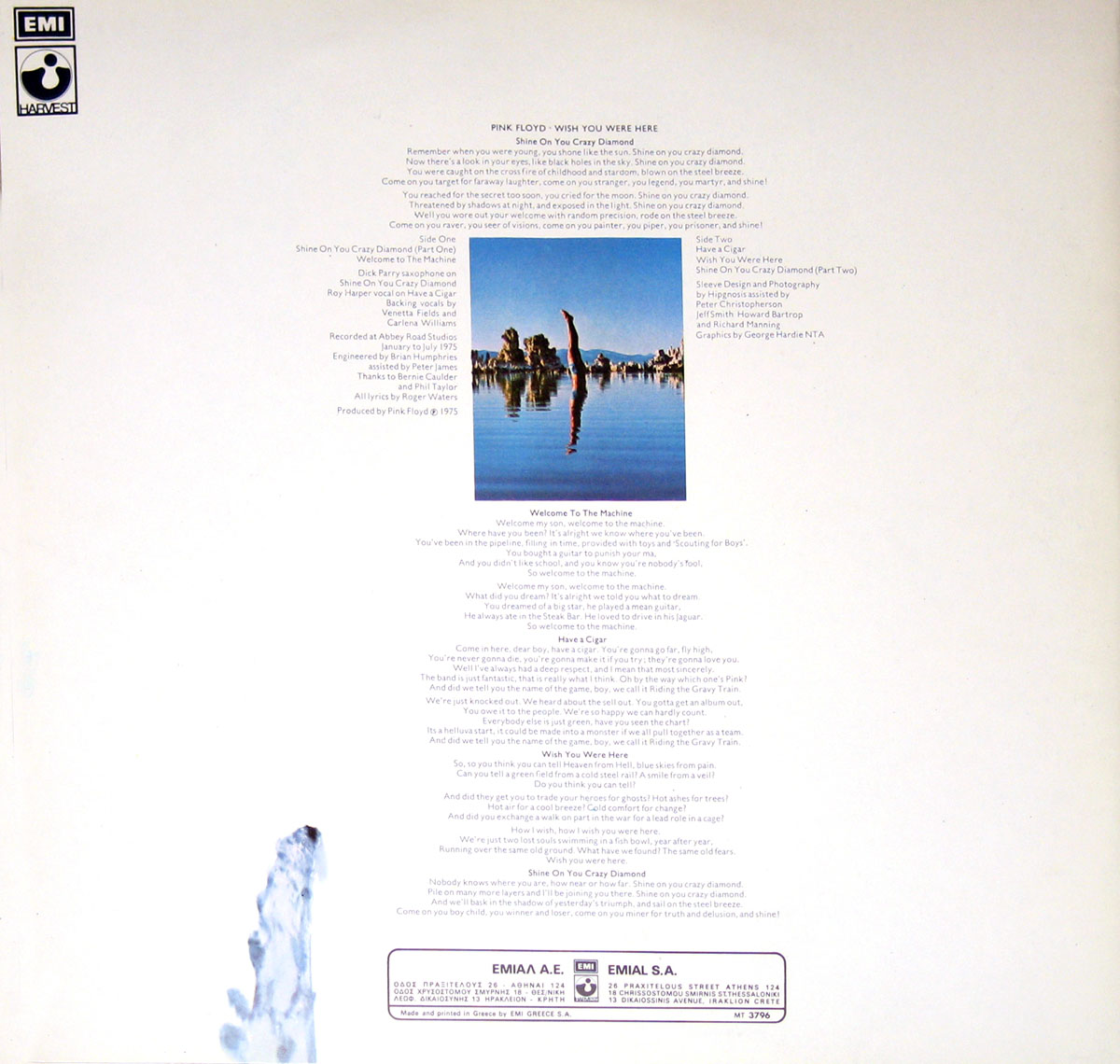
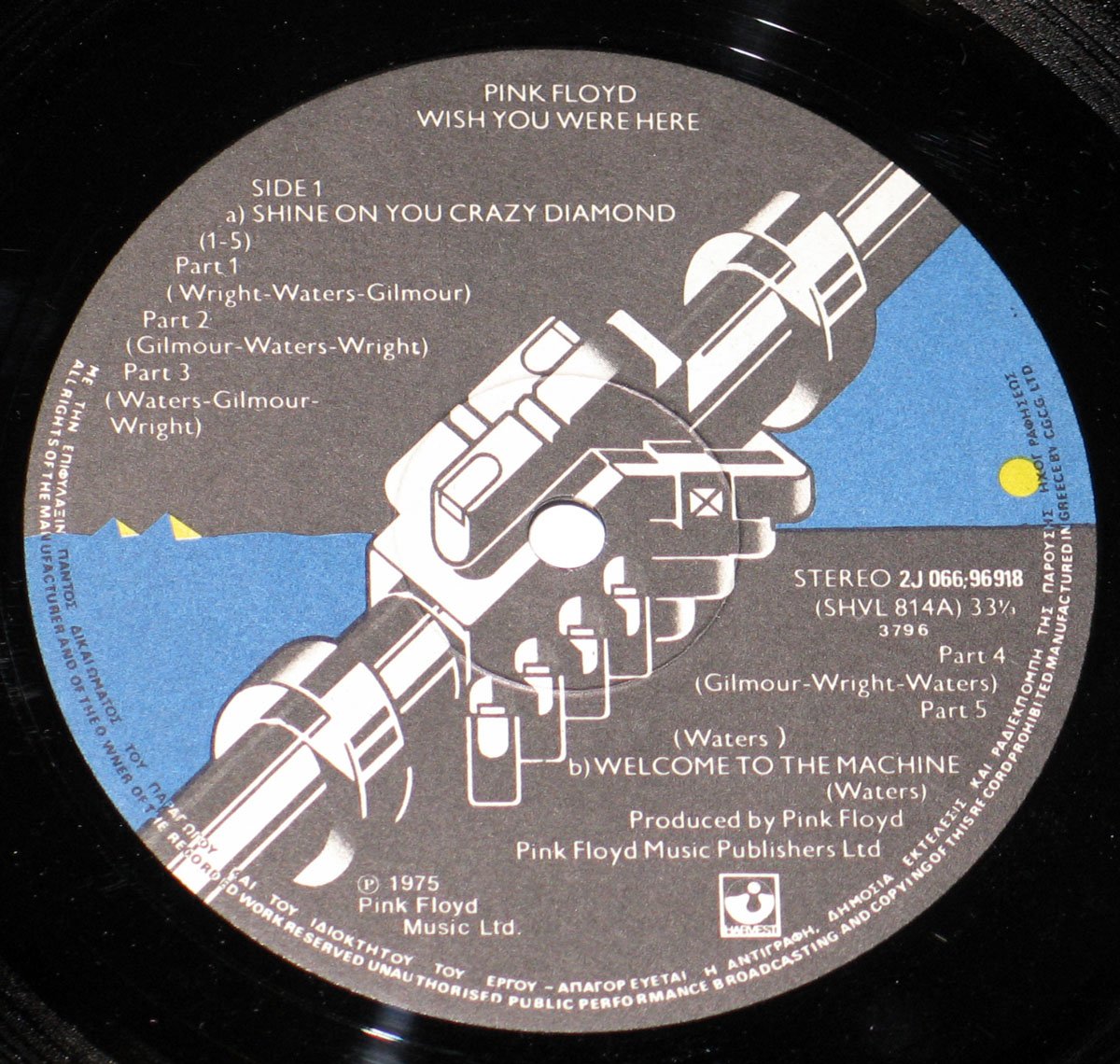
This Greek pressing of "Wish You Were Here" catches Pink Floyd at the point where prog stopped being decorative and started sounding like a diagnosis. You can see it before you even drop the needle: the Hipgnosis sleeve, the formal handshake turned suspect, the custom inner sleeve with lyrics and photos, the whole package built like an object with a grudge. A lot of records from the mid-1970s still wanted to dazzle you. This one prefers to leave a mark.
What still makes the album bite is that it is not really drifting off into some benevolent cosmic mist, no matter how many lazy people keep filing Pink Floyd under that old incense-cloud stereotype. This record is tighter, meaner, and more wounded than that, and once you start looking past the title track, you run straight into absence, industry, and a band staring at its own reflection like it does not entirely trust what it sees. The Greek edition only sharpens that feeling because it keeps the thing physical: cardboard, vinyl, lyrics in your hands, no streaming gloss to hide behind.
By 1975, Britain was in a foul, jittery mood: inflation was brutal, recession had set in, and the culture was starting to split between old scale and new impatience. Progressive rock was still sprawled across the shelves in expensive tailoring, but pub rock was already dragging things back into smaller rooms, and punk was beginning to gather its hostile little storm cloud. Against that backdrop, Pink Floyd did not make a cheerful monument to success. They made a big, elegant record about disconnection, exhaustion, and the sour smell that comes off success when the machinery around it gets too familiar.
Musically, this is prog rock with the fat trimmed off and the nerves left exposed. Where Yes and Genesis could sometimes feel like they were building cathedrals out of arrangement, Floyd here work with distance, repetition, drag, and pressure; the spaces between sounds matter as much as the sounds themselves. The attack is rarely violent, but the tension is constant. "Shine On You Crazy Diamond" does not rush anywhere, and that is exactly why it feels so heavy: it hangs in the air like a memory you cannot file away.
The personnel on the page tell the story plainly enough: Roger Waters on bass and vocals, David Gilmour on guitar and vocals, Rick Wright on keyboards and vocals, Nick Mason on percussion. Producer credit goes to Pink Floyd, and that matters because the album behaves like a closed system, not like a band being steered by some outside fixer in an expensive scarf. Gilmour brings the ache and the clean edge, Wright supplies the vapor and the chill, Mason keeps the pulse from becoming mush, and Waters pushes the whole thing toward accusation whenever it threatens to turn merely pretty.
Hipgnosis and George Hardie did practical work here, not decorative window dressing. The sleeve does what the music does: it removes warmth, swaps certainty for suggestion, and turns a human gesture into something faintly suspicious. Aubrey Powell's famous burning-handshake image is one of those rare album-cover ideas that does not just advertise the record; it argues with it, then doubles back and explains it without a single helpful lecture. That is rarer than rock mythology likes to admit.
There is also the older wound hanging over the whole thing. By this point Pink Floyd were long past the first psychedelic rush and firmly in their four-man 1970s shape, but the ghost of Syd Barrett had not exactly packed his bags and left. The album keeps circling absence in different forms: absent friends, absent honesty, absent connection, absent self. That is why the record feels less like a victory lap after "The Dark Side of the Moon" and more like a band checking the walls for cracks while the money is still coming in.
As for controversy, there was no grand public scandal attached to this release in the usual rock-paperback sense. The more common misconception is duller and somehow more persistent: people reduce "Wish You Were Here" to the title song, as if the whole album were a soft, wistful campfire moment for men who buy hi-fi magazines by the kilo. Nonsense. Half of this LP is a cold-eyed sneer at music-business emptiness, and the rest is grief trying not to become sentimentality.
I have always liked records like this most at night, when the room is quiet enough for the slow parts to do their damage properly. Sliding out a custom inner sleeve, reading the lyrics under a lamp, and watching that severe artwork stare back at you is part of the experience; collectors know this, even if the convenience brigade pretends cardboard is just packaging. It is never just packaging.
That is why this Greek pressing matters beyond mere geography. It preserves the album as a handled thing: EMI Harvest labels, thick twelve-inch presence, the full visual scheme intact, and the same unnerving emotional weather trapped in the grooves. Some records want to entertain. "Wish You Were Here" would rather hover in the room, slightly accusing, while you decide whether the problem is the music business, the band, the missing people, or you.
References
- Greek pressing page with high-resolution album photos and packaging details
- Pink Floyd official album page for "Wish You Were Here"
- Pink Floyd official 1975 timeline
- Encyclopaedia Britannica overview of Pink Floyd
- Encyclopaedia Britannica on progressive rock
- Encyclopaedia Britannica on pub rock
- Encyclopaedia Britannica on punk
- House of Lords Library briefing on the UK economy in the 1970s
 album front cover mediumsize.jpg)
 album front cover mediumsize.jpg)
 album front cover mediumsize.jpg)
 album front cover mediumsize.jpg)
 album front cover mediumsize.jpg)
 album front cover mediumsize.jpg)
 album front cover mediumsize.jpg)
 album front cover mediumsize.jpg)
 album front cover mediumsize.jpg)
 album front cover mediumsize.jpg)
 album front cover mediumsize.jpg)