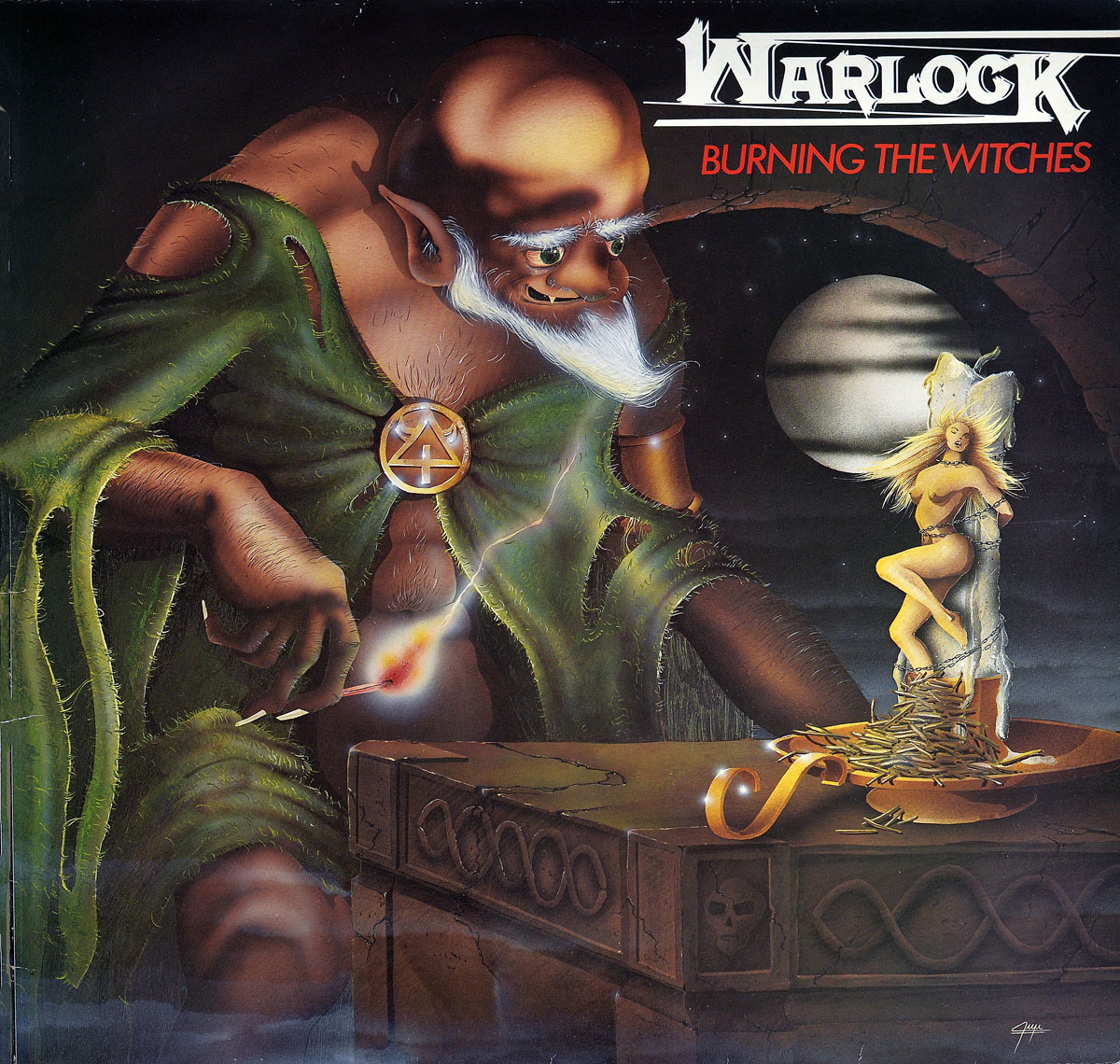
"Burning The Witches" (1984) Album Description:
"Burning The Witches" does not stroll in with manners. It comes out of Duesseldorf with Kellerluft on its jacket, twin guitars up front, and Doro already tearing into lines like she means to leave teeth marks in the tape. This is not the sleek, major-label Warlock that would come later. This is the band at the point where ambition still sounds hungry, a little cramped, and all the better for it.
In West Germany in 1984, heavy metal was pushing hard in every direction at once. Accept had already gone broad-shouldered and militant, Grave Digger were swinging blunt instruments, Steeler were keeping it lean, Stormwitch were dressing the thing in occult smoke, and Running Wild were about to get meaner and faster. Warlock belonged in that weather, no question, but there was a twist in the air: once Doro hit the room, the record stopped sounding like another Teutonic riff machine and started sounding like trouble with a pulse. The hidden part is where that trouble really shows its face.
Duesseldorf, a fast studio, and a band still proving itself
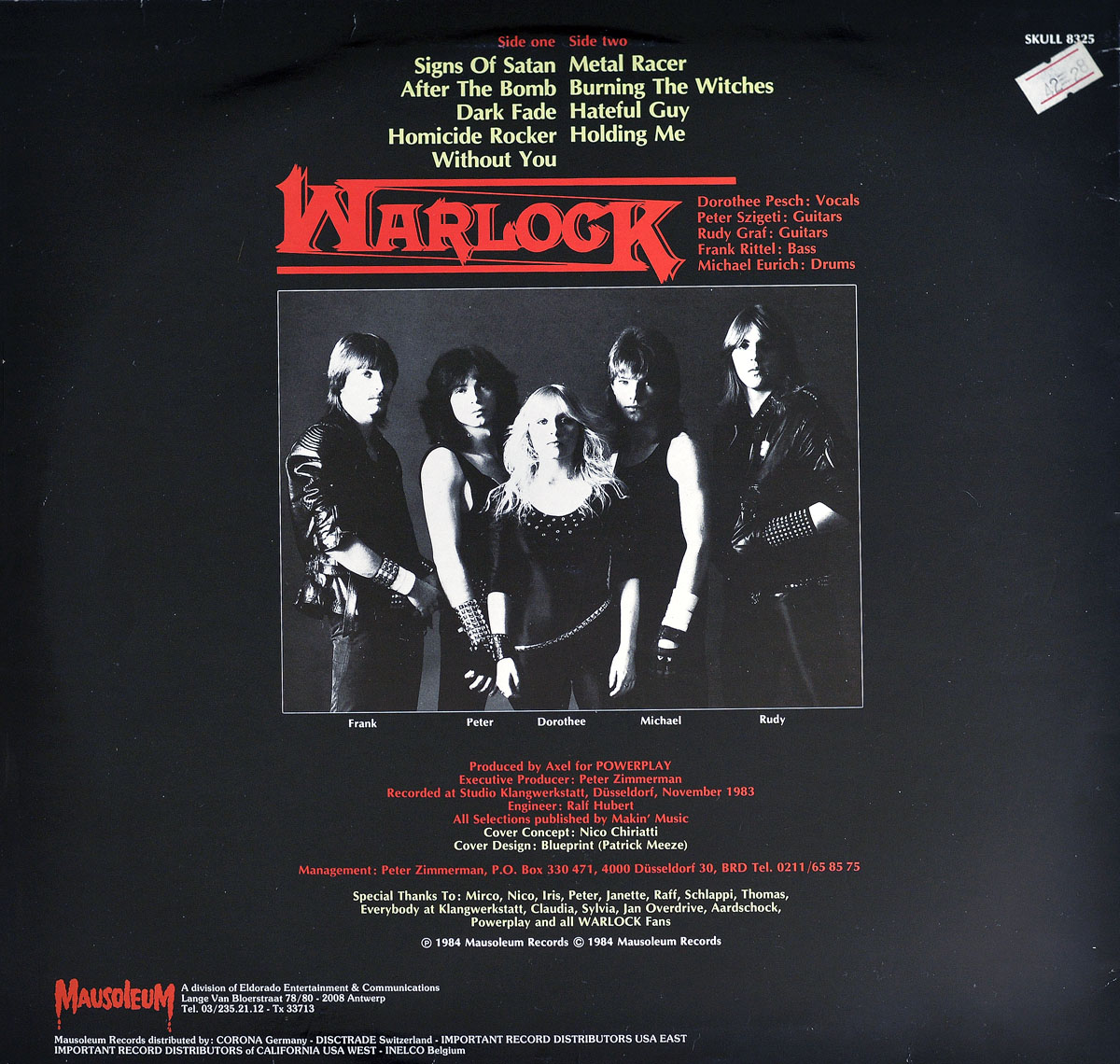
Warlock had only been together since 1982, and you can still hear the local-club grit on this debut. By the time they reached Studio Klangwerkstatt in November 1983, the line-up had settled into the five names that matter here: Doro Pesch on vocals, Peter Szigeti and Rudy Graf on guitars, Frank Rittel on bass, Michael Eurich on drums. That matters because this does not sound like a star vehicle with hired support. It sounds like a working band that had already sweated through enough small stages to know which parts needed to hit first.
The record was cut quickly, and you can tell. I do not mean that as a complaint. The songs move with that familiar early-metal urgency where nobody has time to decorate the edges, so the attack becomes the decoration. You hear a group choosing impact over finesse, Stahl over perfume, and for this material that was exactly the right vice.
What was in the air in Germany that year
German heavy metal in 1984 was not behaving like a polite branch office of the New Wave of British Heavy Metal anymore. It had taken the British blueprint, put on heavier boots, and started talking in its own accent. The riffs were chunkier, the drumming less elegant, the mood more street-level and less mythic. Even when bands flirted with fantasy, there was usually a hard concrete floor underneath it.
- Accept had discipline and muscle, like a steel press running on time.
- Grave Digger came in rougher, more beer-hall blunt force than finesse.
- Steeler kept things tighter and more stripped to the riff.
- Stormwitch leaned further into black-romantic atmosphere and occult theatre.
- Running Wild were about to push the speed and grime further down the road.
Warlock sit somewhere between those lanes. Less drilled than Accept, less loutish than Grave Digger, less mystical than Stormwitch, and not yet as rabid as Running Wild. What they had instead was tension: melody trying to stay upright while the guitars kept throwing elbows.
The sound: riffgewitter, pressure, and a voice that refuses to behave
The first thing that hits is the guitar shape. Szigeti and Graf do not paint pretty backgrounds; they jab, scrape, double up, and keep the songs moving with that wiry early-80s German attack that feels half club sweat, half factory spark. The production does not give them acres of air, either. Everything arrives packed close together, which gives the album its pressure. You are not standing at a polite distance from this record. You are in the room with it.
Doro is the decisive element, of course, but not for the lazy reason people usually reach for. She is not interesting here because she is a woman fronting a metal band. That is the newspaper angle. The real point is that she already knew how to shove a chorus forward without sanding off the grain in her voice. She can bark, push, lean, and suddenly lift a line into something almost triumphant, then drop it back into the grit before it turns too clean.
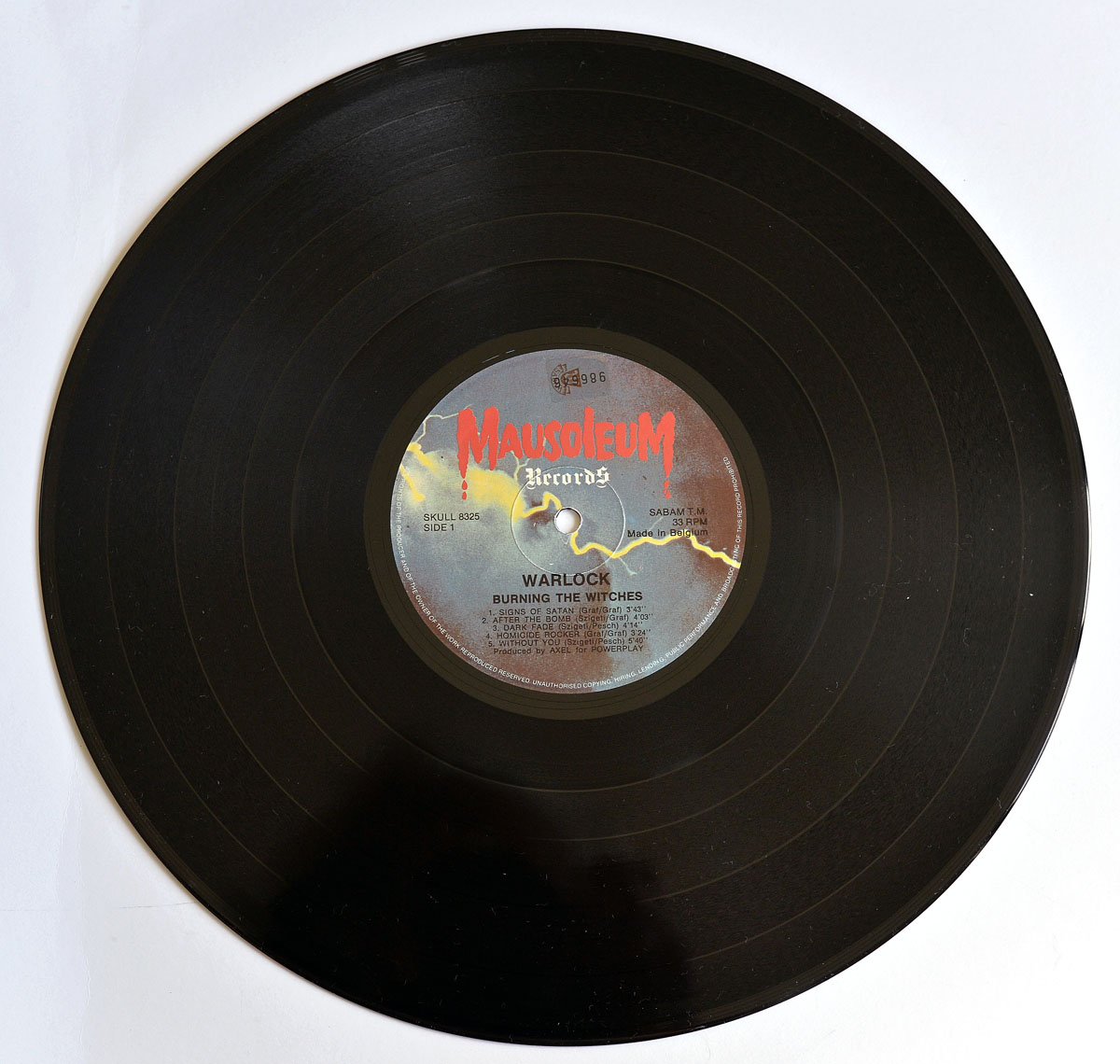
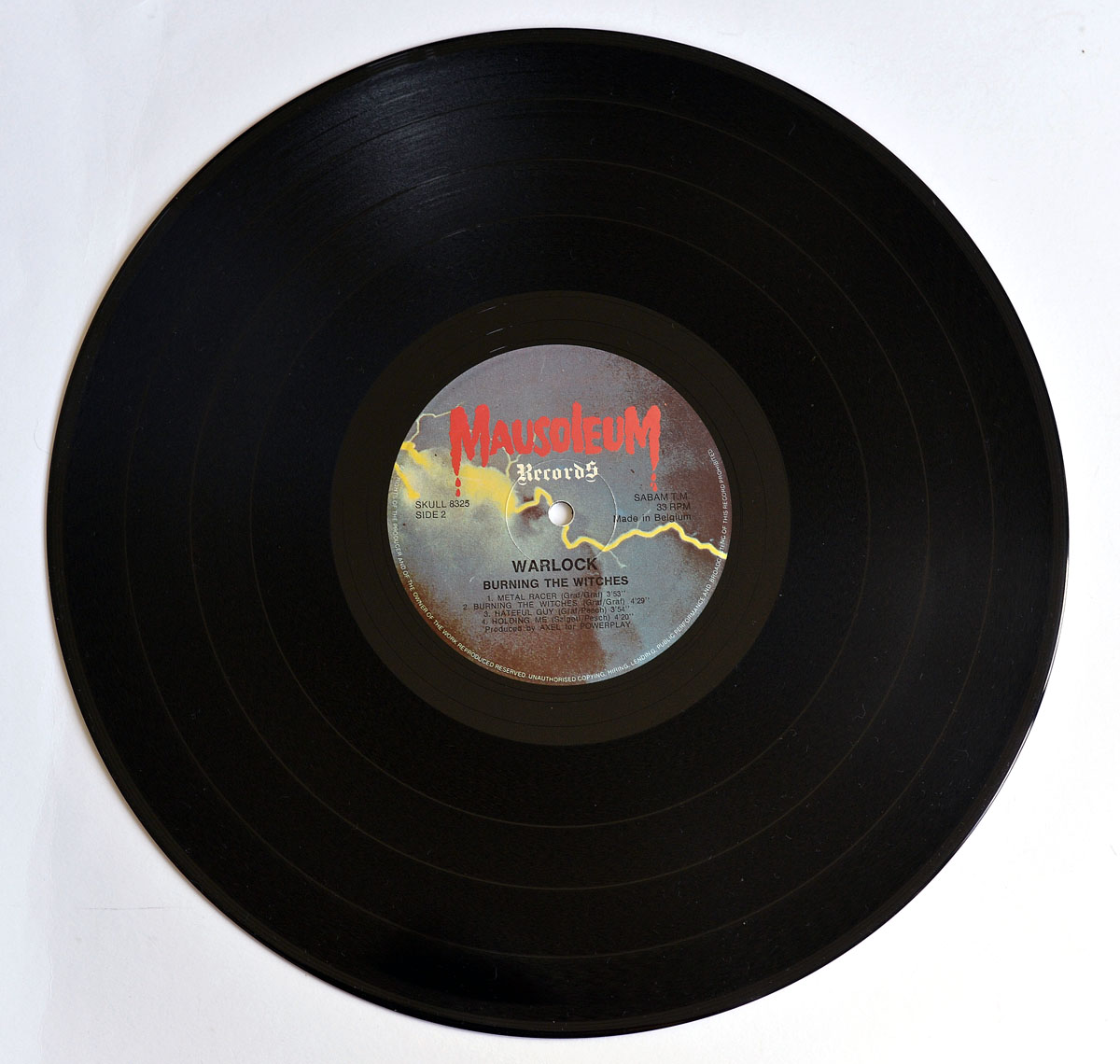
"Signs of Satan" opens the album with exactly the right kind of snarl, quick on its feet and eager to start a fight. "After the Bomb" and "Dark Fade" keep the pressure on, while "Without You" pulls the tempo down just enough to show the band were not trapped in one speed. On side two, "Metal Racer" and the title track carry the real Leder und Stahl charge. The title song, especially, has that jagged little surge great debuts sometimes catch by accident and then spend years trying to recreate on purpose.
The people behind the desk and what they actually did
Axel Thubeauville produced the record, and his job here was not to civilize Warlock. It was to get them onto tape before the voltage leaked away. That is a different craft. He kept the thing moving, practical and unromantic, which is often what a debut needs most. Peter Zimmerman, handling executive production and management, was the sort of behind-the-scenes organizer bands like this usually depend on more than they admit.
Ralf Hubert engineered it, and his contribution is easy to miss if you only look at the big names. The guitars bite without turning to soup, the rhythm section stays firm enough to carry the songs, and the whole album keeps that metallic edge instead of collapsing into rehearsal-room mush. After the recording, uncredited remix work by Rainer Assmann and Henry Staroste helped tighten the album further. Not glamorous work. Necessary work.
Cause and effect inside the band
This album catches Warlock before later changes started pulling at the frame. Frank Rittel had come in on bass before the debut sessions, replacing the earliest bass position from the band's formative period, and that settled the line-up at exactly the right moment. You can hear the benefit: the band sound committed, not provisional. A debut can easily sound like five people still auditioning for one another. This one does not.
That solidity would not last forever, and maybe that is part of the album's charm. Warlock were still close enough to the ground to sound like a gang rather than a brand. Later success would bring larger rooms, larger expectations, and eventually line-up movement. Here they still sound like they are pushing the van together.
No real scandal, just the usual lazy misunderstanding
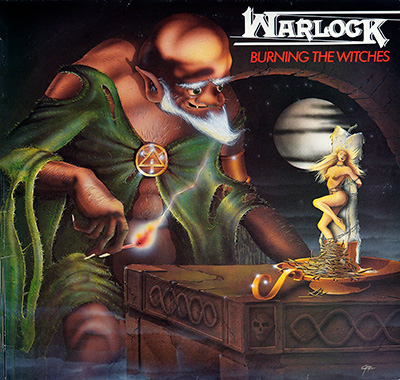
There was no grand public controversy around "Burning The Witches" beyond the usual metal suspicion that sleeves like this attracted in the 1980s. The more common mistake now is much duller: people flatten the album into "the first Doro record" and stop there. That misses the point and half the sound. This is a band record, built on the shove of two guitars, a stubborn rhythm section, and a singer who knew how to cut through all of it without turning theatrical in the wrong way.
There is also one small discography gremlin that keeps hanging around the album: the opening track is often listed as "Sign of Satan" instead of "Signs of Satan." Metal history is full of these tiny clerical wrecks. They are annoying, but they also suit a record like this. Nothing about "Burning The Witches" was born tidy.
One small human angle
I can still picture a record like this sitting in a shop bin late in the afternoon, half-hidden between bigger names, the sleeve too gaudy to trust and too gaudy to ignore. Those were often the best ones. You took them home because something in the room changed when you looked at them.
Why this one still hits
Because it moves. Because it does not waste time flattering the listener. Because the sound is cramped in the right places and alive in the right ones. Because Doro had not yet been turned into a fixed icon and the band had not yet been pushed into cleaner shapes. "Burning The Witches" catches that brief and useful condition where a heavy metal band is still trying to force the door with its shoulder instead of waiting for permission.
And that is usually when the good records happen. Not when everything is solved. When the sparks are still jumping around the wiring and nobody in the room is pretending otherwise.