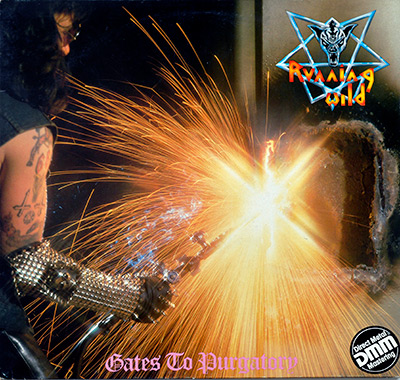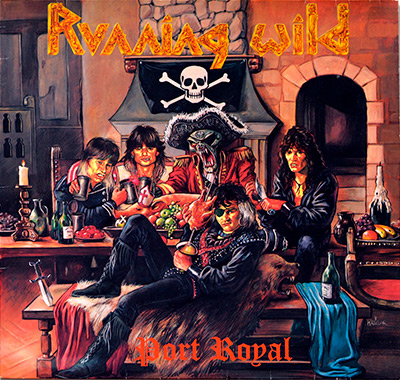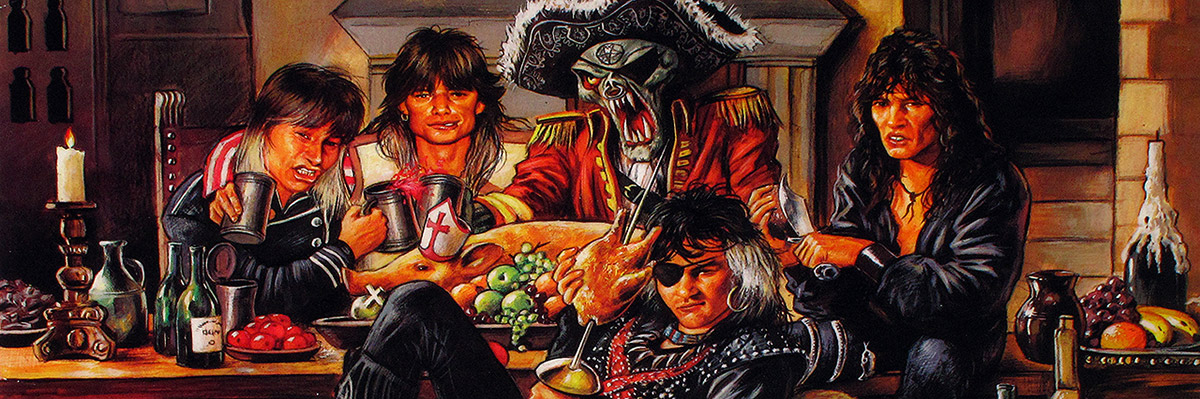
Running Wild Band Description:
Running Wild did not begin as a neatly packaged pirate-metal brand. Back in Hamburg in 1976, the thing started as Granite Hearts, then became Running Wild in 1979, and those early years carried more leather, smoke and rehearsal-room stubbornness than sea spray. You can still hear a band trying to kick the door off its hinges rather than pose for a concept sketch. That rough beginning matters, because the later Jolly Roger mythology did not fall from the sky fully dressed. It was built, riff by riff, by musicians who first sounded like they wanted to start a fight with the decade.
That is why "Under Jolly Roger" hit so hard in 1987. Not because somebody needed a cute genre tag, but because the whole vessel suddenly changed course. The satanic smoke of the early records drifted off, the black flag went up, and Rolf Kasparek stopped flirting with imagery and started steering the ship straight into waters that would later be called pirate metal. Plenty of bands have borrowed that chest of tricks since, but Running Wild got there first, with the riffs doing the real work and the lyrics firing the broadside.
After that, the golden run was no accident. "Port Royal", "Death or Glory", "Blazon Stone" and "Pile of Skulls" did not politely arrive; they stormed the deck. The guitars bit down, the choruses were made for raised fists and hoarse throats, and the history in the lyrics came wrapped in cannon smoke instead of classroom dust. That was always the clever part with Running Wild when they were on form: there was research under the hood, but it never sounded like homework. It sounded like movement. Boots on planks. A boarding party with amplifiers.
I have always preferred them when they sound a little stubborn and wind-burned, as if smoothing the edges would have spoiled the rum. Put one of those late-1980s LPs on during a grey afternoon and the room changes temperature. Not elegant. Not refined. Better than that. You get salt, gunpowder, cutlasses, mutiny, and that old heavy metal trick of making everyday walls feel too small. Running Wild were never about tasteful restraint. They were about charge, clang, swagger's louder cousin, and the glorious racket of a band that knew exactly when to hammer and when to let the anthem breathe.
The later years are not a perfectly polished treasure chest, and pretending otherwise would be silly. Some records strike cleaner than others, and "The Brotherhood" is rarely the first disc a sane person grabs when trying to convert a newcomer. Still, Rolf never truly struck the colours for good. He shut the project down in 2009, revived it in 2011, and when "Shadowmaker" arrived in 2012 it felt less like a graceful reinvention than an old captain climbing back aboard because land life was obviously not going to work. Messy? Sometimes. Toothless? Not really.
By the time "Blood on Blood" appeared in 2021, Running Wild had already left a long wake behind them. Imitators, admirers, scavengers, cheerful thieves - take your pick. Yet the band never fit comfortably behind museum glass, and that is part of the appeal. The best Running Wild records still feel physical. Wet timber. Iron hardware. A riff snapping like rope under strain. Even when the catalogue gets uneven, the old charge is still there, somewhere below deck, waiting for the right song to light the fuse.
That is the real legacy, not some safe line about being "important" or "influential." Running Wild mattered because they made fantasy sound like impact. You could almost smell the harbour rot and feel the deck tilt under your boots. When they were good, they did not invite you to admire the scenery from shore. They handed you a flag, shoved you toward the rail, and let the next broadside do the talking.