WARLOCK ( Heayy Metal , Germany ) Collector's Album Cover Gallery & Information

WARLOCK ( Heayy Metal , Germany ) Banner photo

In my Kalax shelves of German heavy metal, Warlock never feels like a polite addition; it feels like a spark that still throws heat. When these records first landed in the mid-1980s, the European scene was already loud with Accept, Scorpions, and a growing pack of hungry metal bands, but Warlock carried a different kind of voltage. The guitars bite, the drums push like a bar fight about to start, and Doro Pesch’s voice cuts straight through the smoke. Spin "Burning the Witches", "Hellbound", or the stadium-sized roar of "All We Are" and the room suddenly smells like denim jackets and warm amplifiers again. These albums still feel restless, stubborn, and gloriously unpolished in the right places. Even now, decades later, they play like records made by a band that refused to wait politely for permission.

WARLOCK Band Description:

Warlock were never just some tidy footnote in German heavy metal, and I have never had much patience for that watered-down version of the story. The band took shape in Düsseldorf around 1982-1983, out of the local underground mess that also fed Snakebite and Beast, and once Doro Pesch was in front, the whole thing stopped looking ordinary. There was already enough leather and noise in the scene. What Warlock had was tension. Not polish at first. Tension.

You can hear that immediately on Burning the Witches from 1984. That record still sounds like a band pushing forward with its shoulders down, not asking permission, not smoothing the edges for radio men in clean offices. It was proper European heavy metal: hungry, sharp, and still close enough to the club floor that you could almost smell the smoke in it. I have always liked that debut for exactly that reason. It sounds like ambition before the accountants arrive.

Then came Hellbound in 1985, and for me that is where the band really tightened the screws. Darker. Faster. Meaner in the right places. This was not the sort of record that smiled too much, and I mean that as praise. Around this period Warlock started building a real name outside the home turf, and they earned it the hard way, by playing, travelling, and surviving in a scene that was not exactly handing out medals for effort.

The line-up did not stay still, of course. It never does when things start moving. Rudy Graf was gone after the Hellbound period, Niko Arvanitis stepped in, and True as Steel arrived in 1986 with a cleaner, brighter, more commercial bite. Some old die-hards still grumble about that album as if it personally insulted them at the bar. I do not go that far, but I understand the complaint. Still, 1986 was the year Warlock stopped being a promising German band and started looking larger: Monsters of Rock at Castle Donington, Doro as the first woman to front a band on that stage, and then support slots with Judas Priest. That was no small change of scenery.

By the time Triumph and Agony landed in 1987, the band had shifted again, with Tommy Bolan and Tommy Henriksen in the ranks and the whole machine leaning harder into the American market. You can hear it. Bigger hooks, bigger choruses, bigger rooms in mind. Sometimes that sort of move ruins a band. Here it gave Warlock "All We Are", "Für Immer", and a real MTV-era breakthrough without completely draining the blood out of the music. It is probably the easiest Warlock album to sell to a newcomer. It is not my only favourite, but I would be lying if I pretended it did not hit hard.

What I will not accept is the lazy version that says Warlock more or less ended in 1987 because two members left. That is schoolbook nonsense. The band kept going through more line-up changes, toured with Dio and later Megadeth in the United States, and only truly lost its name when the legal fight over "Warlock" turned poisonous at the end of 1988. By then Doro was the last original member left, and the transition into Doro was less a graceful career plan than a business knife slipped between the ribs.

That is also why Warlock still matter. Not because they fit a nice category, and not because people enjoy repeating that Doro was charismatic, which is true but far too easy. They matter because the records still show the pressure of the time: German steel, shifting line-ups, American ambition, legal stupidity, and a singer who refused to go quietly. Plenty of bands had riffs. Warlock had nerve. I trust nerve more.
References
Why Doro Pesch Left Warlock
Not a clean break, but a legal mess with amplifiers still humming

People still talk about Doro Pesch leaving Warlock as if she calmly shut one door and opened another. That version is too neat for heavy metal and much too neat for the late 1980s. What really happened was uglier. By the end of 1988, after all the line-up shifts and all the miles, Doro was the only original member still standing, and just when Warlock had real momentum behind it, the name itself was pulled out from under her.

Losing the Name, Not the Voice

The trouble was not some grand artistic epiphany. It was business, which is usually where the rot starts. Warlock's former manager won the rights to the band name and merchandise, and that left Doro boxed in at exactly the wrong moment. I have always found that part especially bitter: the records were out there, the audience knew the voice, the image, the songs, and yet the legal paperwork came marching in like a bored accountant with a knife.

The label then backed the one thing it could still sell without confusion: Doro. Not because it was romantic, and not because that had been the dream, but because her name was the surviving banner. The album that had begun as the next Warlock record surfaced in February 1989 as "Force Majeure", and that tells the whole story better than most tidy summaries do. Same drive, same woman at the microphone, different name on the sleeve. Heavy metal has seen stranger tricks, but not many meaner ones.

From Warlock to Doro: More Survival Than Reinvention

This is why I never buy the polite version that frames it as a graceful solo launch. Doro herself has said it was not really her choice, and that matters. It was a forced transition, made worse by the fact that the old Warlock unit had already thinned out through line-up changes. By then, the old gang feeling was gone, and what remained was her determination to keep moving rather than let lawyers and ex-management decide where the music stopped.

And the spirit did not vanish anyway. Anyone who has followed her live shows knows the Warlock songs never got buried. They stayed in the set because they belonged there. That is the bit I like most: the paperwork may have stolen a name for years, but it never managed to shut the songs up. Good luck trying.

References
Teutonic Titans: Metal Bands That Ruled Alongside Warlock

By the time Warlock came charging out of Dusseldorf with "Burning the Witches" in 1984 and "Hellbound" in 1985, German metal was already crowded with sharp elbows, loud amps, and a very clear refusal to behave. Warlock had Doro, danger, and that hungry, cutting edge I still associate with the best mid-80s European metal. But they did not have the road to themselves. Not even close.

The Big Names Already Taking Up Space

Accept: Accept were impossible to dodge. I always think of those records as slabs of steel: "Restless and Wild" in 1982, then "Balls to the Wall" in 1983, both built to hit first and explain nothing. Udo Dirkschneider did not sound polite, and that helped. If Warlock brought menace with style, Accept brought brute force and discipline. Less glamour. More boot leather. Some days that is exactly what heavy metal should be.

Scorpions: Scorpions were not really the younger gang fighting for scraps by then. They were the older brothers who had already stolen the bigger amplifier. "Blackout" in 1982 and "Love at First Sting" in 1984 pushed them into a larger, cleaner, international game than most German bands could even imagine. Too polished for some purists? Fine. Let them complain. Those songs were huge, and pretending otherwise has always felt a bit silly to me.

The Rougher End of the Street

Grave Digger: Grave Digger, formed in 1980, felt closer to the pavement. "Heavy Metal Breakdown" in 1984 and "Witch Hunter" in 1985 did not stroll in wearing a silk scarf; they kicked the door and left marks on it. There was something gloriously unvarnished about them. Warlock had flash and attack, but Grave Digger carried more grime under the fingernails. I have always had time for that sort of honesty, even when the edges were rough enough to frighten a decent hi-fi.

What I still like about that period is the lack of neatness. One scene, several tempers. Warlock stood out because they had to push through serious company, not because the field was empty. That is usually how the good records are made anyway: under pressure, with rivals nearby, and with no patience for tidy history lessons afterwards.

References

Warlock: The Iconic Heavy Metal Band that Blended Intensity and Catchiness with Charismatic Frontwoman Doro Pesch

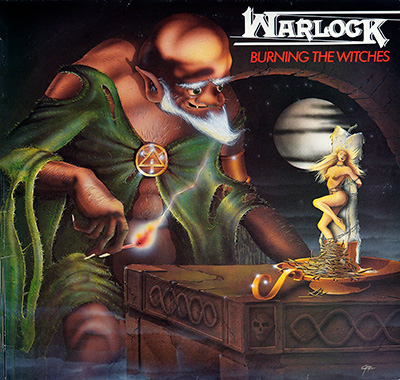
WARLOCK - Burning the Witches album front cover vinyl LP album https://vinyl-records.nl

The Raw German Metal Debut Where Doro First Unleashed Her Voice

WARLOCK - Burning the Witches

Warlock’s debut did not glide in; it shoved its way out of Düsseldorf with twin guitars, Kellerluft and Doro already biting into the mic. Cut in November 1983 and issued in 1984 on Mausoleum’s Belgian SKULL 8325 pressing, "Burning The Witches" has that young-band pressure I still trust more than polish. You can almost picture it in a dim shop bin: too gaudy to ignore, too raw to fake, all Stahl, riffgewitter and bad intent.

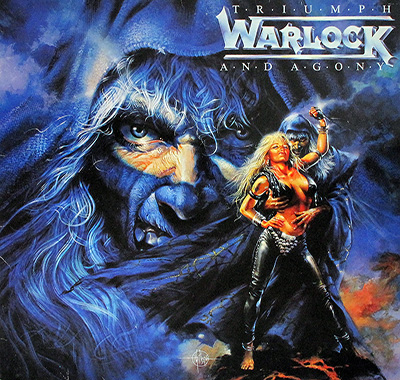
Updated WARLOCK - Triumph and Agony album front cover vinyl LP album https://vinyl-records.nl
WARLOCK - Triumph and Agony (West-German and Netherlands Release)

Warlock’s "Triumph and Agony" (1987) stands as the band’s defining statement, driven by Doro Pesch’s commanding voice and anthems like "All We Are". Produced by Joey Balin at New York’s Power Station, it fuses German heavy metal grit with international appeal, capturing the energy and drama of the late 1980s metal era.

- Triumph and Agony (1987, Holland) - Triumph and Agony (1987, West-Germany)
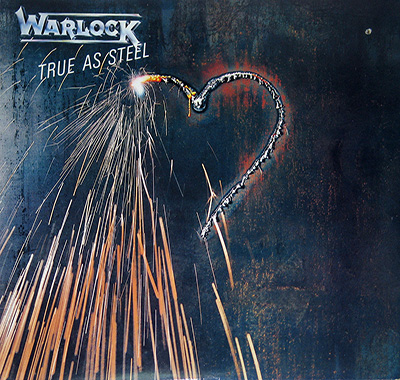
WARLOCK - True as Steel
WARLOCK - True as Steel (1986).  album front cover vinyl record

Warlock's driving force was the inimitable Doro Pesch, a powerhouse vocalist with undeniable stage presence. Her raw energy and soaring vocals on tracks like "Fight For Rock," epitomized the spirit of classic 80s heavy metal.

True as Steel (1986) 12" Vinyl LP