"Triumph and Agony" Album Description:
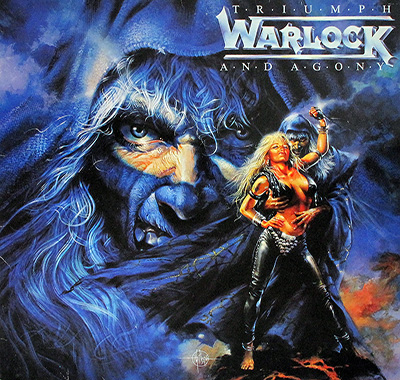
Released in 1987, Warlock's "Triumph and Agony" feels less like a polite career milestone and more like the moment the band kicked the studio door open and let the cold New York air in. By then the lineup had shifted, with Tommy Bolan and Tommy Henriksen in the group, and you can hear that change immediately. The sound is tighter, shinier, more transatlantic, but it still carries that German Heavy Metal bite-that old Stahl und Donner under the lacquer. This Dutch 12" vinyl LP catches the record in the form most collectors actually care about: big sleeve, big sound, no digital antiseptic nonsense.
Musical Legacy
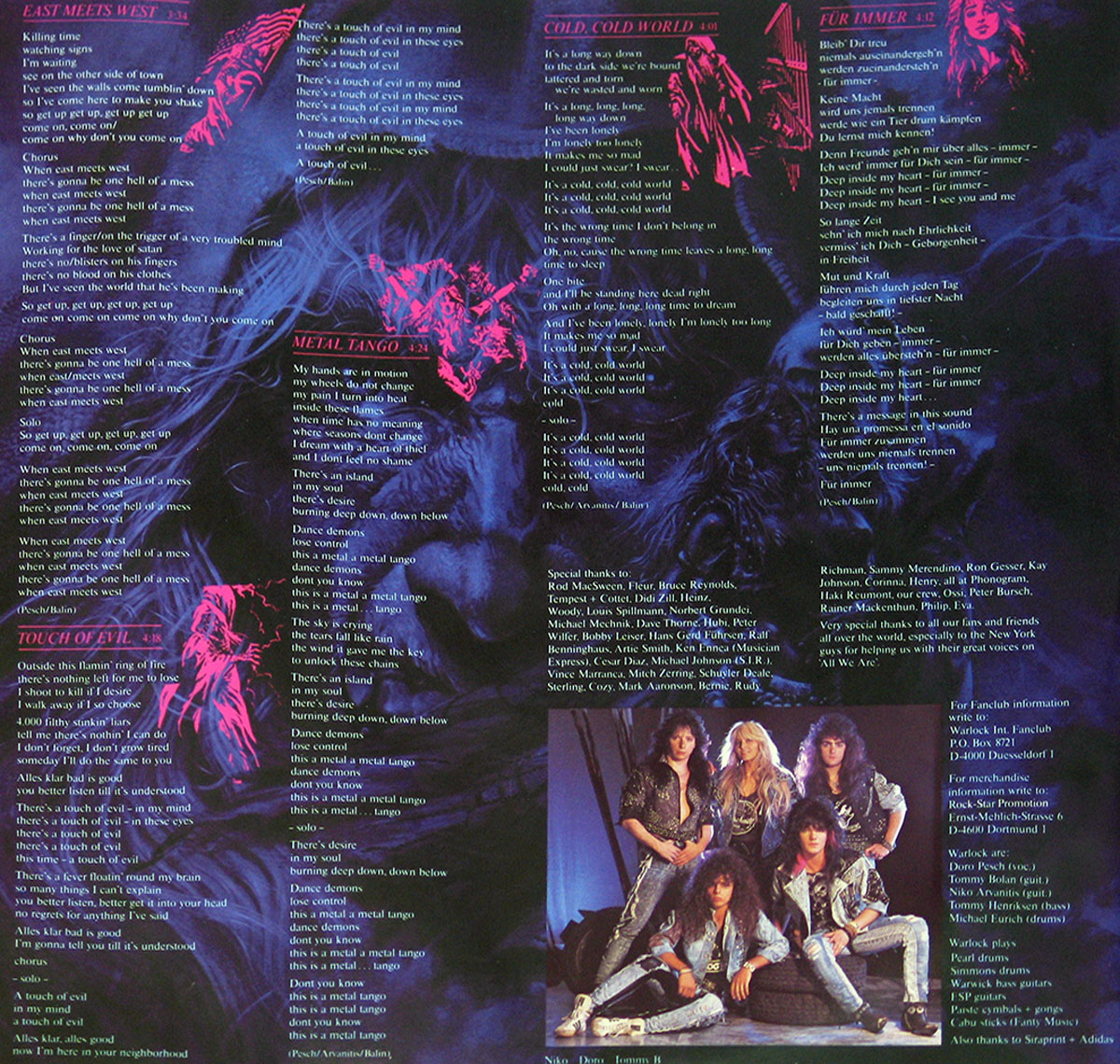
What hits first is not theory, not genre placement, not some museum-label lecture about metal history. It is impact. "All We Are" does not arrive gracefully; it storms in like a terrace chant with leather boots on. "I Rule the Ruins" has that hard, almost street-level push to it, while "Für Immer" slows the pulse without going soft. That was always Warlock's trick on this album. They could swing from fist-in-the-air to bruised and romantic without sounding confused. I have always liked that about German metal when it gets it right: a little melodrama, a little steel, no apology.
Commercial Impact
The original text smoothed this part over too neatly. The truth is better, and messier. "Triumph and Agony" was Warlock's fourth and final studio album, and it was the one that pushed them furthest beyond the European metal bunker. The videos for "All We Are" and "Für Immer" gave MTV something to work with, and the record reached the American Billboard 200. You can hear the ambition in every chorus. Not desperate ambition, either. More like a band deciding they were done playing small rooms forever and aiming straight for the floodlights. Sometimes that kind of move ruins a band. Here, it gave them one of their sharpest records.
Distinctive Qualities
And then there is Doro. Everything circles back to her, whether the purists like it or not. She does not merely "blend power and vulnerability" like some copywriter filling air with wallpaper words. She bites into lines, drags them, then suddenly lifts them skyward. That contrast is the whole album. Tough one second, wounded the next. On an ordinary afternoon, with the sleeve on the table and coffee going cold beside the turntable, this is exactly the sort of record that reminds me why late-1980s metal could still feel alive before too many bands polished the danger out of it. "Triumph and Agony" is not flawless. Good. Flawless records are usually boring. This one still throws sparks - Funkenflug, heart, and a bit of glorious Teutonic excess.