"Come Out and Play" (1985) Album Description:
"Come Out and Play" is Twisted Sister in 1985, right when the band stops being “those maniacs from the clubs” and starts being “those maniacs on your TV.” The circus got bigger than the tent, and you can hear the spotlights heating up the paint. This one isn’t shy. It knows it’s being watched.
The riffs still swing like fists, sure. But there’s also that extra layer of pressure you can’t fake: ambition, expectation, the “do it again, but louder” vibe. Some bands thrive on that. Some bands get weird. Twisted Sister kind of does both here.
1. Introduction on the band and the album
Twisted Sister always felt like a band that didn’t just play songs — they picked fights with your boredom. Dee Snider doesn’t sing so much as he leans into the room and dares you to blink first. On "Come Out and Play" they still want metal to be tough and fun at the same time, which is exactly the combination that annoys people who think fun is “not serious enough.”
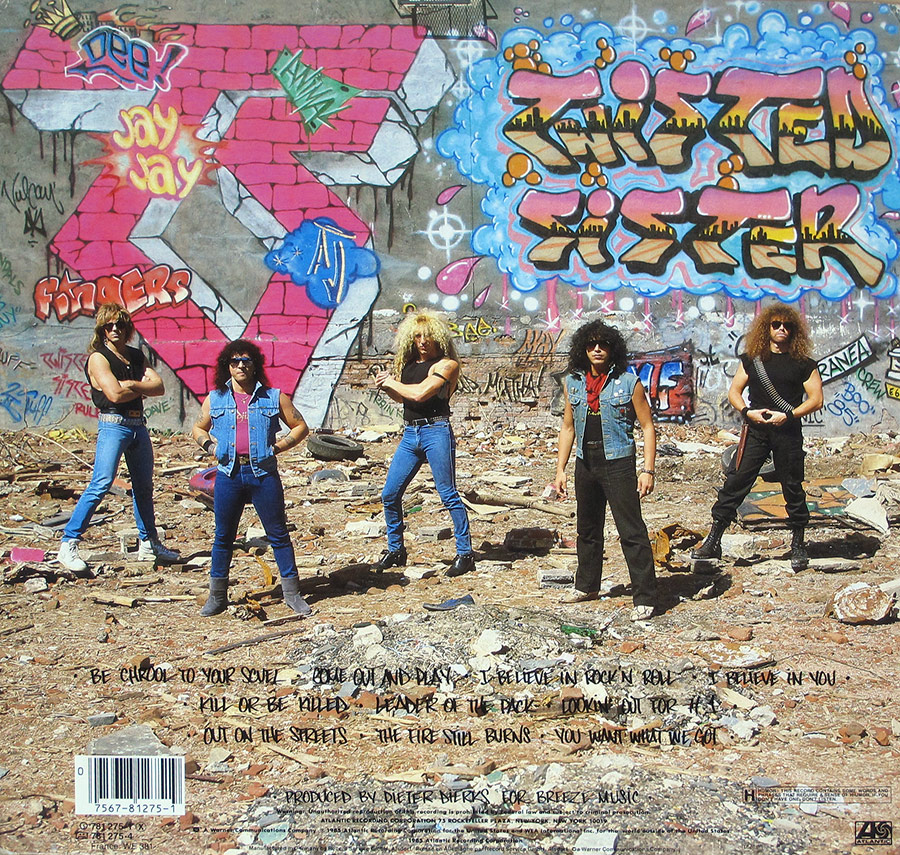
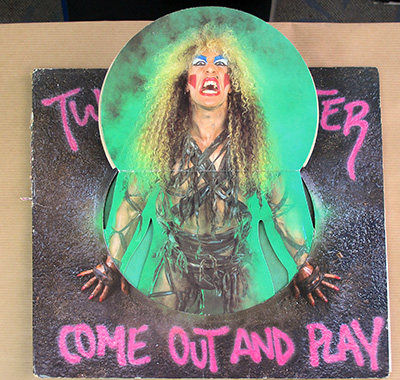
And then the German gimmick pop-up cover shows up, grinning like it already knows the argument is coming. That manhole cut-out doesn’t whisper “collector’s item.” It yells it. You don’t even get to the vinyl before the sleeve goes LOOK AT ME.
Dee bursting up through the street is basically the band’s whole 1985 situation in cardboard form: crawling out of the underground and immediately getting hit by neon. It’s charming. It’s ridiculous. It’s also… kind of accurate.
2. Historical and cultural context
1985 wasn’t a gentle year for loud music. Metal had moved into the mainstream air like it owned the place — MTV, arenas, bedrooms, school lockers, the whole deal. Everything was bigger, brighter, and more photogenic. Which is a polite way of saying: everyone was trying to be unforgettable.
And adults were doing that classic adult thing: clutching pearls and asking if the music was corrupting the youth. Meanwhile the youth was like, “yes,” and turned it up. That tension is in the background here, like static under the songs.
Twisted Sister fit the moment because they could sell hooks without pretending to be polite about it. They looked like trouble on purpose. Not subtle trouble either. The kind that shows up early and drags a chair across the floor just to make the noise.
3. How the band came to record this album
This is what happens after a band kicks the door in and everyone immediately wants a second door kicked in. Touring, momentum, label expectations — that whole “congrats, now repeat the miracle” treadmill. You can feel that push behind the record even when the songs are smiling.
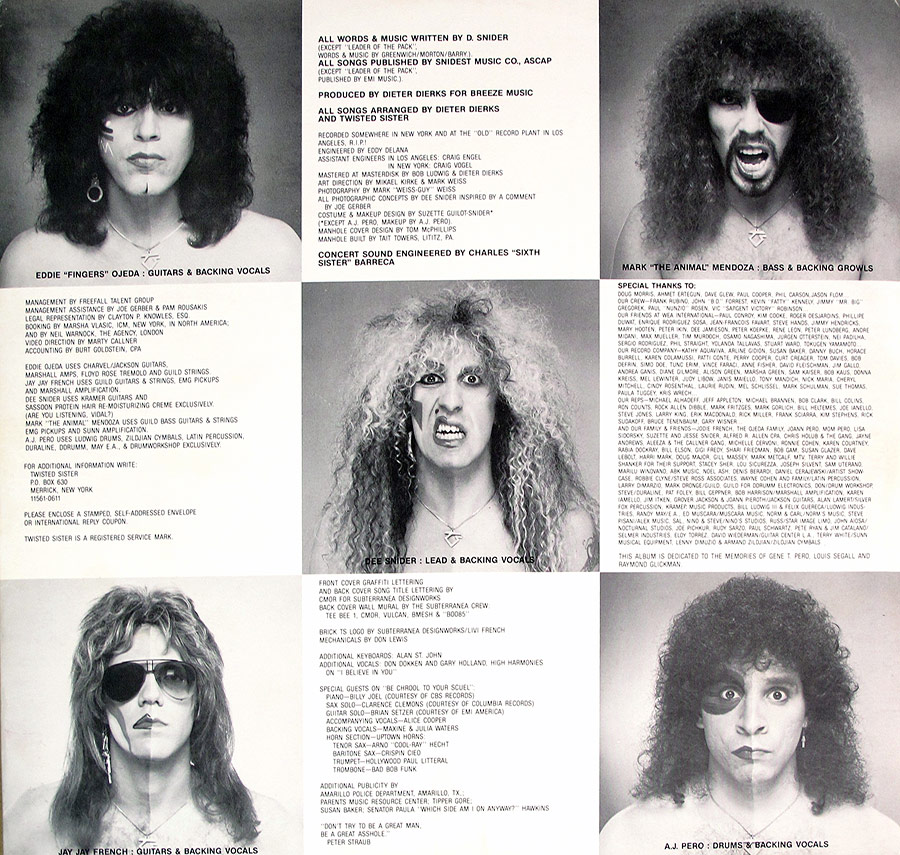
Bringing in Dieter Dierks as producer is a choice with intent. Dierks doesn’t do “cheap and scrappy.” He does “big and clean,” the kind of sound that hits hard without smearing. The album starts strutting almost immediately, like it knows it’s wearing expensive shoes.
Recorded at the Record Plant in Los Angeles and mastered at Masterdisk, with Bob Ludwig in the chain — that’s not the “let’s capture the sweat in the room” approach. That’s the “build it tall, paint it glossy, make it travel” approach.
4. The sound, songs, and musical direction
Sonically, this album feels like chrome. The guitars bite, but they’re groomed. The drums don’t tumble — they land. Dee’s voice still has that street-preacher snarl, but now it’s framed like a headline, not a shout from the back of a club.
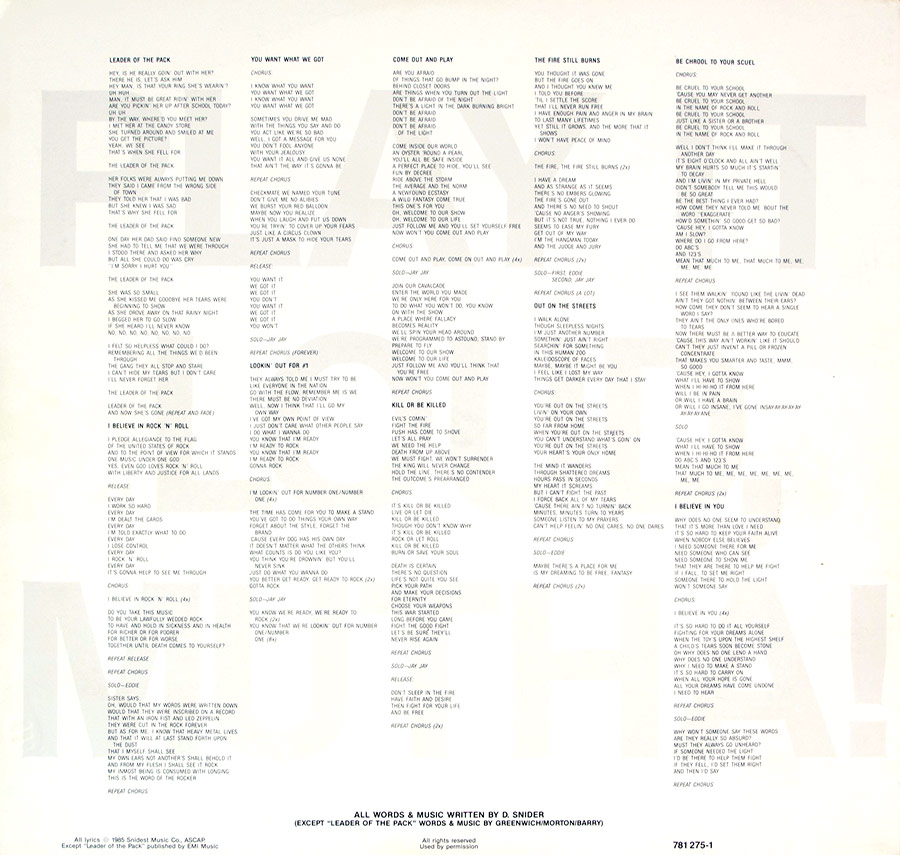
"You Want What We Got" comes in like a grin with a switchblade behind it. Party on the surface, dare underneath. That’s Twisted Sister’s sweet spot, and they know it.
"The Fire Still Burns" is the one that sticks with me. It doesn’t need to wink. It just stomps forward, stubborn and upright, like it’s allergic to embarrassment.
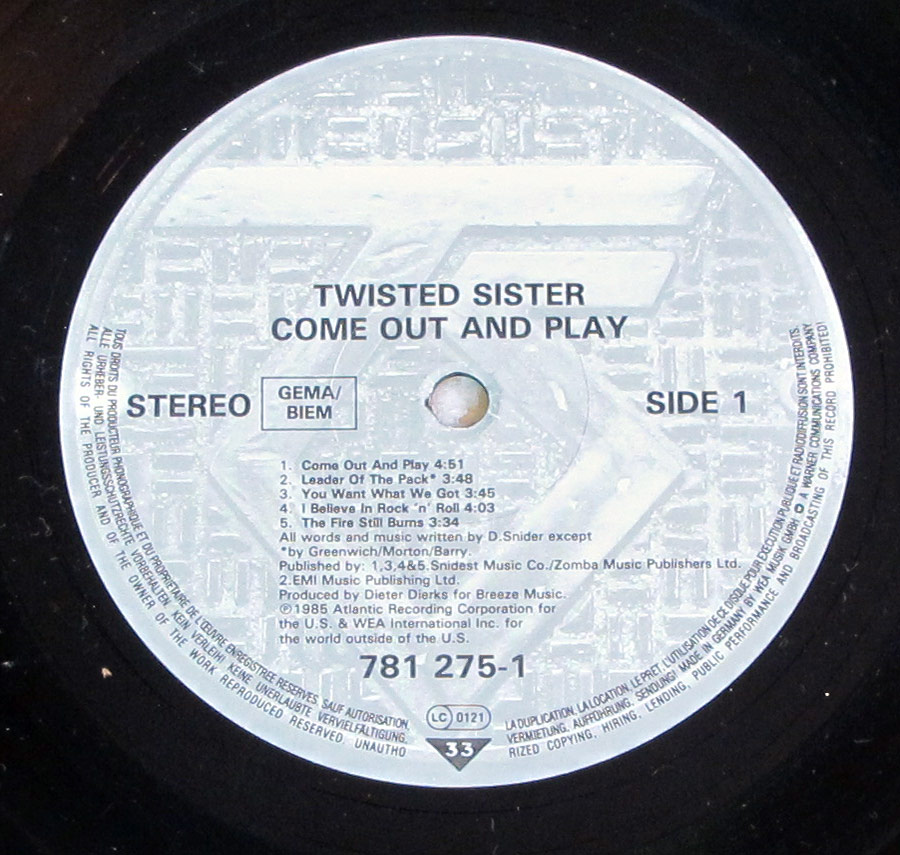
The title track "Come Out and Play" leans into the theater — not apologizing, not pretending it’s “just music.” It’s the band stepping onto a stage that’s already on fire and deciding, fine, let’s dance here then.
And "Leader of the Pack" is pure big-gesture Twisted Sister: a cover that doesn’t try to be clever or delicate. They grab it, repaint it in loud metal colors, and dare you to call it too much. It’s absolutely too much. That’s the point.
5. Comparison to other albums in the same genre/year
In 1985, the big heavy/glam sound was getting refined into something slick and sellable without losing all its teeth. Put "Come Out and Play" near "Theatre of Pain" (Mötley Crüe), "Invasion of Your Privacy" (Ratt), and "Metal Heart" (Accept) and you can hear the shared grammar: hooks, shine, choruses built like billboards.
The difference is tone. Other bands could be sexy, dangerous, or cool. Twisted Sister was defiant and kind of ridiculous on purpose — and I mean that as a compliment. Dee sells lines like he’s testifying in court and heckling the judge in the same breath. It shouldn’t work. It does.
6. Controversies or public reactions
The mid-80s panic around rock imagery and lyrics was real enough that some people practically needed a villain of the week. Twisted Sister was an easy target: famous enough to blame, loud enough not to flinch, and visually impossible to ignore. If you wanted a band to point at, they were basically neon.
Musically, the reaction split the usual way. Some listeners loved the bigger, polished punch. Others reached for the sacred rock-fan curse word — sellout — because apparently success is suspicious unless it happens to your favorite band. The funny part is the complaints still kept the album in the room.
7. Band dynamics and creative tensions
This album feels like five guys trying to keep their grip on the same rope while the world keeps yanking it sideways. Twisted Sister worked because the personalities were huge but aimed in one direction. In 1985, that direction also had to include cameras, marketplace logic, and the weight of “top this.”
You can hear the balancing act: keep the raw identity, but deliver something “bigger.” That pressure doesn’t always explode right away. Sometimes it just tightens everything, smooths the edges, and leaves the arguments for later.
8. Critical reception and legacy
"Come Out and Play" lives in the shadow of the record right before it, which is one of the crueler fates in rock history. A record can be good and still get graded like it’s sitting next to a straight-A sibling. Time has been kinder than the quick takes, though. The songs still hit. The attitude still works. It’s a very 1985 kind of loud.
And yes, I’m a collector, so I’m going to say the quiet part out loud: the packaging matters. That pop-up manhole cover is pure 80s excess — physical, goofy, brilliant. It forces you to handle the album, not just consume it and forget it five minutes later. Streaming can’t do this. Streaming doesn’t even try.
9. Reflective closing paragraph
My personal anchor with this one is stupidly simple: it’s the record that makes me slow down for ten seconds before I even play it, because the sleeve demands attention like an obnoxious friend you still love. I pull the German pop-up edition off the shelf, open it, and Dee pops up like the city itself couldn’t keep him underground. :-)
Decades later, the riffs still carry that faint mix of beer, sweat, and misplaced optimism. And honestly? I trust that smell more than most modern “deluxe experiences.” Those usually come with a marketing plan. This comes with a manhole.