"Ummagumma" (1969) Album Description Part 1/2:
By 1969 Pink Floyd had already burned through one identity. Syd Barrett was gone, London’s psychedelic circus was starting to wobble, and the band suddenly found themselves with a strange freedom: no frontman prophet, no clear direction. "Ummagumma" feels like the sound of that moment. Two records. One caught live under stage lights. The other built alone in studio corners while tape machines hummed and someone probably forgot to close the door.
The title itself sounds like something muttered at three in the morning after too much hash and tea. Friends around the band claimed it was Cambridge slang for sex. Others in Floyd later shrugged and said the word meant absolutely nothing. Either way it sticks in your head like a weird mantra. Say it out loud a few times and suddenly the album makes more sense.
Britain, 1969: Psychedelia Turning Weird
The British underground was mutating that year. Cream had already exploded and vanished. King Crimson were about to kick the door open with "In the Court of the Crimson King". Soft Machine were drifting toward jazz. Meanwhile Pink Floyd were drifting somewhere else entirely — not tighter, not heavier, just… stranger.
Instead of trying to compete with the rising progressive scene, they stepped sideways. "Ummagumma" doesn't behave like a normal rock album. Half concert document, half experimental scrapbook.
The Sleeve That Keeps Folding In On Itself
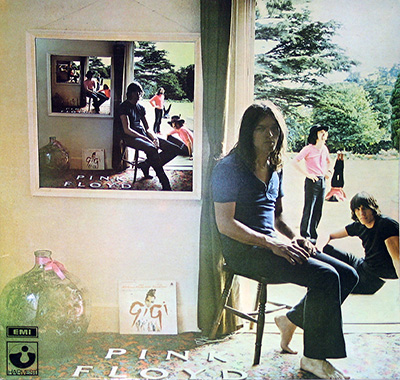
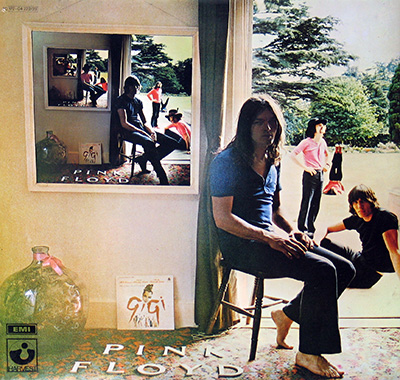
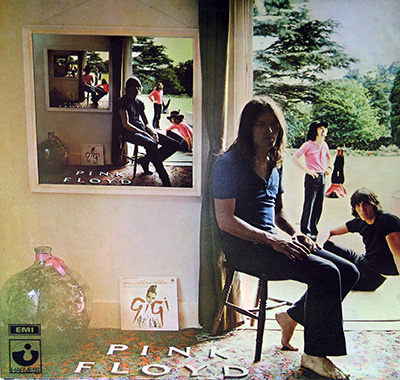
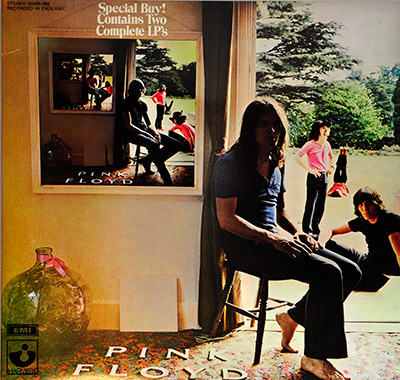
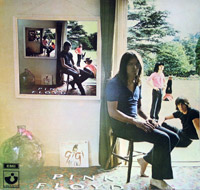
The cover photograph is one of Hipgnosis’ sly tricks. A quiet Cambridge room, the band arranged inside it — and inside the frame within the frame, again and again like a visual echo. Storm Thorgerson shot the image in a house in Great Shelford. Stand there long enough and the whole picture feels like it’s folding inward.
Early American pressings quietly erased a small Doctor Strange comic poster visible on the wall. Copyright headaches. The solution was blunt: airbrush the panel blank and hope nobody noticed.
The Back Cover’s Aviation Joke
Flip the sleeve and suddenly the band’s gear lies scattered across a runway at Biggin Hill Airport. Amps, drums, guitars, cables — everything spread out like an exploded aircraft diagram from a military manual. Nick Mason dreamed up the idea. Roadies Alan Stiles and Peter Watts stand there among the equipment like mechanics inspecting the wreckage.
It looks half serious, half absurd. Which is exactly the Pink Floyd mood of the time.
The Gatefold Portraits
Inside the sleeve the band appear in stark black-and-white photographs. David Gilmour stands near the Elfin Oak in Kensington Gardens looking like he wandered out of a folk club. Roger Waters appears beside his first wife Judy Trim — although later CD editions quietly cropped her out of the frame, trimming the caption along with her.
Record companies like tidy photos. Reality is usually messier.
One Small Radio Memory
Late-night radio loved albums like this. You’d hear the DJ mumble something about “a bit of Pink Floyd weirdness” and suddenly that eerie experimental side would drift out of the speakers. Half the listeners probably checked whether their turntable had slowed down.
But that was the trick of "Ummagumma". It didn’t ask permission. It just wandered off and took the tape recorder with it.