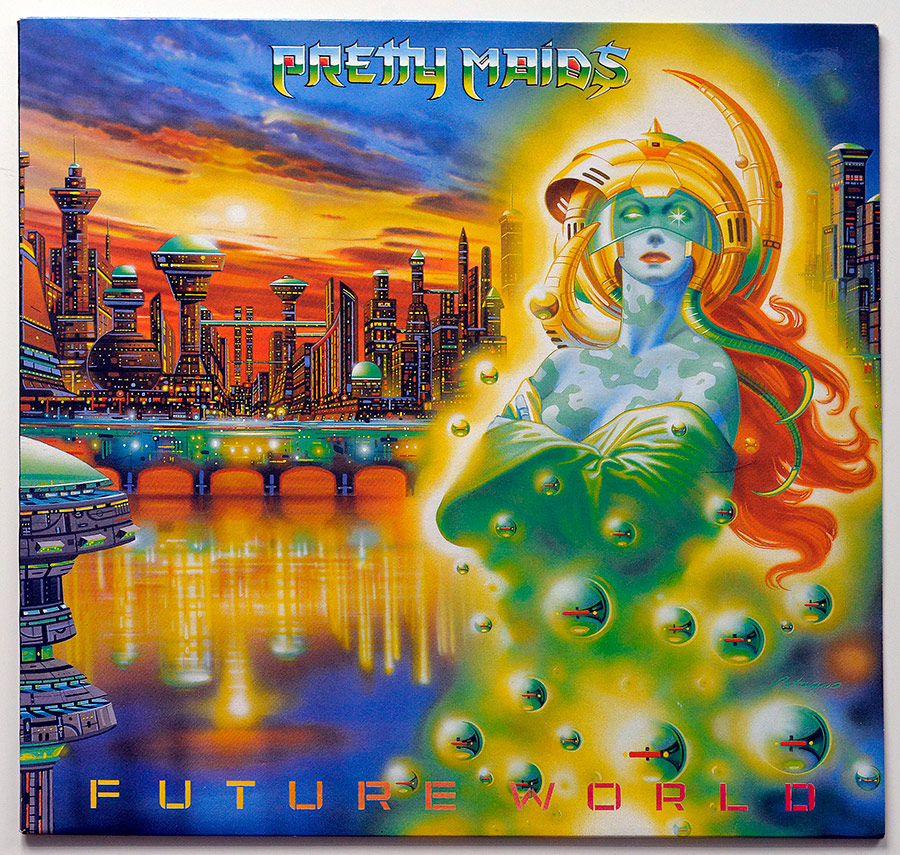
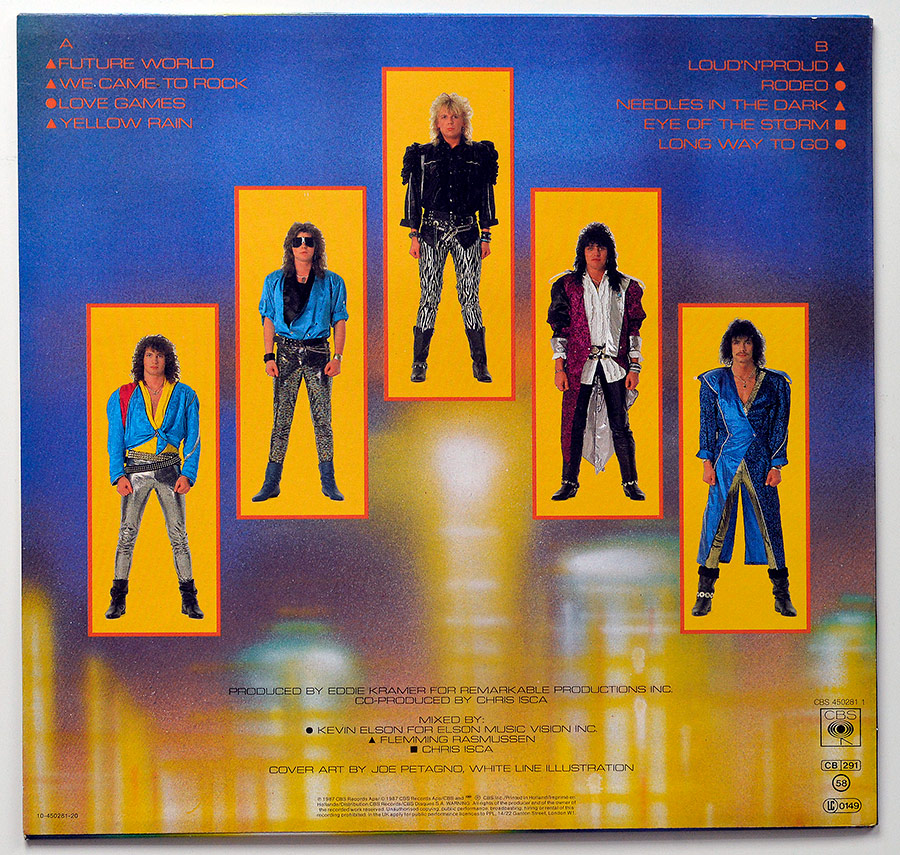
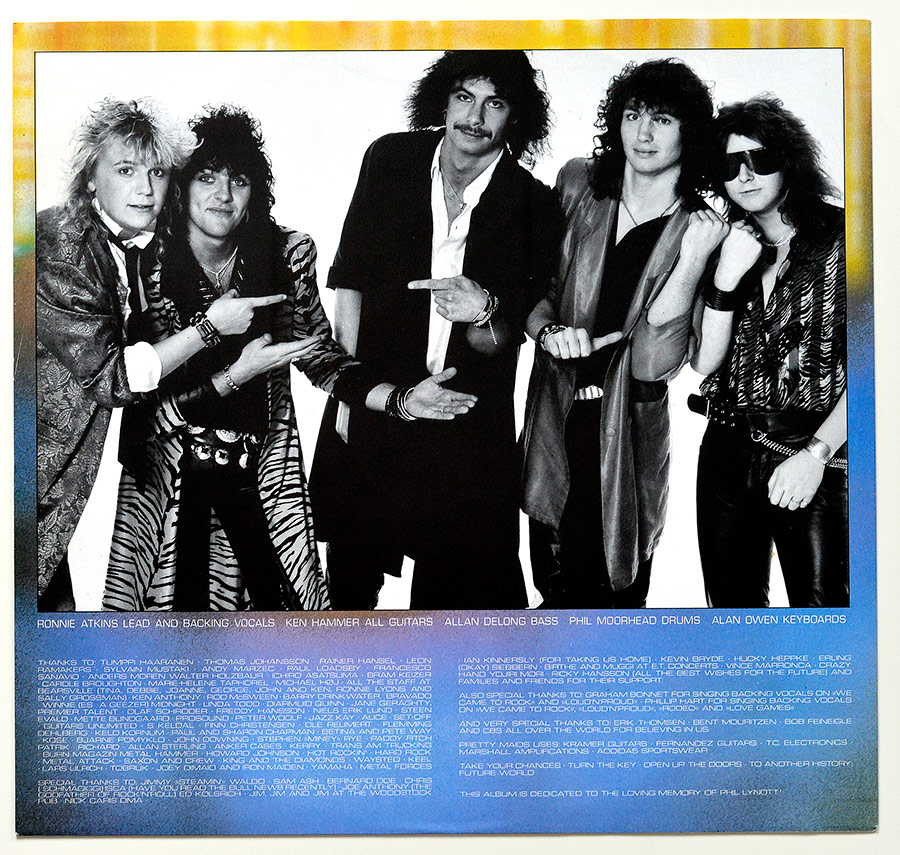
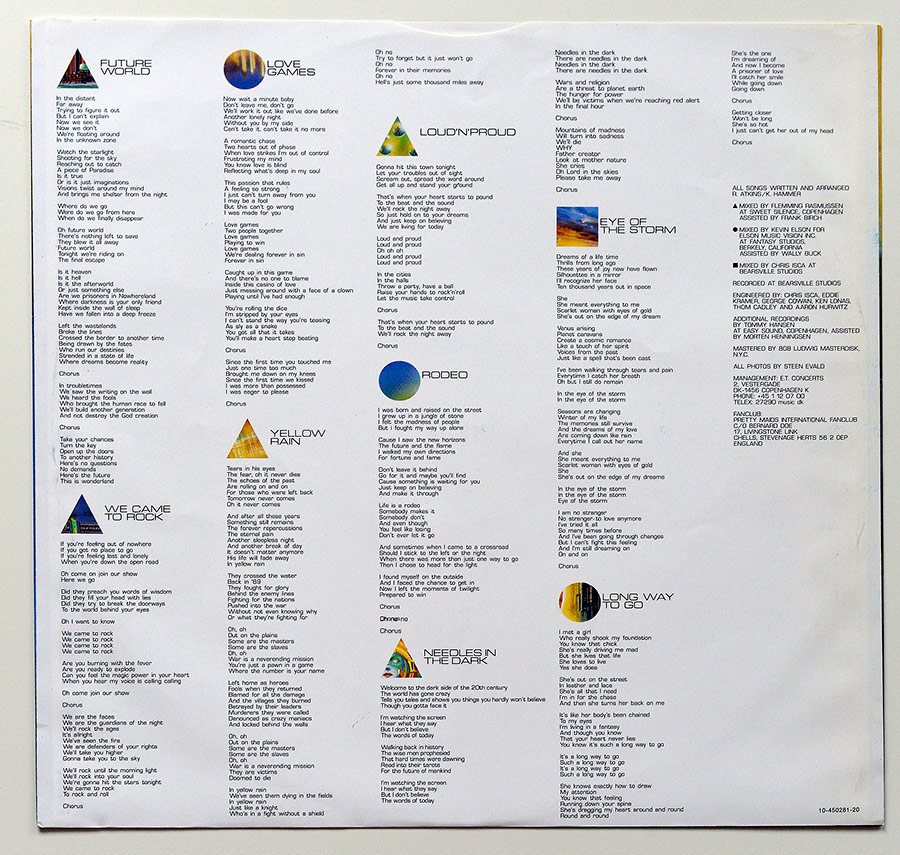
"Future World" Album Description:
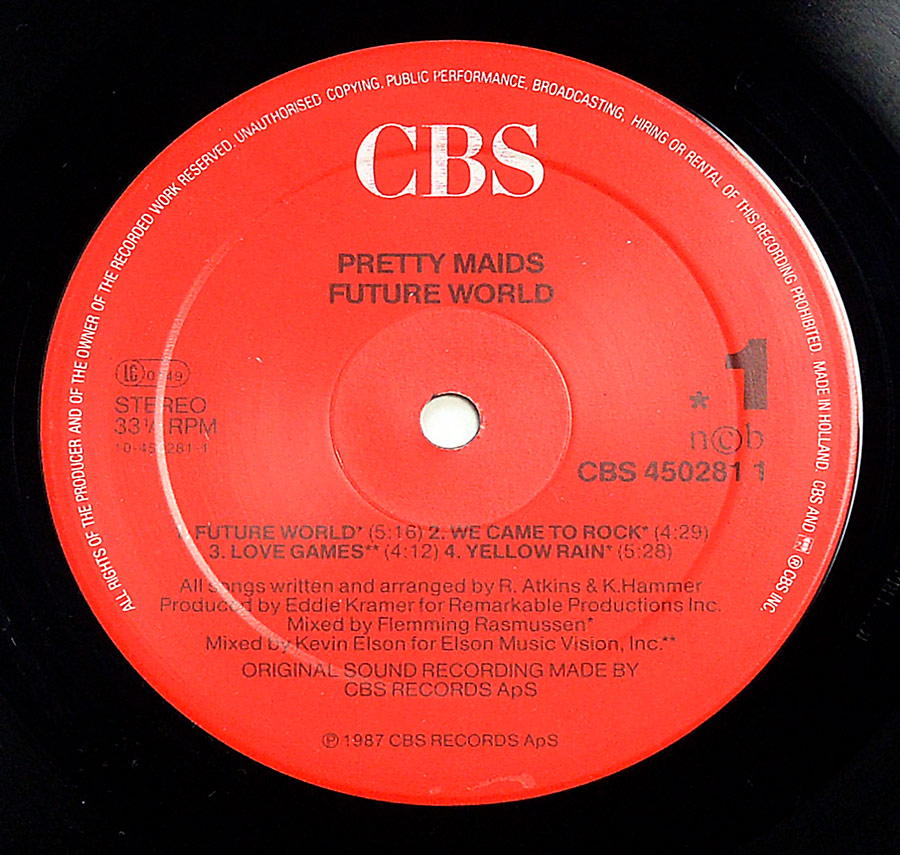
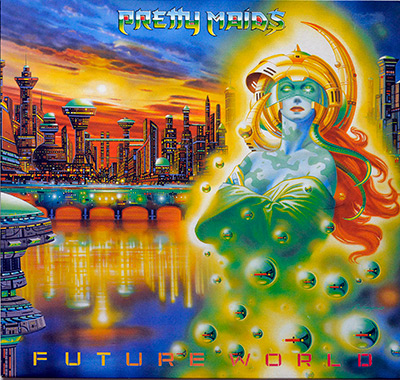
In the vibrant tapestry of 1980s music, the year 1987 marked a pivotal moment for the Danish hard rock and heavy metal scene with the release of Pretty Maids' second studio album, "Future World." Stepping into the intricate realm of this iconic 12" Vinyl LP Album allows us to delve into the time period and production that defined the band's distinctive sound.
The Time Period: 1987
The late 1980s were a tumultuous yet thrilling era for the global music landscape. A wave of diverse genres and subcultures clashed and merged, giving rise to the unmistakable sound of the decade. In this backdrop, Pretty Maids emerged as a force to be reckoned with, hailing from Denmark—a country not traditionally associated with heavy metal prowess.
As the world was caught in the grip of socio-political changes and technological advancements, the music industry was also undergoing a transformative phase. The 1980s witnessed the peak of the heavy metal genre, with bands experimenting with new sounds, pushing boundaries, and seeking international acclaim. Pretty Maids' "Future World" was a testament to this dynamic period, capturing the essence of both the band's identity and the broader musical landscape.
Production Magic by Eddie Kramer
Behind the scenes, the production of "Future World" was entrusted to the seasoned hands of Eddie Kramer, a name synonymous with some of rock and metal's most iconic albums. Kramer's prowess had previously graced works by legendary acts like Led Zeppelin, Jimi Hendrix, and Kiss. His collaboration with Pretty Maids brought a touch of sonic excellence to the album.
Kramer's production style, characterized by its clarity and attention to detail, allowed the band's musical prowess to shine. The mix of powerful guitar riffs, dynamic drumming, and soaring vocals found a perfect balance under his guidance. The result was an album that not only met the expectations of the burgeoning heavy metal scene but also left an indelible mark on the global stage.
Musical Odyssey in "Future World"
"Future World" is not merely an album; it's a musical odyssey that takes listeners on a journey through the realms of hard rock and heavy metal. Tracks like "Future World" and "Love Games" showcase the band's ability to blend melodic elements with the raw energy characteristic of the genre. The album's lyrical themes, touching on societal issues and the human experience, resonated with audiences, adding depth to the sonic experience.
Pretty Maids' sophomore effort solidified their place in the heavy metal pantheon and left an enduring legacy. The album's success catapulted the band into the international spotlight, demonstrating the global appeal of Danish heavy metal.
Production and Recording Information
Eddie Kramer for Remarkable Productions Inc.
Edwin H. “Eddie” Kramer – Producer, Audio EngineerThe guy who could take Hendrix saying “make it sound green” and somehow turn that into real audio. Read more...
Edwin H. “Eddie” Kramer, in my book, is rock’s ultimate behind-the-glass magician: starting in London studios in the early 1960s, then going full-throttle with Jimi Hendrix from 1967–1970, capturing Woodstock (1969), engineering major Led Zeppelin work from 1969 onward, steering Electric Lady Studios as engineering director in 1970–1974, and later locking in that arena punch with Kiss through the mid/late 1970s (and beyond). When I see his credit, I expect big guitars, bigger atmosphere, and a mix that still feels alive.
Sound Mix by Kevin Elson for Elson Music Vision Inc
Aaron "Professor Louie" Hurwitz - Sound Engineer
Chris Isca - Sound Engineer
Flemming Rasmussen - Producer, Sound Engineer
Flemming Rasmussen – Producer, Sound EngineerSweet Silence Studios founder/engineer whose fingerprints show up on metal records that sound way bigger than the room they were made in. Read more...
Flemming Rasmussen is one of those behind-the-glass names I keep spotting like a quality stamp: a Danish producer and sound engineer, and the founder of Sweet Silence Studios in Copenhagen. His timeline reads like a metal history syllabus I actually want to study: Rainbow (1981), then Metallica (1984–1988: Ride the Lightning, Master of Puppets, ...And Justice for All), followed by Artillery (1990), Morbid Angel (1993), Blind Guardian (1995–1998), Ensiferum (2003–2004), and Evile (2007). He even won a Grammy for producing Metallica’s "One" (1989), which is kind of hilarious when you remember that song is basically anxiety with military boots on.
Frank Birch - Sound Engineer
George Cowan - Sound Engineer
Ken Lonas - Sound Engineer
Kevin Elson - Sound Engineer
Morten Henningsen - Sound Engineer
Thom Cadley - Sound Engineer
Tommy Hansen - Sound Engineer, Producer
Tommy Hansen – the Danish Sound Engineer and ProducerI always hear Tommy Hansen in that sharp, muscular European metal sound: polished enough to travel, dangerous enough to bite. Read more...
Tommy Hansen was the Danish studio craftsman who gave European hard rock and metal a muscular shine without sanding off the danger. I remember Tommy Hansen as one of those behind-the-desk men whose fingerprints were all over the sound of European metal. He started young with The Old Man & The Sea in 1967 and later played in Iron Duke in the mid-1970s, before turning Jailhouse Studio into a serious workshop for loud music. From 1983 to 1984 he worked with Pretty Maids on the early EP and "Red, Hot and Heavy"; with Helloween he turns up across 1987-1988 and again 1993-1998 on "Keeper of the Seven Keys" Parts I and II, "Chameleon", "Master of the Rings", "The Time of the Oath" and "Better Than Raw". He later shaped records by Iron Fire in 2000-2001 and 2006, Wuthering Heights in 2002, HateSphere in 2005, and Jorn in 2008-2010. That was no accident. That was authority.
Wally Buck - Sound Engineer
Bob Ludwig - Mastering Engineer
Bob Ludwig – Mastering EngineerMy quick tell for a record that’s about to sound expensive: “Mastered by Bob Ludwig” quietly lurking in the credits. Read more...
Bob Ludwig, for me, is the final boss of “make it hit”: cutting lacquers at A&R in the late ’60s, shaping the 1970s at Sterling Sound, the 1976–1992 Masterdisk era, then building Gateway Mastering in Maine (founded 1992) before retiring in 2023. His mastering fingerprints run from classic rock to metal to modern pop—Led Zeppelin and Lou Reed through Metallica, Nirvana, Tool, and Daft Punk.
Joe Petagno - Cover Art
Joe Petagno is an American artist known principally for creating images used on rock album covers for bands such as
Pink Floyd
,
Led Zeppelin
,
Nazareth
, Sweet, Motörhead, Roy Harper, Marduk, Bal-Sagoth, Autopsy, Attick Demons, Illdisposed and
Sodom
.
Joe Petagno was born in Portland, Maine and left the United States in 1972. He worked with Hipgnosis before meeting Motörhead's Lemmy in 1975,
Steen Evald - Photography