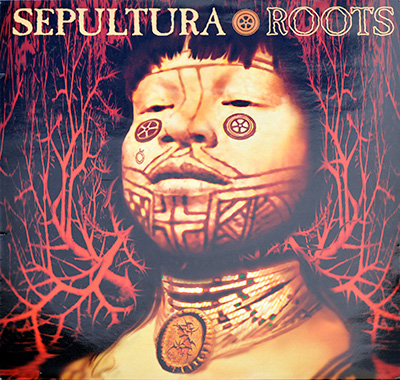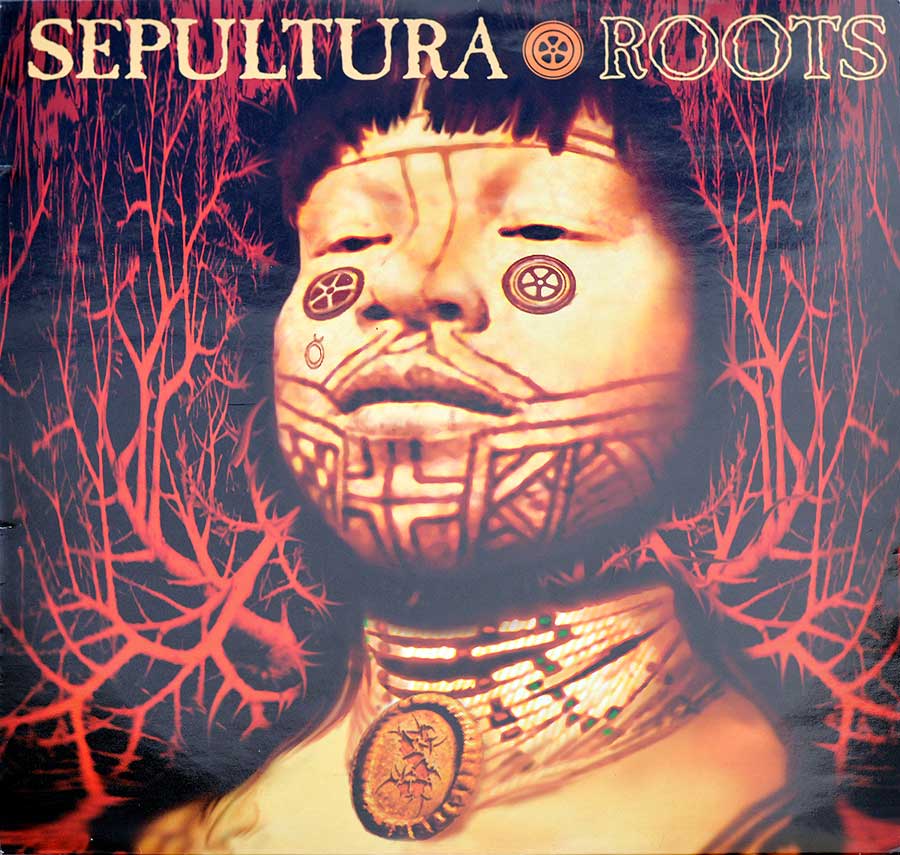
"Roots" (1996) Album Description:
"Roots" arrived when Sepultura had already outgrown the tidy little thrash box people kept trying to nail shut around them. Formed in Belo Horizonte by the Cavalera brothers and sharpened into something deadlier once Andreas Kisser came aboard, the band had spent years learning how to hit harder than their heroes. By 1996 they were no longer chasing Slayer or anybody else. This record sounds like a gang of amplifiers dragged through red dirt, then set on fire while the drums kept talking back.
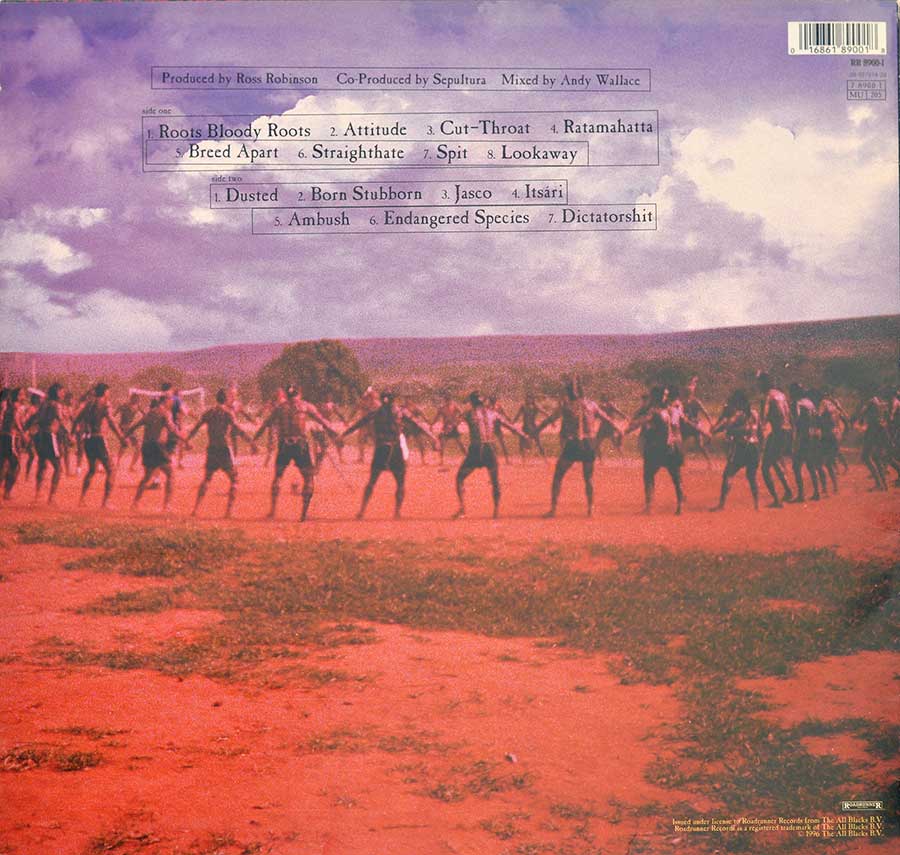
That is the hook here, and it still bites: this is not a polite “tribal phase” record, no matter how many lazy write-ups try to dress it that way. Ross Robinson helped keep the thing sweaty and uncombed, Sepultura co-produced to stop it from turning into somebody else’s idea of “world metal,” and Andy Wallace gave the final mix enough shape to keep the floor from collapsing. Then Carlinhos Brown walks in and suddenly the album stops behaving like a metal record and starts moving like a street ritual with bad intentions. That alone should make anyone curious enough to keep going.
Brazil in the room, not hanging on the wall
Brazil in 1996 was not in the mood to ask permission from London, Los Angeles, or the Bay Area. The country had spent the previous years living through sharp economic adjustments, media overload, imported trends, and that constant street-level collision between local identity and global noise. The Brazilian metal scene knew the foreign rulebook by heart, but a band like Sepultura had stopped treating it as scripture. That matters, because "Roots" does not sound like exotic garnish sprinkled over imported riffs. It sounds like a band from Brazil finally deciding to let Brazil make a mess in the control room.
What the record does to the air
The attack is low and physical. Guitars do not slice so much as shove. Igor Cavalera’s drumming keeps switching the ground under your feet, from straight-ahead punishment to something more circular and bodily, while Paulo Jr. holds the bottom together like a man bracing a door with his shoulder. Max Cavalera barks, growls, and half-chants his way through the songs as if the words matter less than the impact they leave on the wall behind you.
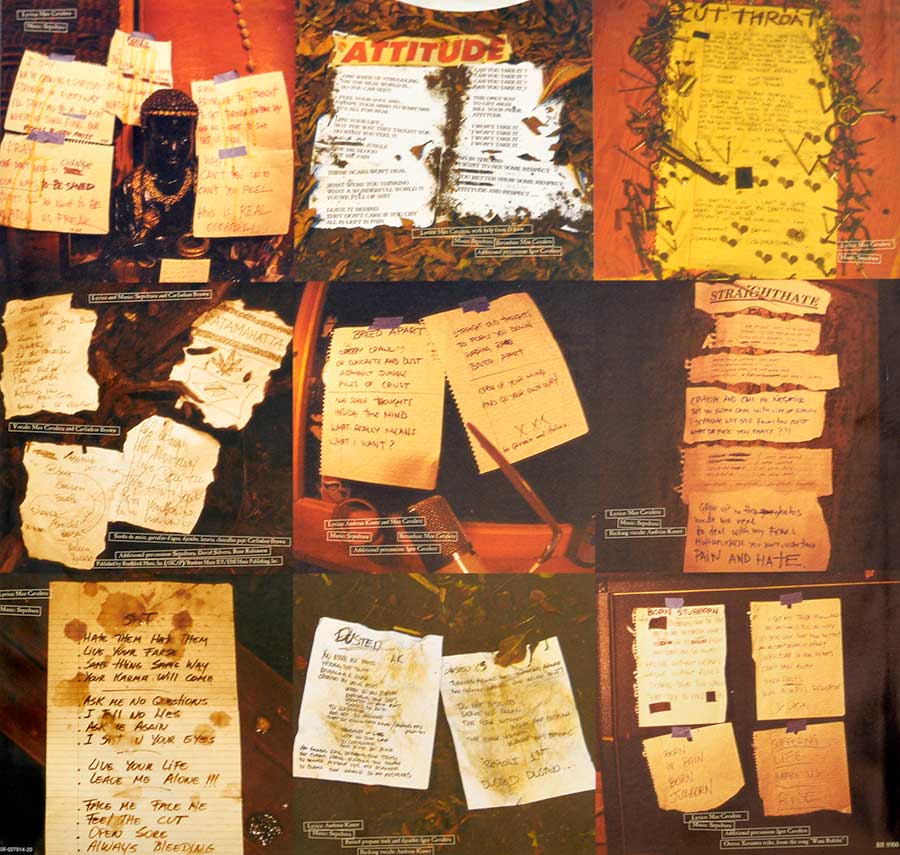
"Roots Bloody Roots" is the obvious opening punch, but the record gets stranger once it settles in. "Ratamahatta" chatters, stomps, and grins at you with broken teeth. "Straighthate" moves like a riot compressed into five minutes. "Itsári" changes the temperature in the room entirely, which was a risky move on a heavy record and exactly the sort of risk this band needed by then.
Not Pantera, not Korn, not anybody’s side project
The easiest mistake is to lump "Roots" in with every mid-90s heavy band that detuned and glowered. That is far too lazy. Pantera were all steel beams and barroom force. Korn were twitchier, inward, all private damage leaking into public. Machine Head sounded urban and blunt, Fear Factory sounded industrial and locked to a grid, and Slayer still cut with a cleaner blade. Sepultura on "Roots" went after something earthier and uglier. The groove here is not decorative. It is territorial.
The people who made the mess work
Robinson’s real contribution was not some magic producer fairy dust. He knew when to leave the room tense. He kept the performances ugly in the right way, refused to iron out the friction, and let the record keep its sweat. Andy Wallace, coming in on the mix side, stopped that mass of percussion, voice, and down-tuned guitar from turning into a brown smear. Steve Sisco and the engineering crew handled the practical burden of capturing all that impact without choking it to death, which sounds easier on paper than it ever is.
Carlinhos Brown deserves more than a passing guest-line nod. His percussion does not “add color.” That phrase ought to be buried. What he brings is movement, argument, and pulse. The record starts breathing differently once he is inside it, and that is exactly why "Ratamahatta" still feels less like a collaboration than a collision.
Cause and effect inside the band
Sepultura had been evolving for years, but "Roots" caught them at the point where expansion and fracture started looking like the same thing. Kisser had already widened the band’s musical brain. Max kept pulling toward something more primal and chant-driven. Igor could make almost anything sound tribal without turning it soft. That combination made the album possible. It also made balance harder to keep.
So yes, this was the last Sepultura studio album with Max Cavalera, and the reason is not mysterious destiny descending from the clouds. Bands that push this hard usually drag internal fault lines to the surface. The record sounds like four musicians and a set of guests discovering a new language at the exact moment the old one is breaking apart.
Late-night proof
Around midnight on a cheap radio or in a club with sticky floors, "Roots Bloody Roots" did not sound clever. It sounded like furniture needed moving. That was enough.
The argument around the album
There was no grand public scandal attached to the release, not in the tabloid sense people sometimes expect. The real fight came from inside heavy music. Old thrash loyalists heard betrayal because the tempos did not keep sprinting and the riffs had started carrying more body than speed. Later on, people got even lazier and blamed "Roots" for every bad late-90s copycat who confused groove with personality. That misses the point by a mile.
The common misconception is that Sepultura simply abandoned thrash and invented nu metal by accident. Neither half of that sentence holds up. The band had already started breaking the frame on "Chaos A.D.," and "Roots" did not arrive as trend-chasing. It arrived as a willful act of identity, pressure, curiosity, and probably a bit of stubbornness. Good. Records like this should be stubborn.
Why the hidden half matters
Spend time with the full run of songs and the album stops being just the one with the famous opening riff and the weird video. It becomes a rough, sometimes confrontational piece of work by a band refusing to stay photogenic for the market. Some passages lunge, some brood, some just pound until the point makes itself. That unevenness is part of the charm. A smoother album would have been easier to sell and easier to forget.