"The Doors" (1973) Album Description:
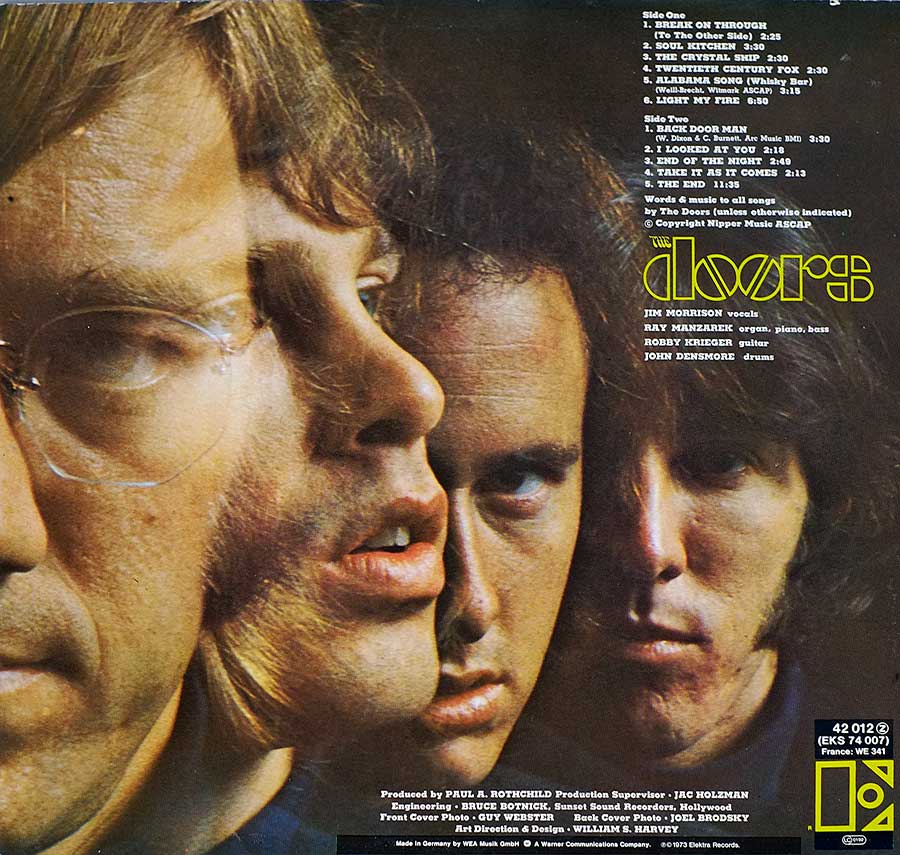
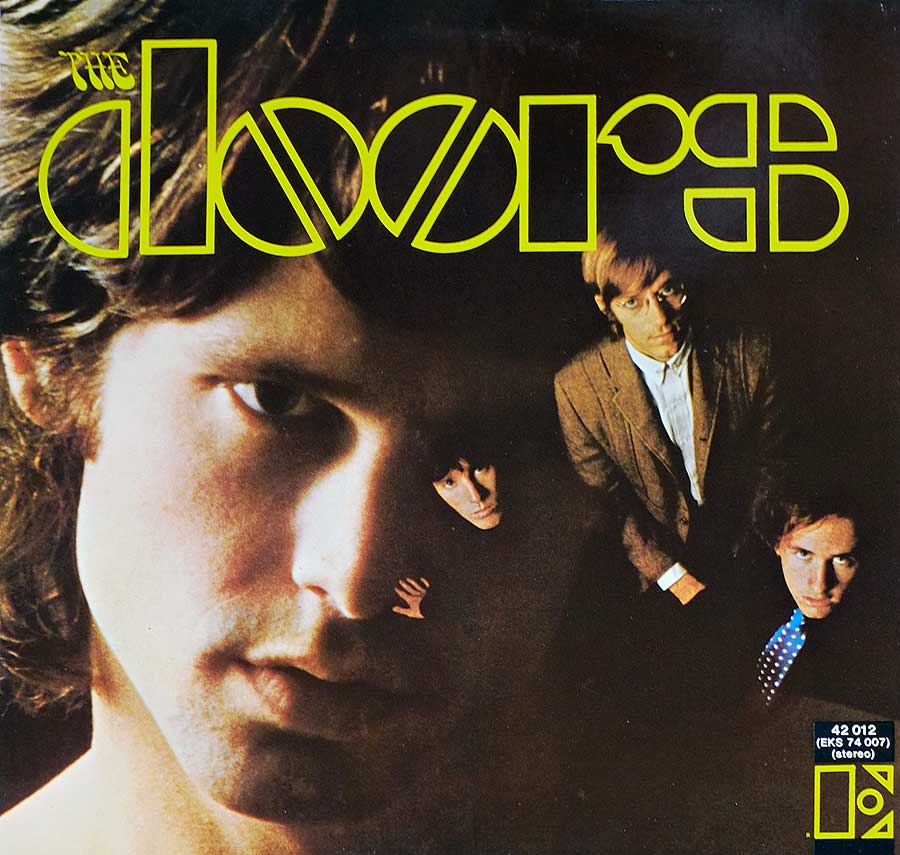
This 1973 German pressing of "The Doors" lands with a small jolt of irony before the needle even settles. By then the band already belonged to the wreckage and myth department: Jim Morrison was gone, the original storm had passed, and yet here was Elektra in Germany putting the debut back on the rack in its red-label form, as if to remind everybody that the first punch still hurt. That makes this copy more than a routine repress. It is a delayed echo from 1967, carrying the smell of the Sunset Strip into post-Morrison Europe.
What makes the record worth opening up again is not just "Light My Fire" or the usual shrine-building around Morrison. It is the way this album still sounds half nightclub, half bad trip, with Paul Rothschild keeping the thing just disciplined enough that it never spills its drink. And once you look at a 1973 German issue in that light, the whole object turns stranger: a debut album from the American acid-rock moment, sold after the band had already started turning into legend, mistake, and argument.
In American terms, 1967 was the year the walls started breathing. Psychedelia was no longer some local hallucination passed around Los Angeles and San Francisco clubs; it was leaking into radio, posters, clothes, and every conversation about how far rock could be pushed before it stopped being rock and turned into theatre, ritual, or noise. The Doors came out of Los Angeles, not Haight-Ashbury, and that matters. Jefferson Airplane sounded communal, Love could be baroque and brittle, Iron Butterfly liked to bludgeon a riff until it saw God, and the Grateful Dead drifted outward like a van with no map. The Doors were tighter than that crowd, meaner too. Less flower market, more alleyway after midnight.
The lineup is one of those rare cases where every player really does matter, and not in the lazy hall-of-fame way people say that when they have run out of adjectives. Morrison supplies the danger, of course, but Robby Krieger is the real shape-shifter on this album, sliding from flamenco bite to electric snarl without announcing himself like some guitar-hero peacock. Ray Manzarek fills the room with organ and piano in a way that makes a bass player feel unnecessary rather than absent, which is no small trick, and John Densmore keeps the whole thing from turning into shapeless incense smoke. Paul Rothschild's production was the practical glue: he did not pretty the band up, he boxed the chaos just enough to get it onto tape without sanding off the nerves.
The sequence still works because it moves like a real album, not a jukebox with delusions. "Break On Through (To the Other Side)" kicks the door in fast, sharp, almost impatient, and "Soul Kitchen" immediately loosens the collar with that humid late-night sway. "The Crystal Ship" hangs there like cigarette smoke in a room with the curtains shut, while "Light My Fire" does what overplayed classics almost never manage anymore: it still earns its length. You can hear the attack, the space, the pull between discipline and drift. Not many acid-rock records get that balance right. Plenty went for transcendence and wound up sounding like a chemistry set on a beanbag chair.
The blues material matters too. "Back Door Man" is not there as a polite nod to roots; it is there to prove that this band's idea of psychedelic tension was wired straight into older, dirtier American music. That is one reason the album avoids the weightless daze that sank a lot of late-1960s imitators. Even when "The End" stretches out into its long, ominous corridor, it never feels decorative. It feels invasive. The track still has that nasty ability to make a room go still.
As for band history, this debut caught them just before fame started chewing the edges off the group. The Doors had built their identity in Los Angeles clubs, then broke nationally when "Light My Fire" exploded in 1967. Success gave them reach, but it also magnified Morrison's excesses and every public spectacle that came with them. After Morrison died in Paris in July 1971, the remaining three tried to continue, made two more studio albums, and then split in 1973. So this German pressing arrived at an awkward, almost poetic moment: the band's first statement being recirculated just as the original story had finally burned itself out.
There was no special controversy attached to this 1973 German issue itself, and that is worth saying because collectors and casual fans like to smear all Doors records into one cloud of scandal. The real friction belonged to the band's reputation already baked into the material: the menace of "The End," Morrison's public persona, the sense that the group was always one bad night away from disgrace or transcendence, sometimes both before breakfast. The misconception is that the debut is only valuable as a shrine to Morrison. Nonsense. The record endures because the band around him could actually play, arrange, and sustain tension without collapsing into self-importance. A rare skill in acid rock, where self-importance was practically a union rule.
One of the quiet pleasures of a copy like this is purely physical. You lift a 230-gram slab from a German sleeve, glance at that red Elektra label, and for a second you are not reading history at all; you are just back in the room with the lamp on low, flipping the record over because Side Two still feels like a place you have to enter carefully. Some albums decorate a shelf. This one still stares back.
References
- Vinyl Records Gallery page with high-resolution album cover photos and pressing details
- The Doors official archive interview with producer Paul Rothschild
- Rhino note on the January 1967 release of the debut album
- Rhino history of "Light My Fire" as the breakout single
- Britannica overview of The Doors and the post-Morrison breakup timeline