"Tarkus" Album Description:
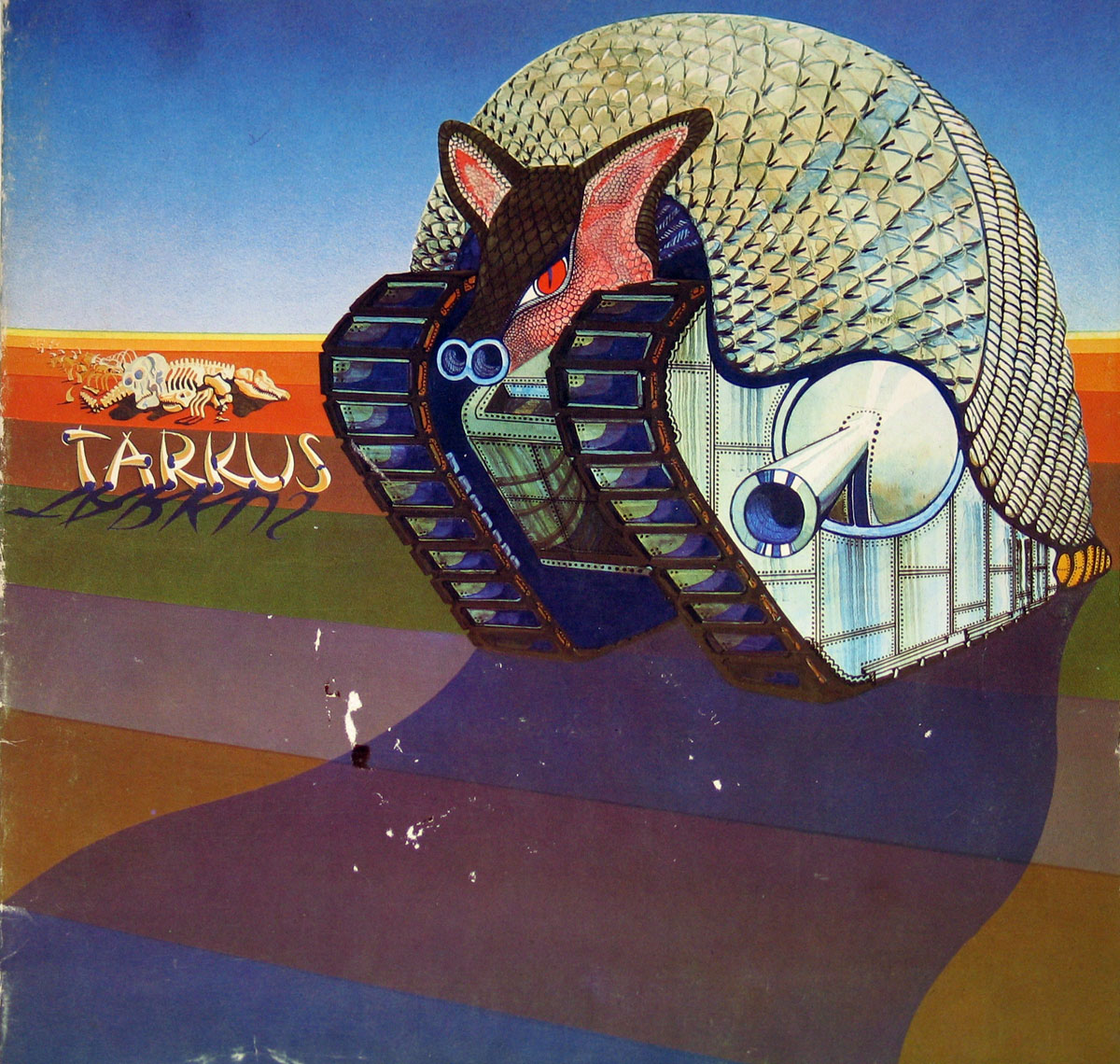
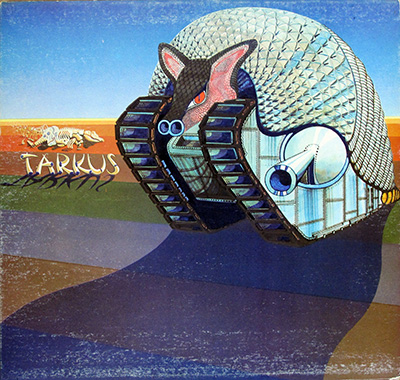
The release of Emerson, Lake & Palmer's "Tarkus" on a 12" vinyl LP in 1971 marked a significant contribution to the music landscape of that time period. This iconic album, pressed on high-quality audiophile 200 grams vinyl and adorned with a gatefold album cover featuring the artistic prowess of William Neal, stands as a testament to the fusion of progressive rock and avant-garde elements that defined an era.
In the early 1970s, the music scene was undergoing a transformative period, witnessing the rise of progressive rock as a genre that pushed the boundaries of conventional musical norms. Emerson, Lake & Palmer (ELP), comprised of keyboardist Keith Emerson, vocalist and bassist Greg Lake, and drummer Carl Palmer, emerged as pioneers within this movement.
The production of "Tarkus" showcased the band's commitment to sonic excellence. Eddy "Are You Ready" Offord, the skilled sound and recording engineer behind the album, played a crucial role in capturing the intricate layers of the band's instrumentation. The decision to press the release on 200 grams vinyl further emphasized the commitment to delivering a high-fidelity listening experience, appealing to audiophiles and enthusiasts who sought the best in sound quality.
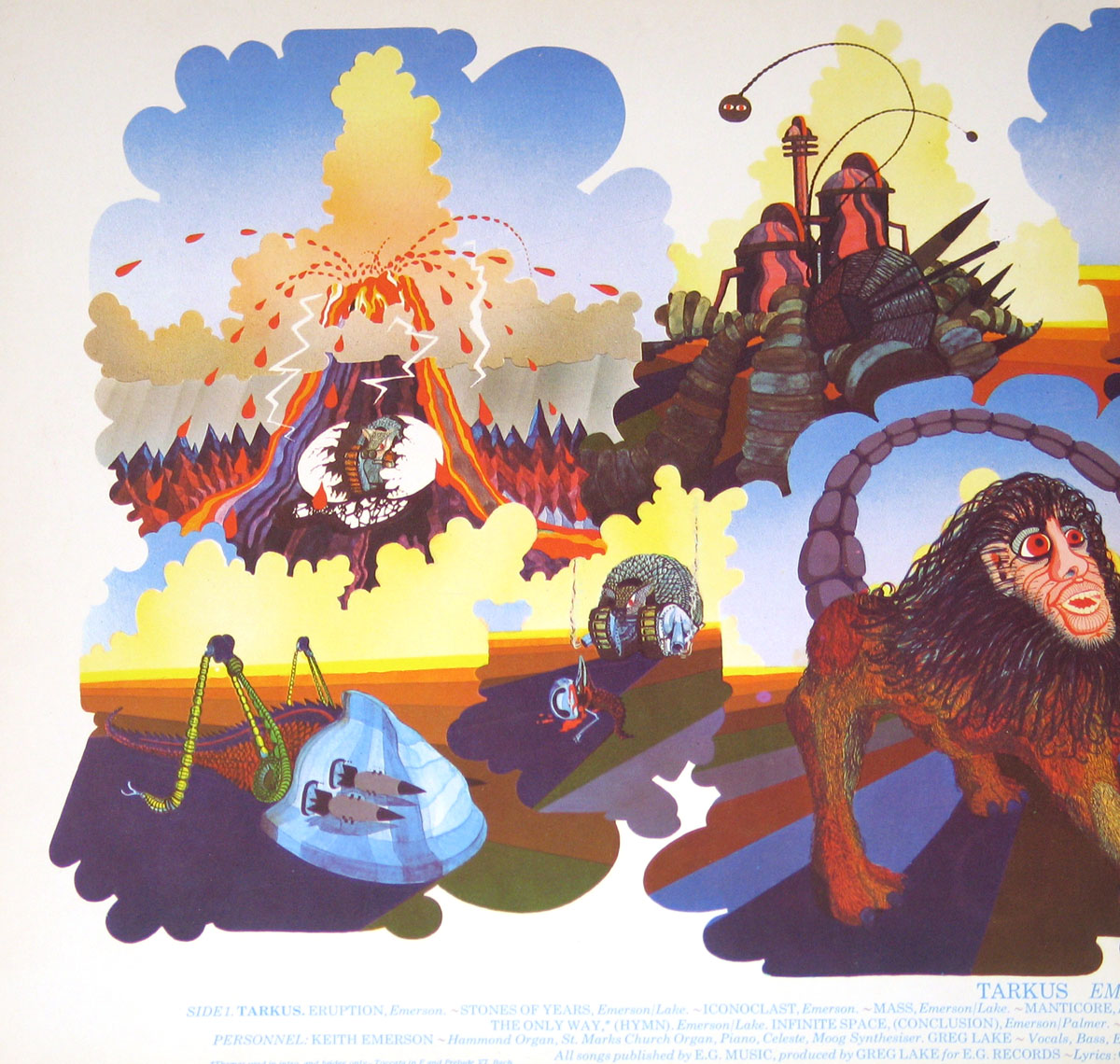
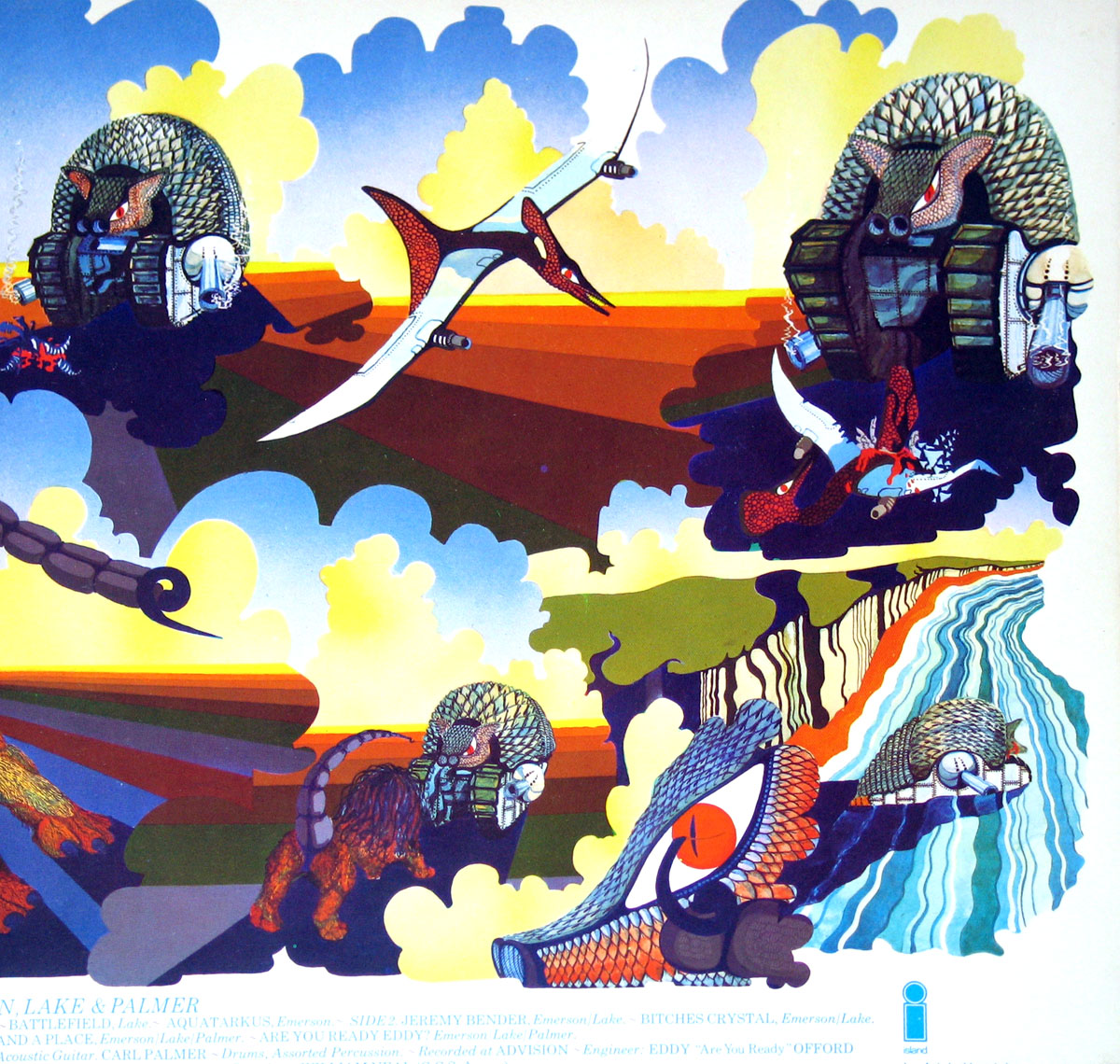
The album cover, featuring paintings by William Neal, added a visual dimension to the auditory journey that "Tarkus" offered. Neal's artistic creations complemented the thematic richness of the music, creating a cohesive and immersive experience for the listener. The gatefold design allowed for a larger canvas to showcase Neal's intricate artwork, inviting fans to explore the visual narrative that accompanied the musical compositions.
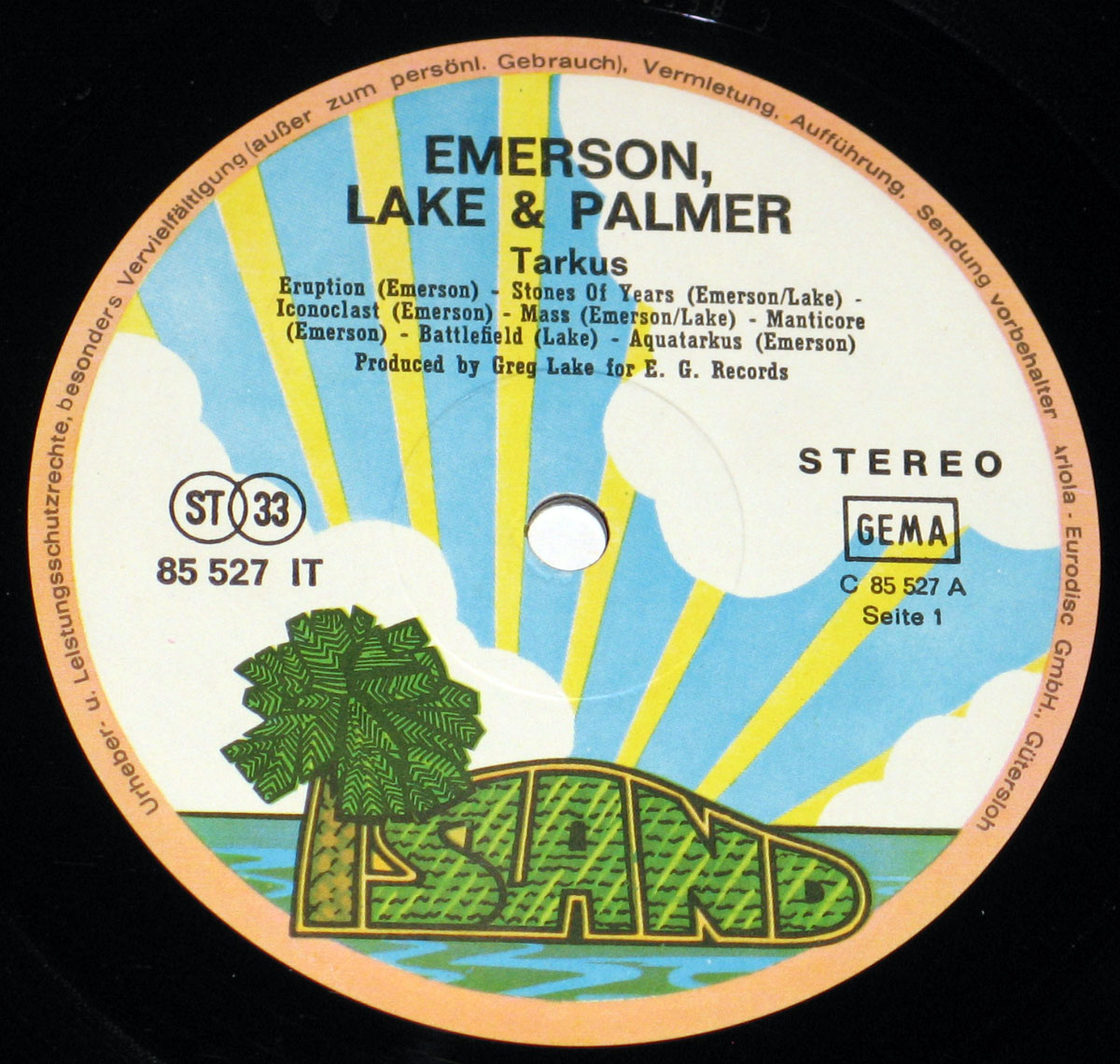
Island Records, a label known for its eclectic roster and commitment to artistic expression, played a pivotal role in bringing "Tarkus" to audiences in Germany. The international release of the album further expanded the reach of Emerson, Lake & Palmer, contributing to the globalization of progressive rock and cementing their status as influential musicians on the global stage.
Band Members and Musicians on: Emerson, Lake & Palmer Tarkus (Island Records Gatefold album cover)
|
Band-members, Musicians and Performers
- Keith Emerson (ex The Nice)
- Keith Emerson – Keyboards
The guy who made the Hammond and Moog sound like they were trying to escape the stage. Read more... Keith Emerson was the keyboard alchemist who made prog rock sound like a classical recital crashed into a rock club. I first caught him in The Nice (1967-1970), where he pushed rock into Bach, jazz, and sheer volume, then he helped launch Emerson, Lake & Palmer (1970-1979; later reunions 1990-1999) and turned the Moog into a headline act. His rig of Hammond, piano, and synths wasn't decoration; it was the whole plot, and he played it like a restless conductor. In the 80s he detoured through Emerson, Lake & Powell (1985-1986) and the trio 3/Emerson, Berry & Palmer (1988-1989), always chasing bigger sounds than the stage could hold, even when the band name changed.
- Greg Lake - Vocals, Bass Guitar
- Greg Lake – Bass, Vocals, Guitar
The voice behind "Lucky Man" and the basslines that kept prog from floating into space. Read more... Greg Lake was the warm-voiced anchor who made prog rock feel human even when the music went full sci-fi. I first heard him with King Crimson (1969-1970), where his bass, acoustic guitar, and vocals helped define the debut-era drama. Then he co-founded Emerson, Lake & Palmer (1970-1979; reunions 1990-1998), writing and singing the tunes that gave all that virtuosity a heartbeat. In the mid-80s he took another run with Emerson, Lake & Powell (1985-1986), proving the songs still landed even when the lineup shifted. Before the big leagues, he cut his teeth in The Gods (1967-1968), already aiming for bigger stages than the clubs could offer, with a songwriter's grin.
- Carl Palmer
- Carl Palmer – Drums, Percussion
The human metronome who could still swing while the time signatures did parkour. Read more... Carl Palmer was the turbo-charged drummer who made prog rock feel like a high-speed chase in a concert hall. Before the supergroup mythology, he cut his teeth with The Crazy World of Arthur Brown (late 1960s) and Atomic Rooster (1969-1970). Then he strapped in with Emerson, Lake & Palmer (1970-1979; reunions through the 1990s) and turned odd meters into something you could actually head-nod to. After ELP’s first run, he helped launch Asia (1981-1986, 1989-1992, 2006-2022), where his precision kept the arena hooks from going soft. Palmer’s playing is all snap, elegance, and controlled chaos—the kind of drummer who makes keyboards and guitars behave by sheer force of timing.
|