Album Description:
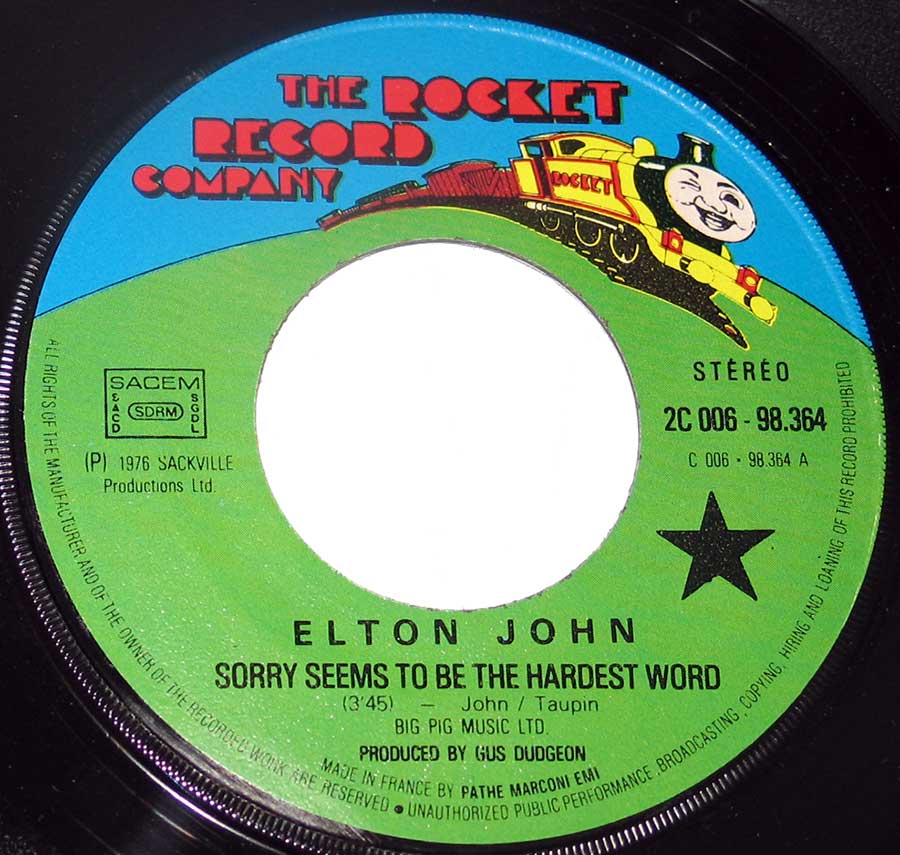
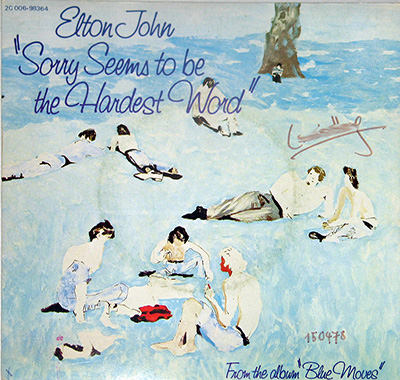
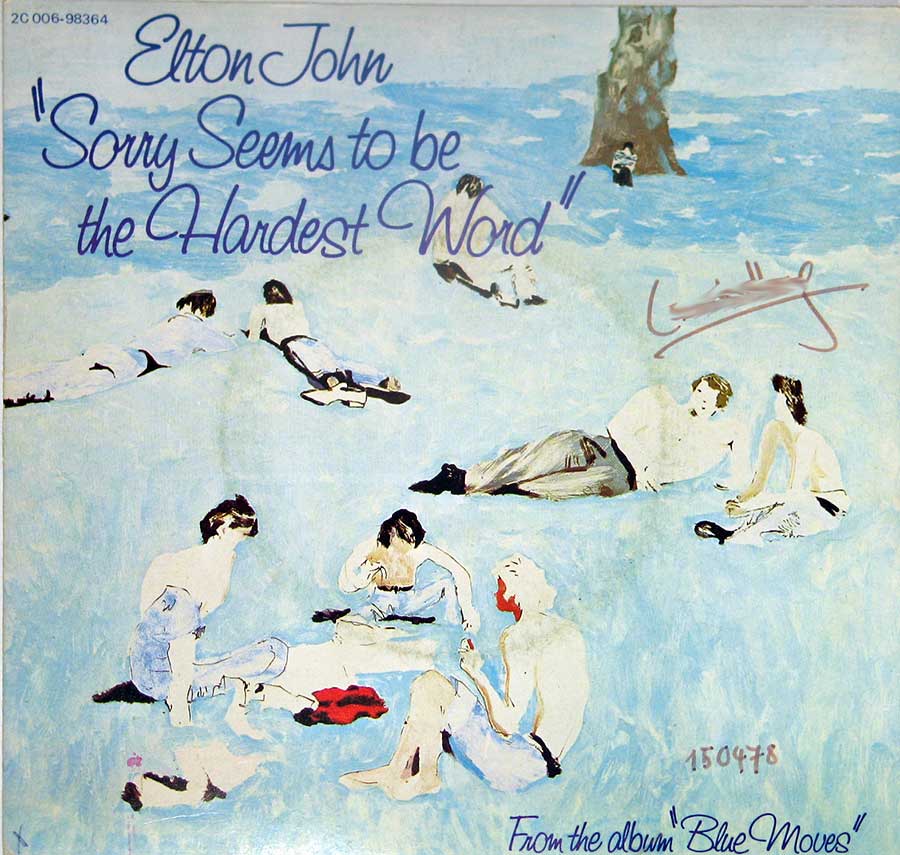
In 1976, Elton drops "Sorry Seems to Be the Hardest Word" into the world like a quiet bruised thing that refuses to shout. Gus Dudgeon produces it (again), and you can hear the control in the way everything sits: the piano is close, the vocal is exposed, and the arrangement never rushes in to rescue him. This page is about the French 7" picture sleeve issue - not the mythology, not the speeches, the actual small square of cardboard you end up holding at the kitchen table.
The 1970s Musical Scene:
People like to describe the 1970s by listing genres, as if music came with a laminated map. What I remember is the contrast: glitter and volume everywhere, and then a song like this shows up and just stares back. In the same decade that celebrated excess, this single does the opposite. It slows down. It lets the awkward silence live in the gaps. That is why it lasted.
Production Insights: Gus Dudgeon's Influence:
Dudgeon had a knack for making Elton sound expensive without sanding the personality off. "Sorry" is a good example: the parts feel placed, not piled. The backing vocals do their job and step aside. The piano leads like it owns the room (because it does). And if you know it comes from the "Blue Moves" era, you can hear that slightly heavy, late-1976 weight in the sound - polished, but not cheerful.
The Single: "Sorry Seems to Be the Hardest Word":
Officially, it lands as a 1976 single from the "Blue Moves" album, written by Elton John and Bernie Taupin and produced by Dudgeon. On many 7" releases, it runs with "Shoulder Holster" on the flip. That pairing always amuses me: one side is a public apology, the other side is a little more sideways, a little more bite. Like he could not resist reminding you he is still Elton, even when he is being tender.
Vinyl Collectors' Delight: 7" Picture Sleeve Vinyl Single:
The 7" picture sleeve is the whole point here. The song is everywhere in reissues and playlists, but the sleeve is the part that gets scuffed, ring-worn, and quietly lost - which is why collectors keep hunting the clean ones. This French issue is not "significant" because it is France. It is significant because it is physical proof: a specific pressing, a specific design, a tiny artifact from 1976 that still turns up in the wild if you keep your eyes open and your standards just high enough to be annoying.