"Live at the Inferno" (1984) Album Description:
Raven's "Live at the Inferno" lands in 1984 like a sweat-soaked receipt from the loud end of the NWOBHM counter: two Gallaghers, Rob "Wacko!" Hunter, a stage full of heat, and no great urge to behave. This is not the tidy, heroic live album with the crowd politely arranged behind the band like hired wallpaper. It feels faster, rougher, more combustible, the kind of Heavy Metal record that keeps nudging the needle into the red and then grins as if the damage was planned all along.
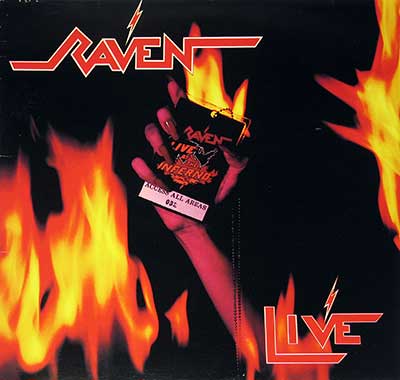
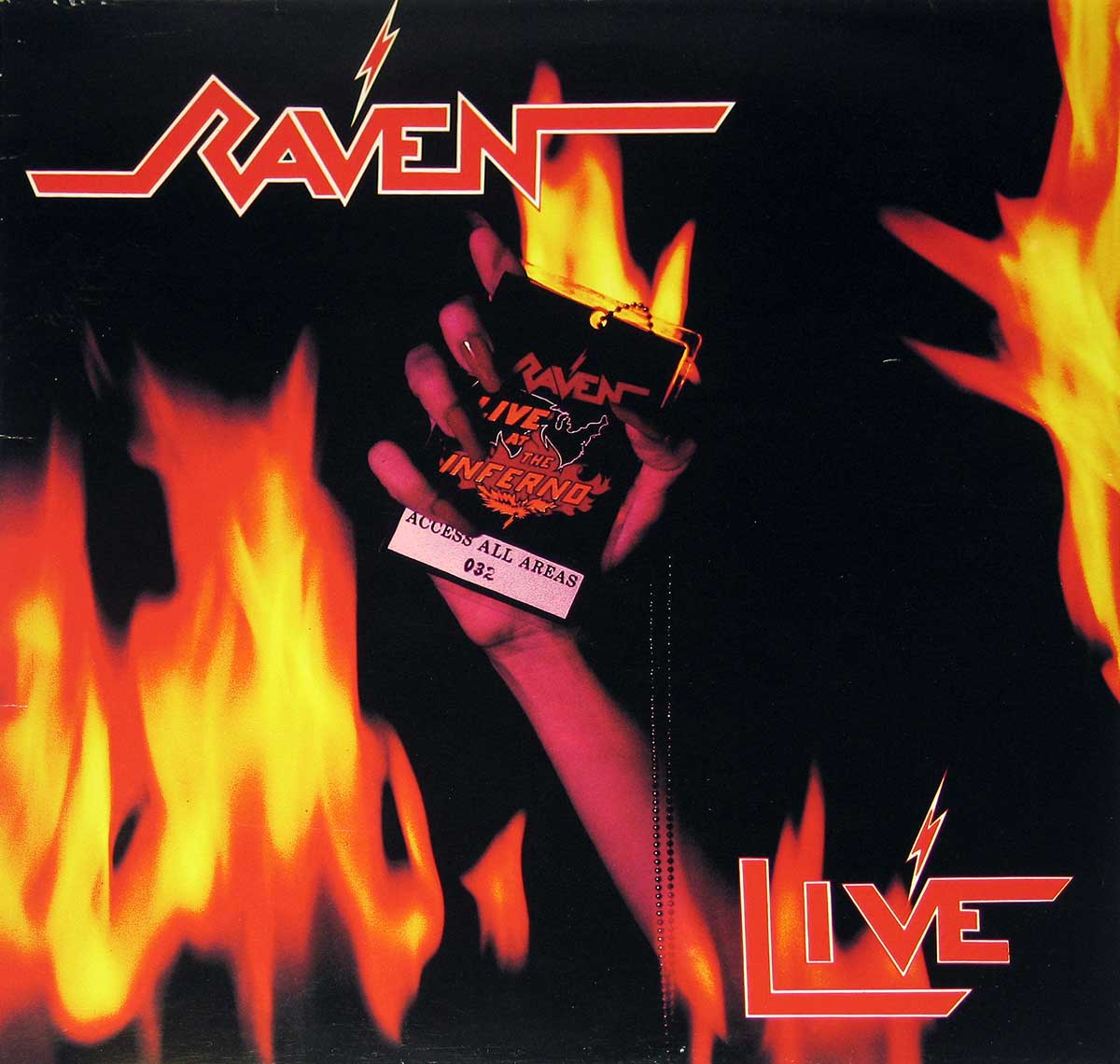
The sleeve already gives the game away: flames, access pass, DEFCON track headings, gatefold photos, thank-you lists, road crew names, and enough small print to keep a collector squinting until the kettle boils dry. But the more interesting story is under the cardboard. Why does this record feel less like a victory lap and more like Raven trying to prove, loudly, that the whole bloody live circuit was theirs for the taking?
By 1984, British metal had already split into several noisy neighbourhoods. Iron Maiden were building the grander machine, Saxon were carrying the road-scarred banner, Girlschool still had that hard street-level snap, Tank dragged everything through diesel fumes, and Venom were busy making the cellar smell of sulphur and bad decisions. Raven sat differently in that mess: less stately, more athletic, more wired. They sounded like a band trying to outrun their own amplifiers.
"Live at the Inferno" catches that early Raven line-up in its most physical form. John Gallagher handles lead vocals and bass like both jobs are part of the same argument, barking over the top while locking the bottom end to the floor. Mark Gallagher's guitar does not glide; it cuts, snaps, and throws sparks. Rob "Wacko!" Hunter drums as if the kit has offended him personally. Lovely nonsense, really, but controlled enough to survive the grooves.
The Sound: Speed, Sweat, and Very Little Politeness
The sound has bite rather than polish. "Take Control" charges with that blunt Raven shove, all elbows and forward motion, while "Mind Over Metal" feels like a metal slogan hurled from a van window at closing time. "Rock Until You Drop" is the obvious fan-bonding piece, but it works because Raven never make it sound decorative. It has the sweaty logic of a room full of believers shouting back before anyone has invented a sensible exit plan.
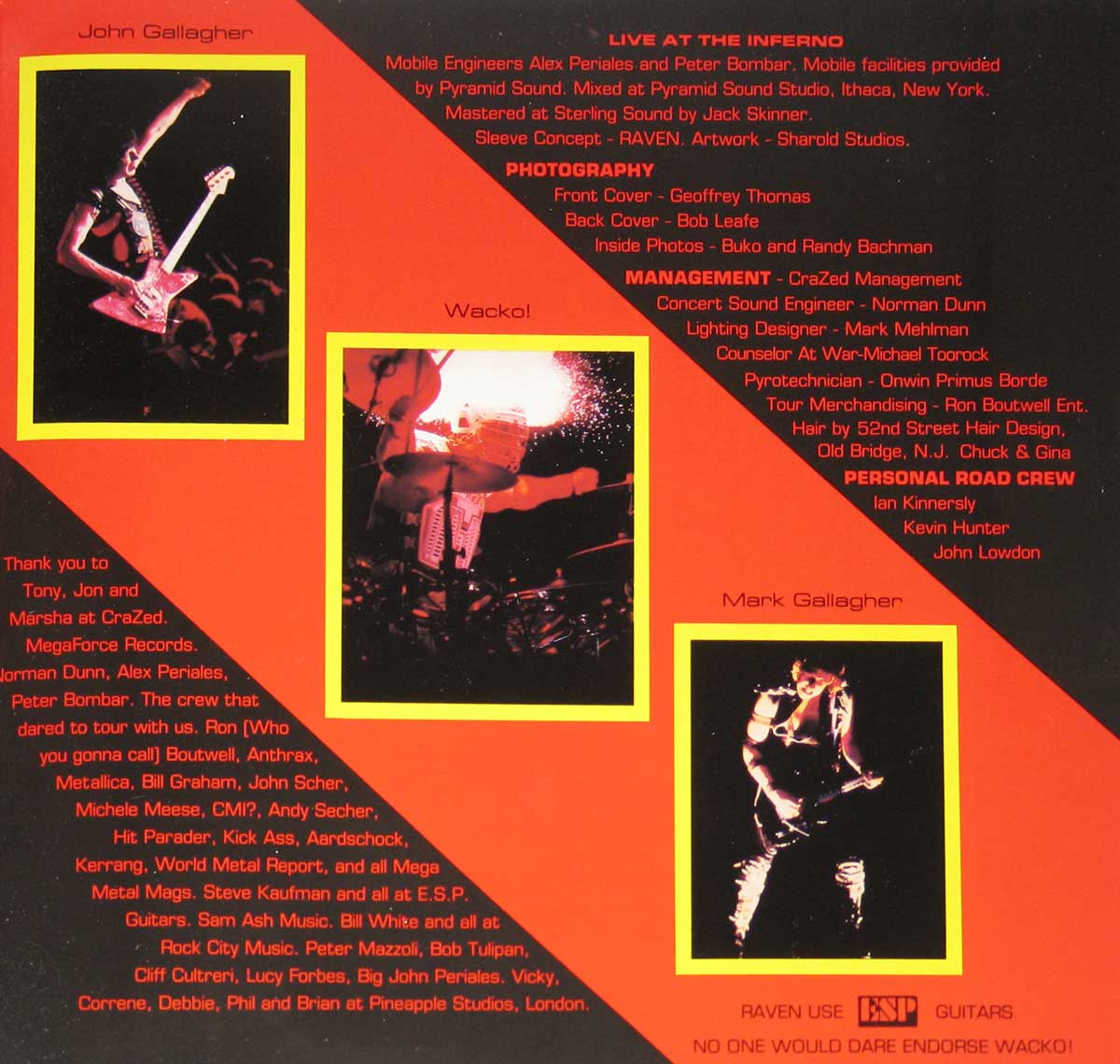
What keeps the album alive is the tension between chaos and craft. A bad live metal recording can become soup in thirty seconds, especially when the bass is racing, the guitar is sawing, and the drummer has clearly rejected moderation as a lifestyle choice. Here the mobile engineering by Alex Perialas and Peter Bombar gives the racket edges. Norman Dunn's concert sound credit matters too, because stage volume without shape is just punishment with lighting.
Pyramid Sound sits behind the recording and mix, and that name makes sense here. The album keeps the East Coast metal bite without scrubbing away the British pub-born nerve. Jack Skinner's mastering at Sterling Sound gives the record enough discipline to sit on vinyl without turning into a pile of hot filings. That is the sort of work nobody notices until it goes wrong, and then everybody suddenly becomes an expert. Funny how that works.
The Sleeve Knows What Kind of Trouble This Is
The cover concept by Raven and artwork by Sharold Studios do not waste time pretending this is subtle cultural material. Flames, black space, a raised access pass, and the red Raven mark: all very direct, all very 1984, all one half-step away from being ridiculous. Good. A Raven live record with tasteful beige restraint would be a crime against both cardboard and common sense.
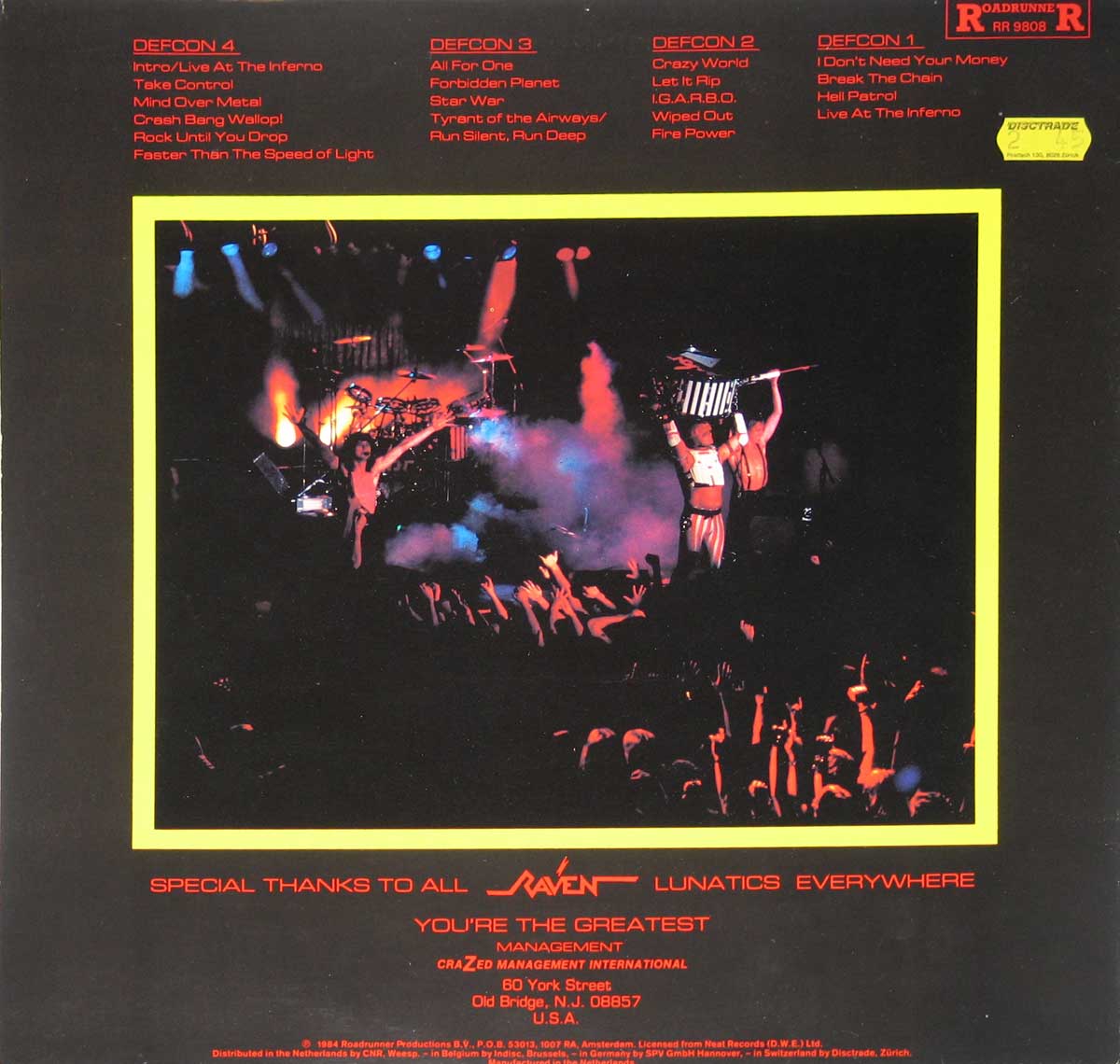
The back cover is better than it first looks. The DEFCON headings turn the track listing into a joke with teeth, and the central live photo gives proof that this was not just studio leftovers with applause glued on like cheap wallpaper. Inside the gatefold, the credits spill across the red-and-black diagonals: Geoffrey Thomas, Bob Leafe, Buko, Randy Bachman, CraZed Management, Mark Mehlman, Michael Toorok, and the road crew. It reads like a campaign report from a travelling circus with amplifiers.
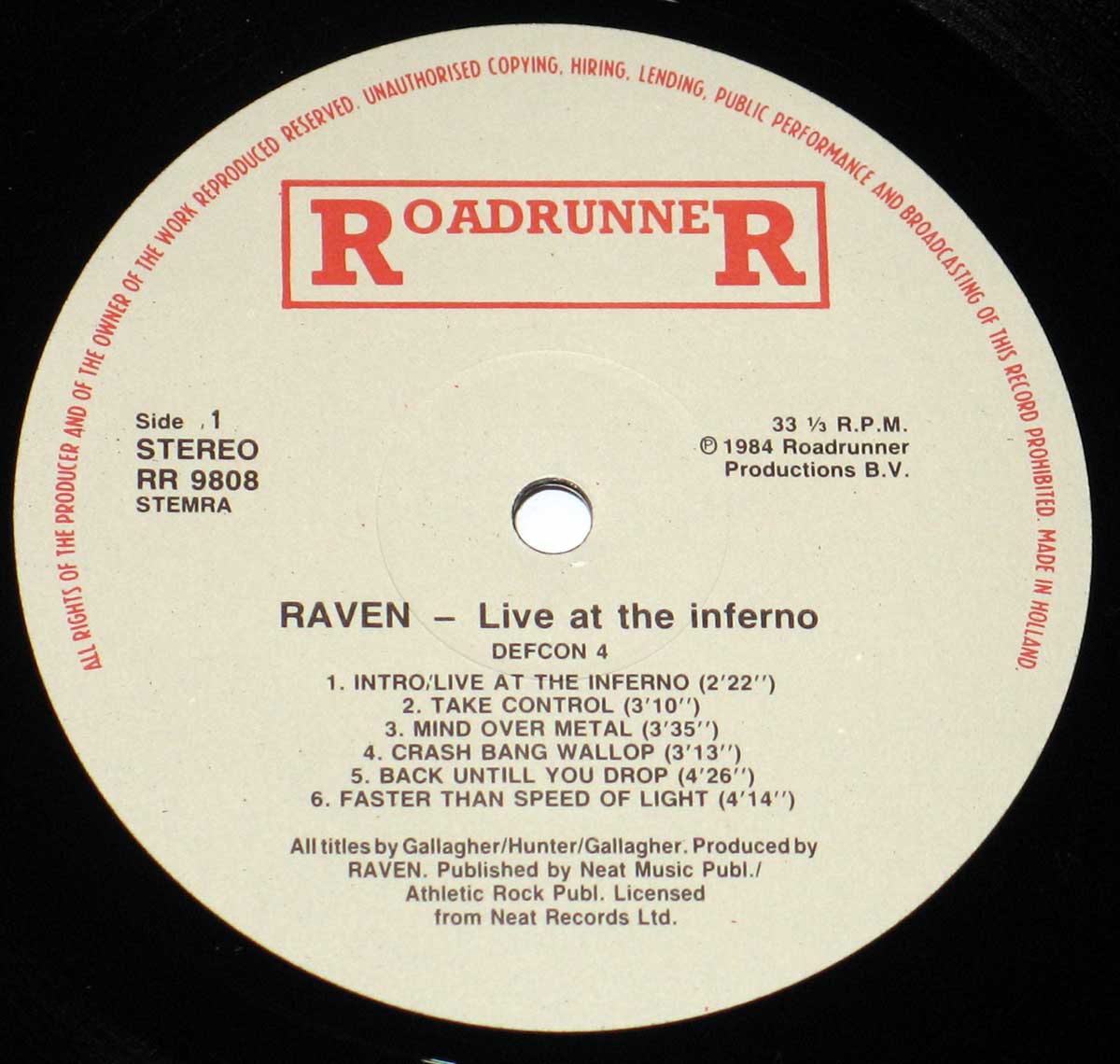
There is a small pleasure in the Dutch RoadrunneR copy too, not because the catalogue number alone makes angels sing, but because the object feels specific. RR 9808, made in Holland, gatefold sleeve, thick paper inner, label close-up: these are the little anchors that stop a record page from floating away into vague fan chatter. Collectors know the difference. Or at least they pretend to until someone points at the wrong label.
Context, Confusion, and the Usual Metal Fog
No great controversy seems attached to this release in the supplied album material, and that is almost refreshing. The usual confusion sits elsewhere: label variations, territory differences, live-album versus compilation assumptions, and the slightly daft belief that a long track list automatically means a padded record. This one does not feel padded. It feels like Raven emptying the ammunition box because carrying anything home would be inefficient.
Historically, the album sits at a hinge point. NWOBHM had stopped being just a local surge and was feeding faster American metal, club circuits, import bins, tape traders, and ambitious labels looking for the next thing with claws. Raven were part of that movement's restless middle: too frantic for old hard rock comfort, too cheeky and raw to sound like polished arena metal, and just close enough to speed metal that younger bands could smell blood in the water.
Late at night, this is the sort of record that makes more sense with the sleeve open beside the turntable and a mug going cold somewhere too close to the amplifier. The gatefold photos stare back, the RoadrunneR label turns, and the whole thing feels less like nostalgia than evidence.
Preference declared: the roughness is the point. Smooth Raven is not what anyone sensible came here for. "Live at the Inferno" works because it keeps the band's athletic madness intact, from John's urgent vocal attack to Mark's sharp guitar violence and Rob's percussive demolition work. A few edges stick out. They should. Sand them down and the album loses its grin.
So yes, this is a live NWOBHM record, a Heavy Metal document, a RoadrunneR collector piece, and a rather loud warning about trusting bands with pyrotechnic imagination. But mostly it is Raven caught mid-charge, before the mythology became too tidy and before anyone could frame the whole thing as respectable history. Respectable history can wait. This one still smells faintly of smoke.