"All For One" (1983) Album Description:
Raven’s "All For One" comes out of 1983 like a boot through a rehearsal-room door: British, sweaty, stubborn, and not remotely interested in behaving itself. The genre tag here says Teutonic Controlled NWOBHM, which sounds absurd until the needle drops and the trick becomes obvious. Raven still charge like Newcastle street-metal lunatics, but the album has a German grip around the throat, keeping the racket sharp enough to draw blood instead of turning into a lovable bucket of noise.
The tasty part hides behind the production credits. Michael Wagener and Udo Dirkschneider appear under the Double Trouble banner, and that little detail changes how this record should be heard. Not as a polite upgrade. Not as a tidy studio correction. More like two German metal operators standing beside Raven’s runaway machine, tightening the bolts, then wisely moving away before Rob Hunter starts hitting things.
Britain in 1983 was already moving fast, and the NWOBHM crowd had started splitting into tribes. Iron Maiden were building bigger stage machinery and grander drama, Saxon were chasing broader hard-rock muscle, Venom were making ugly noise sound like scripture, Diamond Head still had that clever, doomed elegance, and Motörhead kept proving that speed, dirt, and bad manners were perfectly respectable career tools. Raven sat somewhere else: less majestic, less evil, more physical. They sounded like a heavy metal band who thought sport, volume, and minor injury were all part of the same evening.
The album’s attack is not graceful, and that is half the pleasure. John Gallagher’s bass does not simply sit underneath the songs; it grinds through them, thick and metallic, like loose machinery refusing retirement. Mark Gallagher’s guitar throws hard sparks rather than pretty flames, while Rob Hunter drums with that elbows-out impatience that makes "Athletic Rock" feel less like a slogan and more like a warning label. Subtle? No. Thank God.
The line-up matters because Raven worked best as a three-man pressure system. John Gallagher had the voice and low-end shove, Mark Gallagher supplied the riff damage and electrical bite, and Rob Hunter gave the whole thing its reckless forward motion. Raven had formed back in 1974, so by "All For One" they were not beginners thrashing around for attention. They had already learned how to turn their limitations into character, which is more useful than talent when the amps are hot and the money is probably terrible.
Wagener’s hand can be felt in the way the album holds together. He does not sand Raven smooth; he gives them edges that can be followed. The guitars stay readable, the bass keeps its iron clank, and the drums punch rather than blur. That is the Teutonic control in the thing: not coldness, but focus. Plenty of British records from this period have charm because they sound half-broken. This one has charm because it sounds half-broken on purpose.
Dirkschneider brings a different weight. His Accept background hangs around the album like a steel door: hard phrasing, blunt chorus force, no patience for decorative nonsense. The result does not turn Raven into a German band, which would have been a dreadful little crime against nature. Instead, it gives songs like "Take Control", "Mind Over Metal", and "All For One" a firmer jaw. The madness stays British; the discipline has a German accent.
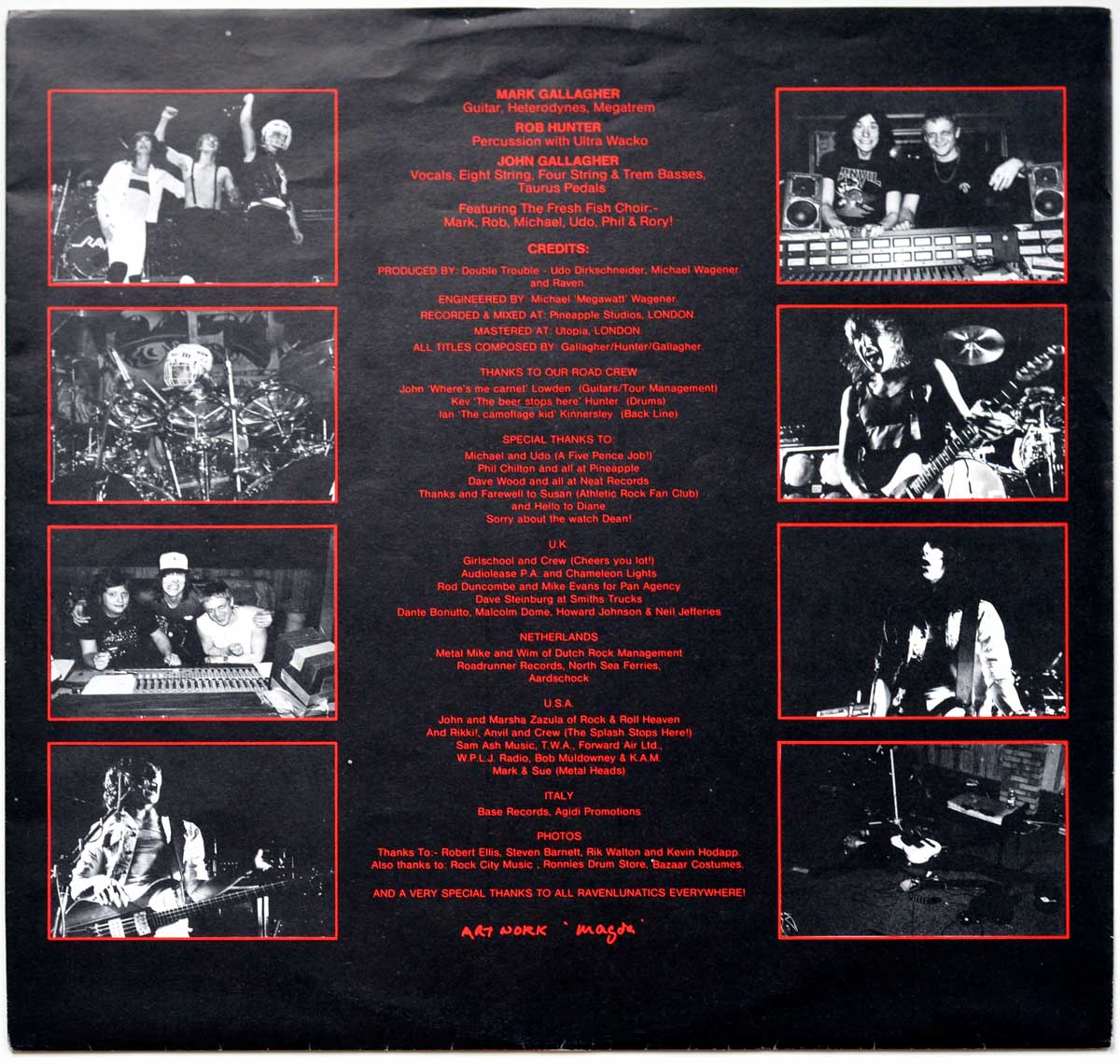
The record was recorded and mixed at Pineapple Studios in London, then mastered at Utopia Studios, also in London. That London studio setting matters because the album does not sound like a fantasy battlefield, despite the sabres on the sleeve. It sounds boxed-in, hot, and practical: amps in a room, drums under pressure, voices shouted into shape. A metal record should sometimes smell faintly of cables and bad coffee.
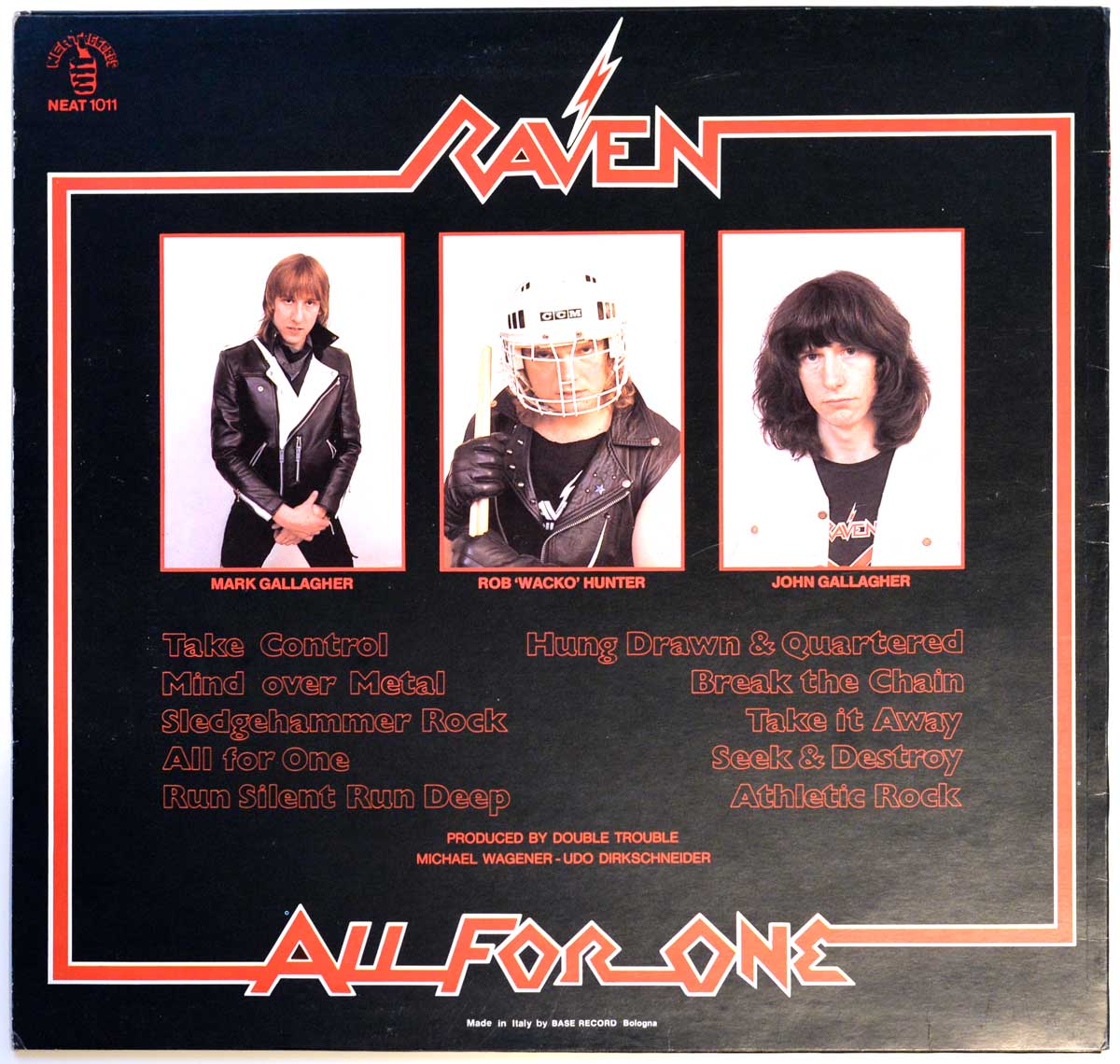
There is no major controversy clinging to "All For One", despite the weapons, the shouting, and Rob Hunter looking on the back cover as if the ice hockey shop had been raided for strategic purposes. The lazier misunderstanding is calling it just another NWOBHM album. That misses the fun. Raven were not chasing elegance; they were chasing impact. Where some bands wanted mythology, Raven wanted movement. Preferably at unsafe speed.
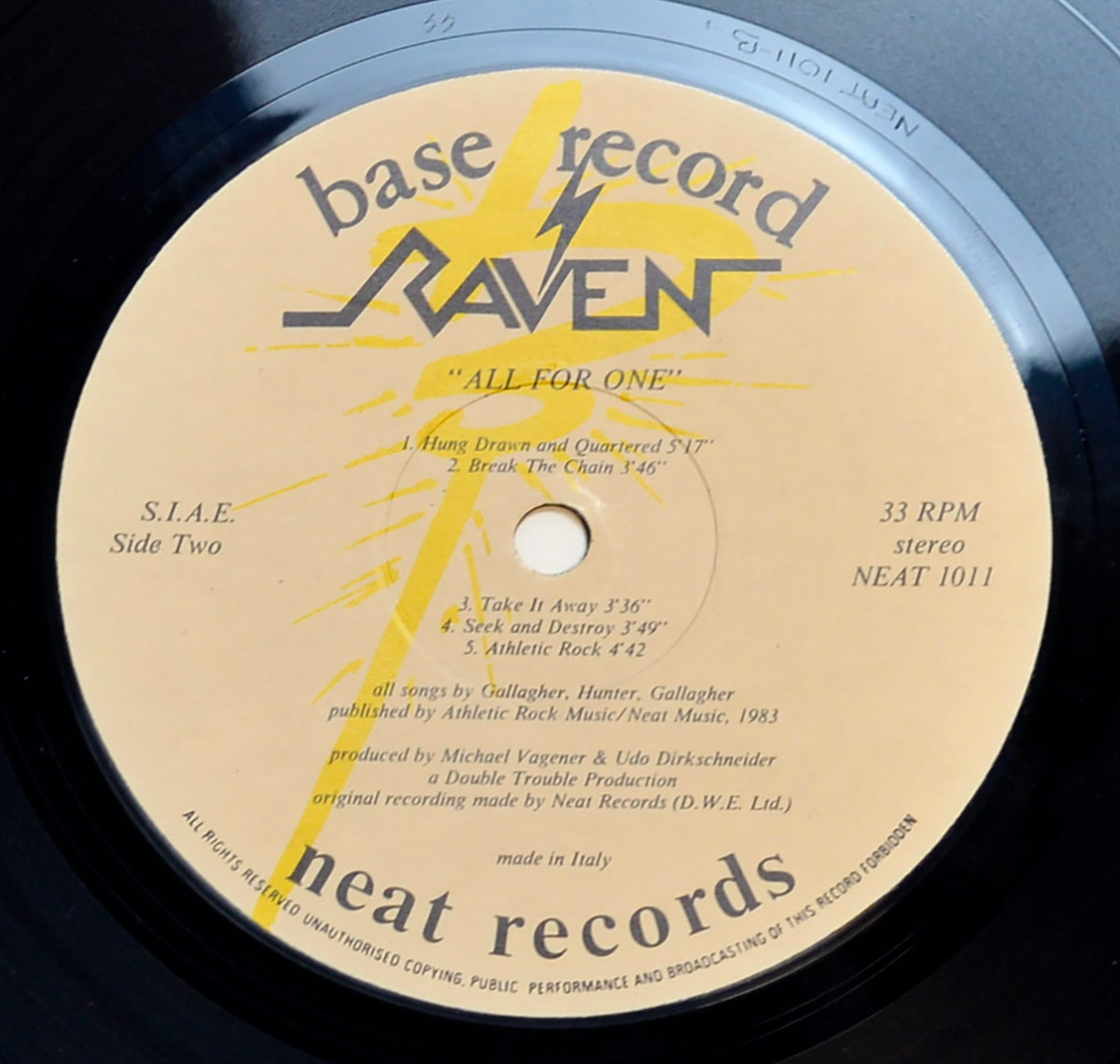
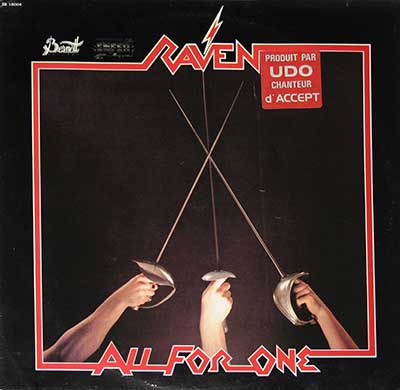
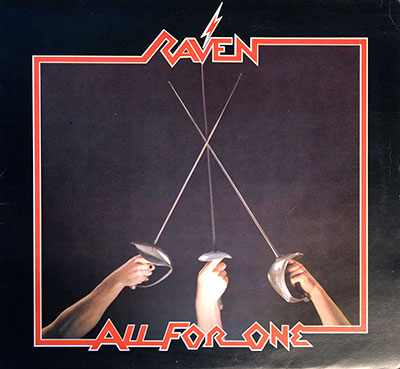
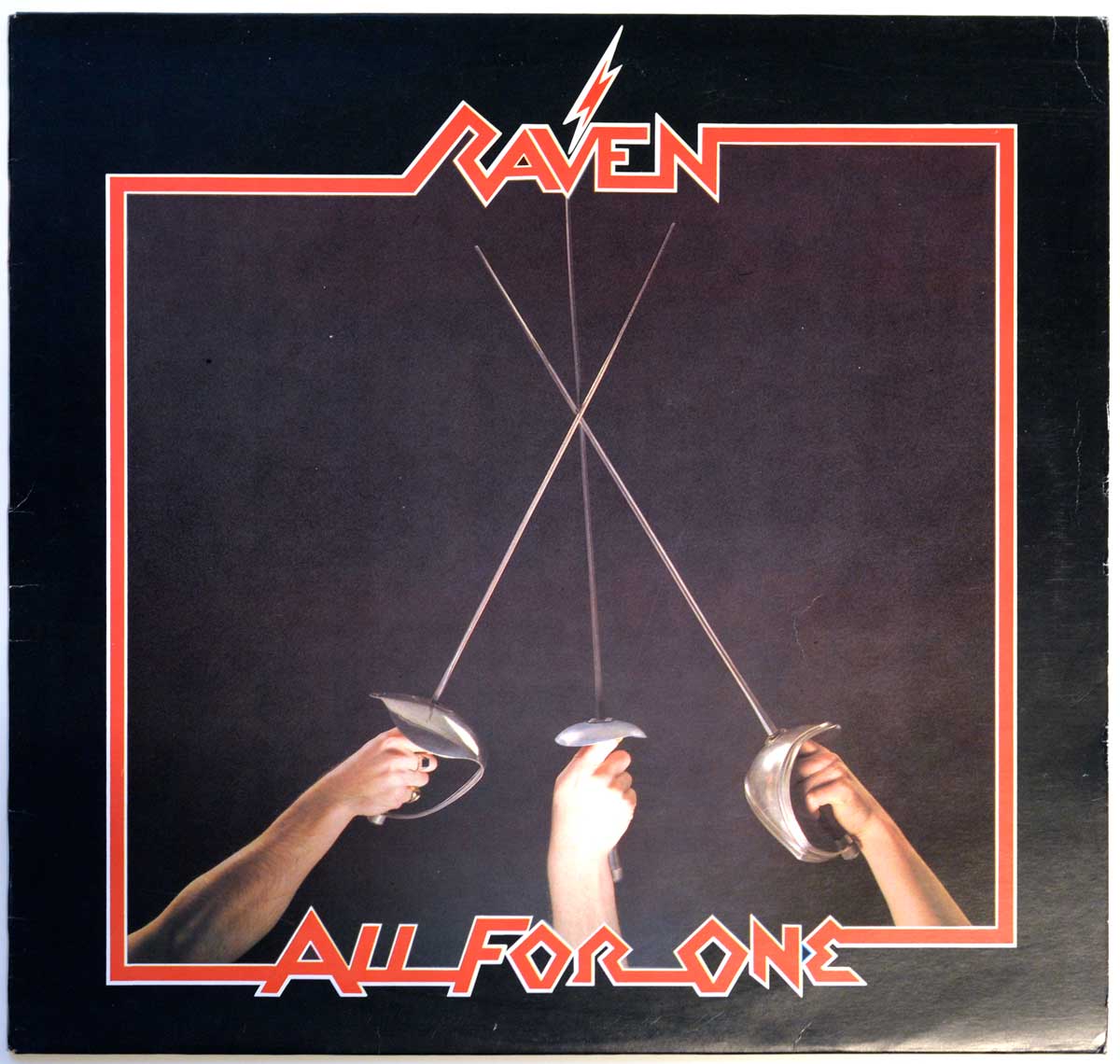
The sleeve helps the argument. Three raised arms, three crossed sabres, black space, red framing, and the Raven logo with that lightning slash: it is almost stupidly direct, which is exactly why it works. The Italian Base/Neat pressing adds a neat collector twitch with its local label character and NEAT 1011 markings, but the record itself is still the main event. Paperwork is nice. Volume is better.
Late at night, this is the kind of album that makes the room feel slightly smaller. The bass fills the corners, the guitar scratches at the walls, and the drums keep making sensible furniture seem nervous.
Personal bias, then: "All For One" is not Raven’s most refined statement, and refinement can go stand outside with the smokers. The charm is in the shove, the comic-book bravado, the roughness that survives the German tightening. It is NWOBHM with its shirt stuck to its back, its boots on the monitor, and just enough Teutonic control to stop the whole circus crashing into the PA. Nearly.
References
- Vinyl Records and Album Cover Gallery: Raven - All For One Italian Base/Neat LP page with album photos and page context
- Encyclopaedia Metallum: Raven - All for One album details, personnel, recording and mastering notes
- Discogs: Raven - All For One master release and pressing overview
- Wikipedia: All for One by Raven, release context and production credits