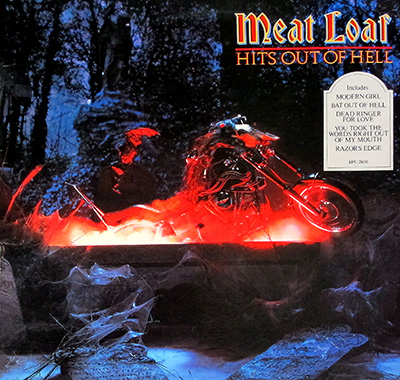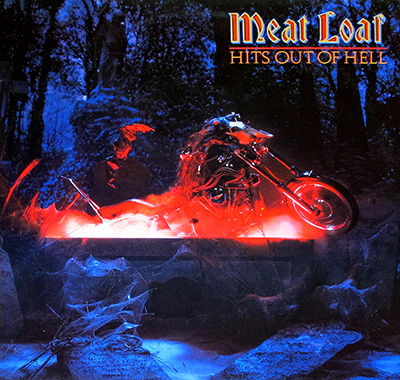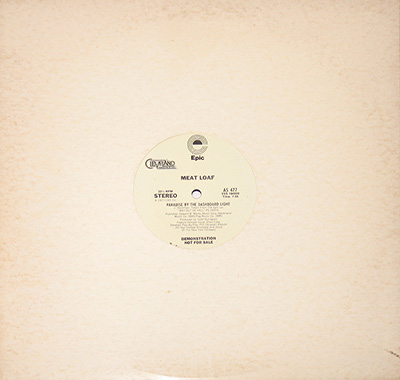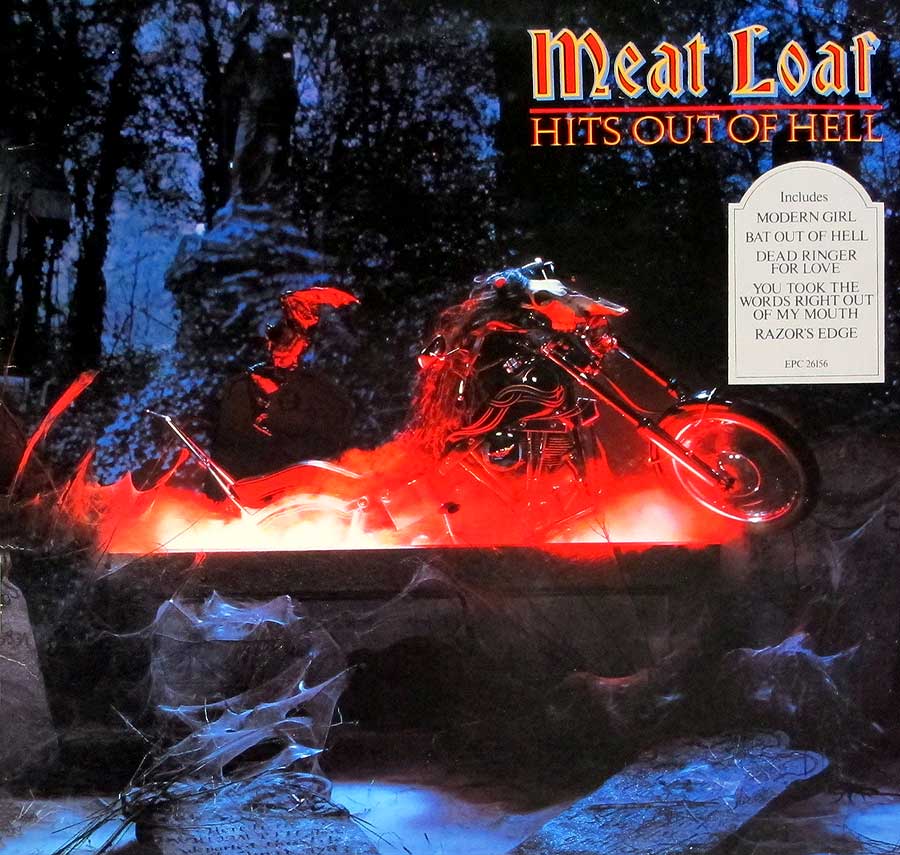
"Hits Out of Hell" (1984) Album Description:
"Hits Out of Hell" is the kind of compilation that doesn’t politely introduce itself. It kicks the door, drags a spotlight across the carpet, and dares you to pretend you’re too tasteful for this much melodrama. The needle drops and suddenly you’re back in a world where engines howl, hearts crack, and a chorus can feel like it’s trying to lift the roof off your house.
Here’s the fun part: it isn’t a neat “best-of” bow-tied for collectors and accountants. It’s a stitched-together creature from different years, different sessions, and different moods, and you can hear the seams if you lean in. Click “Read more” and I’ll point out where it snarls, where it struts, and where it accidentally tells the truth.
What this record actually is (and why that matters)
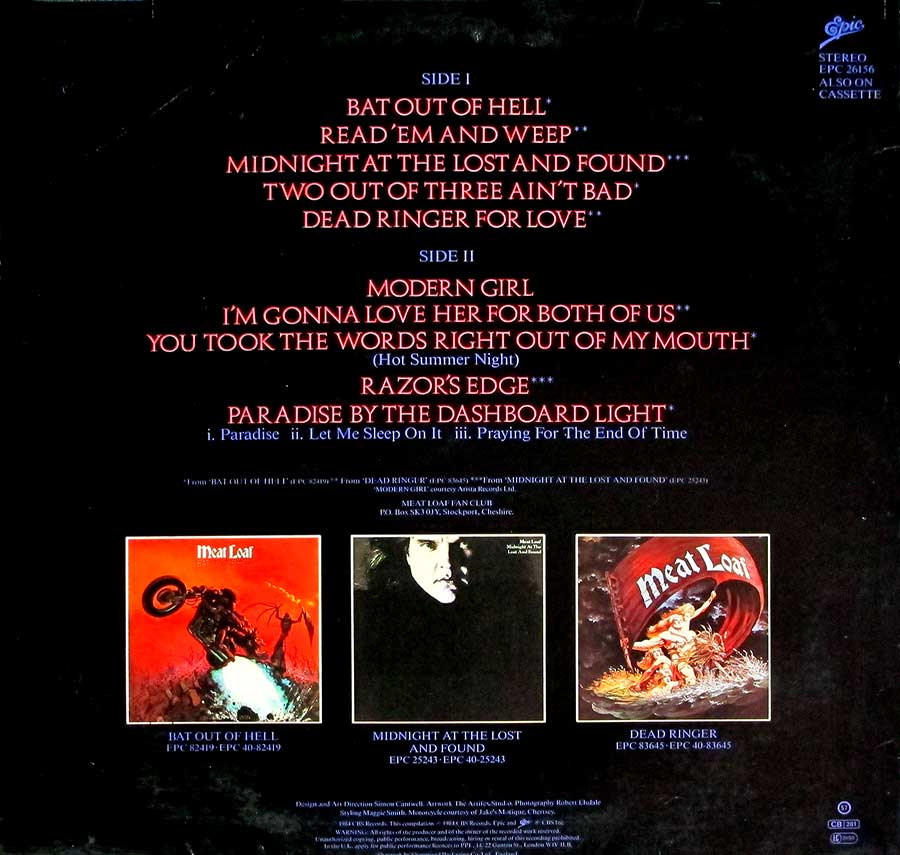
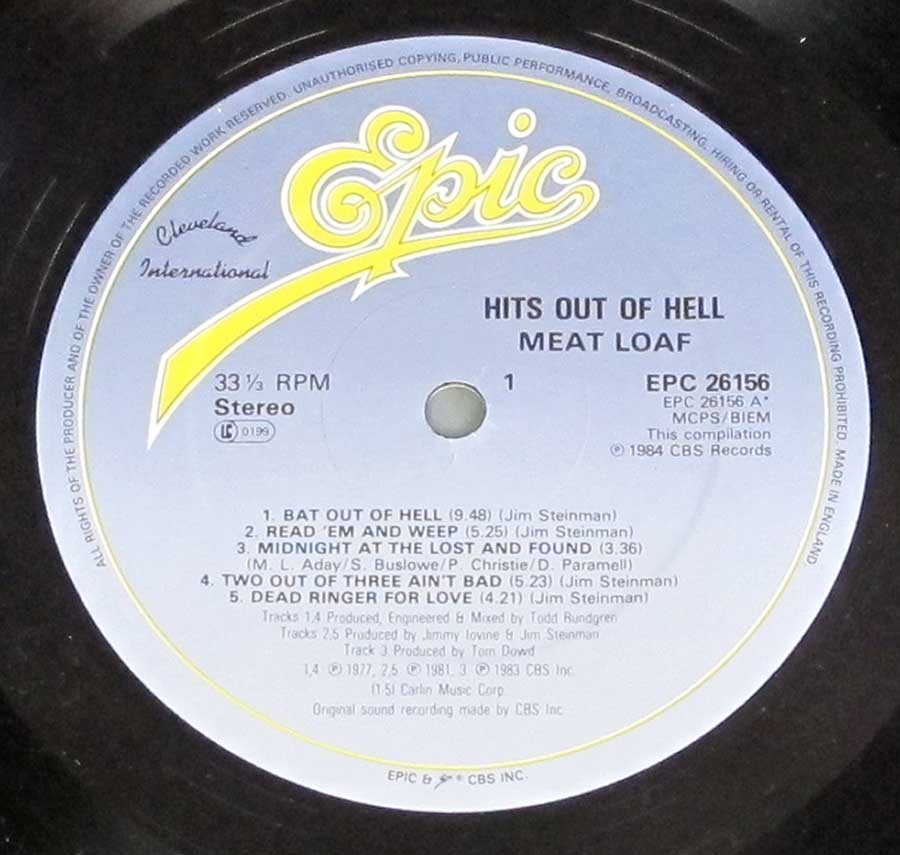
The UK Epic/Cleveland LP (catalogue EPC 26156) plays like a highlights reel with bruises on it: Side One is all ignition and big lungs, Side Two throws in pop-sleek temptation and then dares you to survive eight minutes of teenage mythmaking. It’s “American Rock-Pop” on paper, sure, but the real genre is: theatrical arena rock with a Broadway grin and a biker’s temper.
The track list on your page tells the truth out loud: yes, you get the Steinman thunder (“Bat Out of Hell,” “Two Out of Three Ain’t Bad,” “Paradise by the Dashboard Light”). But you also get songs that aren’t Steinman at all (“Midnight at the Lost and Found,” “Modern Girl,” “Razor’s Edge”). That’s not a flaw. That’s the point. It’s a portrait of the whole messy machine, not just the most famous exhaust pipe.
1984 Britain: glossy pop, hard times, and a hunger for big drama
In the UK around 1984, the charts were packed with polish and pulse, and the street-level mood wasn’t exactly sunshine. The scene behaved like it always does when the weather turns: people wanted something louder, brighter, bigger than the day they’d just had. So a record like this makes perfect sense. It’s comfort food that screams back.
By early 1985, you could literally see how well that appetite worked: "Hits Out of Hell" is sitting at No. 2 on the UK album chart (3 February 1985), wedged under Foreigner’s "Agent Provocateur." The country is buying synth sheen and stadium muscle in the same breath. No purity tests at the counter.
Peers in the same air (quick contrasts, no sermon)
- Foreigner were selling sleek force; Meat Loaf sells theatrical force with sweat on it.
- Bruce Springsteen was doing widescreen America; Meat Loaf does widescreen teenage apocalypse.
- Queen could turn camp into power; Meat Loaf turns power into camp and then dares you to laugh.
- Def Leppard had the clean, sharp shine; Meat Loaf has the messy, human roar.
- Iron Maiden brought gallop and steel; Meat Loaf brings melodrama and gasoline.
Sound: engines, velvet, and a fistful of Broadway
When this album works, it works like physics. The drums push forward, the guitars don’t just “play” so much as lean into the beat, and then the vocals arrive like a spotlight that refuses to dim. There’s a constant tug-of-war between tenderness and theatrics, like someone’s trying to whisper in a hurricane.
The best moments have that “rev it and pray” tension: you can feel the tempo breathe, feel the pauses do damage, feel the choruses swell like they’ve been dared to knock down a wall. It’s not subtle. That’s the deal. Subtlety can take the bus.
Key people (hands on the wheel, not just names on paper)
Meat Loaf isn’t “a great singer” in the polite sense. He’s an actor with lungs who treats a lyric like it owes him money. He sells desperation the way other people sell charm.
Jim Steinman writes like he’s scoring a teenage movie that keeps catching fire. The phrases are huge, the stakes are ridiculous, and somehow the ridiculous part is what makes it feel real.
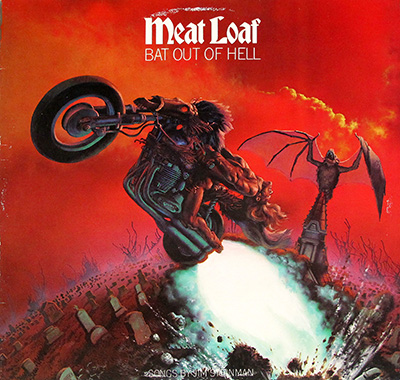
Todd Rundgren is the guy who helped the original "Bat Out of Hell" material land like a real record instead of a theatre demo with delusions. You can hear that discipline in the way the big songs keep their shape while everything inside them is trying to explode.
Cher shows up on "Dead Ringer for Love" like she’s amused and armed. It’s a duet that doesn’t flirt so much as spar.
Needle-drop moments (the ones that grab your shirt)
- "Bat Out of Hell" — the opening blast that sounds like a motorcycle trying to outrun its own prophecy.
- "Two Out of Three Ain't Bad" — the slow burn that proves he can stand still and still be dramatic.
- "Dead Ringer for Love" — all elbows and cheekbones, with Cher turning the whole thing into a street fight with lipstick.
- "Modern Girl" — pop-smart and a little cynical, like the 80s tapping you on the shoulder mid-opera.
- "Paradise by the Dashboard Light" — eight minutes of teenage mythology, sweat, panic, and comedy that somehow lands like truth.
Controversy? Not really. Misconceptions? Plenty.
There’s no scandal hanging off this release like a torn sleeve. The real drama is quieter: Meat Loaf himself didn’t love having compilations shoved out without his say, and this album’s very existence smells like label strategy as much as artistic intent.
The big misconception is that this is simply “the Bat Out of Hell greatest hits.” It isn’t. It’s a mixed-era snapshot, and the non-Steinman cuts matter because they show what happens when you step out of the cathedral and back into the street. The lights change. The voice stays.
One quiet personal anchor
I picture this record in a late-night pile: cheap headphones, one lamp on, rain tapping the window, Side Two waiting like a dare. You don’t play "Paradise" to relax. You play it to feel something move.
When the last notes fade, you’re not “educated” about Meat Loaf. You’re just awake. Slightly irritated. Slightly grateful. And suspicious that you’ll flip the record again anyway.
References
- Vinyl-Records.nl — "Hits Out of Hell" (UK) high-resolution album cover photos + track listing
- RareVinyl — UK Epic EPC 26156 listing (year/cat no.)
- Wikipedia — "Hits Out of Hell" (release details + tracklist variants)
- Official Charts — UK Albums Chart (3 February 1985 snapshot)
- Wikipedia — "Bat Out of Hell" (production context incl. Todd Rundgren)