- Limited Edition 5000 copies only
“Programme Love” has always hit me like a spark off frayed wiring — bright, stubborn, and absolutely refusing to behave. Every time I pull this 7-inch out of its picture sleeve, I’m reminded how The Outcasts captured something Belfast wasn’t giving many people at the time: a reason to shout back. This little EP doesn’t just play; it bristles.
“Programme Love” has always hit me like a spark off frayed wiring — bright, stubborn, and absolutely refusing to behave. Every time I pull this 7-inch out of its picture sleeve, I’m reminded how The Outcasts captured something Belfast wasn’t giving many people at the time: **a reason to shout back**. This little EP doesn’t just spin; it *bristles*.
Early-80s Northern Ireland wasn’t exactly known for breezy optimism. The streets felt tense, the nights felt long, and music — especially punk — became the pressure valve. In 1981, while polished new wave was creeping into the charts, Belfast’s punk scene stayed gloriously stubborn. **No gloss, no filter, no apology.**
The Outcasts had been grinding for years: lineup reshuffles, label limbo, gigs that probably smelled like spilled beer and short tempers. By the time they walked into Downtown Studios in July ’82, they weren’t chasing perfection. They were chasing **truth**, in the only language they had — fast riffs, bruised vocals, and a rhythm section that felt like it was dragging the gear uphill.
What pulls me in is how the record attacks from the first second. “Programme Love” swings with that slightly unhinged swagger only a Belfast punk band can get away with. “Beating and Screaming” parts I and II feel like chapters of the same fight — the kind where nobody walks away looking heroic, but **everyone feels alive**. And “Mania”? It’s the grin you give right before diving into chaos.
You can stack this EP next to The Exploited or Stiff Little Fingers and instantly hear its difference. It’s rougher than the trendy new-wave hybrids, but more melodic than the hardcore bruisers. The Outcasts weren’t trying to reinvent punk; they were trying to **hold onto themselves** in a scene splitting at the seams.
No riots, no bonfires, no pearl-clutching newspaper columns. Just the predictable muttering from critics who wanted punk to “grow up” — as if that was ever the point. Fans got it instantly: this was **real**, and real doesn’t ask for permission.
Listening closely, you can almost hear the push-and-pull inside the band. The Cowan brothers bouncing between unity and friction, Getty carving bright slashes of guitar across the chaos, two drummers bringing their own kind of artillery. It’s messy, human, and exactly the sort of tension that makes punk worth collecting.
At release, it didn’t top charts or start revolutions — but it *did* capture the beating heart of a band refusing to fade. Today, collectors like me cling to this EP because it feels untouched by time. Each spin whips up that familiar mixture of smoke, sweat, and teenage stubbornness. **It’s punk preserved like a fossil — sharp edges intact.**
Irish Punk, British Punk, 80s Early New Wave
Irish Punk, British Punk, and early 80s New Wave collide into a raw, street-level sound shaped by sharp guitars, DIY energy, and a restless youth culture. The genre carries the grit of late-70s punk rebellion but leans into melodic edges and emerging post-punk textures, echoing both local angst and a shifting underground scene.
Outcasts Only Records 00001 , Cherry Red Music / Grafotone
7" Picture sleeve.
Record Format: 7" EP Vinyl Stereo Gramophone Record
1981 – UK
Disclaimer: Track durations shown are approximate and may vary slightly between different country editions or reissues. Variations can result from alternate masterings, pressing plant differences, or regional production adjustments.
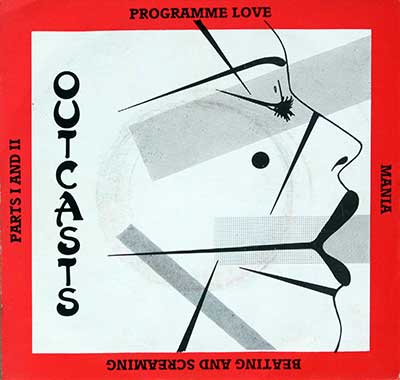
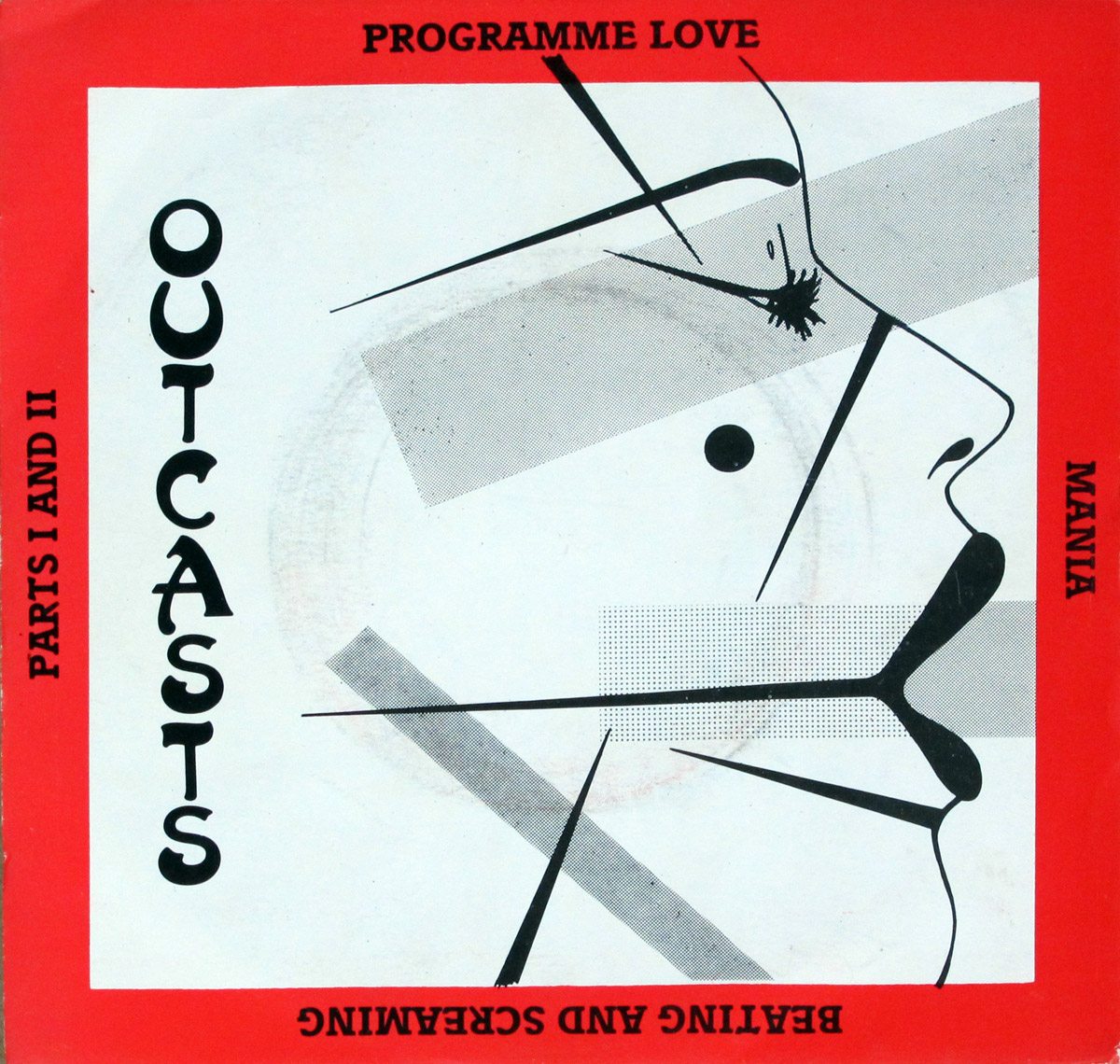
The sleeve features a bold red border framing a stark black-and-white illustration of a woman’s face in profile, drawn with razor-thin lines and geometric shading. The artwork leans heavily on that Nagel-like 80s aesthetic: sharp contours, high contrast, and a cold, stylized expression that stands out sharply against the flat white background.
The band name OUTCASTS is printed vertically along the left side in chunky, uneven punk-era lettering, while the track titles wrap around the edges in black: Programme Love at the top, Parts I and II on the left, Mania on the right, and Beating and Screaming at the bottom. Each label is positioned to frame the illustration without cluttering it.
The overall layout looks clean but intentionally rough around the edges, typical for early-80s UK punk sleeves—minimal color printing, high-contrast design, and typography that feels slightly off-balance on purpose. The sleeve shows faint surface wear and light handling marks, the usual cosmetic signs you expect from an original copy circulating for decades.
From a collector’s point of view, the combination of the red surround, the Nagel-style graphic, and the track titles arranged on all four edges makes this pressing instantly recognizable. No barcode, no glossy finish—just a raw, direct punk-era sleeve that tells you exactly when and where it came from.
When I first yanked this record from the Punk section, I was fully braced for the usual punk filth — something offensive enough to get me dirty looks on the way to the counter. But no, fate had jokes. Instead of chaos and controversy, I’m greeted by a Patrick Nagel–styled illustration that looks more at home on an 80s hair-spray advert.
It’s the kind of sleeve that makes you double-check you didn’t wander into the New Wave bin by accident. Stylish? Sure. Punk? Only if you squint hard enough and pretend Nagel was secretly into Belfast street fights. Still, the mismatch gives this EP its own weird charm — like finding a switchblade in a gift box from a fashion boutique.
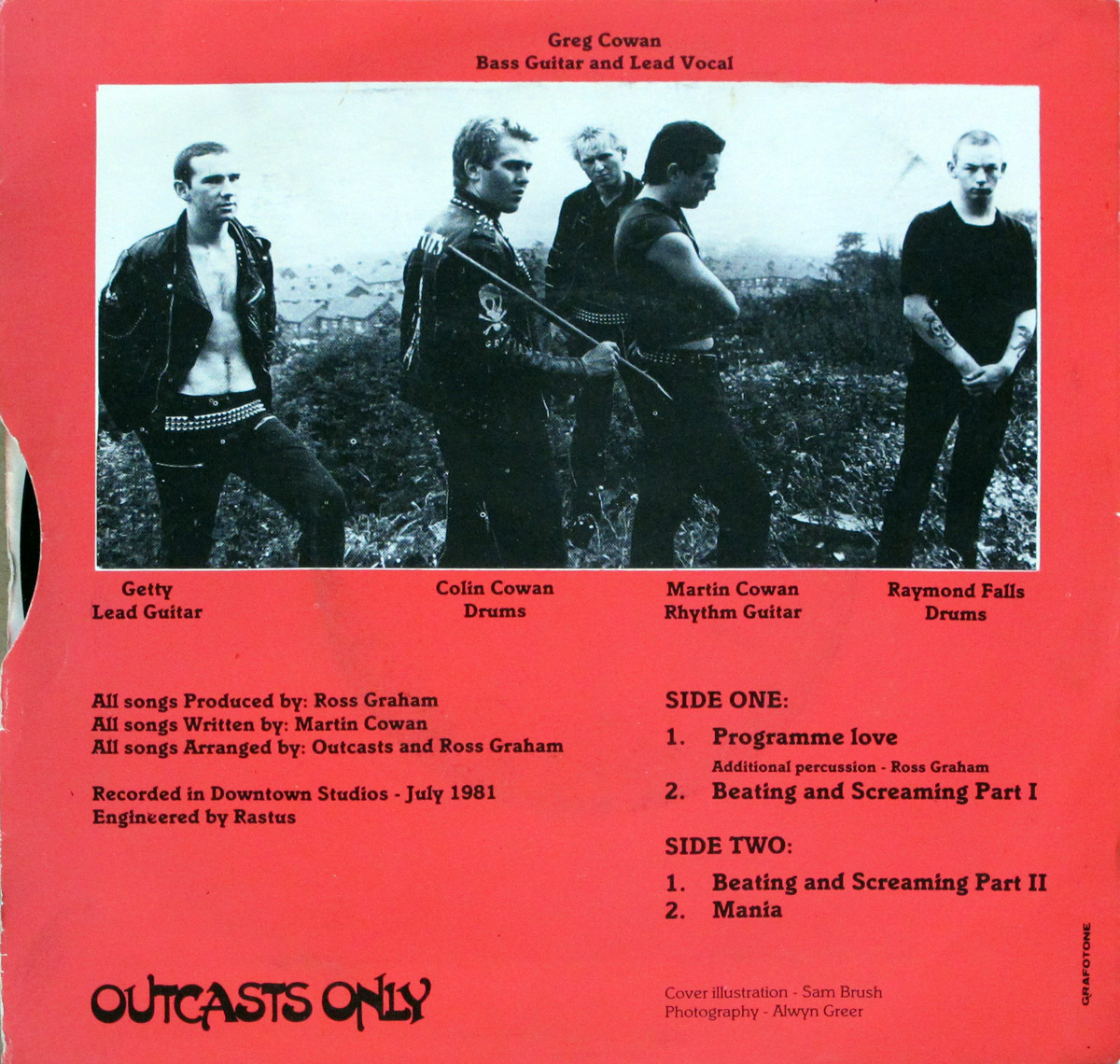
The back cover uses a solid red background framing a wide black-and-white band photo placed near the top. The image shows all five Outcasts members standing outdoors on uneven ground, likely a hillside overlooking houses in the distance. Their posture is tense, typical for early punk imagery: leather jackets, studs, exposed torsos, and a rough attitude that reads instantly from the grainy photograph.
Each member is identified directly beneath the photo in clean black text: Greg Cowan centered at the top, with Getty, Colin Cowan, Martin Cowan, and Raymond Falls aligned underneath from left to right. The credits sit in a straight horizontal row, making it easy to connect faces with names. The text is crisp and spaced evenly, matching the functional, no-frills layout common for small UK punk labels at the time.
Production details follow below, listing Ross Graham as producer and Rastus as engineer, with recording noted at Downtown Studios in July 1981. The tracklisting is printed on the right side in two columns for Side One and Side Two. The titles are set in black serif type, with an additional note crediting Ross Graham for extra percussion on “Programme Love.”
The bottom edge includes the Outcasts Only logo in its familiar hand-drawn style, and small-print credits for cover illustration by Sam Brush and photography by Alwyn Greer. A subtle “GRAPHTONE” marking sits vertically on the right border. Light edge wear and faint surface marks are visible, consistent with an original early-80s sleeve handled and stored over decades.
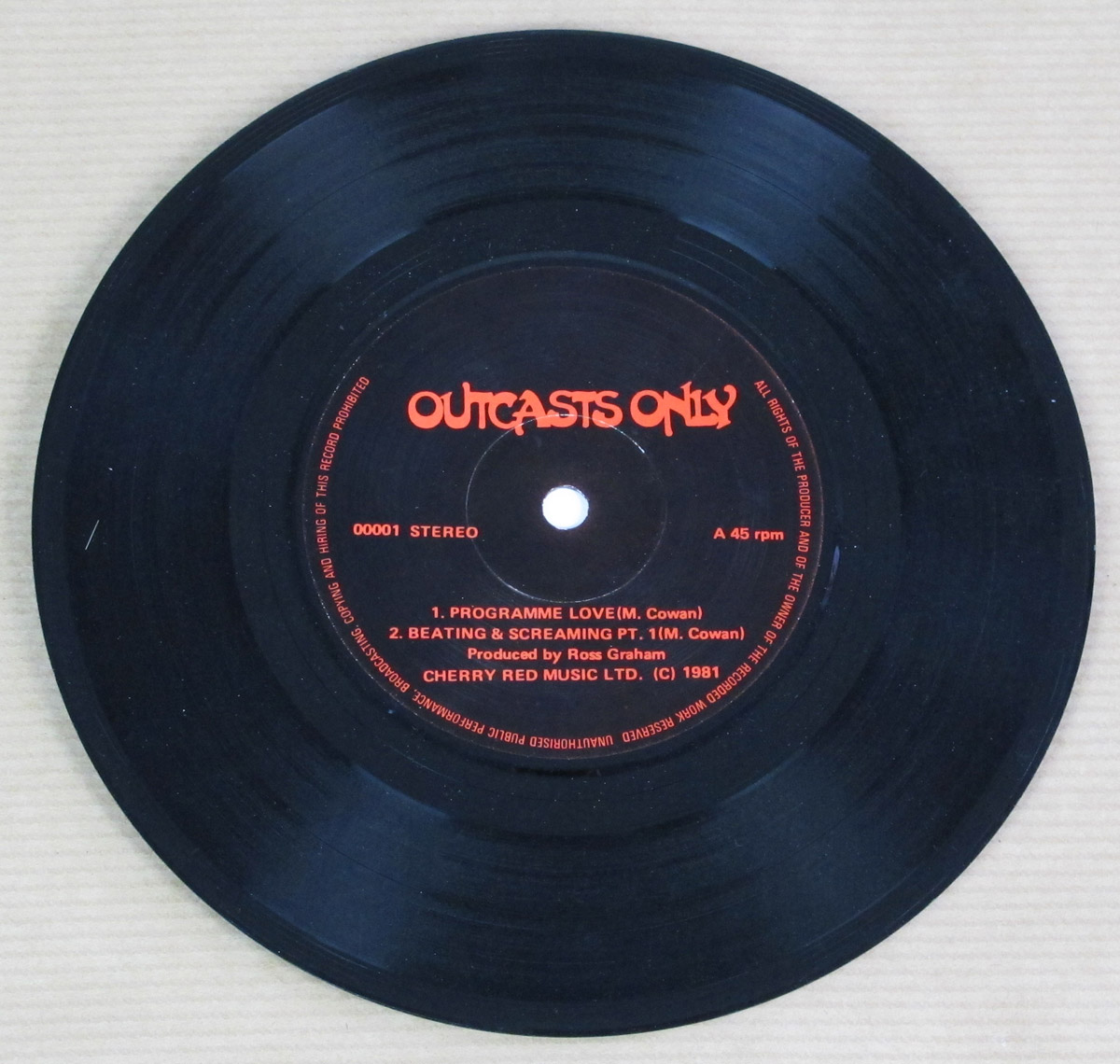
The Side A label sits on a standard black 7-inch disc with a matte finish and visible pressing rings. The label design uses bright red text printed cleanly against the black background, giving the entire center a sharp, high-contrast look typical for small UK punk labels in the early 80s. The iconic OUTCASTS ONLY logo arches across the top in its jagged, uneven lettering.
Beneath the logo is the catalogue number 00001 and the word STEREO aligned to the left, with the A 45 rpm marking on the right. The text layout is functional and tightly grouped, without decorative flourishes. Pressing quality shows minor surface scuffs and light handling marks expected from original copies of this era.
The track information is printed cleanly: 1. Programme Love (M. Cowan) and 2. Beating & Screaming Pt. 1 (M. Cowan). Production credit to Ross Graham appears directly below, followed by Cherry Red Music Ltd. (C) 1981. The outer rim text states standard reproduction and broadcasting restrictions in small red type.
The label’s overall appearance is a strong identifier for genuine early pressings, combining the red-on-black layout, the centered logo style, and the catalogue number placement. The hand-etched matrix and Porky Prime Cut markings—though not visible in this photo—correspond exactly to the documented characteristics of this pressing.
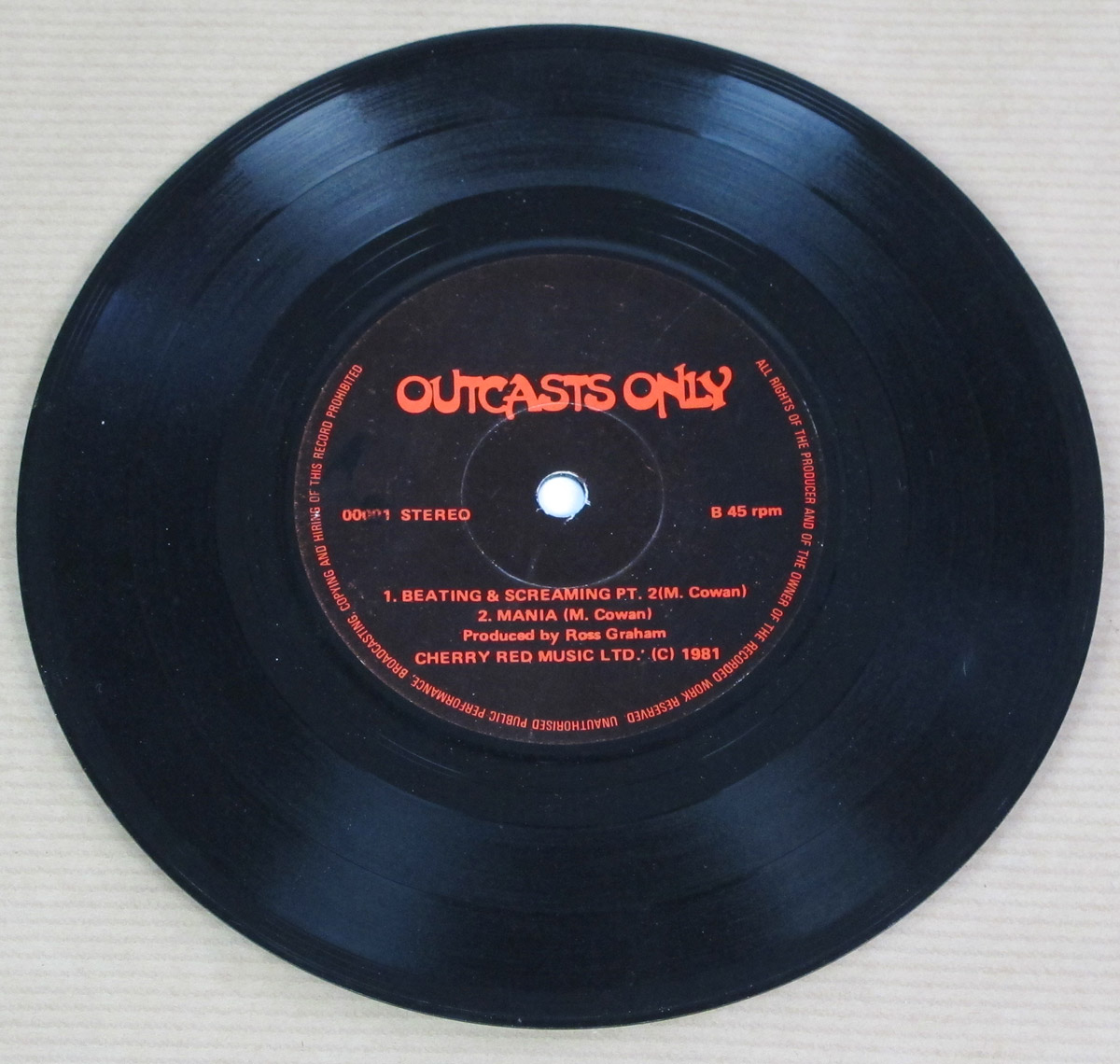
The Side B label follows the same red-on-black layout as Side A, printed on a matte black center with the typical pressing rings clearly visible. The bold OUTCASTS ONLY logo stretches across the top using the same rough-edged typeface that gives these early pressings their recognizable DIY identity. The print is bright and crisp, offering strong contrast against the black background.
The catalogue number 00001 and STEREO marking appear on the left, with the B 45 rpm indicator on the right. The text sits slightly off-center vertically, a common trait in small-label punk releases where alignment wasn’t always perfect. Light surface scuffs are visible on the vinyl, consistent with decades of storage and play.
Track listings are printed in the same clean red type: 1. Beating & Screaming Pt. 2 (M. Cowan) and 2. Mania (M. Cowan). Production credit again goes to Ross Graham, and Cherry Red Music Ltd. is credited at the bottom with the © 1981 marking. The perimeter features the standard legal text in small red type, running along the curve of the outer label.
The combination of the vivid logo, the precise catalogue placement, and the consistent typography makes this label design instantly recognizable to collectors. Even without the sleeve, this Side B label alone confirms the record as part of the earliest Outcasts Only pressings of the Programme Love EP.
All images on this site are photographed directly from the original vinyl LP covers and record labels in my collection. Earlier blank sleeves were not archived due to past storage limits, and Side Two labels are often omitted when they contain no collector-relevant details. Photo quality varies because the images were taken over several decades with different cameras. You may use these images for personal or non-commercial purposes if you include a link to this site; commercial use requires my permission. Text on covers and labels has been transcribed using a free online OCR service.
Abstract Records ABT 004 , 1982 , France
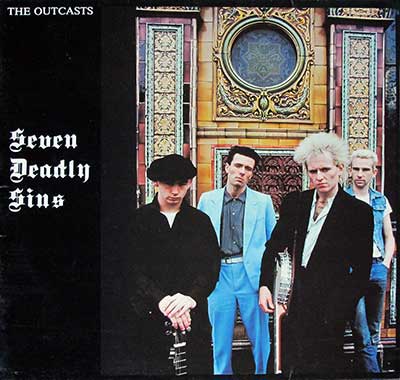
A fierce 1982 French-release LP where the Outcasts sharpen their Belfast punk bite into tighter, louder anthems. Loaded with grit, frustration, and youthful rebellion, it captures the band pushing into heavier territory while keeping that raw street-level punch intact.
Good Vibrations Records GOT 3 , 1978 , UK
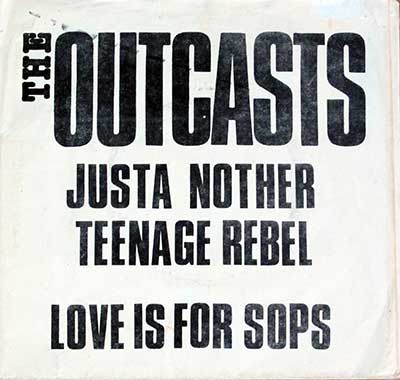
A cornerstone of Belfast punk, this 1978 single bottles teenage fury into two rough-edged anthems. Shouted vocals, jagged guitars, and zero patience for polite society make it a defining early Outcasts release and a vital Good Vibrations-era classic.
“Programme Love” hits with lean Belfast aggression, Greg Cowan driving the vocals while the guitars attack nonstop. The sharp, Nagel-influenced sleeve adds an unexpected polish that clashes—in a good way—with the EP’s raw bite. A compact, high-energy relic of early-80s punk and one of the band’s most collectable releases.
New Rose Records NEW 40 , yPartx 90.978 , 1984 , France
A gritty 1984 LP that finds the Outcasts pushing their punk edge into darker, tighter territory. Packed with aggression and social bite, tracks like “Gangland Warfare” hammer out a fierce portrait of mid-80s street-level angst and defiance.