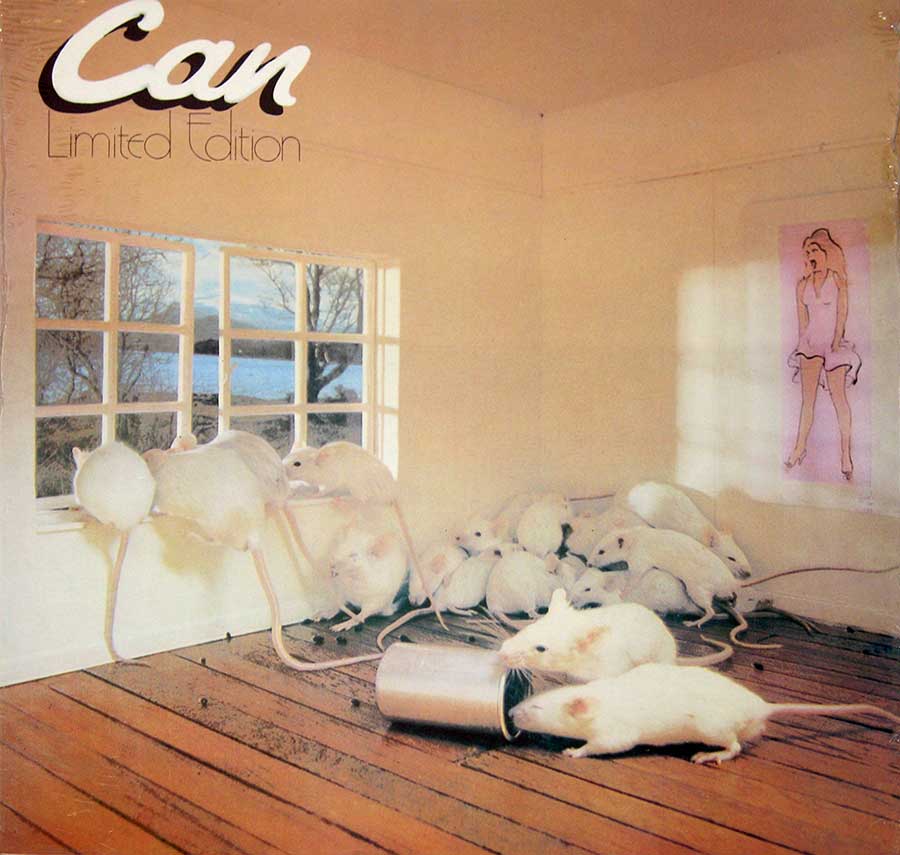
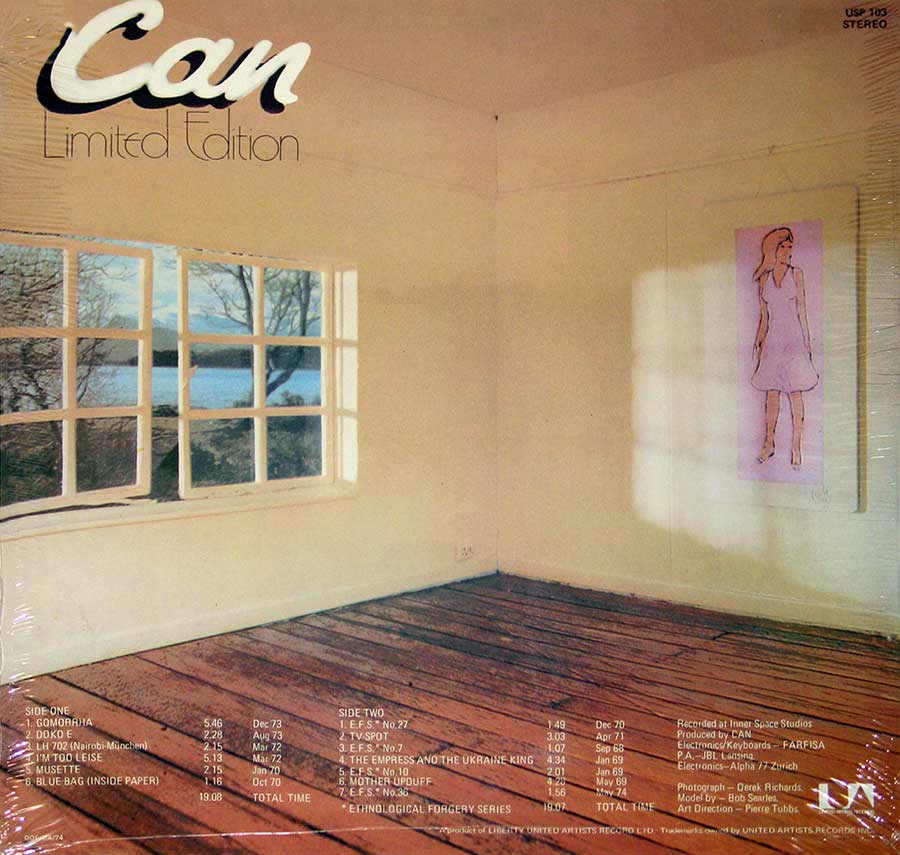
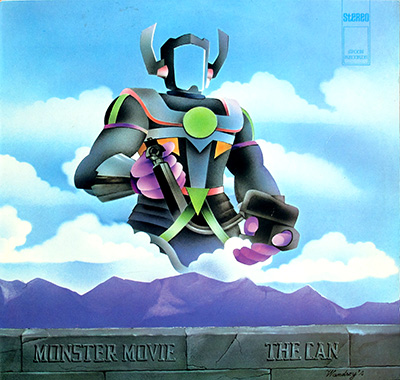
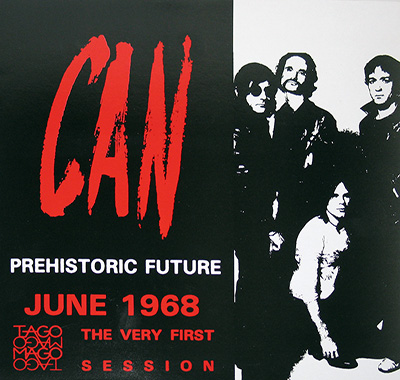
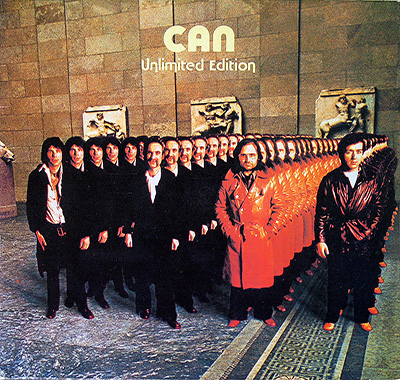
"CAN - Limited Edition (SS )" (N/A) Album Description:
CAN didn’t so much “make” "Limited Edition" as they cracked open the Inner Space Studio vault and let the raw machinery hiss at you: unreleased cuts and studio fragments spanning 1968–1974, issued by United Artists as a band-produced compilation that feels less like an album and more like a controlled lab accident you can dance to.
What this record really is
Think of it as CAN’s workshop floor swept into one bag: sketches, tape-splices, miniatures, and sudden full-color songs, all recorded under the band’s own roof at Inner Space. The “album” logic is secondary; the logic is process. You hear the band treating the studio as an instrument, not a place where instruments politely behave.
West Germany, 1968–1974: the pressure cooker
Late-60s and early-70s West Germany was still trying to invent a cultural voice that didn’t sound borrowed, guilty, or obedient. Rock bands weren’t just playing louder; they were trying to sound new on purpose, and the result got tagged “krautrock” by outsiders who didn’t exactly mean it as a compliment.
By 1974, the scene had split into different future-threads: motorik minimalism, synth precision, cosmic drift, and full-on improvisational trance. CAN sits in the messy center, grabbing all of it and then sabotaging the clean parts with edits, jokes, and rhythm that refuses to sit still.
Genre check: Kraut / Psych / Acid Rock, but with a scalpel
The tag soup on your page (Kraut, Psych, Acid Rock) fits, but only if you accept that CAN uses those genres like ingredients, not rules. The beats lock into hypnotic repetition, then the tape blade shows up and suddenly you’re somewhere else. Melody appears, disappears, reappears wearing a fake mustache.
"Limited Edition" isn’t a greatest-hits victory lap. It’s the sound of a band catching itself thinking out loud, mid-experiment, and refusing to edit out the weird parts.
The players: who’s steering the noise
The core engine is brutally clear: Jaki Liebezeit on drums turning repetition into authority, Holger Czukay on bass and tape strategy, Michael Karoli on guitar threading texture through the gaps, and Irmin Schmidt on keyboards coloring the edges. Vocals shift between Malcolm Mooney’s early volatility and Damo Suzuki’s later, improvisational, language-bending presence, which is why the era-span matters: you’re hearing different versions of the band’s “front” without the band ever becoming a standard front-led rock act.
Musical exploration: what to listen for on these tracks
"Gomorrha" and "Doko E" lean into the group’s gift for groove that feels assembled from moving parts rather than “performed” in the usual way. "LH 702 (Nairobi/München)" plays like travel footage spliced into a dream, while "I'm Too Leise" stretches the band’s patience for tension and release.
The short pieces are the real tell: little audio-postcards that treat genre like costume. The E.F.S. fragments especially operate as deliberately artificial “folk” impressions, which is both conceptually sharp and, depending on your tolerance for irony, occasionally provocative.
1974 peers: the neighborhood this record was dropped into
This compilation lands in a year where German experimental rock is getting louder, sleeker, and more confident. A quick reality check on the wider lane:
- Kraftwerk pushing the machine-road myth into pop space.
- Neu! and related projects chasing motorik focus and repetition-as-identity.
- Cluster / Harmonia drifting toward pastoral electronics and minimalist structure.
- Faust treating the studio like a prank factory with a philosophy degree.
So where’s the controversy?
First, the framing: a “limited” archival release can read like label logistics rather than artistic intent, and CAN’s catalog around this period was already tangled with expectations from outside the band. Second, the term “krautrock” itself arrived with baggage; the music outgrew the label, but the label stuck.
Third, the E.F.S. concept can rub listeners the wrong way: these are intentionally fabricated “ethnological” miniatures, and that idea lives right on the border between critique, parody, and appropriation depending on how you hear it. CAN didn’t do comfort. They did experiments, and experiments don’t always ask permission.