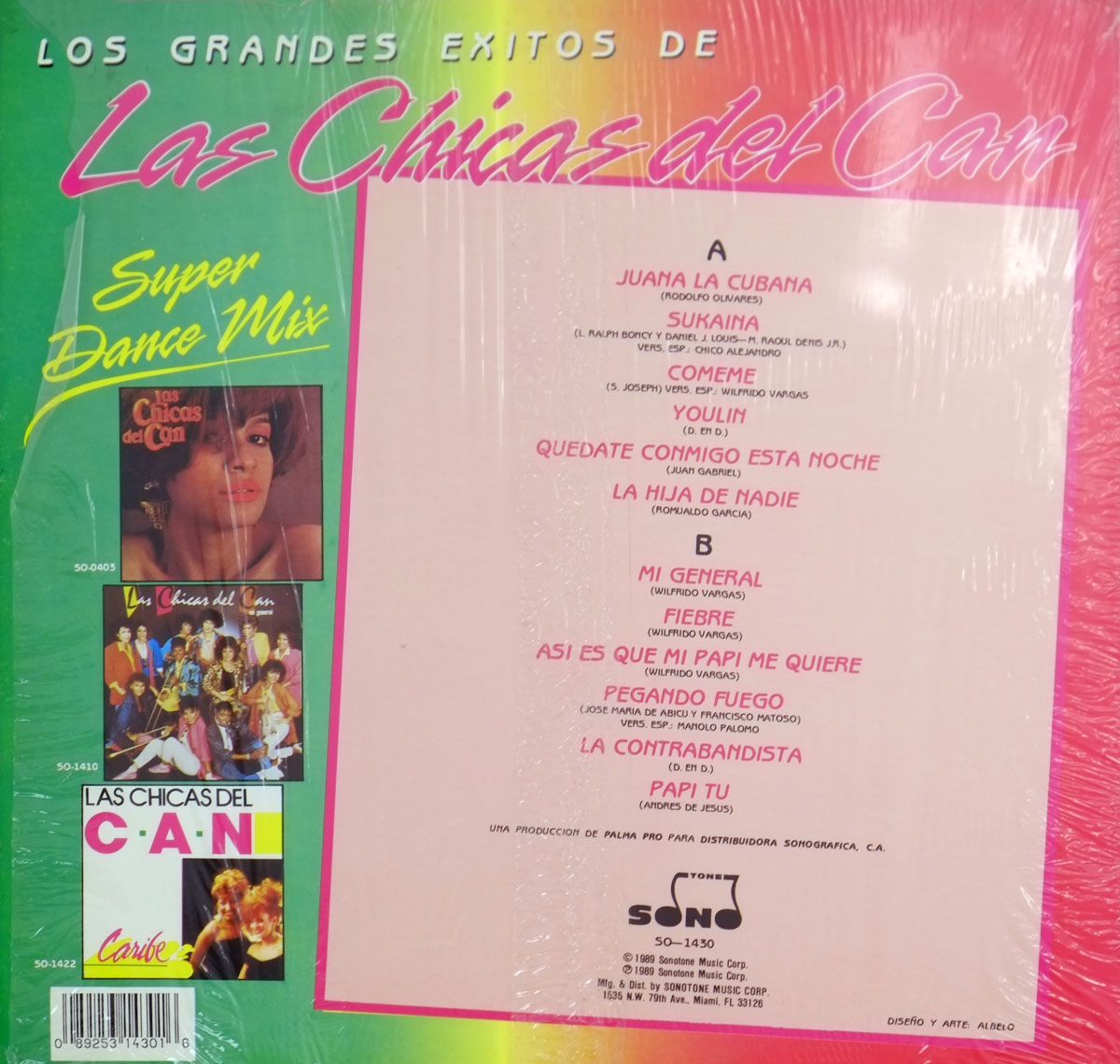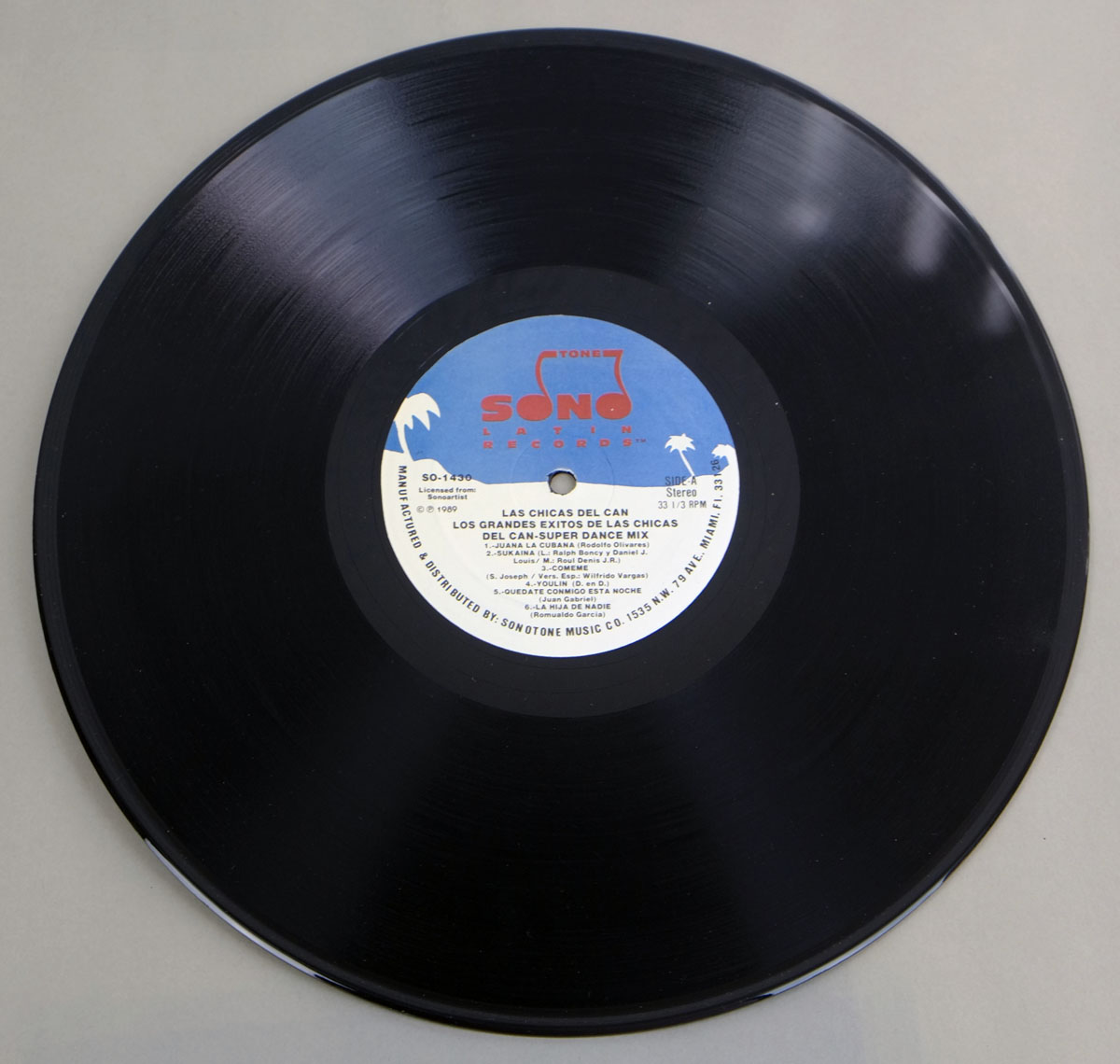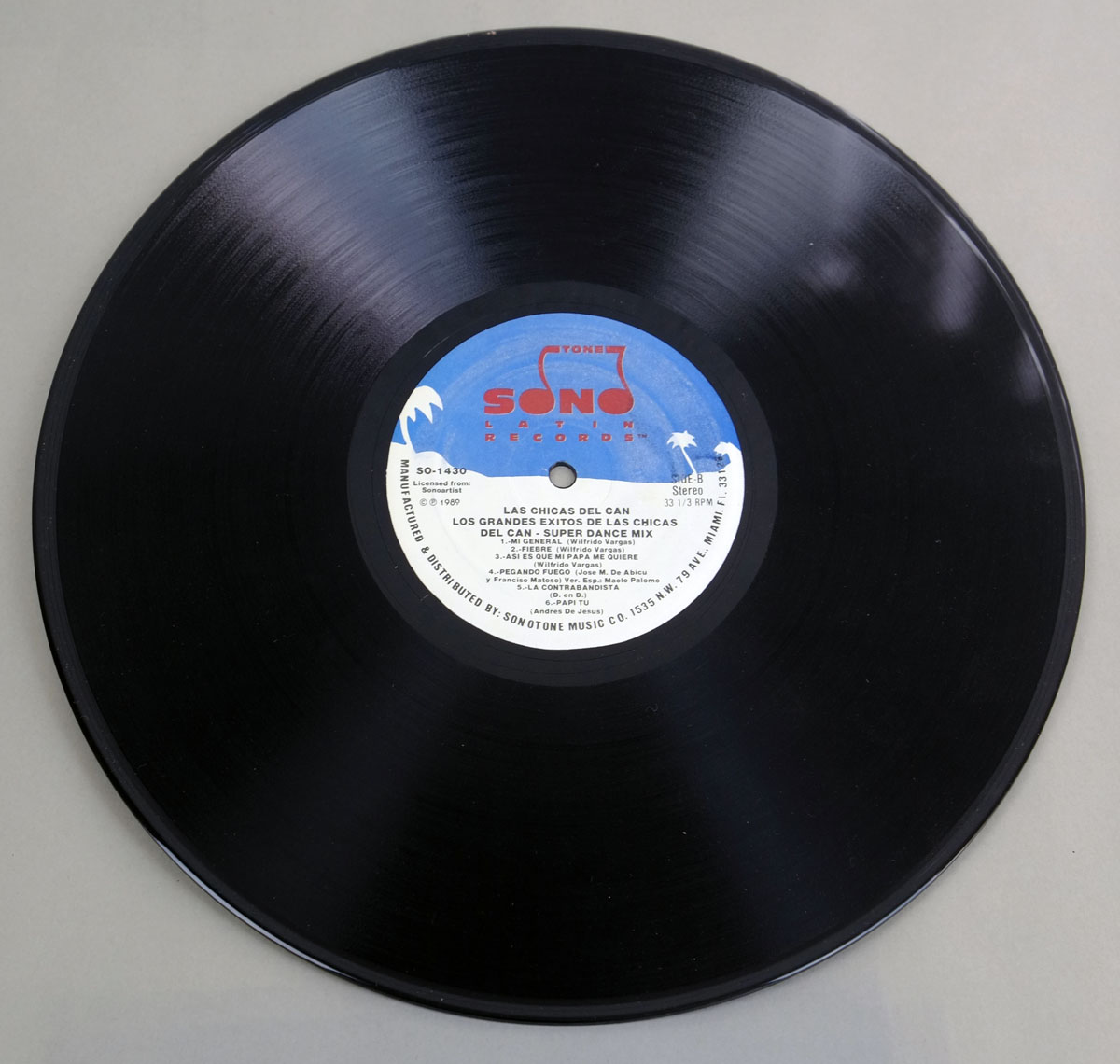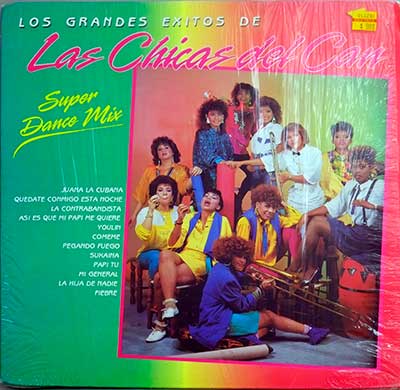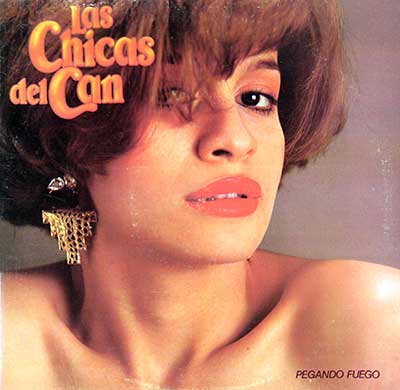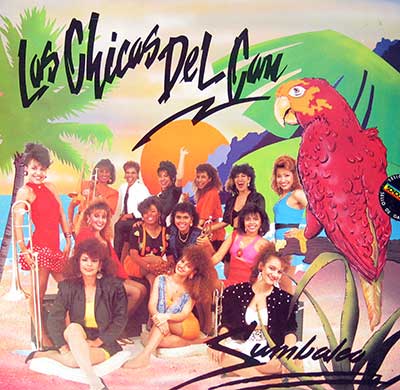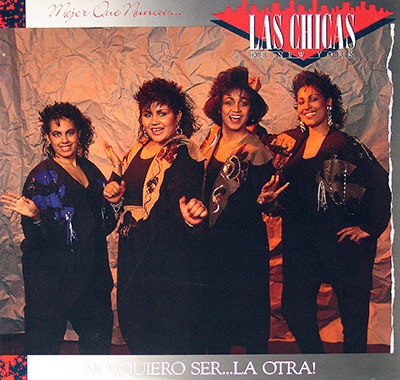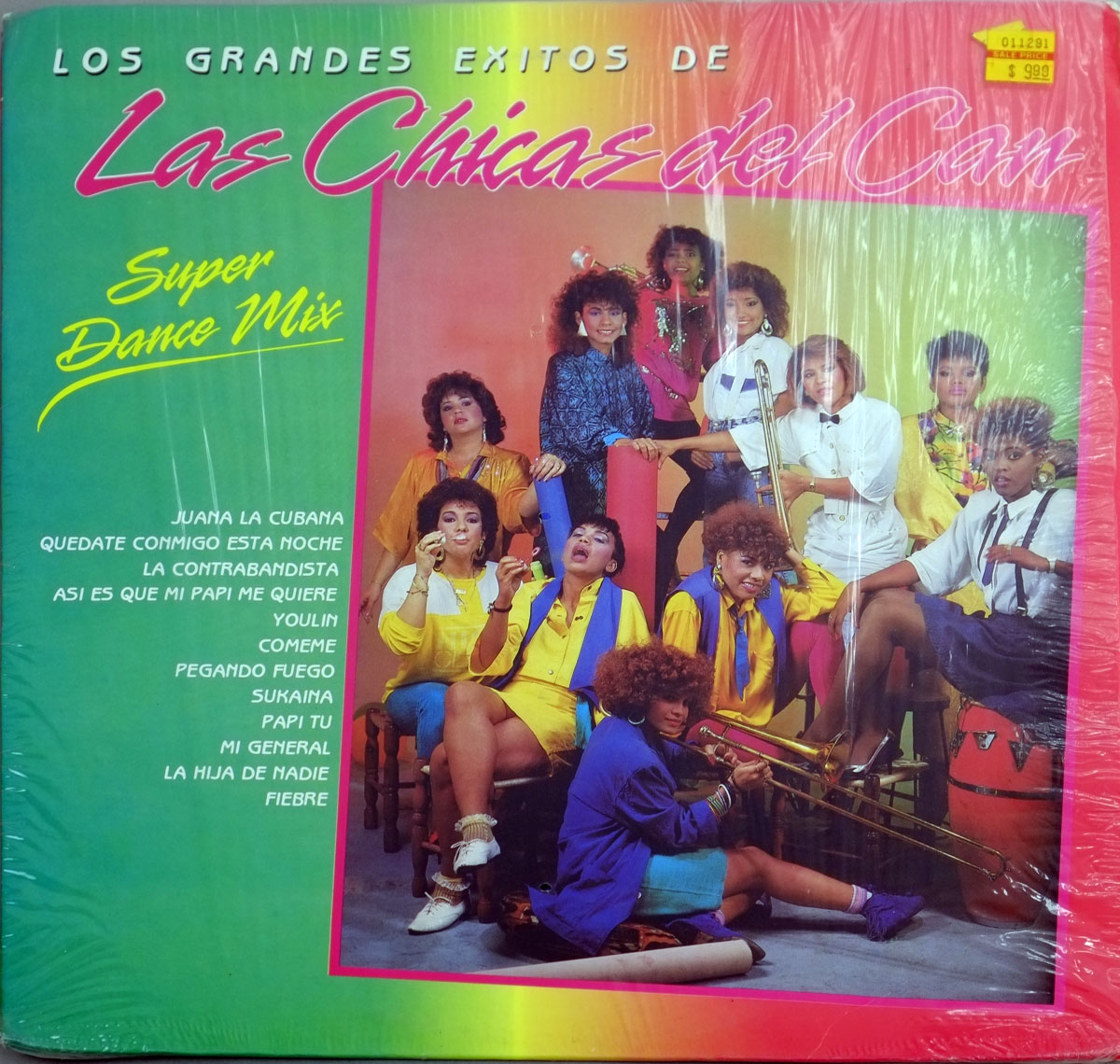
"Los Grandes Exitos Super Dance Mix" (1989) Album Description:
By 1989, merengue was no longer some local secreto passed around Santo Domingo dancehalls and family parties. It was everywhere: on radio, in clubs, in immigrant neighborhoods far from the island, with that hard little shove from the tambora and the scratch of the guira making even a tired room sit up straight. A record like "Los Grandes Exitos Super Dance Mix" lands right in that moment, not as a grand artistic manifesto, but as something just as useful: a sharp, sweaty reminder of how much damage Las Chicas Del Can had already done to the floor.
And that is where this LP gets more interesting than the title first suggests. On paper it looks like one more late-1980s hits package, the kind labels threw together when the market smelled caliente and nobody wanted silence between one smash and the next. But once you get past the practical, slightly shameless compilation logic, you run straight into a bigger story: an all-female Dominican merengue machine that had already survived illness, lineup turbulence, ownership quarrels, and the usual music-business circus, yet still sounded like it could kick the salami right off the table.
The first thing worth clearing up is simple. This is a compilation, not some freshly conceived studio album with a neat little concept tied around it in ribbon. That matters, because the real pleasure here comes from hearing a run of established crowd-burners stacked together until the room starts leaning forward: "Juana La Cubana", "Sukaina", "Comeme", "Mi General", "Fiebre", "Pegando Fuego". No filler speech. No polite throat-clearing. Dale.
Las Chicas Del Can had deeper roots than many casual buyers probably noticed when this LP turned up in the bins in the United States. The group began in 1976 under Belkis Concepcion, and the later Wilfrido Vargas connection changed the scale of the whole operation, commercially and musically. That switch brought muscle, visibility, and a more aggressive route into the merengue mainstream, but it also left behind the sort of authorship dispute that always follows success around like a stray dog.
By the middle of the 1980s, the group had already been through the kind of upheaval that would flatten lesser acts. Belkis Concepcion's illness forced a major shift, Miriam Cruz moved into the front line, and the band's identity became both stronger and less stable at the same time. That contradiction sits behind this record too: the sound feels locked in, while the personnel story behind it was anything but tidy.
In the Dominican Republic of the late 1980s, merengue was not sitting quietly in a glass cabinet waiting for approval from cultural gatekeepers. It was moving fast, selling hard, crossing borders, and feeding off radio, migration, nightlife, and personality. You had Wilfrido Vargas driving the genre with showman discipline, Los Hermanos Rosario pushing swing and velocity, Milly Quezada bringing authority without needing to shout, Johnny Ventura still casting a long shadow, and bands like Las Chicas de Nueva York riding that same transnational corriente between the island and New York. Against that crowd, Las Chicas Del Can did not win by being delicate. They won by sounding sabrosas, quick on their feet, and slightly dangerous.
Sonically, this LP works because merengue like this does not meander. The attack is immediate. The rhythm section does not ask permission; it grabs your sleeve. The brass and keyboards hit in bright blocks, the choruses are built to be remembered by people who have had exactly two drinks too many, and the vocals carry that teasing, clipped confidence that good dance music needs if it wants to survive outside the studio. Plenty of 1980s pop-latin crossover now sounds lacquered and tired. This stuff still moves its hips.
"Juana La Cubana" is the obvious door into the record, and fair enough. It is a street-corner tune dressed for maximum public trouble, built to catch fire in seconds. But I have always thought the deeper strength of Las Chicas Del Can shows up when the set turns from obvious novelty and into groove pressure: "Sukaina" has that sly, rolling insistence, "Fiebre" lives up to its title without becoming cartoonish, and "Pegando Fuego" still feels like what the phrase means, not just what it says.
There is also a collector's point here that should not be ignored just because critics like to posture. Compilation LPs are often treated as second-tier objects, as if only a first pressing of a proper studio statement deserves respect. Nonsense. A record like this tells you how a band was being packaged, exported, remembered, and sold at a specific moment. That is history too, just with more plastic wrap and less romance.
Palma Pro and SONO Latin Records were not selling an archaeological document here. They were selling momentum. The "Super Dance Mix" tag says it all: this was meant to keep bodies moving, to turn known songs into a continuous practical weapon for parties, family gatherings, DJs, and anybody who did not need a lecture before dancing. Some collectors sniff at that kind of repackaging. I don't. A good dance-floor record has already passed a harder test than most serious albums ever will.
As for controversy, this particular release does not seem to have dragged a fresh scandal in with it. The real friction sat around the wider history of the group: who founded it, who controlled the name, and how the lineup kept changing while the brand stayed marketable. The common misconception is that a record like this proves stable continuity. It proves almost the opposite. What you hear is a powerful public identity assembled out of movement, replacement, adaptation, and a very sharp instinct for what the crowd would answer back to.
I can still picture a record like this in the import section: bright sleeve, slightly glossy, maybe a cut-out notch if you were lucky, filed somewhere between salsa, tropical, and "miscellaneous Latin" by a shop clerk who probably knew less than he thought he did. Put it on late at night and the room changes shape. Even the furniture seems less stubborn.
What lasts is the sense of merengue as pressure and release, not decoration. This album catches Las Chicas Del Can from the side, through a hits package aimed at movement rather than myth, and sometimes that is exactly the right angle. No marble pedestal. No fake solemnity. Just guira, tambora, hooks, heat, and that unmistakable Dominican snap that says this thing was born to bailar, not to behave.
References
- Vinyl Records Gallery page with high-resolution album cover photos and page context
- Apple Music artist biography for Las Chicas Del Can
- Dominican Music in the US essay on the 1980s internationalization of Dominican beats
- Spanish-language background history of Las Chicas del Can
- Discogs release entry for track listing and release format cross-check