"A Nice Pair" Album Description:
“A Nice Pair” isn’t a 1967-1968 release, no matter how many old catalog pages try to bluff it into being one. It’s the early-70s repackaging job: two full LPs (“The Piper at the Gates of Dawn” and “A Saucerful of Secrets”) folded into one gatefold and sold to people who’d just discovered Pink Floyd the hard way - by being flattened by their later albums and then wondering what the band sounded like before the cathedral got built.
One record drops you into Syd-era London where songs don’t politely “start,” they just lurch into the room. “Astronomy Domine” is the opener that still feels like someone threw open a door to a noisy planet. “Lucifer Sam” struts. “Interstellar Overdrive” refuses to behave. It’s not “groundbreaking,” it’s stubborn. That’s why it survives. Norman Smith’s name sits there in the small print like the calm adult who somehow kept the tape rolling while everyone else tried to levitate the studio.
The second LP is where the mood thickens. The band gets heavier, the jokes get darker, and the grooves start hinting at the machine they’d become. “Let There Be More Light” punches the air. “Set the Controls for the Heart of the Sun” does that slow, hypnotic burn that either drags you under or bores you silly depending on your patience level. Credit where it’s due: this side is where the early weirdness starts learning discipline, whether you like that word or not.
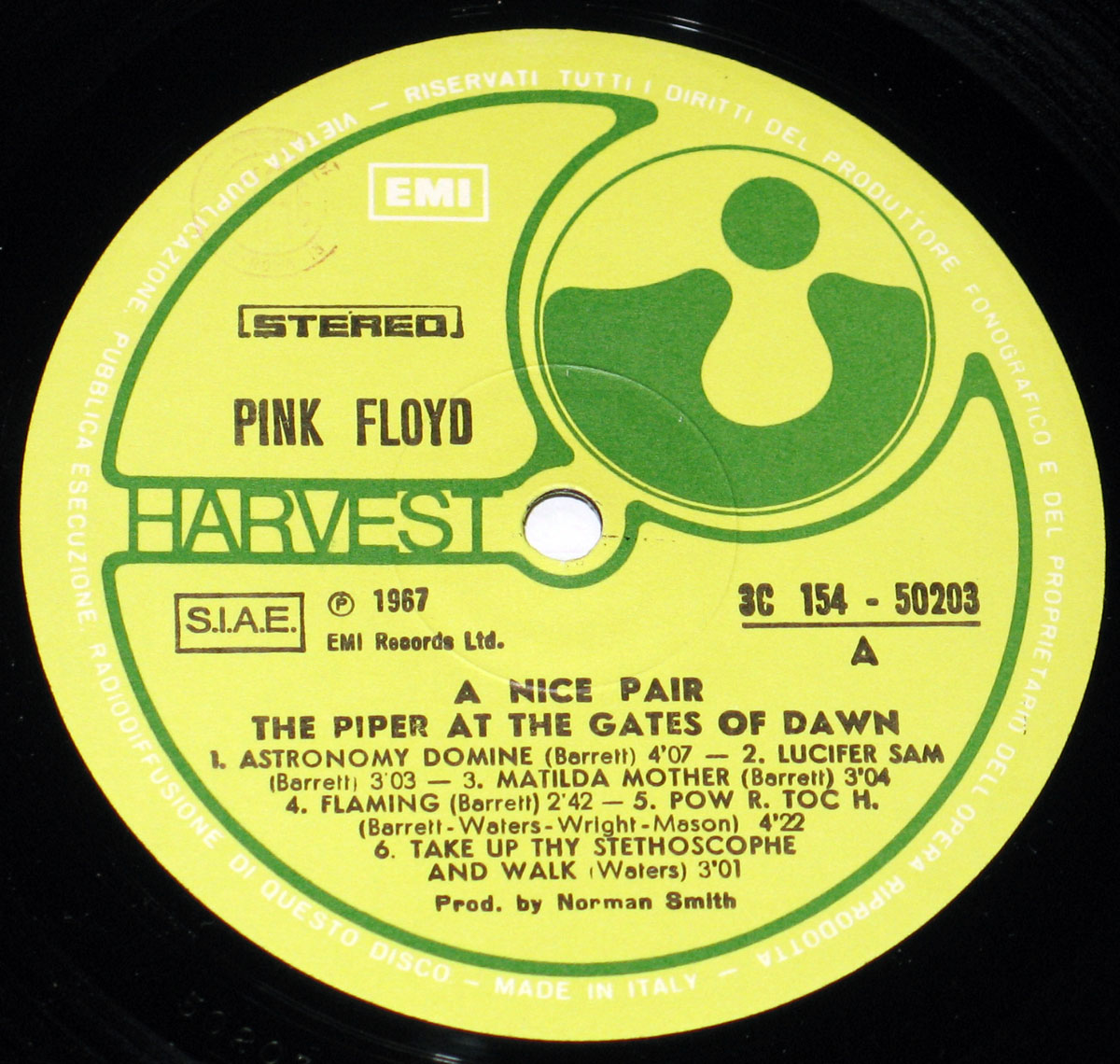
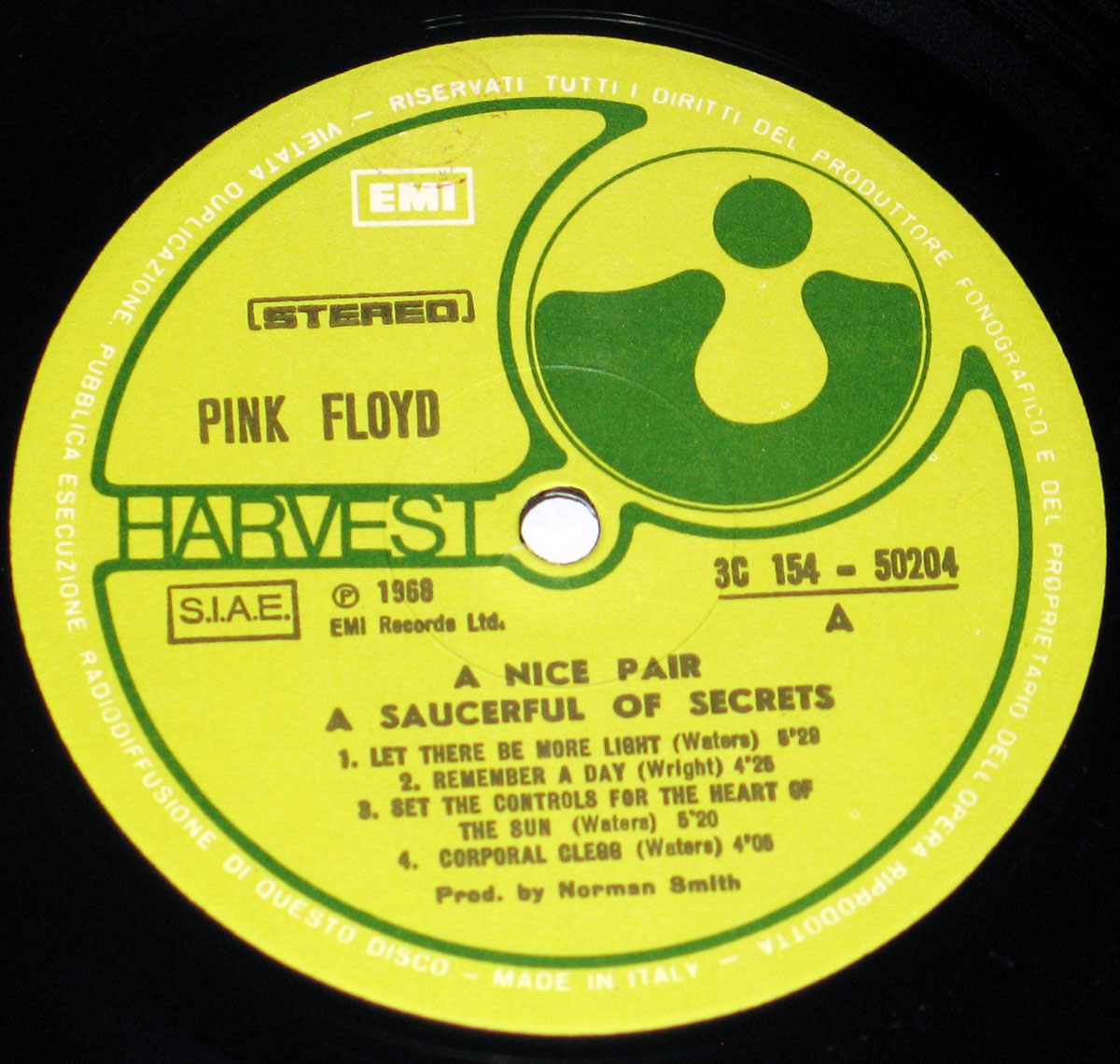
Collector reality shows up fast on the Italian copy. The Harvest labels are loud yellow and green, “Made in Italy” riding the rim text, and the catalog numbers split across the two discs (3C 154-50203 on one, 3C 154-50204 on the other). The dates printed on the labels (P 1967 and P 1968) aren’t the compilation’s release year; they’re the original copyright years for the material. It’s the kind of detail that stops arguments at record fairs, which is a public service.
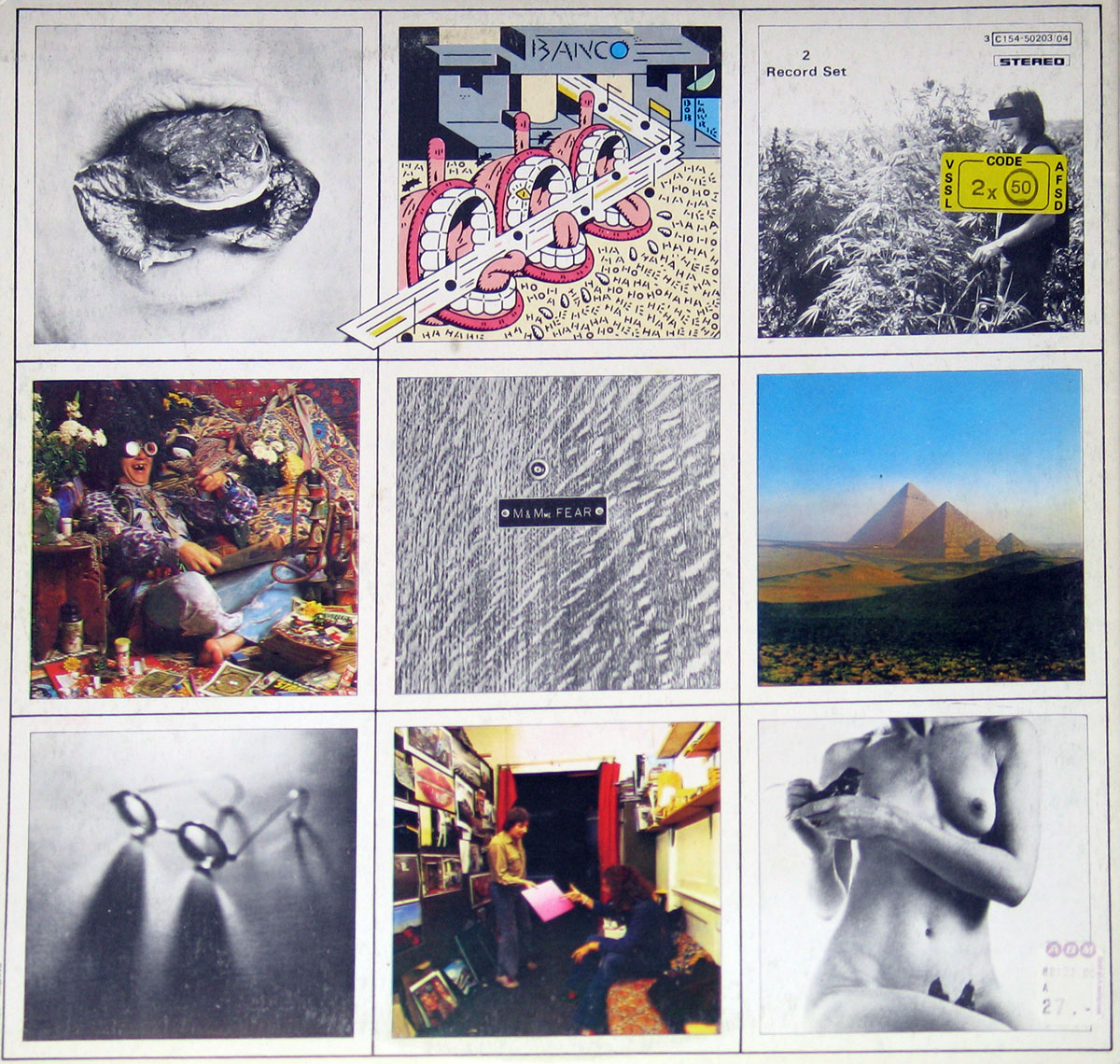
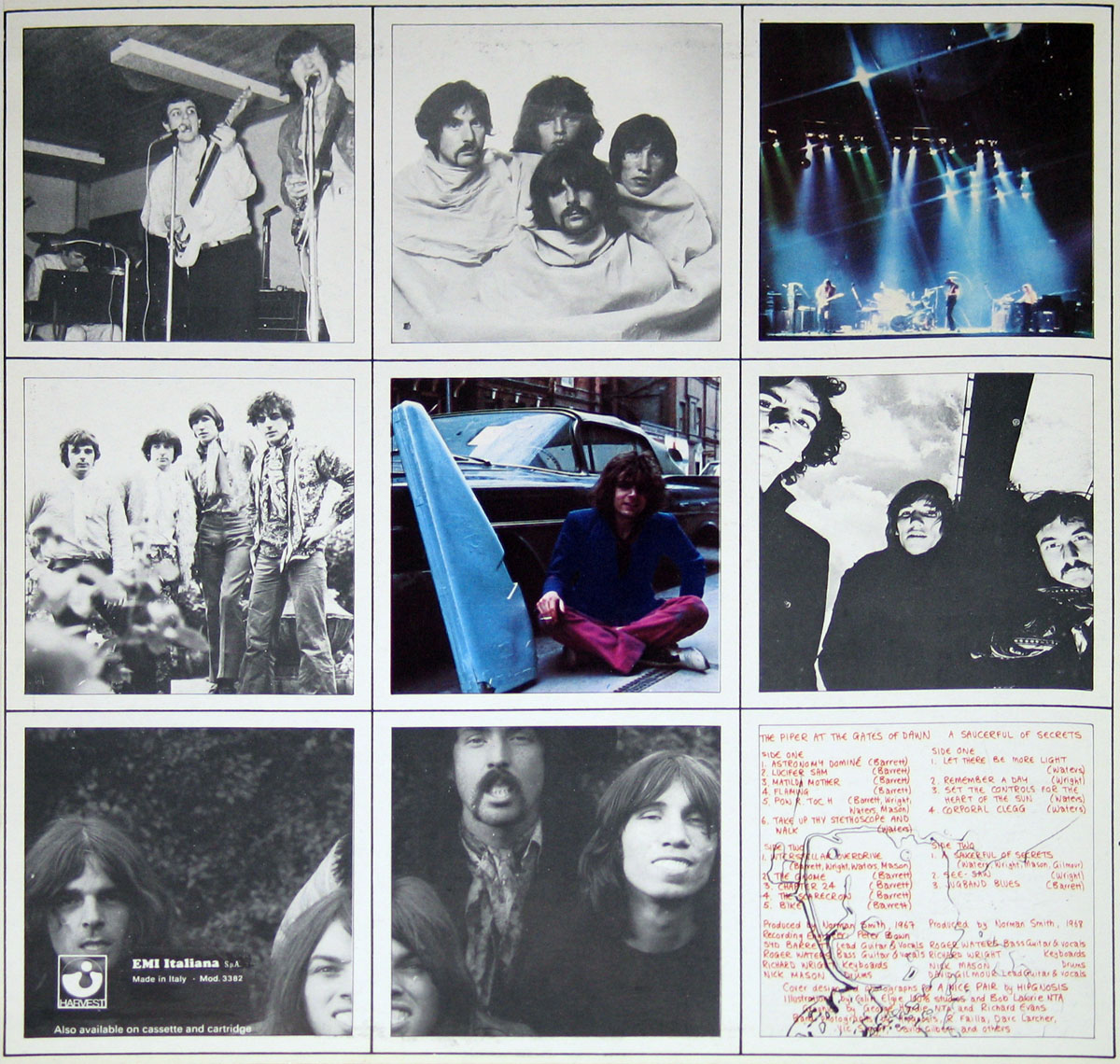
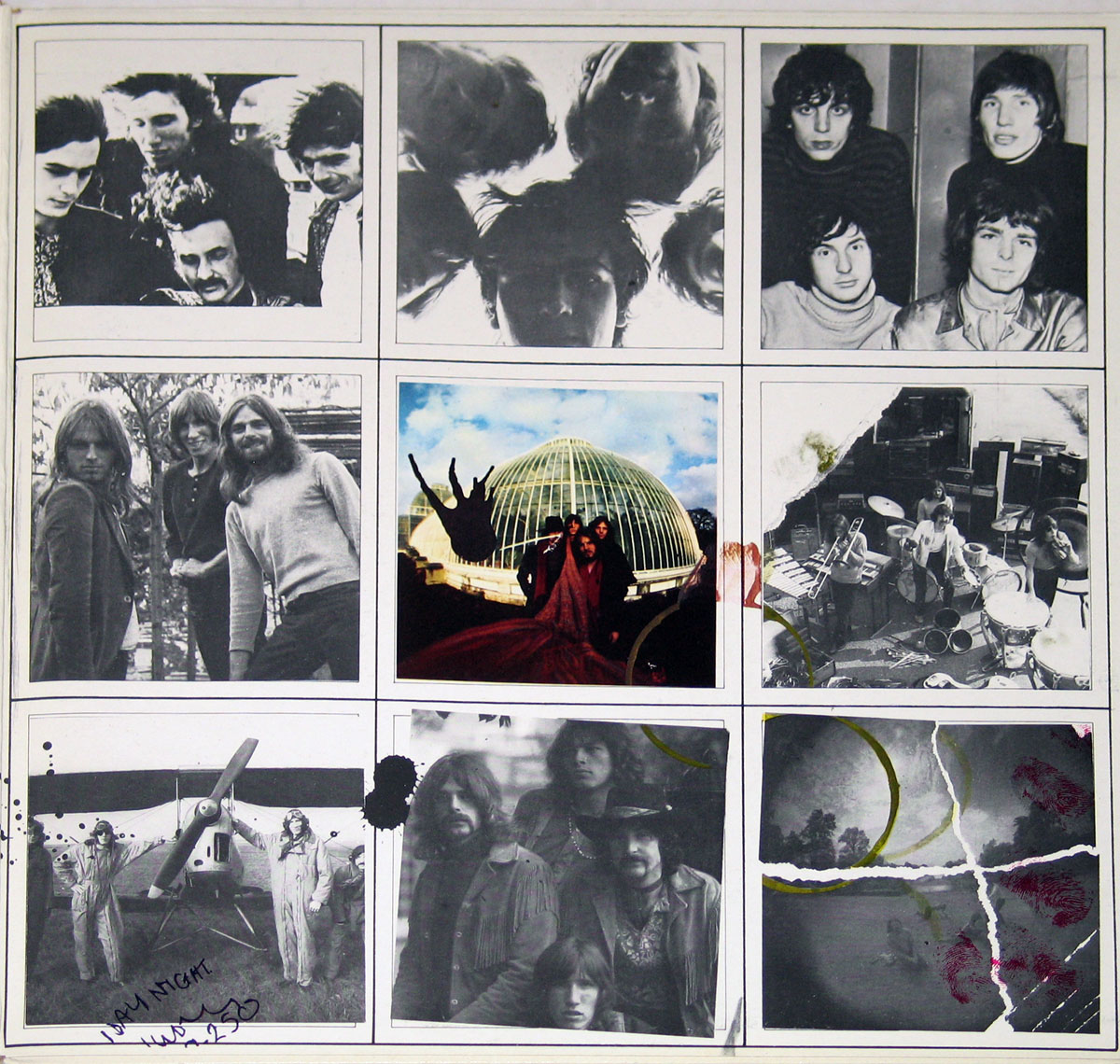
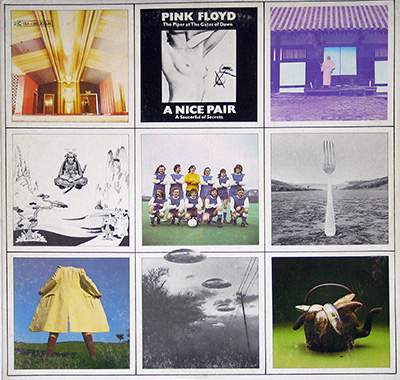
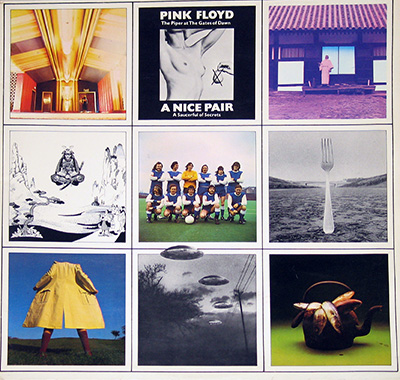
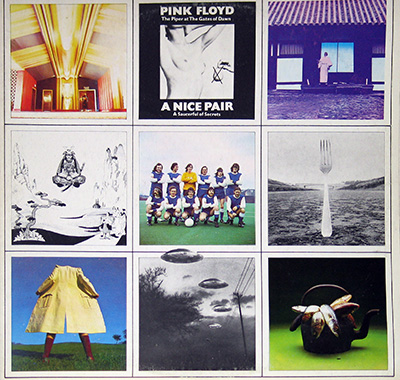
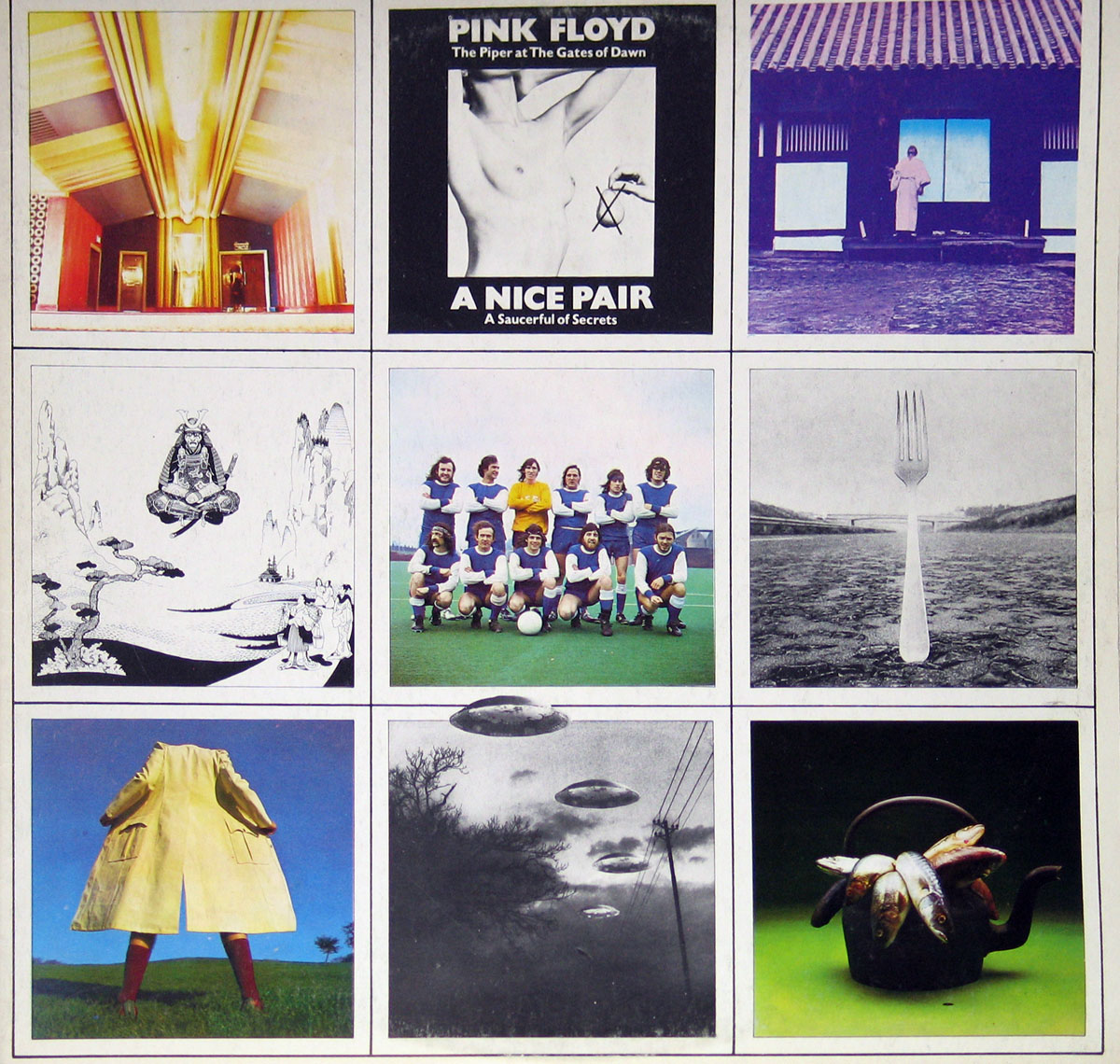
The cover art is where “A Nice Pair” turns into a traveling circus. Hipgnosis built it as a grid of visual puns and odd photos, and different countries couldn’t resist meddling. Some copies slap a black bar over the nude panel. Others hide it with a sticker over the shrinkwrap. Early runs even swapped out one panel after a real dentist objected to his surgery being used as a joke, because reality always ruins the fun. Even the inside gatefold photos can vary between pressings, so two “identical” copies can quietly disagree with each other in the details. Annoying. Also irresistible.
Italian labels get their own little collector-side quest thanks to SIAE, the Italian rights society. On plenty of Italian records the SIAE mark shows up as a physical stamp applied after printing - actual ink, sometimes different colors, sometimes slightly off-kilter because a human hand did it. That’s the charm and the headache: “official” can look messy on purpose. On this release the S.I.A.E. marking sits in the usual boxed position on the label, and whether your copy has a stamped mark or a printed one is exactly the kind of thing that makes sane people back away slowly while collectors lean in closer.
So yes, it’s a compilation. It’s also a very practical trap: two foundational albums, one gatefold, and enough label and cover variations to keep you checking “just one more copy” for the next twenty years. Pretend it’s about “history” if you want. The sleeve knows better.
References
- Vinyl-Records.nl: Pink Floyd "A Nice Pair" (Italy) - high resolution photos
- Wikipedia: "A Nice Pair" (release date, cover art notes, censorship and image swaps)
- Discogs: Italy release details (EMI Italiana, 3C 154-50203/04 label numbers)
- Steve Hoffman Forums: Italian SIAE stamp background (collector discussion)