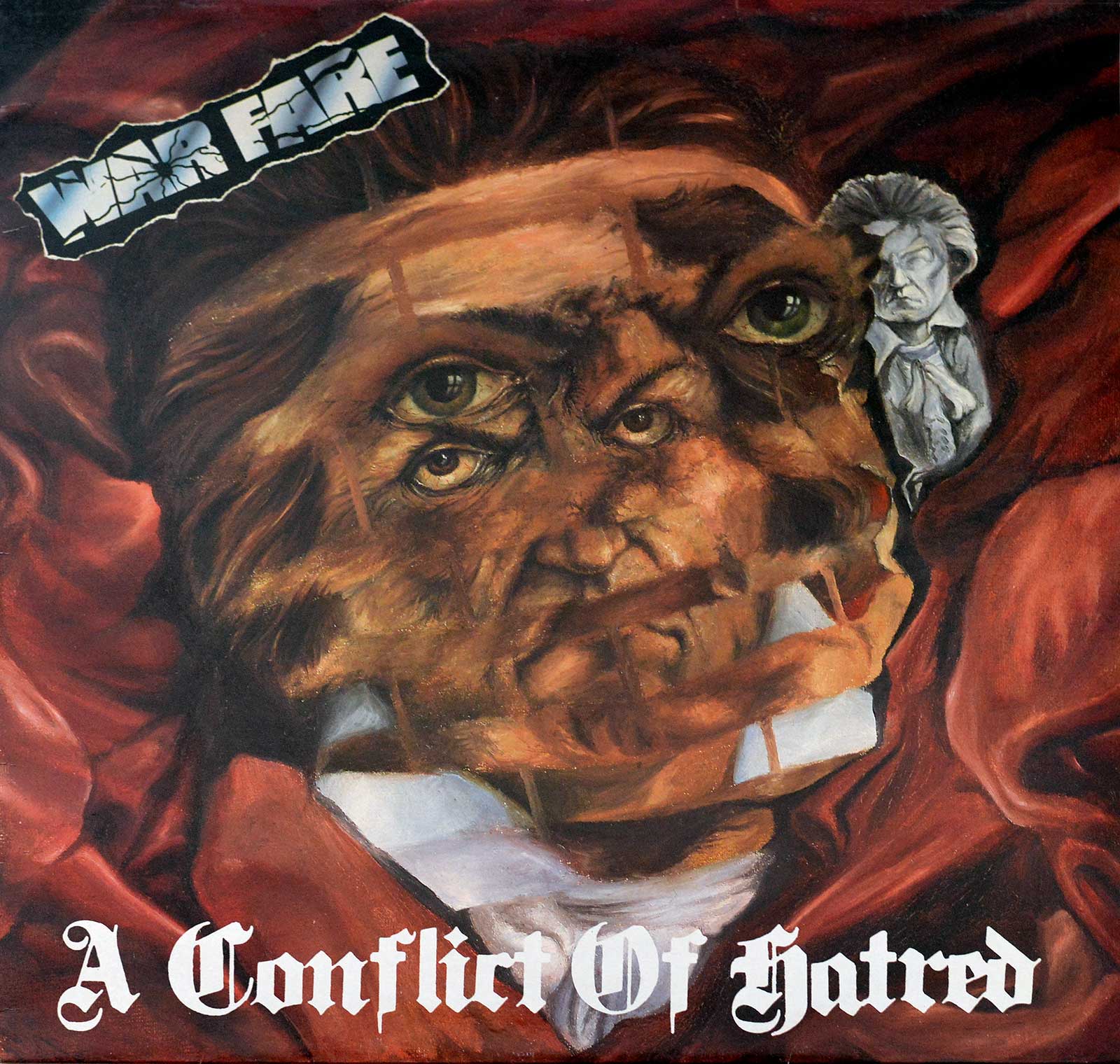
"A Conflict of Hatted." This wasn't just another NWOBHM (New Wave of British Heavy Metal) echo; it was a primal scream in a studded leather jacket, a middle finger raised to the hairspray-and-spandex glam metal scene that was dominating MTV.
Warfare had been kicking around the UK metal scene since the early '80s, but by '88, they'd honed their sound into a blunt instrument of aggression. "A Conflict of Hatred" wasn't about virtuosity or technical prowess; it was about raw power and unadulterated rage. Think Motörhead on a bad day, or Venom with a chip on their shoulder.
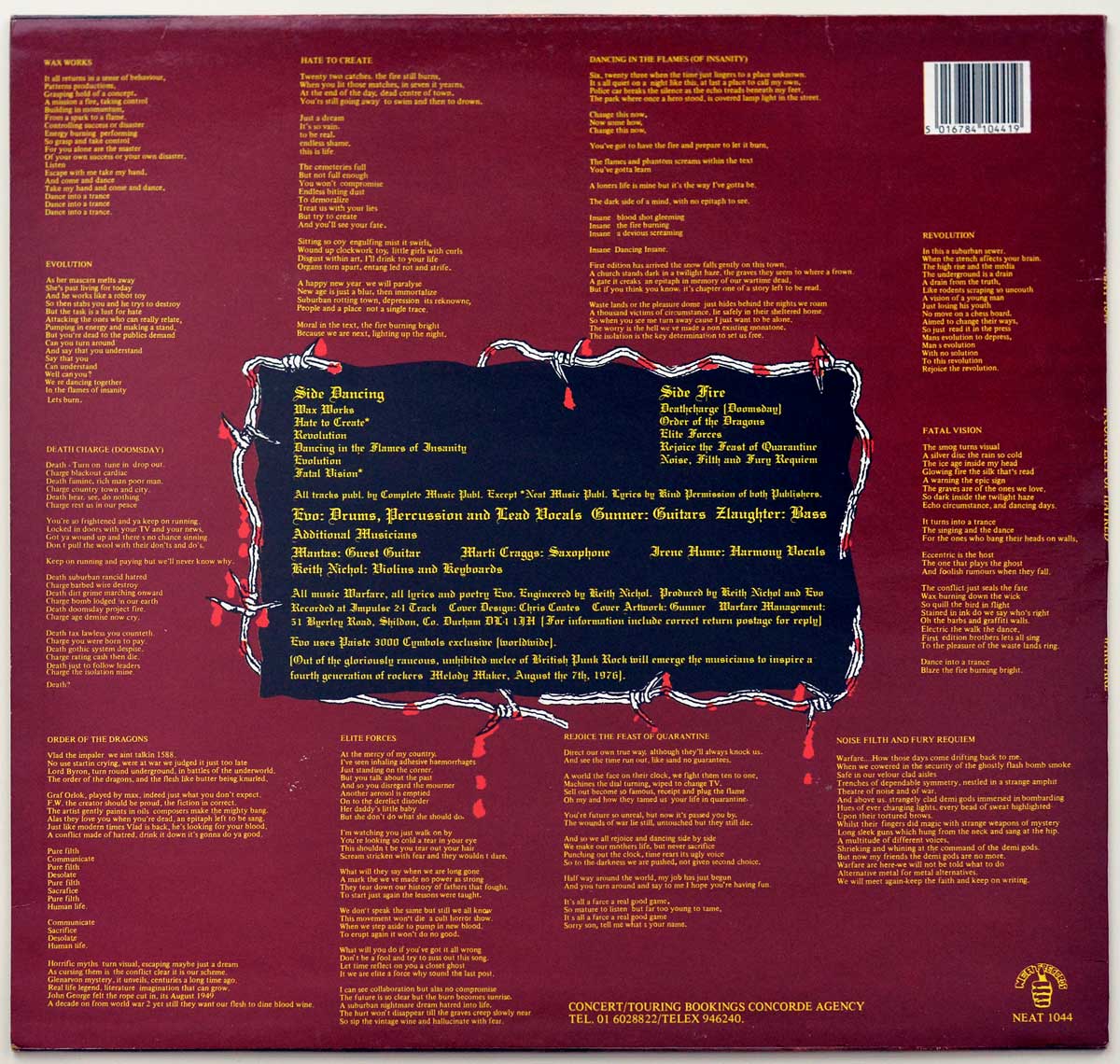
The album opens with the title track, a relentless barrage of distorted guitars and pummeling drums. Vocalist Paul Evo spits out his lyrics with a venomous snarl, railing against injustice and hypocrisy with a working-class fury. This wasn't music for the faint of heart; it was the soundtrack to a back alley brawl, the anthem of the disenfranchised.
Musically, Warfare weren't reinventing the wheel. They were rooted in the classic heavy metal tradition, but they injected it with a punk rock energy and a streetwise attitude. Songs like "Death Sentence" and "The End of Humanity" were stripped-down and brutal, with no time for solos or frills. The production, handled by the band themselves, was rough and raw, capturing the intensity of their live shows.
"A Conflict of Hatred" wasn't without its controversies. The album's lyrics, with their references to violence and social unrest, raised eyebrows in some quarters. Warfare weren't afraid to tackle taboo subjects, and they didn't shy away from expressing their anger. This wasn't music for the masses; it was a rallying cry for the marginalized and the disaffected.
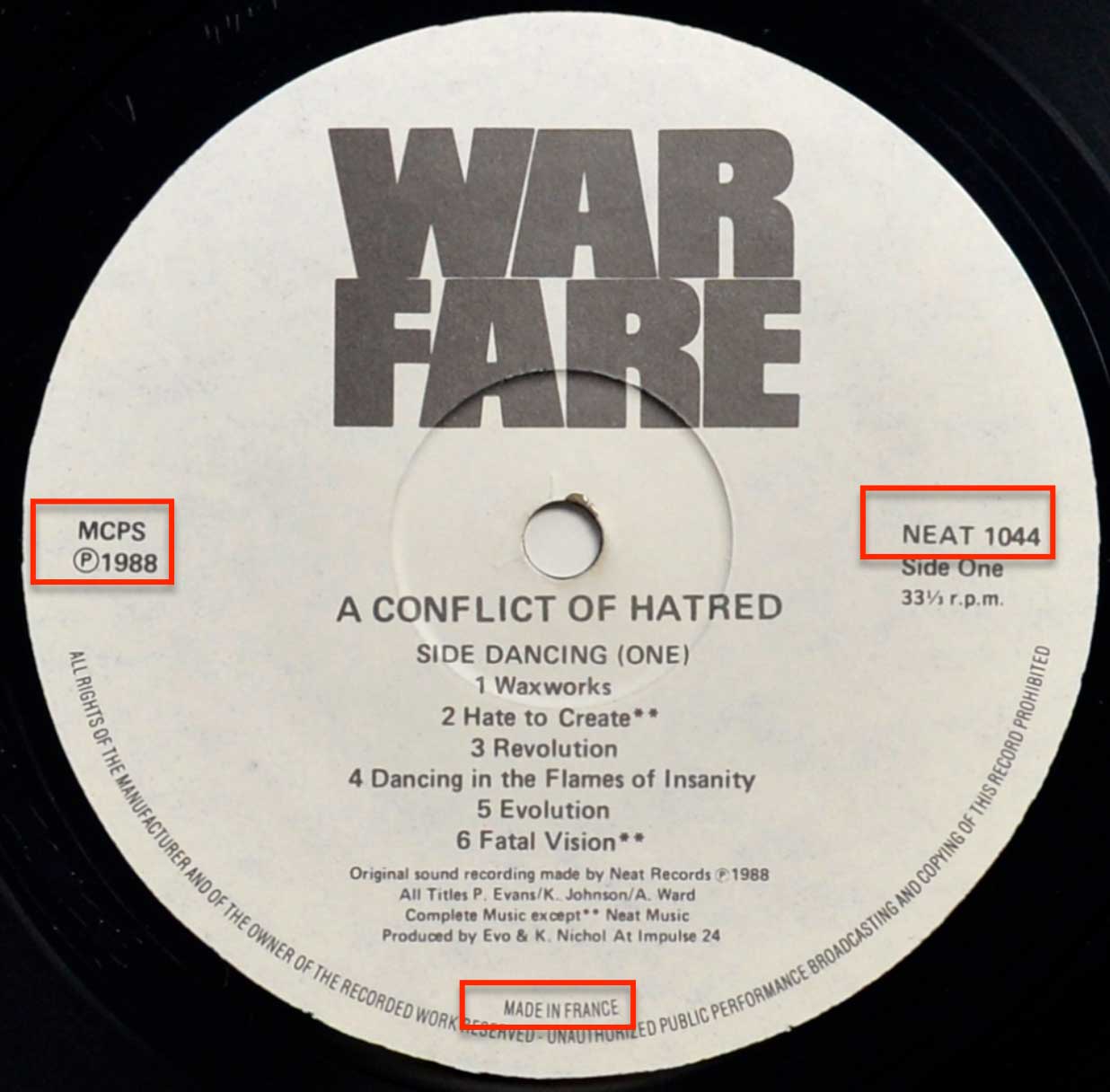
Neat Records, the label that released "A Conflict of Hatred," was known for its roster of underground metal bands. They weren't concerned with commercial success; they were about giving a voice to the outcasts and the rebels. Warfare fit perfectly into this ethos, and the album became a cult classic among fans of the heavier side of metal.