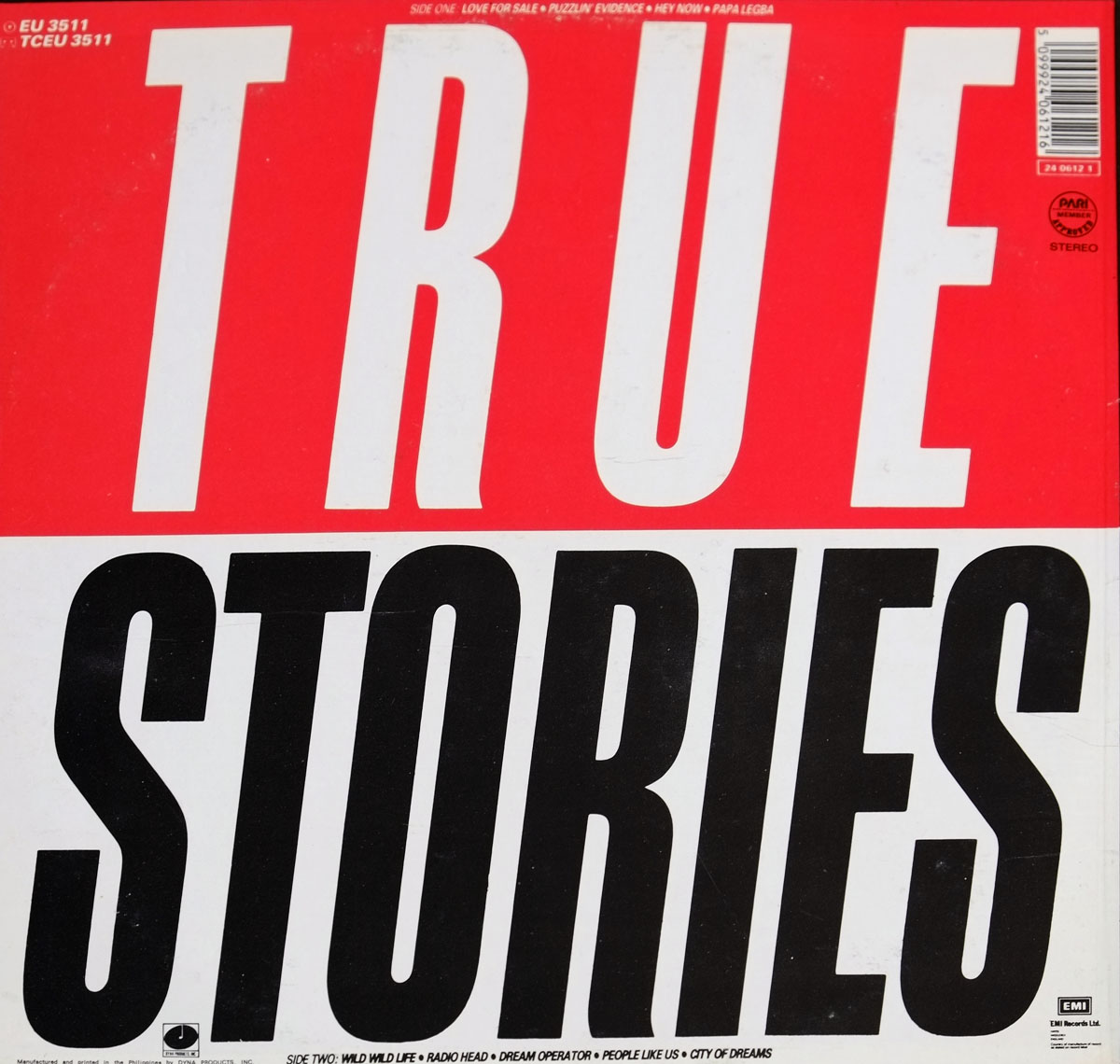
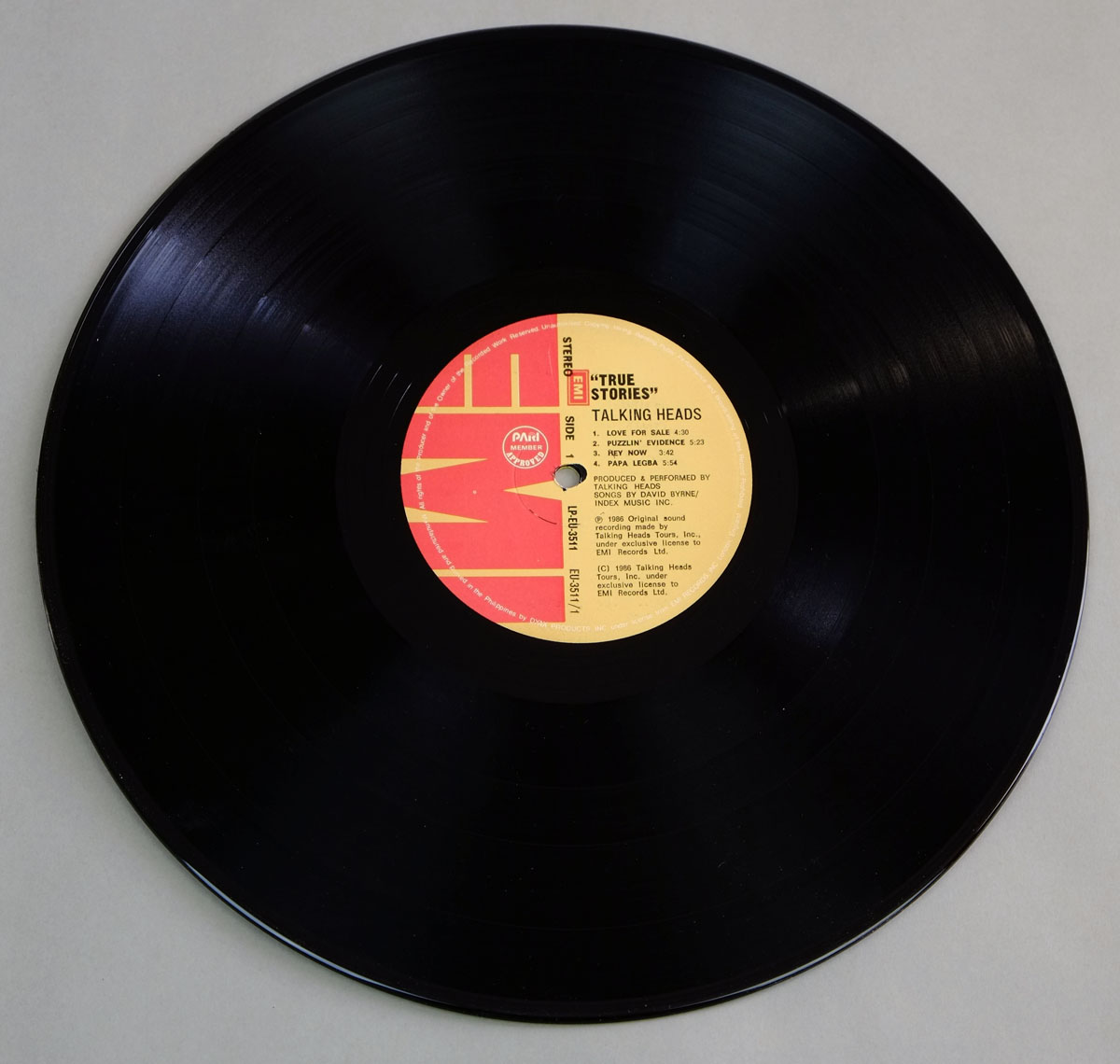
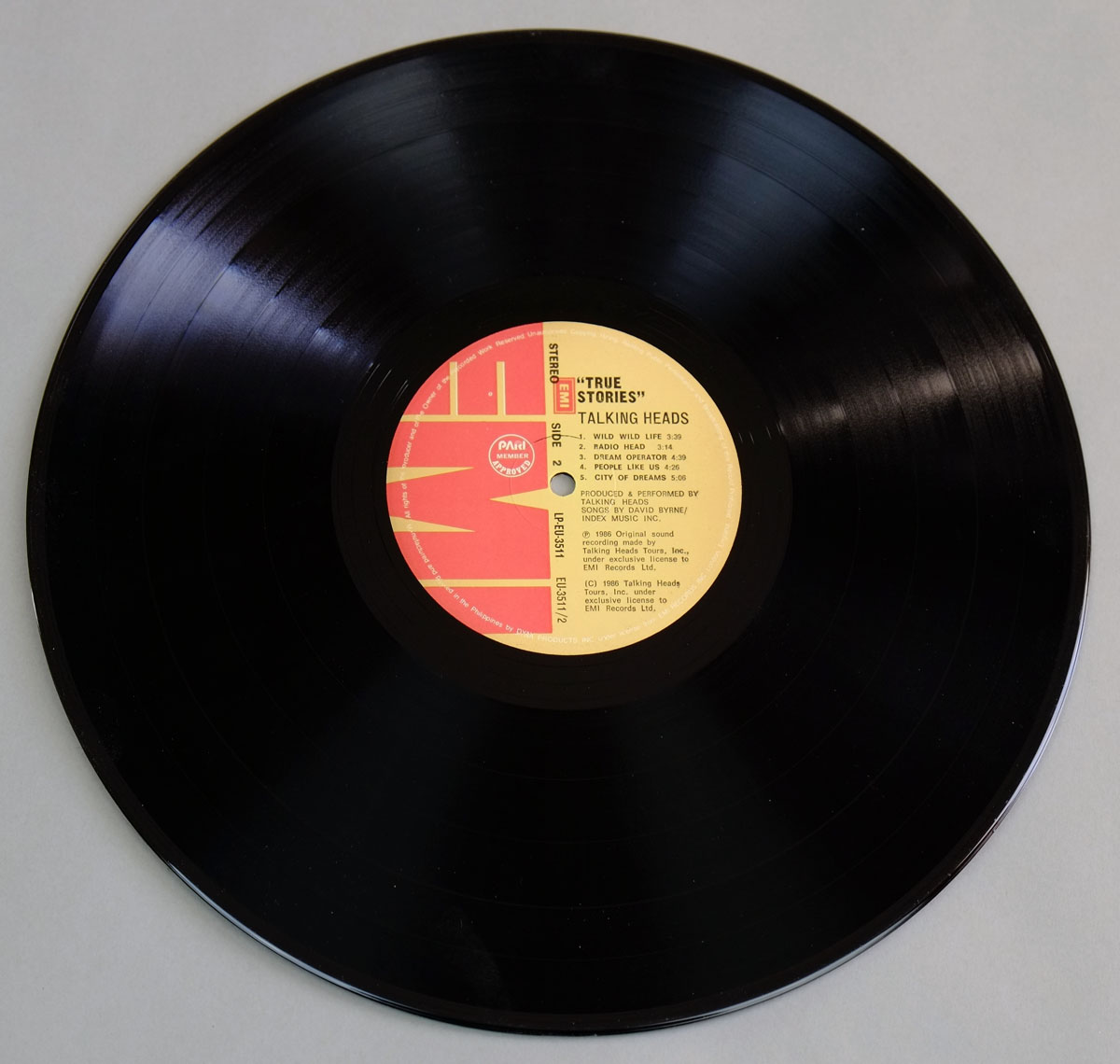
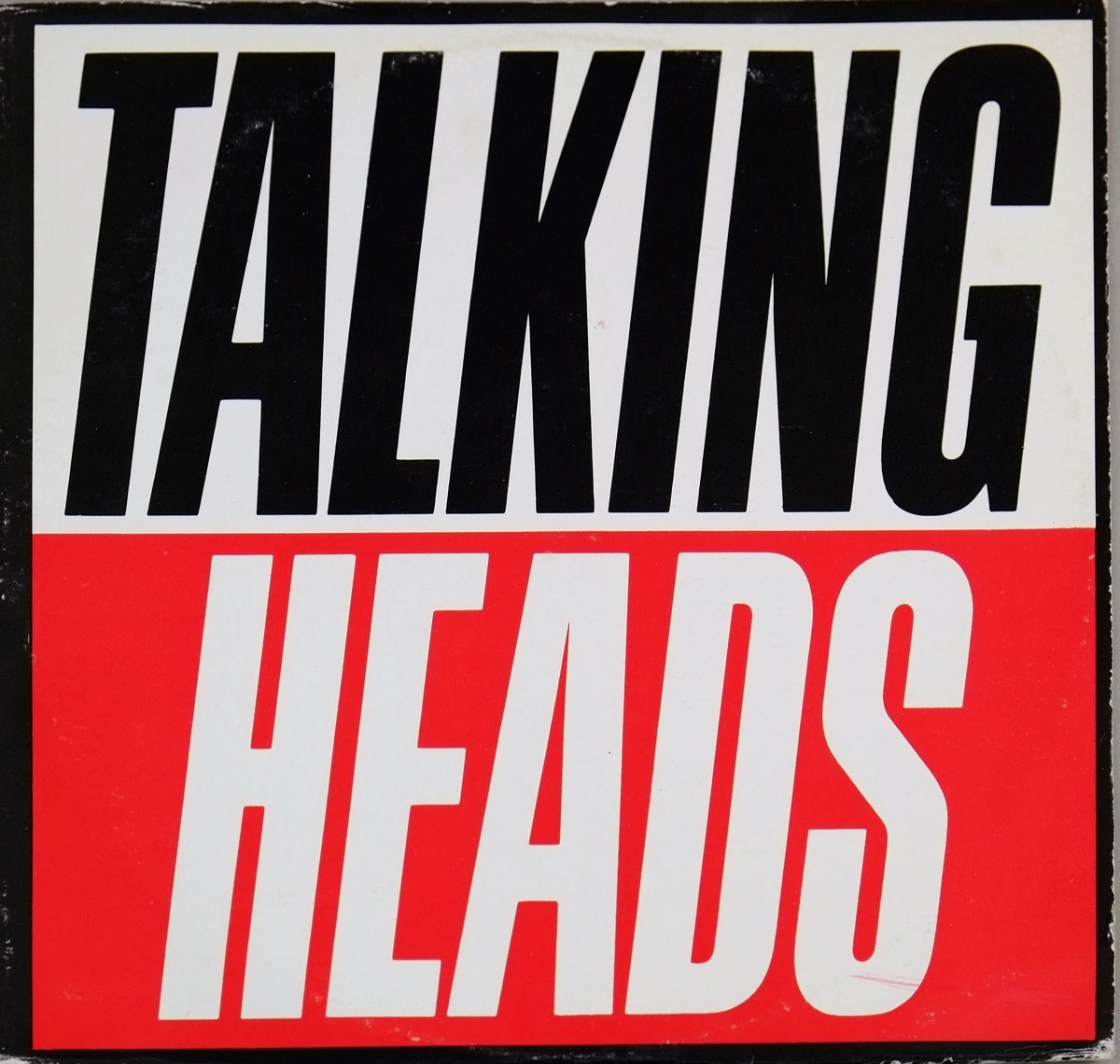
"True Stories" Album Description:
The release of Talking Heads' seventh album, "True Stories," in 1986 marked a significant moment in the band's discography. Accompanying the album was a film of the same name, directed by the band's frontman, David Byrne. This convergence of music and visual storytelling added a unique dimension to the overall artistic expression of Talking Heads during this period.
Produced by the band itself, "True Stories" showcases the distinctive sound that Talking Heads had become known for – a fusion of new wave, post-punk, and world music influences. The album's production team included sound/recording engineers Eric E.T. Thorngren and Melanie West, who played pivotal roles in capturing the band's sonic vision.
The recording sessions took place at Sigma Sound in New York, further contributing to the album's urban vibe and eclectic energy. The choice of location reflected the band's commitment to creating music rooted in the cultural tapestry of the city.
One notable aspect of this particular release is its origin – the album was made in the Philippines. This international production adds an intriguing layer to the narrative of "True Stories." It speaks to the global reach of Talking Heads' music and the band's ability to connect with audiences beyond their American roots.
The year 1986 was characterized by a diverse musical landscape, with genres like synth-pop, new wave, and rock dominating the charts. Talking Heads, with their avant-garde approach and socially conscious lyrics, stood out as innovators in this musical era. "True Stories" contributed to the band's reputation for pushing boundaries and defying musical conventions.
In the context of European publications, discussions about Talking Heads' "True Stories" would likely involve analyses of its cultural impact, musical experimentation, and the band's role in shaping the musical landscape of the time. The European music scene of the mid-1980s would have been influenced by a myriad of genres and cultural exchanges, and Talking Heads' ability to blend different styles resonated with audiences across borders.
As we reflect on the album's release in 1986, it becomes clear that "True Stories" not only encapsulates the spirit of its time but also serves as a testament to Talking Heads' enduring legacy in the realm of innovative and boundary-pushing music. The convergence of music and film, the international production context, and the eclectic sonic palette all contribute to the rich tapestry of Talking Heads' musical journey during this period.
Personnel/Band Members and Musicians on: TALKING HEADS - True Stories Philippines |
Band-members, Musicians and Performers
- David Byrne – guitar, vocals
- David Byrne – Vocals, Guitar, Songwriter
Scottish-born, New York-rewired; he made nervous art-pop sound like cardio. Read more... David Byrne is the restless frontman who turned New York anxiety into dance-floor gospel. I first clocked him in the mid-70s: a RISD dropout with the short-lived Artistics (1973-1974), then Talking Heads (1975-1991), where he went from CBGB razor-pop to funked-up, polyrhythmic fever. While the band was still rolling he peeled off for outside projects and early solo moves (1979-1981), then came back with a proper solo album run (1989-present). His sharpest detour is with Brian Eno (1979-1981; 2008), two brains rewiring what a "song" can be. Later he sparred and harmonized with St. Vincent (2012). For me, "Stop Making Sense" (1984) is the receipt: weird, sweaty, human, precise.
- Chris Frantz – drums
- Tina Weymouth – bass, backing vocals
- Jerry Harrison – keyboards, guitar, backing vocals
- Bert Cross Choir – vocals on "Puzzlin' Evidence"
- Tommy Camfield – fiddle on "People Like Us"
- Paulinho Da Costa – percussion on "Papa Legba", "Radio Head", and "People Like Us"
- Steve Jordan – accordion on "Radio Head"
- St. Thomas Aquinas Elementary School Choir – vocals on "Hey Now"
- Tommy Morrell – pedal steel guitar on "People Like Us" and "City of Dreams"
|