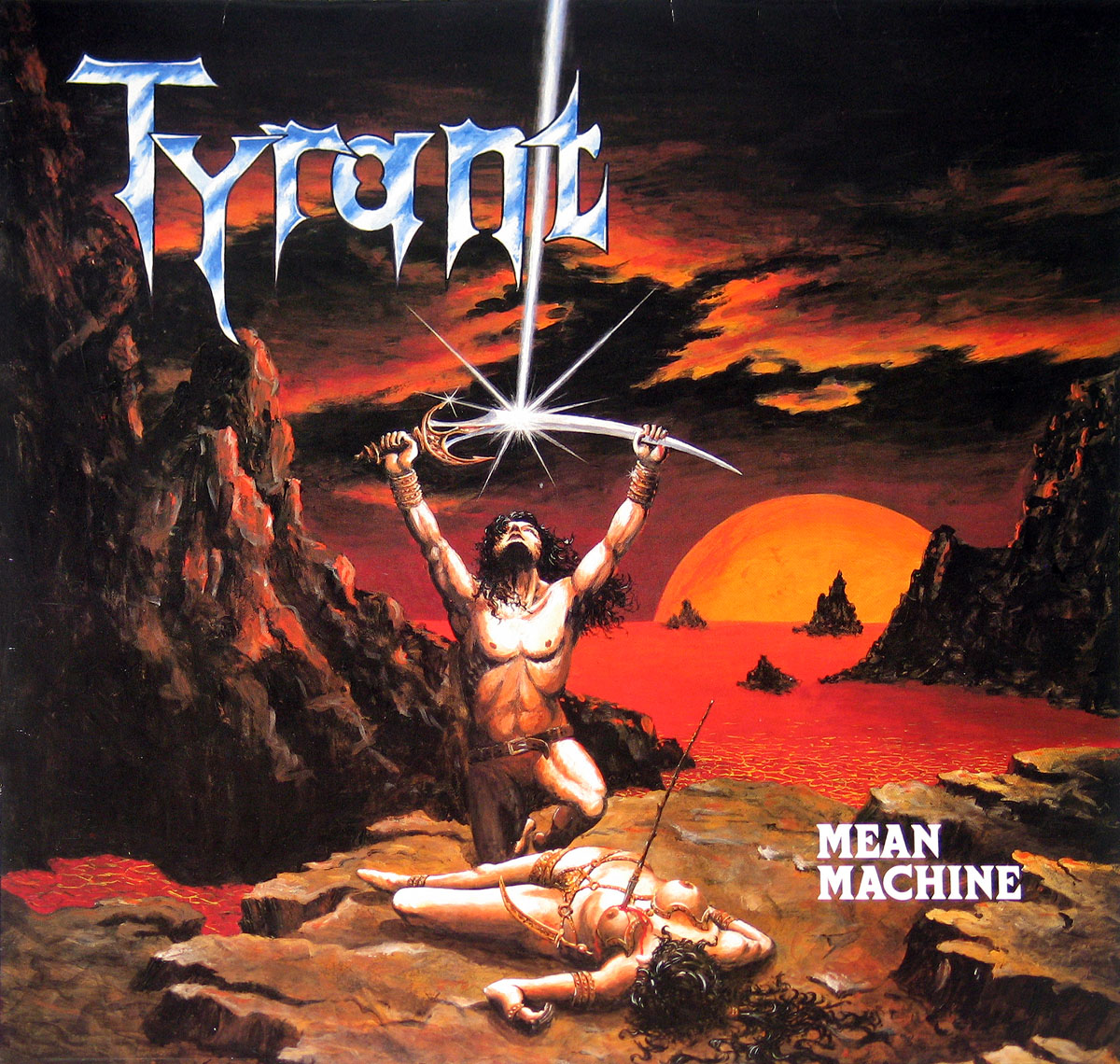
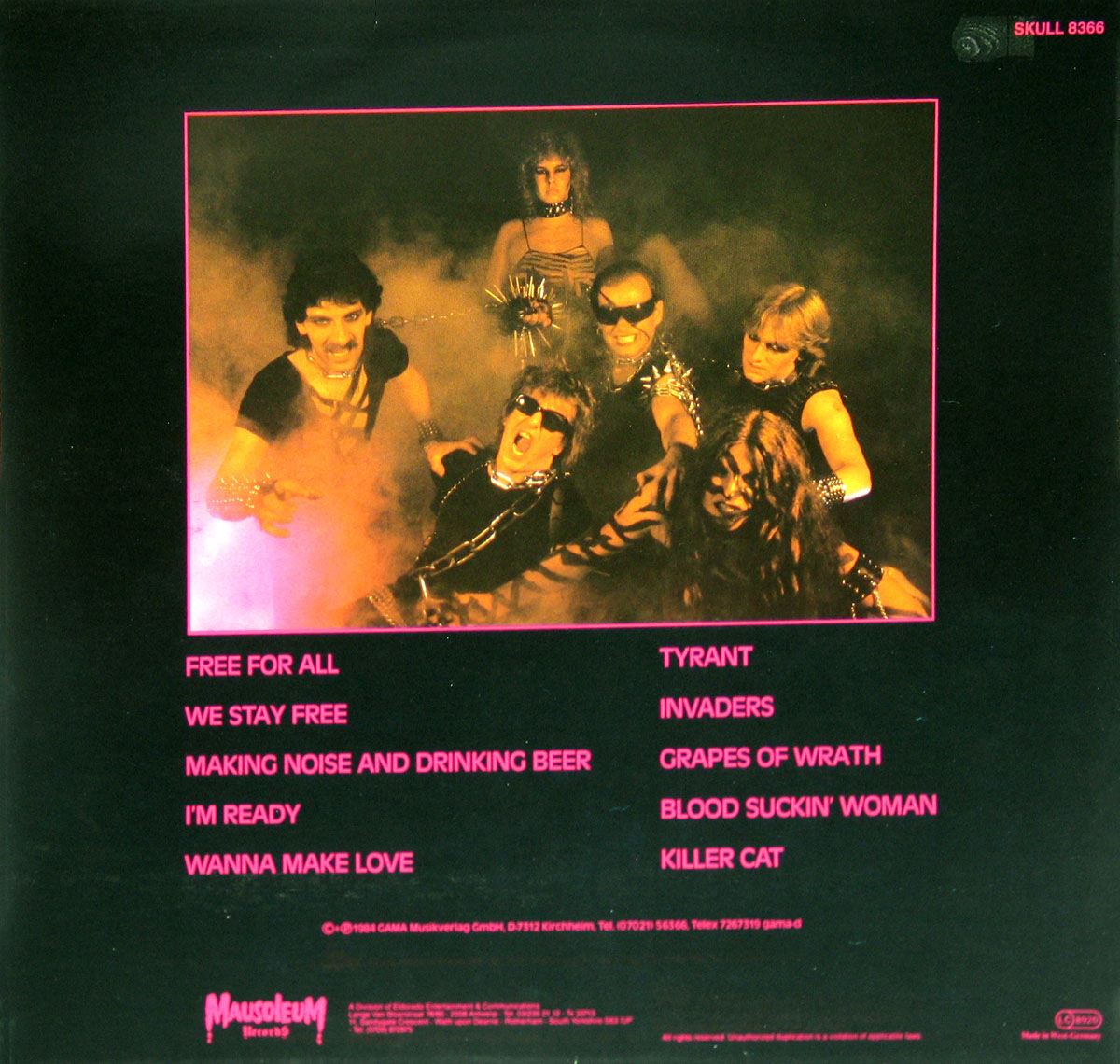
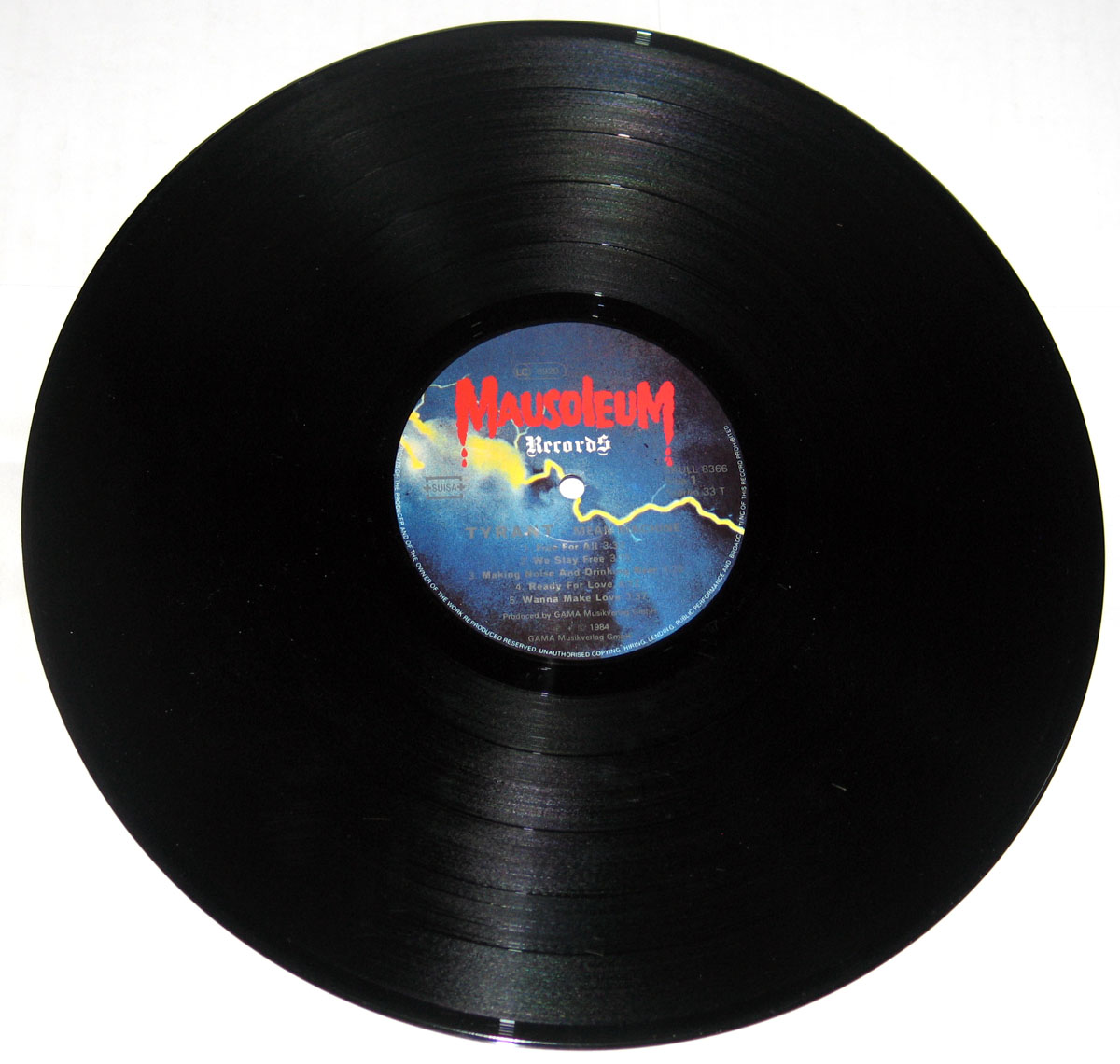
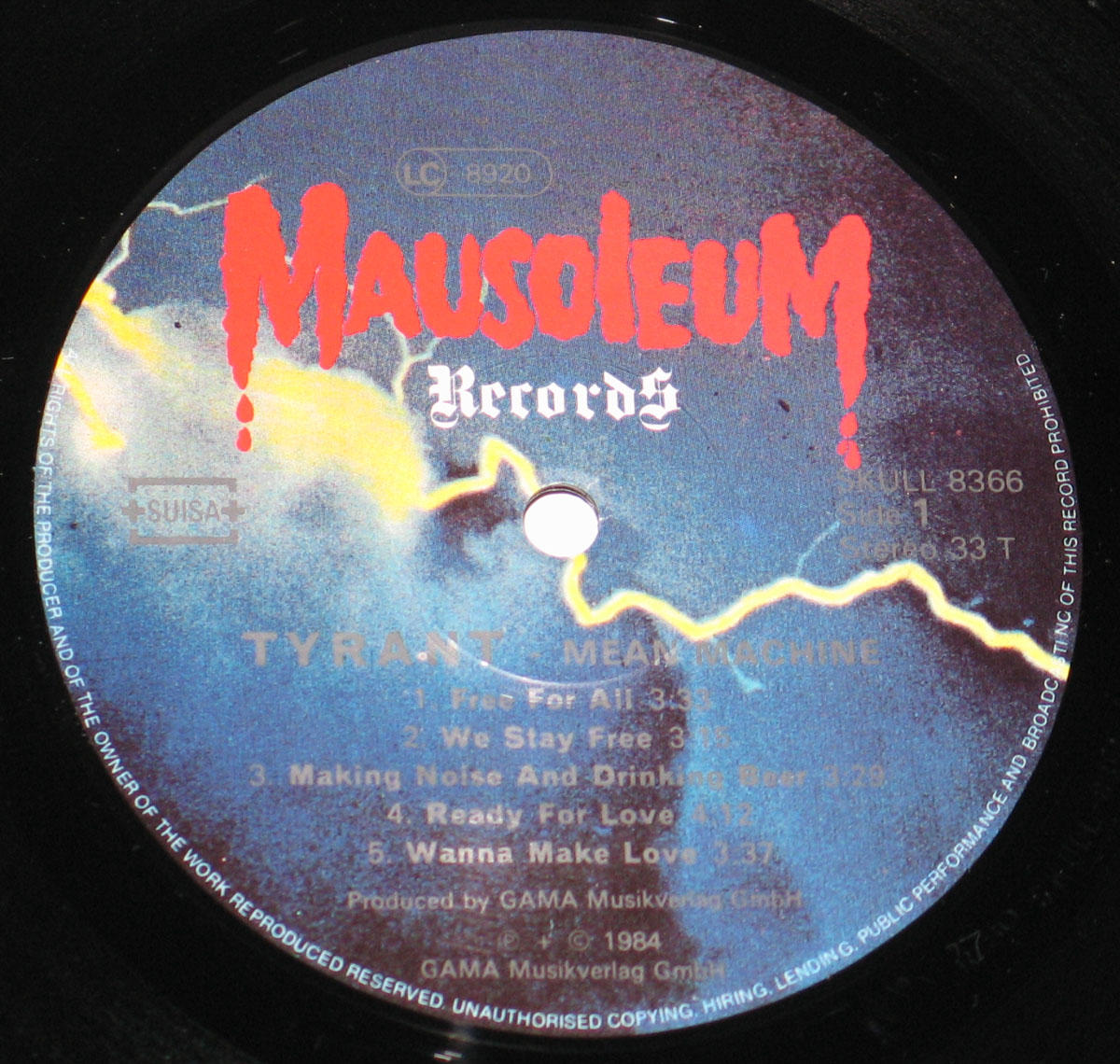
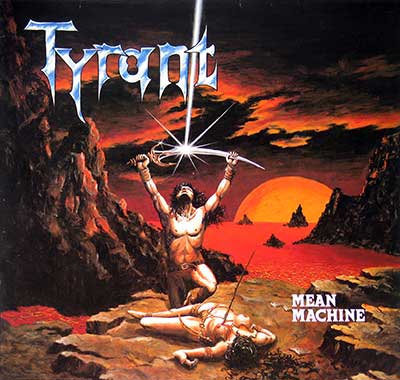
"Mean Machine" (1984) Album Description:
1) Introduction on the band and the album
Tyrant’s "Mean Machine" is the kind of 1984 heavy metal LP that doesn’t ask permission — it just kicks the door in and leaves bootprints on your speakers. What makes this one extra tasty for collectors is the absurdly specific twist: a rare Swiss pressing that feels like it was made for a small circle of believers who wanted their metal loud, fast, and just a little hard to find.
2) Historical and cultural context
In 1984, heavy metal in Europe was hitting that sweet spot: big enough to matter, still raw enough to feel dangerous, and spread by tape trading, tiny labels, and word-of-mouth devotion. The scene was full of bands trying to sound larger than their rehearsal rooms, because that was the whole point — ambition with scuffed boots. "Mean Machine" lives right in that moment, where the riffs are urgent and the attitude is basically a survival strategy.
3) How the band came to record this album
This record smells like a band capturing its momentum before life gets in the way: write hard, play harder, record it while the fire is still hot. The official credits keep it grounded — produced under Gama Musikverlag, shaped by the hands of people who clearly knew how to translate volume into something you can press into grooves. And that’s the 80s metal reality: you didn’t need a palace, you needed commitment, competence, and a shared belief that louder was a valid philosophy.
4) The sound, songs, and musical direction
Sonically, "Mean Machine" runs on punchy riffs, straight-ahead drive, and that classic mid-80s European bite — tight enough to feel disciplined, dirty enough to feel alive. The opener "Free For All" and the anthem-charged "We Stay Free" set the tone: fists up, no apologies, no subtlety requested. Then you get the glorious wink of "Making Noise And Drinking Beer", because sometimes the mission statement really can just be the title.
Flip deeper and it keeps throwing hooks: "Invaders" brings the forward charge, "Grapes Of Wrath" adds that darker, heavier weight, and "Killer Cat" finishes with the kind of grin that says the band knew exactly what kind of record they were making. This isn’t metal for polite living rooms — it’s music that wants air, volume, and a neighbor complaint or two.
5) Comparison to other albums in the same genre/year
If you drop "Mean Machine" into the wider 1984 metal universe, you can feel the shared electricity — the same year that gave us arena-grade power and razor-edged speed across the scene. Think of the bigger monuments like "Defenders of the Faith" (Judas Priest) and "Powerslave" (Iron Maiden), or the sharper new-school punch of "Ride the Lightning" (Metallica). Tyrant doesn’t try to outspend those records — it outworks them with grit, directness, and that “we made this because we had to” urgency.
6) Band dynamics and creative tensions
There’s no big scandal hanging over this album — no headline drama, no moral panic circus — just a band locked into the mission and daring you to keep up. You can hear the creative agreement in the pacing: tough songs, clear intent, and zero filler pretending to be “art.” Even the details around the release feel like a quiet flex: a Swiss edition with its own identity, like the band’s work traveled and found a small but serious home.
7) Critical reception and legacy
Albums like this don’t always get the glossy mythology at release — they get loved by the people who actually play records until the grooves beg for mercy. Over time, that’s exactly where "Mean Machine" earns its staying power: as a snapshot of German 80s heavy metal when it still felt hand-built and hungry. And for collectors, the rare Swiss pressing angle is the cherry on top: it’s not just the music, it’s the chase, the variation, the “wait… what is THIS copy?” moment.
8) Reflective closing paragraph
I keep coming back to this one because it’s honest — not polished into perfection, but pressed with purpose and attitude. The mix and mastering names matter here because they helped bottle the impact, while the cover vibe leans into that classic fantasy-metal energy without blinking. Decades later, the riffs still smell faintly of beer, sweat, and misplaced optimism.