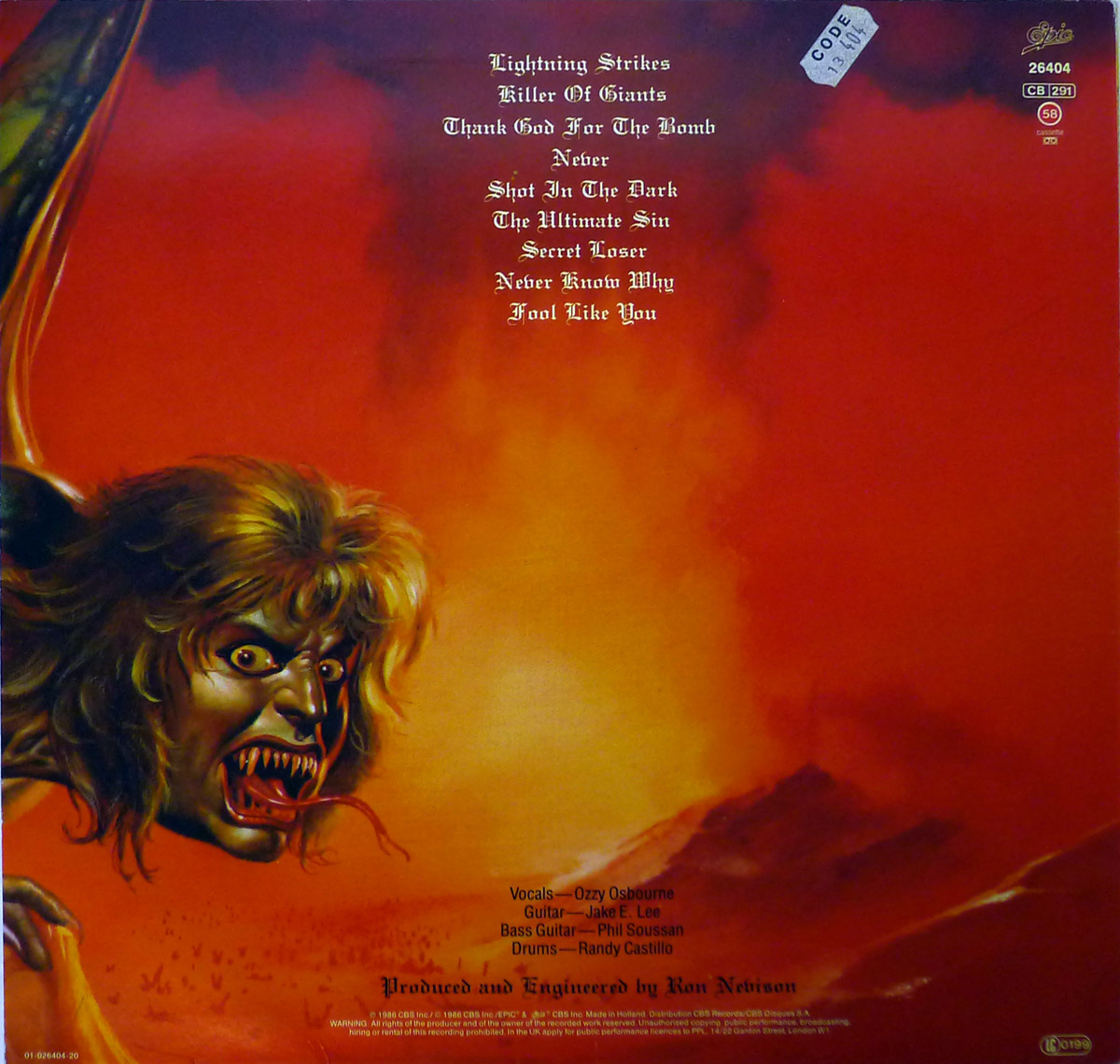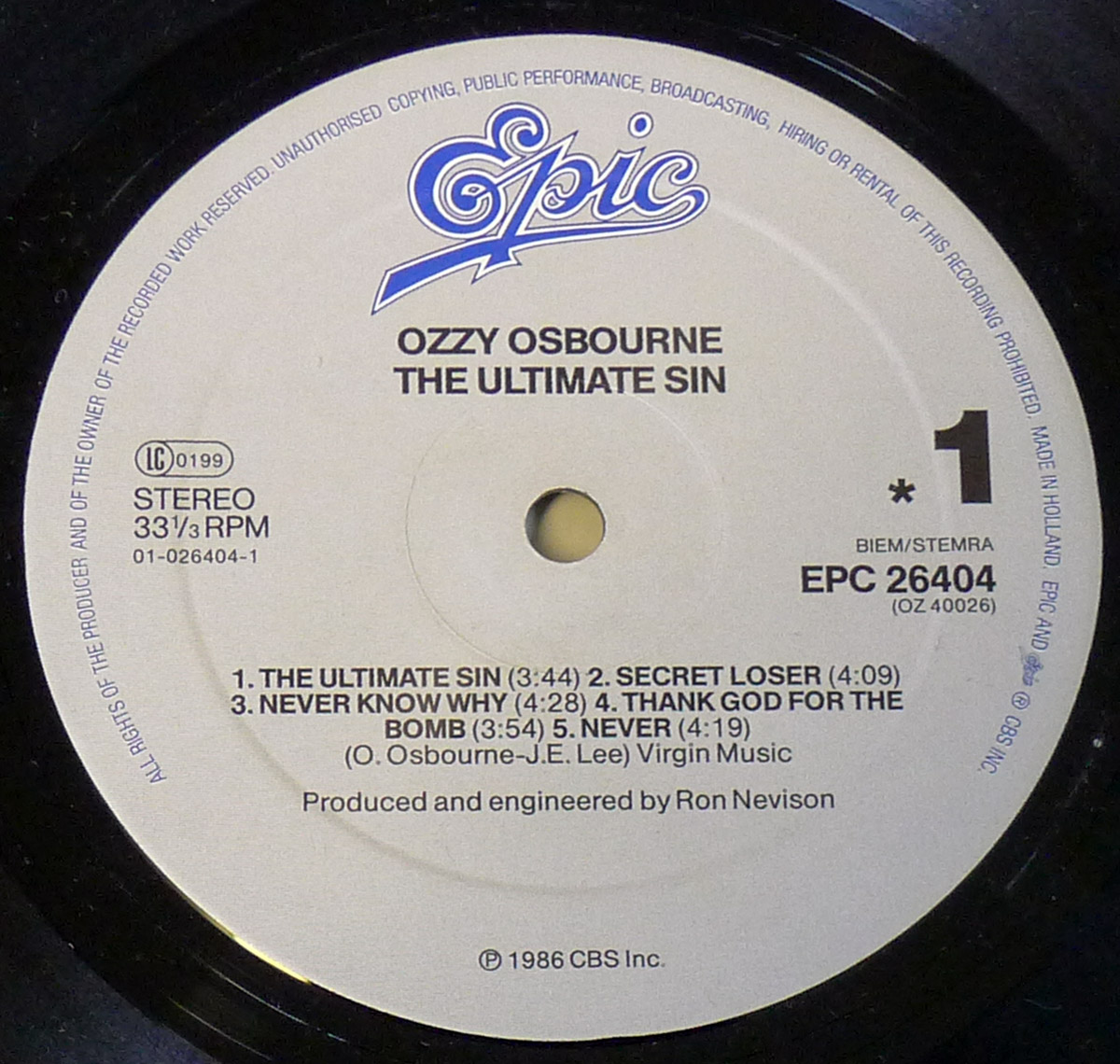
"The Ultimate Sin" (1986) Album Description:
"The Ultimate Sin" walks in wearing 1986 like cologne: glossy, loud, expensive, and a little too sure of itself. Ozzy is already a brand by now, but he still sounds like a person when the chorus hits—ragged at the edges, stubborn in the center. Ron Nevison builds him a clean arena frame, and the band tries to misbehave inside it.
1986: Big Hair, Bigger Nerves
Back in Britain, the mid-’80s had that hard, tight smile: Thatcher country, a few years after the miners got flattened, everybody learning the new rules whether they liked them or not. Metal didn’t sit still either. The serious kids were drifting toward thrash and speed, the radio kids were chasing shine, and the clubs were full of bands trying to sound like they had a tour bus parked outside.
Ozzy, the Birmingham export, lands right in that split. He’s not trying to out-snarl Slayer or out-nerd Metallica; he’s trying to make heavy music behave on the kind of stages where the lights cost more than the amps. That tension is the whole record.
Where It Sits in the Pack
In the same year you’ve got Metallica and Megadeth sharpening blades, Judas Priest bolting chrome onto riffs, Iron Maiden building sci-fi cathedrals, and Bon Jovi turning choruses into currency. Ozzy doesn’t pick one lane. He grabs pieces: a little glam-sheen, a little metal muscle, and a radio hook that doesn’t apologize.
The Sound: Nevison’s Glass-and-Steel Production
Nevison is the guy who makes everything look straight in the mirror. The drums hit like they’ve been measured with a ruler, guitars sit wide and shiny, and Ozzy floats dead-center like a familiar threat. You can almost hear the control-room confidence: nothing spills, nothing surprises, everything lands.
Some people love that kind of order. Some people hear it and want to kick a hole in the drywall.
Jake E. Lee: The Bite Under the Polish
Jake E. Lee plays like a street fighter who learned manners at gunpoint. The riffs have that tight, tense snap—less bluesy swagger, more clipped attack—like the strings are being punished for something. When the solos come, he doesn’t spray notes; he aims them.
Phil Soussan and Randy Castillo: New Blood, New Angles
Phil Soussan is the kind of bassist who understands structure: keep the floor solid, then slip a hook into the frame when nobody’s watching. Randy Castillo hits with a showman’s confidence—big strokes, firm landing, enough swing left to keep it from turning robotic. It’s a line-up that sounds like it can survive the spotlight.
Songs That Actually Stick
The album swings between threat and gloss, sometimes in the same minute. "Killer of Giants" has that slow, heavy march feel—space between hits, tension in the air—like the band is staring at something massive and deciding whether to run or pose for it. "Lightning Strikes" comes in hotter, all forward motion and bright edges.
"Shot in the Dark" is the obvious weapon: a co-write with Soussan, built for radio without sanding Ozzy into wallpaper. It cracked the Billboard Hot 100, got hammered on MTV, and proved he could play the pop game without smiling too much.
Band Chemistry: Cause-and-Effect, Not a Scrapbook
The writing and personnel story matters here because you can hear the seams. Bob Daisley was around the early writing, then left after a disagreement; Jimmy DeGrasso worked on demos before the line-up changed again. By the time the record was made, you’re listening to a band that formed under pressure, not comfort.
- Ron Nevison: produced and engineered; the clean, arena-sized punch is his calling card.
- Townhouse/AIR (London) + Davout (Paris): the record gets its expensive, controlled room tone from real rooms.
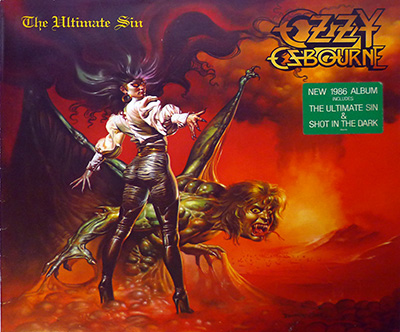
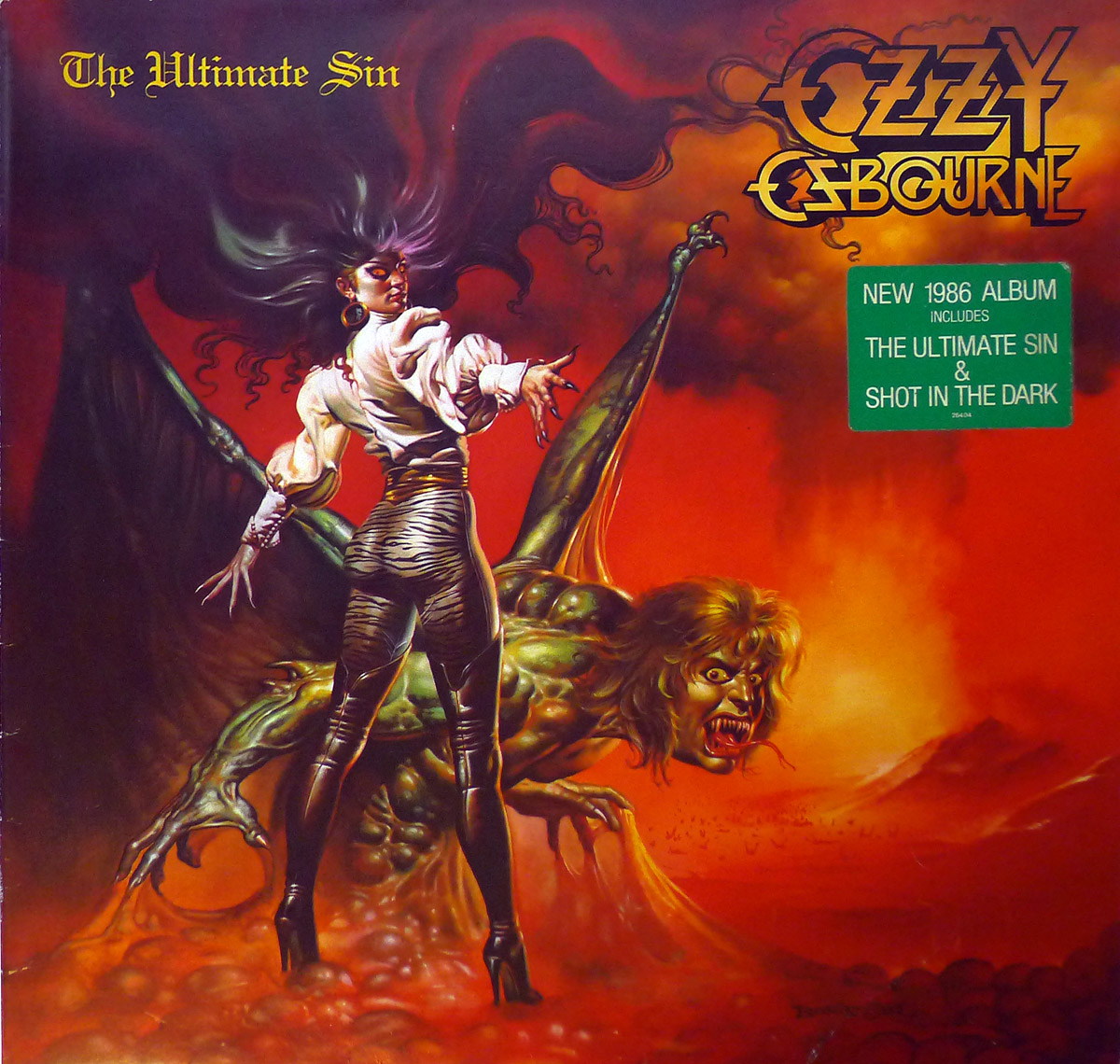
- Boris Vallejo: the cover sells fantasy and danger in one stare.
The Real Dust-Up, and the Misconceptions
The release didn’t trigger riots in the street, but it did drag the usual Ozzy-world arguments into daylight: who wrote what, who got credited, who got paid. Daisley has said his name was missing from early pressings for writing contributions and that it was later corrected. Jake E. Lee, burned on the previous album, pushed for guarantees before handing over ideas.
Common misconception: Ozzy sitting alone with a notepad, writing every line like a tortured poet. The truth is messier, more band-shaped, and full of paperwork.
One Quiet Anchor
Late-night radio, volume low, finger hovering over the tape button, hoping the DJ won’t talk over the intro. That’s where "Shot in the Dark" lived for a lot of people, sneaking into bedrooms while parents slept and guitars pretended they were harmless.
So What Is It, Really?
Even Ozzy has taken swings at this record later, blaming the production more than the songs. Fair. But there’s still a pulse under the polish, and Jake E. Lee’s guitar is doing real work. "The Ultimate Sin" isn’t the filthy alleyway version of Ozzy.
It’s the neon boulevard. Same danger, better lighting.
Sources & Further Reading
- Wikipedia: "The Ultimate Sin" (album)
- Wikipedia: "Shot in the Dark" (single)
- AllMusic: "The Ultimate Sin" (album page)
- AllMusic: 22 Aug 1995 reissue info
- Blabbermouth: Bob Daisley on missing writing credit
- Blabbermouth: Ozzy on why he dislikes the album
- Guitar World: Jake E. Lee interview (reprinted)