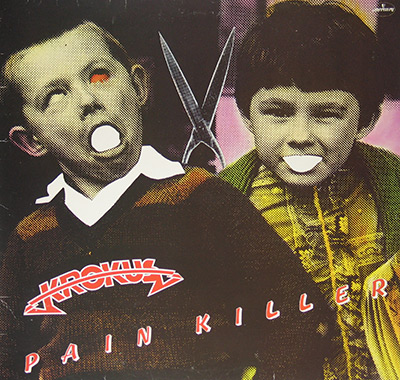
"Painkiller" (1978) Album Description:
"Painkiller" is Krokus before the big international glow-up: a hungry, scrappy 1978 snapshot where the band is still carving its identity into the wax with a Swiss knife and a whole lot of amp hiss. It feels like a group trying on several jackets at once—hard rock, boogie swagger, and a faint prog aftertaste—then deciding the loudest one fits best.
1. Introduction on the band and the album
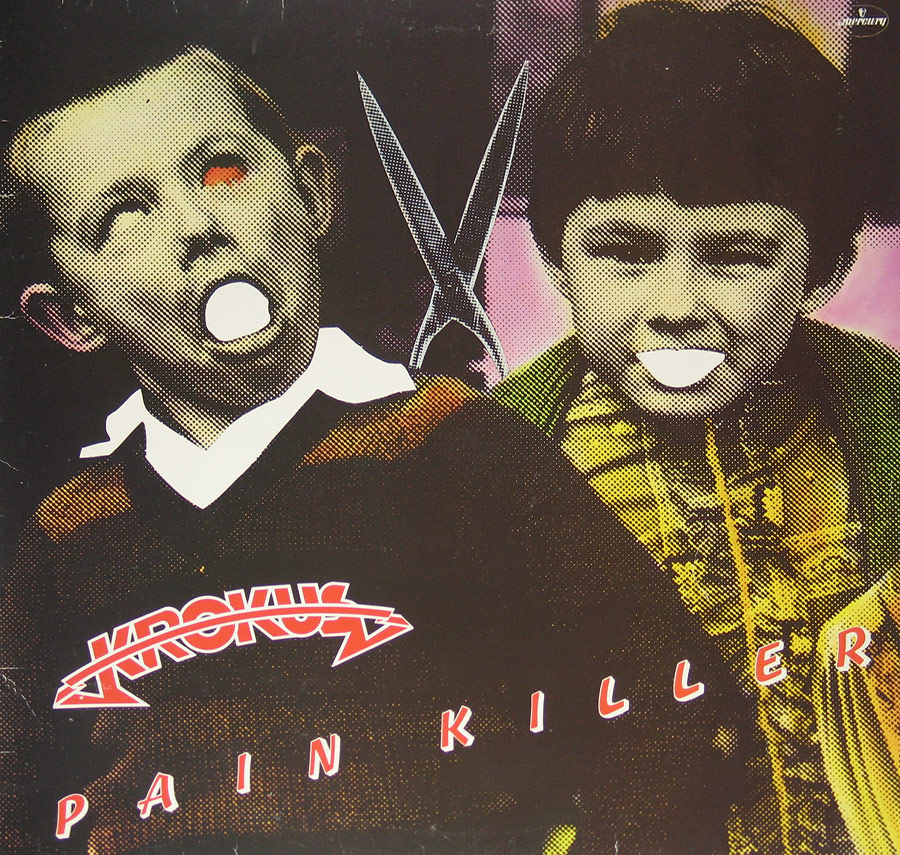
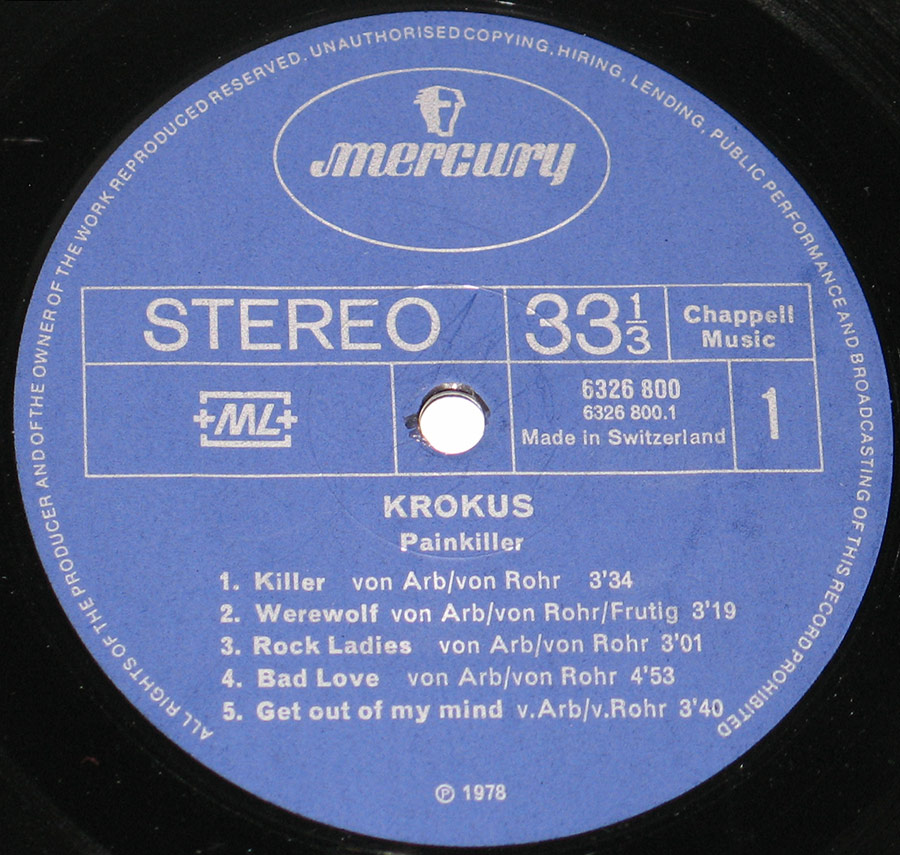
Krokus are the classic “local heroes with global ambitions” story, and this record is them stretching for the next level without pretending they’re already there. On this specific pressing, the whole thing is framed like a proper collector artifact too: the Swiss cues on the label and that national-symbol energy on the packaging make it feel grounded in place, not just genre.
And yeah, it matters that this is 1978: you can hear a band still learning how to be dangerous, but already confident enough to swing for memorable hooks instead of hiding behind endless noodling.
2. Historical and cultural context
1978 is one of those “the ground is moving under your feet” years in hard rock: the scene is getting faster, tighter, and more attitude-forward, with big statements arriving from all directions. That same year, albums like Van Halen’s "Van Halen", AC/DC’s "Powerage", Judas Priest’s "Stained Class", and Rainbow’s "Long Live Rock ’n’ Roll" helped define how much muscle rock could carry without collapsing under its own denim weight.
Switzerland wasn’t exactly the world’s loudest export machine, so Krokus doing the smart thing—taking the work to an English studio—feels like ambition with a plan, not a daydream. When a band records away from home, you often get that extra edge: part excitement, part pressure, and part “we’re not flying back until this thing hits.”
3. How the band came to record this album
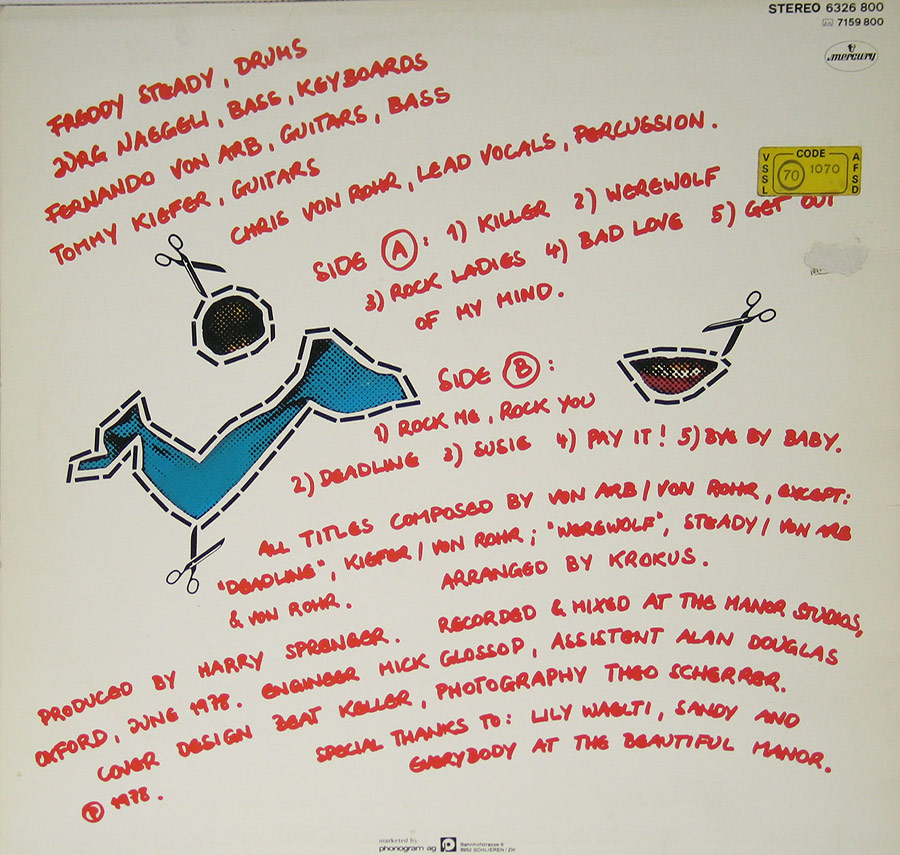
The core narrative is simple and very human: get the songs tight, get into a serious room, and commit. "Painkiller" was produced by Harry Sprenger and recorded in June 1978 at The Manor in England, a setting that practically dares bands to act professional—whether they feel ready or not.
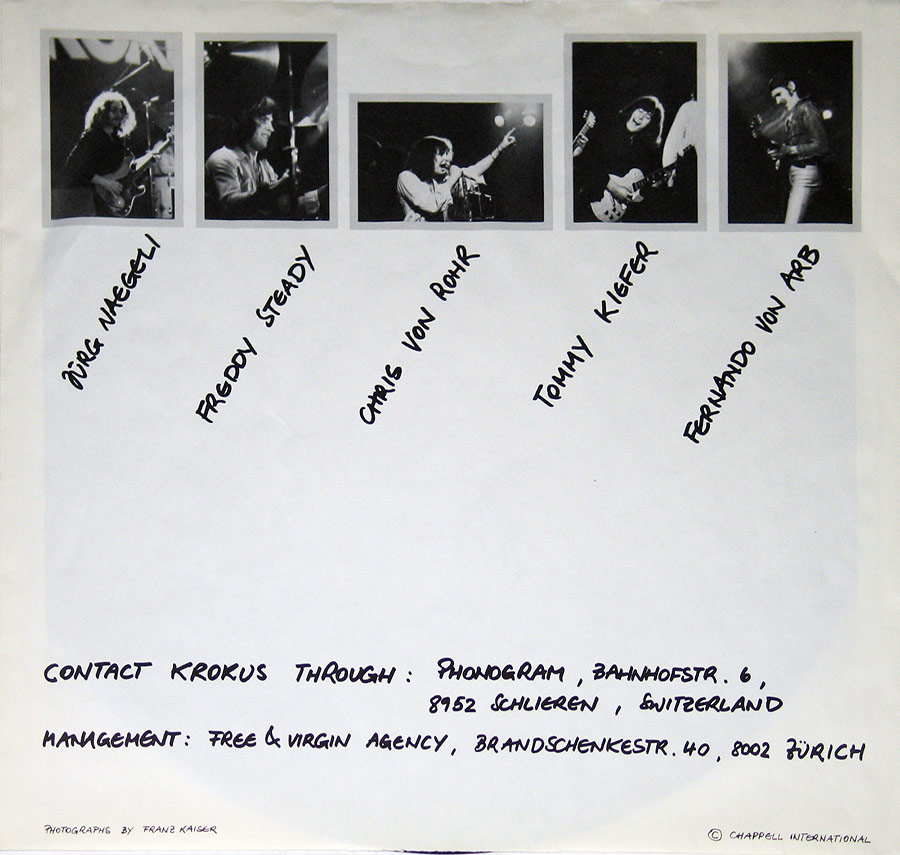
Even the physical presentation supports that “serious release” vibe: the custom inner sleeve and the careful visual identity aren’t just decoration, they’re the band saying, we belong on the same shelf as the bigger names.
4. The sound, songs, and musical direction
The sound lives in that sweet spot where the riffs are chunky and direct, but there’s still room for detours—like the band hasn’t fully chosen between “barroom brawl” and “late-night highway hypnosis.” It’s not the later, streamlined arena-Krokus yet; it’s more like a workshop full of sparks and half-finished weapons.
Tracks like "Killer" and "Werewolf" lean into punchy momentum, while cuts like "Bad Love" and "Rock Me, Rock You" carry that grin-and-groove attitude that keeps the whole album from turning into a stern lecture. Then "Susie" shows the band understood something important early: hooks aren’t a crime, they’re a strategy.
5. Comparison to other albums in the same genre/year
If you drop "Painkiller" into the 1978 rock ecosystem, it doesn’t compete by being flashier—it competes by being stubbornly alive. It’s less “guitar-hero fireworks” and more “band-in-a-room heat,” which is exactly why it charms collectors who like their rock with fingerprints still on it.
- Compared to Van Halen’s debut, Krokus are grittier and less show-off, more garage-to-stage than spotlight-to-stadium.
- Compared to "Powerage", it’s a bit less stripped-down, with a faint prog shadow still hanging around the edges.
- Compared to "Stained Class", it’s not as sharp-edged metal—more hard rock muscle than full blade.
6. Controversies or public reactions
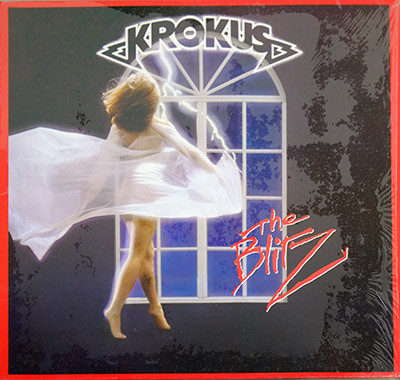
There isn’t a big scandal attached to this album, but it did create the kind of collector confusion that starts arguments at record fairs: the album also appeared as "Pay It in Metal" in some markets, with different covers while keeping the same tracks. Some people call that messy branding; I call it a free side-quest for obsessive collectors.
7. Band dynamics and creative tensions
The lineup tells you a lot about where Krokus were mentally: this is the era where Chris von Rohr is handling lead vocals on the record, before the band’s later frontman identity fully locks in. That alone changes the personality of the album—more rough-edged, more “we’ll just do it ourselves,” and honestly, more intimate in a slightly chaotic way.
You can feel a band testing boundaries without breaking apart: different energies, different instincts, and a shared agreement that the only real sin is sounding timid.
8. Critical reception and legacy
"Painkiller" isn’t remembered as the obvious mainstream breakthrough—it's remembered as the origin story chapter you read after you’ve already met the later, bigger Krokus. It’s the record that makes the timeline make sense: the ambition, the craft, and the willingness to chase a louder future are all already here.
As a Swiss Mercury pressing, it also has that extra collector gravity: not because it’s mythical, but because it’s specific—rooted in a time, a place, and a band still becoming itself.
9. Reflective closing paragraph
When I put this one on, I don’t hear a band that “arrived.” I hear a band moving—packing the van, arguing about tempos, chasing a bigger sound, and refusing to apologize for being loud in a country that usually prefers quiet efficiency.
Decades later, those grooves still smell faintly of rehearsal-room sweat, long drives, and that priceless 1978 optimism that the next riff might be the one that kicks the door open.